How 17-year-old guys created CareLink to help patients in hospitals
The Tech AI
Get the key points in seconds - a short summary from The Tech AI.
Olzhas Mukhtarov, Berdali Junis khan, and Ramazan Akhmet created the CareLink startup for monitoring patients using smartwatches. The team has signed contracts with seven clinics, more than a thousand people are using the devices, and sales volume has exceeded $25,000. Plans include entering the markets of Uzbekistan and Azerbaijan by the end of the year.
At 16 and 17, Olzhas Mukhtarov, Berdali Zhunis-khan, and Ramazan Akhmet created CareLink — a startup that helps hospitals monitor patient conditions using smartwatches. The idea emerged after the founders encountered similar situations in their own lives. Currently, more than a thousand patients are using CareLink devices, and the team plans to expand into Central Asian markets.
Read on to learn more about how the startup idea came about and the results the team has achieved.
Olzhas Mukhtarov, city — Astana, CTO, Instagram
How it all started
I am the Chief Technology Officer of CareLink. My journey in engineering began at an early age: I opened my own computer club and set up more than 100 computers myself. Later, I became a prize winner at an international robotics olympiad in Korea and completed a summer program at Stanford University focused on business and technology, where I worked on engineering projects.
Alongside me, Berdali Zhunis-khan, CEO, and Ramazan Akhmet, COO, work on CareLink.
The startup idea is largely rooted in personal experience. Berdali was hospitalized after surgery and was unable to move or call for help. He found himself in a situation where he could not independently communicate that he needed assistance. Meanwhile, routine patient check-ups are typically conducted at intervals of several hours. During this time, much can happen, and it can be difficult to notice a deterioration in a patient's condition in a timely manner.
Another incident influenced my decision to work on this project — a story from my family. My grandfather was staying in a nursing home, and one day, when a nurse failed to keep an eye on him, he fell and fractured his head. After that, I began to think about creating a solution that would help prevent such incidents in hospitals and elderly care facilities.
Hospitals should be one of the safest places for patients. But in practice, it sometimes turns out that a person may be safer at home than in a hospital, where medical staff cannot always continuously monitor every patient.
Thus, we came up with the idea to create CareLink — a 24/7 monitoring system that helps continuously track patient conditions and promptly identify potential problems. We wanted to create a solution that would be useful not only for us but also for patients' families and anyone who requires constant observation.
Our system works as follows: smartwatches, which I developed independently, transmit data to a mini-computer. A server is also installed in the hospital, which receives and processes the data within the institution's local network.
Data transmission between the watch and the computer occurs over an encrypted channel using our own SDK. The computer decrypts the data and processes the information, after which it becomes available on the hospital network. Medical staff can open a special link from any device and view a dashboard with patient data.
Startup launch
In the first weeks and even months, progress was minimal because we had no funding. We had to work with the resources we had.
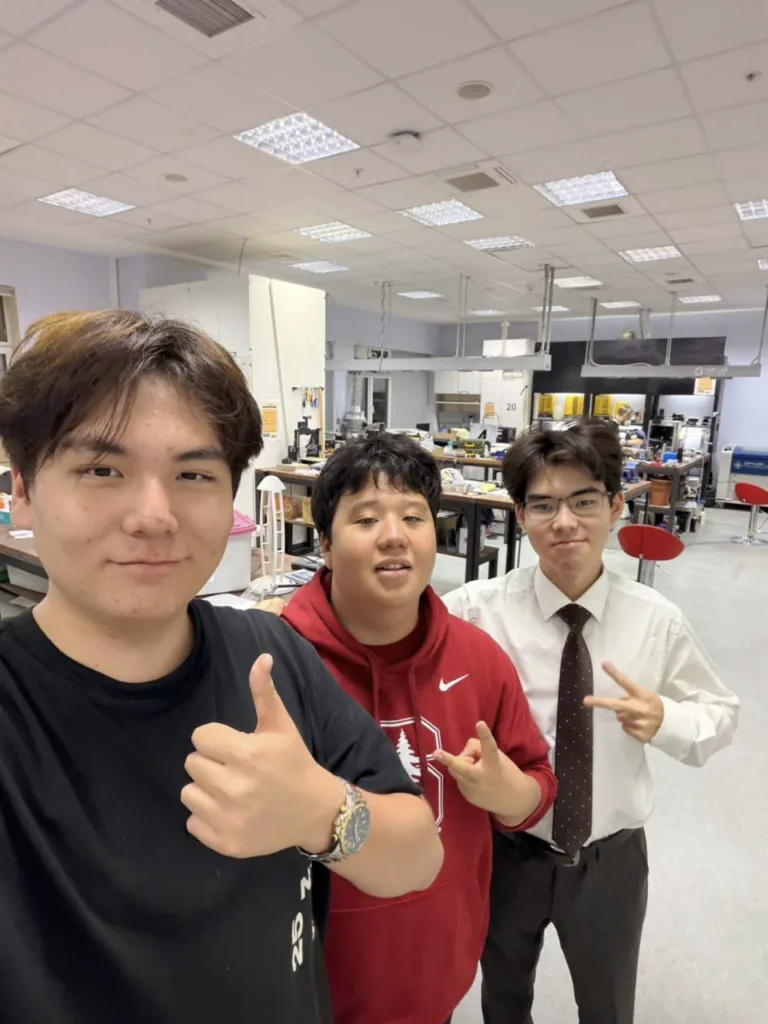
For example, it took me more than two months to develop and configure the watch and computer. I worked in the lab until we created the first prototype.
During all this time, we were only focused on development. It was a fairly routine process: we had no contracts or other results; we were only working on the product. But after creating the first prototype, things began to go better.
We didn't have to build the team from scratch because we had known each other for a long time. I met Berdali in Almaty when I was looking for a job, and over time, we began working together on various projects. Later, this project was added to our portfolio. I met Ramazan through Berdali.
Target audience
Our main target audience is inpatient hospitals. Currently, we have contracts with seven clinics, and we are also running several pilot projects.
Hospitals purchase our devices in bulk and use them to monitor patient conditions. At present, more than 1,000 people are using the devices.
Incubation programs
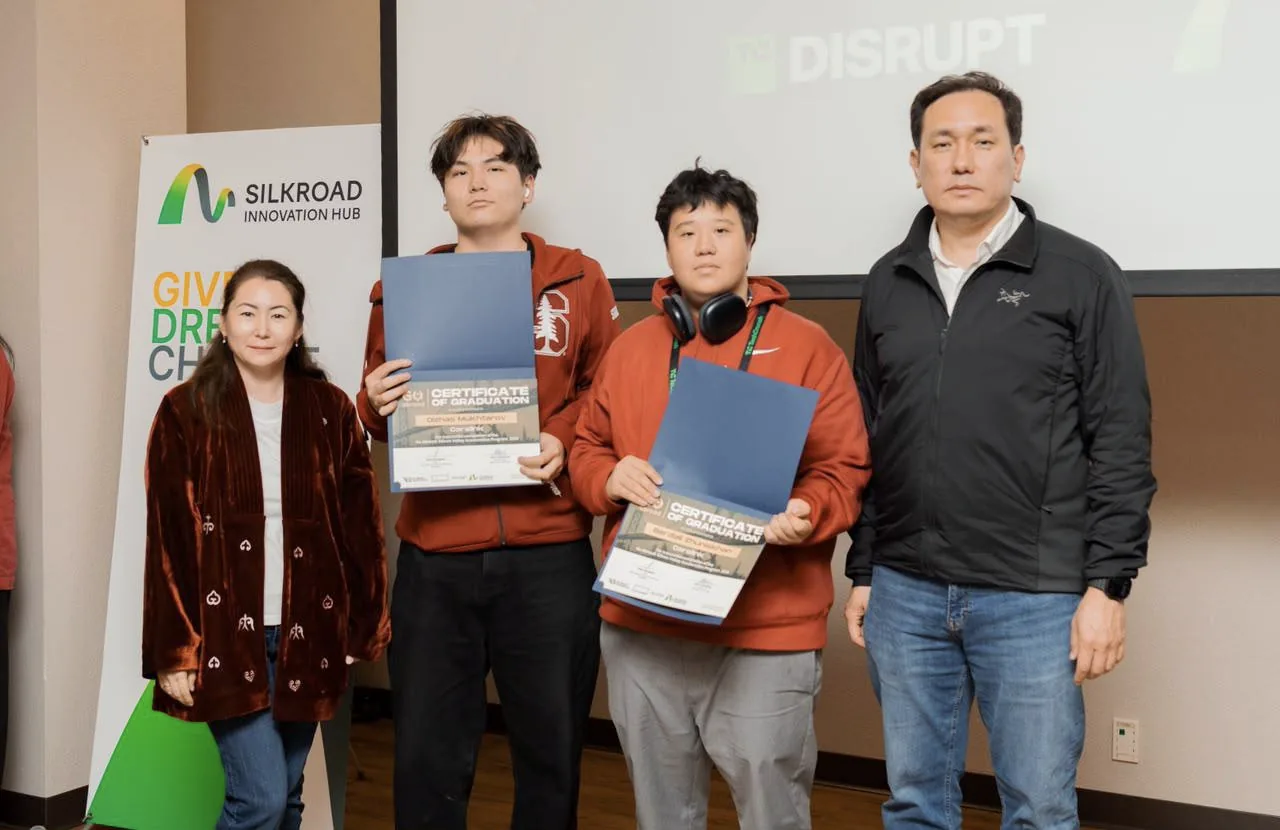
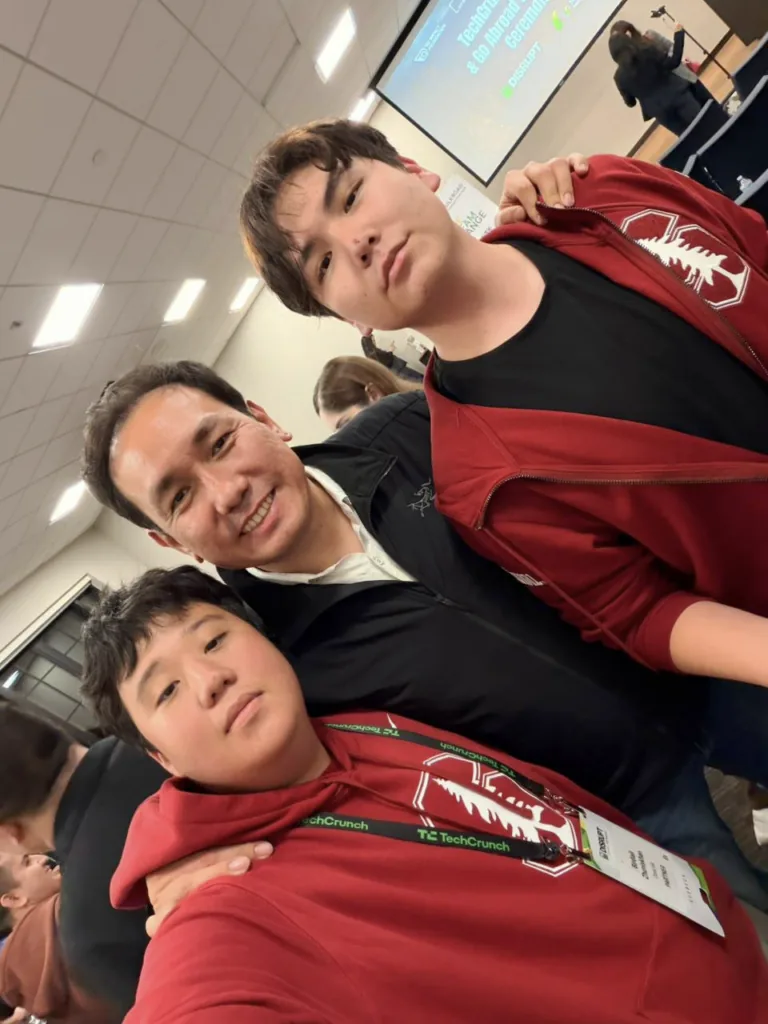
To date, we have completed two acceleration programs. We participated in the Go Abroad program by Silkroad Innovation Hub. We recently returned from San Francisco, where we spent about two weeks. During this time, we worked with investors, engineers, and specialists from various industries.
We currently have no external funding. We are developing the project independently, through our own sales and personal funds.
Challenges
It is important to consider our age. Ramazan and I are 17, and Berdali Zhunis-khan is 16. When we started, we were not always trusted due to a lack of experience. Some believed that our idea was unnecessary. Now we see that our technology can be useful to hospitals.
We had to face a shortage of money and time. Developing the watch took a lot of time: we created many prototypes before achieving the desired result. Due to intense work, disagreements and misunderstandings sometimes arose within the team. As an engineer, I sometimes found it difficult to control my emotions, so I had to learn how to find common ground with the team even in difficult situations.
This became one of our main challenges. We had already invested our own money and significant effort into the project, so it was important not to stop halfway. We managed to overcome the difficulties and continue working. I am confident that there will be new challenges ahead that we will have to face together.
To those just starting their journey, I would advise doing what is truly interesting and important to you personally. If you do not see meaning in your own project, it will be much harder to maintain motivation. Therefore, do not create a startup just for the sake of checking a box or making money — it is important to understand why you are doing it.
At the same time, you need to realistically assess the project's prospects and your own capabilities, including understanding whether you are willing to invest the necessary effort and time into it.
And you must be prepared for the fact that work may take up almost all your free time, and those around you may not always treat you fairly. Sometimes people may hurt your dignity or devalue your efforts. It is important to learn how to handle such situations and not let them hinder your work.
Achievements
One of our main achievements is the independent development of smartwatches and monitoring technology. We have registered copyrights for the technology and are currently considering the possibility of obtaining a patent. In addition, we have an officially registered company, and sales volume has exceeded $25,000.
Each of us also has personal achievements. I took first place at the international World Robot Olympiad in Korea, completed an internship at Freedom Cloud as a Software Engineer, and participated in the Stanford University program on business and technology. At 16, I also sold my own business — a computer club.
Berdali Zhunis-khan took first place in ALEM.AI and received an award from the president. In addition, his previous project, as far as I remember, attracted more than $60,000. He also took first place in the CAS Airlines rocket launch competition, which involved 325 teams.
Ramazan participated in the international ISEF competition and received an award at a scientific conference.
Plans
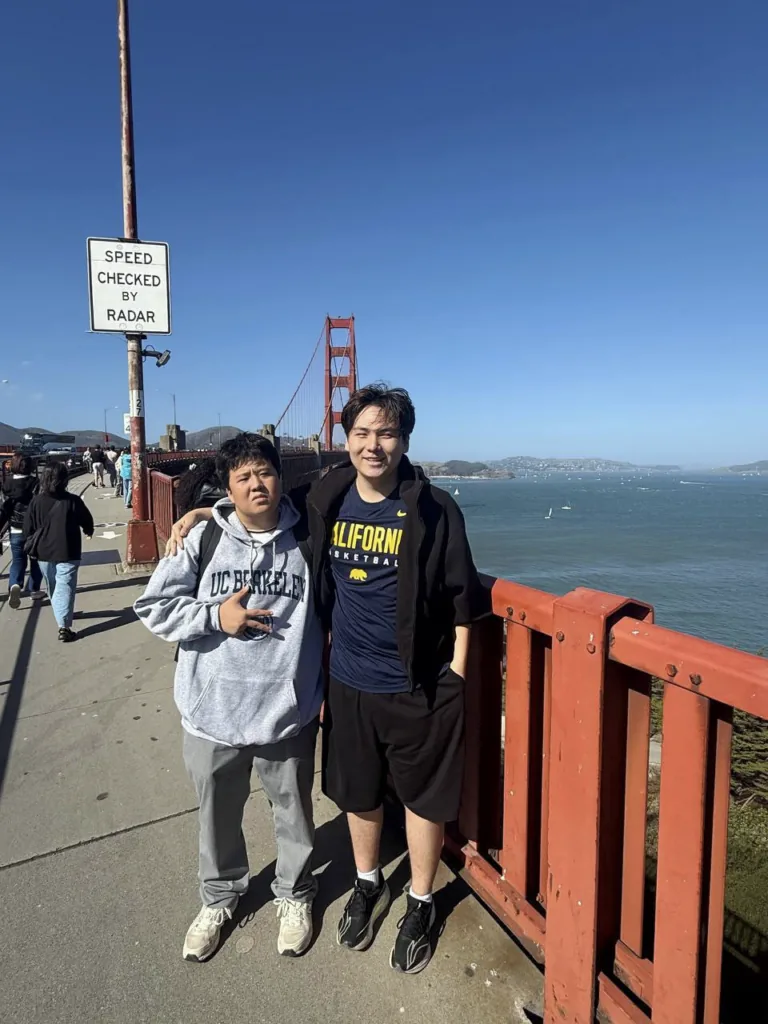
Initially, we planned to expand into the US after establishing ourselves in the Kazakh market. However, during the trip, it became clear that to work fully in the country and attract funding, we would need a different visa. In addition, implementing medical technologies in American hospitals requires FDA approval.
Therefore, we decided to focus on Central Asia. By the end of the year, we plan to enter at least the markets of Uzbekistan and Azerbaijan, and in the coming years, scale CareLink across the region.
At the same time, we are exploring opportunities to apply the technology in other industries, including mining and construction. We are also working on scientific research. Currently, together with a professor from Nazarbayev University, we are preparing a scientific paper. We plan to complete it in about three months, and we expect publication within a year.
In the future, we do not rule out returning to plans for entering the American market. To do this, we will need to obtain FDA approval and find a clinic where we can implement our system.
The Tech on Telegram Follow The Tech on Telegram
Keep up with the latest technology and startup news.
Related reading

More from this author

News IT
The launch of Global Tech Weekend 2027 will take place in Tbilisi.
The Tech
Article Useful
Business Cup, NASA Space Apps, and Startup Week: Opportunities for Startups in November 2026
The Tech
Article Startups
How a guy from Kashkadarya created an IT startup and attracted $40,000 in investments
The Tech

Article Useful
Free tickets to IT conferences in 2027: a list of international events
The Tech
Article Useful
10 platforms with free datasets for AI and machine learning
The Tech
News IT
Northwood Space has raised $375 million in investment to develop its satellite infrastructure.
The Tech