How to pass a Google interview: Rustem Baetov's experience
In an interview with The Tech, Rustem Bayatov shared insights into his journey at Google, the four-month interview process, preparation for Big Tech interviews, relocation to the United States, corporate benefits, and the nuances of living and building an IT career abroad.

The Tech AI
Get the key points in seconds - a short summary from The Tech AI.
Rustem Baetov is a Staff Software Engineer and Technical Lead Manager at Google (Mountain View), and previously worked as a Principal Software Engineer at Microsoft for five years. At Google, he leads two teams: one focused on banking payments, and the other on PIX development in Brazil. In BigTech interviews, algorithms, system design, the ability to explain solutions, and preparation of stories using the STAR method are important. When relocating to the United States, it is important to consider visa regulations and employment risks.
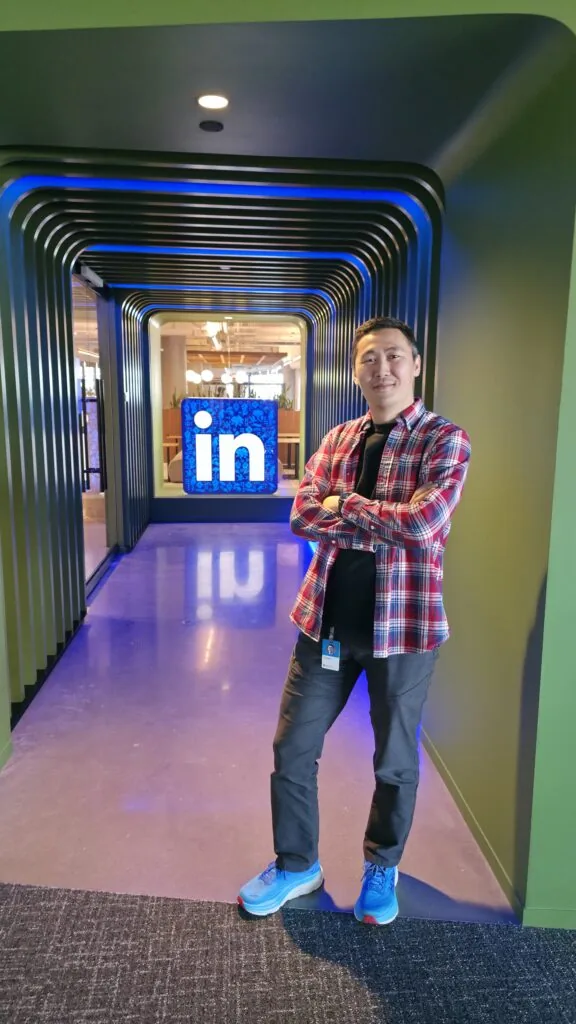
Rustem Bayetov, City — Mountain View, Staff Software Engineer at Google, LinkedIn
About Me
Currently, I work at Google as a Staff Software Engineer and Technical Lead Manager, where I lead two teams within the Google Payments Platform division. This is a large payment infrastructure through which Google users’ payments flow worldwide.
One of my teams handles bank payments—transfers and direct payments from bank accounts, as opposed to payments made with bank cards. The second team is developing the PIX initiative in Brazil—a system of instant payments based on open banking. Similar solutions were already launched in India several years ago, and recently PIX has also appeared in Brazil.
I joined Google quite recently, in late July, so I am still considered a “Googler”—the term used here for new employees, who even receive special hats. Currently, I work at the company’s headquarters in Mountain View, California, where I recently moved.
Before Google, I worked at Microsoft for five years as a Principal Software Engineer, where I contributed to the development of Windows 365—a project involving cloud computers that allow users to connect to their work environment via the internet.

How to Get into Google
My journey to Google took about four months. During this time, I went through seven interviews. Since I was applying for a technical leadership role, I was evaluated not only on coding skills but also on my ability to design system architecture, make engineering decisions, and work with people.
In large tech companies like Google, it is important not just to be able to write code. You need to demonstrate how you think, how you approach problem-solving, and how well you can explain your solutions. For example, when given a task, you should not immediately start writing code silently and trying to find a solution on your own. It is important first to understand the requirements, ask clarifying questions, discuss possible approaches, and explain why you choose a particular option. Only then should you proceed to implementation.
It is important for the interviewer to see your thought process and how you interact with others. After all, in real work, you do not sit alone in a room solving all problems by yourself. You constantly communicate with colleagues, discuss architecture, and make decisions together with the team.
Technical interviews at Big Tech companies place great emphasis on algorithms and data structures. At the same time, the specific programming language may not be the most important criterion. For example, at Google I work with Java, but during the interviews, I was never asked if I knew this language. It was much more important to demonstrate how I solve problems and explain my solutions.
Often, code is written directly in an editor or on a whiteboard without running the program. The interviewer looks at how you reason, build algorithms, consider different scenarios, and verify your solution.
I often compare preparation for such interviews to the IELTS exam. You may know English well, but fail the exam if you do not understand its structure and do not know what is expected of you. The situation with interviews is similar: you can be a strong engineer but fail the interview if you do not know how to properly present your knowledge.
A significant part of the interviews consists of behavioral interviews, where you are asked about real situations from your professional life. For example, you might be asked: “Tell me about a time when you encountered a serious problem in production. What happened? How did you solve it? How did it end? What did you learn?” Many people start to falter here. You recall an incident that happened several years ago, try to reconstruct the details, and the interviewer asks more and more questions.
Therefore, I recommend preparing for such interviews in advance. I would advise setting aside about half an hour a day to write down stories from your professional life. Recall a specific situation, describe the problem, your actions, the result, and the conclusions.
There is a convenient technique for this: STAR—Situation, Task, Action, Result.
Situation: what happened and under what circumstances.
Task: what problem you faced and what you were responsible for.
Action: what exactly you did.
Result: how it ended and what you learned.
For example, once after a release to production, something broke. It is not enough to simply tell about the incident. You need to explain how you participated in solving the problem, what actions you took, and what you did to prevent it from happening again. For instance, you might have reviewed the testing process or added additional checks before the release.
If you write down one such story every day, you will have about 30 prepared examples within a month. With such a collection, it is much easier to answer a wide variety of questions.
Moreover, you need to prepare not only for questions about achievements but also for unpleasant situations: conflicts, mistakes, disagreements with managers, and poor decisions. It is important for the interviewer to understand whether you can analyze your own mistakes, accept feedback, and draw conclusions.
At the same time, you must not lie during such interviews. If you start making up stories or taking credit for others’ achievements, this will quickly be uncovered through clarifying questions. And if a person does not inspire trust, even strong technical skills may not always help them get the job.
For me, a good engineer is not just someone who can write excellent code. It is also a team player with whom other people want to work.
From my experience, interviews at Google focused primarily on my knowledge, skills, and professional experience. My diploma was not asked about.
This does not mean that education does not matter at all: it all depends on the company and the specific position. But it is important to understand that a diploma alone does not guarantee a job. Ultimately, you need to demonstrate that you can really do the job.
At the same time, I believe that one of the main values of university is networking. You meet people who can become your colleagues, partners, or friends for many years.
For example, if you studied together, then in 5–10 years, one of your classmates might work at Google or Microsoft and tell you about a suitable job opening. Therefore, university is not just about knowledge, but also about the environment that can help you in the future.
How the Hiring Process Works in the US
When I lived and worked in Kazakhstan, I thought that getting into an American tech company was something very difficult and unclear. I did not fully understand how the process worked and how to prepare for it.
In the US, everything is organized somewhat differently. Due to the large number of candidates and job openings, the hiring process often consists of several stages.
First, your resume may reach an external recruiter who matches your experience with the job requirements. Then, an internal HR representative from the company gets involved to check again how well your profile fits the position. Only then do you move on to full-fledged interviews with engineers and the hiring manager.
When you reach this stage, the real technical assessment begins: you are asked about algorithms, architecture, technologies, and professional experience.
The most important thing is not to be afraid to try. Even if you fail an interview, it is not the end of the world. You gain experience, learn what questions are asked, understand where your gaps are, and can prepare better next time.
There are many tech companies in the US, so job hunting can be turned into a sequential learning process: going through interviews, analyzing mistakes, and gradually improving your level.
Recommendations for Those Who Want to Get into Google
First, prepare specifically for the interview format. It is not enough to simply code well—you need to know algorithms, data structures, system design, and understand how interviews are conducted at a specific company.
Second, learn to verbalize your thoughts. Do not try to solve problems silently. Ask questions, discuss options, explain your solutions, and show how you interact with the interviewer.
Third, prepare stories about your professional experience in advance. It is especially important to be able to talk about difficult situations, mistakes, conflicts, and the results of your work.
Fourth, develop soft skills. No matter how strong an engineer you are, if you cannot work in a team, it will become a serious problem. Ultimately, people must be willing to work with you.
And finally, do not be afraid of rejections. A failed interview is also experience. The main thing is to understand what went wrong, draw conclusions, and keep moving forward.

About Life Abroad
I would divide those who want to move to America into two categories: IT specialists who plan to find work here, and everyone else who moves for other reasons.
If we talk about IT, it is especially important to understand immigration rules and employment opportunities in advance. In my observation, in recent years, employers have become more cautious about hiring candidates who require visa sponsorship. Finding a job can be difficult even for those who are already in the US on a work visa, and for candidates from abroad, the process is even more complex.
Therefore, I would not advise enrolling in an American university solely to stay in the country after graduation and find a job. You need to assess the risks in advance, study the rules for OPT and CPT, H-1B opportunities, and understand how realistic such a scenario is for you specifically. For specialists in in-demand fields, such as artificial intelligence and machine learning, there may be additional opportunities, but you should not rely on them without preparation.
At the same time, immigration rules and hiring practices change, so it is important to check current requirements before making a decision, rather than relying solely on someone else’s experience.
There is another aspect I advise thinking about before moving—personal life and family.
In America, you may encounter difficulties finding a partner with similar cultural values and language. For example, if you want to meet a girl or guy from Kazakhstan or Uzbekistan, the choice in a specific city may be limited.
Also, do not be afraid of everyday difficulties or bringing a suitcase of our food. It is much more useful to research the neighborhood, rental costs, transportation, stores, and basic expenses in advance. It will still take some time to adapt at first, but gradually you will find familiar routes, stores, and places where you feel comfortable.
When I moved to California to work at Google, one of the main advantages was the company’s assistance with relocation. Large tech companies can allocate thousands of dollars for moving or offer a special program that includes transporting belongings and temporary housing for the first three months.
Additionally, the company can help with language courses, finding work for a spouse, enrolling children in schools or kindergartens, and resolving legal issues. This significantly simplifies adaptation in a new country.
Support continues after the move. For example, at Google, employees and their families are provided with health insurance, as well as separate dental and vision insurance programs.
The Tech on Telegram Follow The Tech on Telegram
Keep up with the latest technology and startup news.
Related reading



More from this author

News IT
The launch of Global Tech Weekend 2027 will take place in Tbilisi.
The Tech
Article Useful
Business Cup, NASA Space Apps, and Startup Week: Opportunities for Startups in November 2026
The Tech

Article Startups
How a guy from Kashkadarya created an IT startup and attracted $40,000 in investments
The Tech

Article Useful
Free tickets to IT conferences in 2027: a list of international events
The Tech

Article Useful
10 platforms with free datasets for AI and machine learning
The Tech
News IT
Northwood Space has raised $375 million in investment to develop its satellite infrastructure.
The Tech