How BACKEER develops a biosensor for breast cancer diagnosis
Oncomarker analysis is one of the diagnostic tools that allows detecting cancer at early stages. However, it is not available to everyone, as it is performed only in specialized laboratories using expensive equipment. Additionally, this method requires time because, to detect oncomarkers, labels such as fluorescent ones are attached to molecules, which help the device identify them.
The Tech AI
Get the key points in seconds - a short summary from The Tech AI.
The Kazakh team BACKEER is developing a label-free optical fiber-based biosensor for detecting cancer markers and other diseases. The project is in the laboratory validation stage, and the test cost will be $35–50. In July 2026, the startup won the Women's Health × EmbryoNet-AI competition among 165 teams, receiving support of up to €100,000.
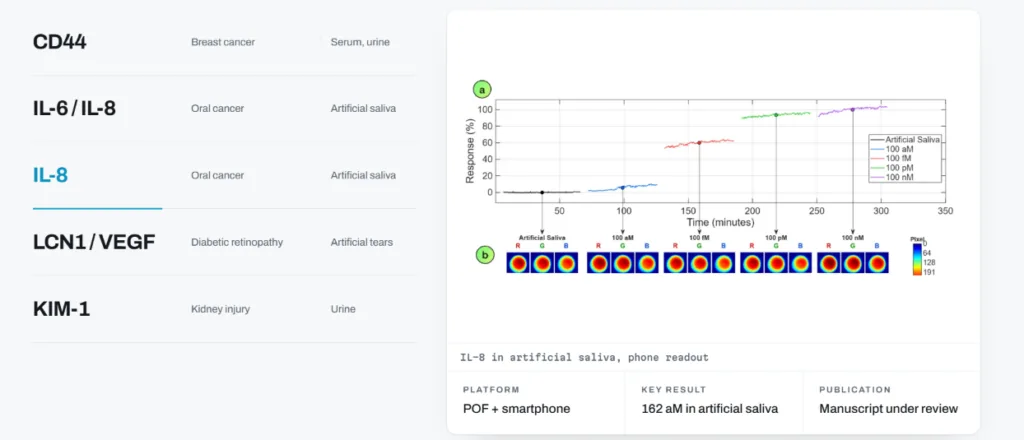
The BACKEER team from Kazakhstan is developing an optical fiber-based biosensor that does not require labels. In addition to breast cancer, the team is testing the technology on markers for oral cavity cancer, diabetic retinopathy, and kidney damage. In July 2026, the startup became one of two winners of the international Women's Health × EmbryoNet-AI competition in Portugal, which involved 165 teams. In an interview with The Tech, BACKEER researcher Zhuldyz Myrkhiyeva explained how their sensor differs from conventional tests, what stage the project is at, and why a scientific startup cannot be built according to the rules of a regular business.
Zhuldyz Myrkhiyeva, Master of Biomedical Engineering, BACKEER
How the sensor works
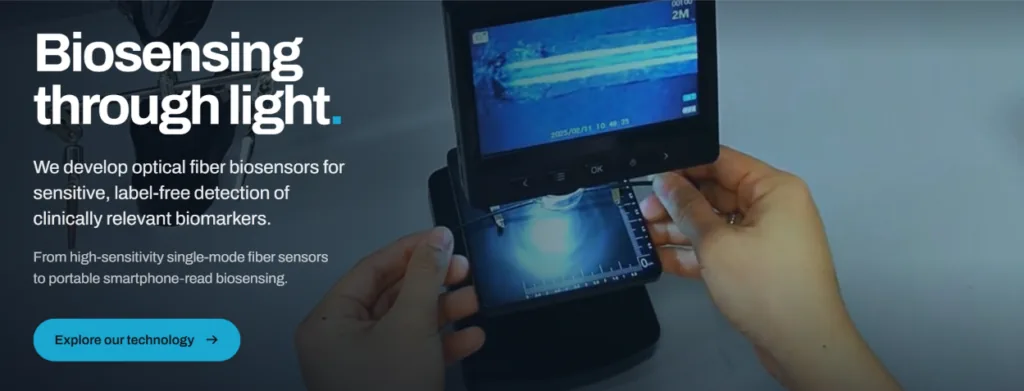
The BACKEER technology is based on optical fiber. Its tip is coated with antibodies that bind to the target protein. When the protein settles on the surface, the characteristics of the light reflected from the fiber change, and the device records this change.
Our main idea is to develop an affordable, easy-to-use, and sensitive biosensor for detecting cancer markers. Many existing diagnostic methods are expensive, time-consuming, and require labeling procedures or specialized laboratory equipment. We aim to create a simpler and more accessible diagnostic platform capable of detecting cancer-related biomarkers with high sensitivity, helping in disease monitoring and clinical decision-making.
According to the team’s calculations, one test will cost $35–$50 in mass production. According to a market analysis conducted by the team, existing methods cost $100–$550. In Kazakhstan, such diagnostics cost from $300, and results take three to four weeks to obtain.
Who is behind the project
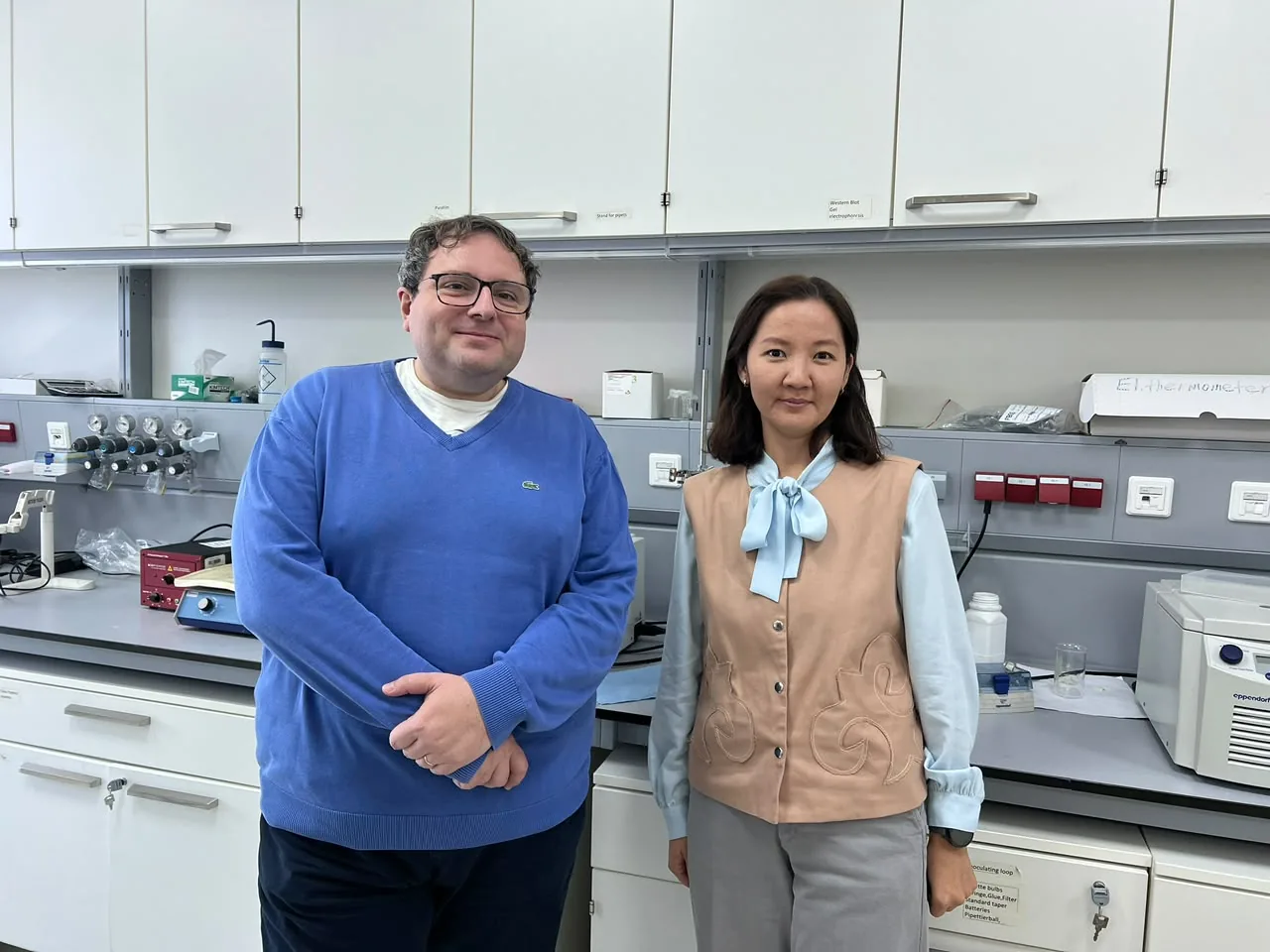
The BACKEER team consists of six people: researchers with serious scientific training and years of laboratory experience:
— Zhuldyz Myrkhiyeva, Master of Biomedical Engineering
— Kanagat Kantoreeva, Master of Robotics
— Aliya Bekmurzaeva, PhD in Science and Technology
— Zhanerke Katrenova, PhD in Electrical Engineering
— Zhanat Ashikbaeva, PhD in Science and Technology
— Professor Daniele Tosi, staff member at Nazarbayev University and head of the Biosensors and Bioinstrumentation Laboratory in Astana.
How a scientific startup differs from a regular one
A scientific startup requires a much longer development process based on evidence. In a regular startup, you can create a product, test it with customers, get feedback, and make changes relatively quickly. In our case, every important claim must be confirmed by experiments, reproducible data, and often by independent or clinical validation. This is compounded by intellectual property, regulatory approval, ethics, clinical trials, and technology transfer.
But this is also the strength of a scientific startup: its value is built on deep scientific knowledge and a technology that is difficult to replicate.

What stage is the project at and what’s next
We have been developing and testing the technology, and now we are working on transferring it from the laboratory to clinical practice.
Currently, BACKEER is at the stage of laboratory validation and prototype development. We have confirmed the sensor’s operating principle, refined the key stages of its manufacturing and surface preparation, and conducted experiments to detect cancer markers. The team’s next tasks are to improve the reproducibility of the sensor and the accuracy of quantitative measurements, test the technology on clinical samples, and conduct pilot studies with partner clinics.
The victory in the Women's Health × EmbryoNet-AI competition provides the team with technical support worth up to €100,000 and access to international investors. With these resources, BACKEER plans to create an AI platform and a user interface for its biosensors.
This is not the team’s first award: in 2025, BACKEER received the award from the Chinese Association of Inventors and the silver award from HKUST-SINO.
The material was prepared as part of the CA Femtech Landscape Study by Femtech Force. If you are creating solutions in the field of women’s health for women, doctors, and the healthcare system—from BioTech and MedTech to digital health, including social projects with monetization potential—fill out the research questionnaire here.
The Tech on Telegram Follow The Tech on Telegram
Keep up with the latest technology and startup news.
Related reading


More from this author

News
Now in ChatGPT, you can hide conversations with a PIN code or Face ID
The Tech

News
Anthropic has introduced Claude Duet, a personal AI agent for business
The Tech

News
Autonomous taxis from inDrive, Pony.ai, and NVIDIA will appear in Astana
The Tech
Article Useful
How to choose a startup accelerator: what programs offer besides investments
The Tech

News IT
AICONF-2026: NVIDIA, OpenAI, and SpaceXAI will come to Dushanbe
The Tech

Article Startups
How a startup from Baku combined more than 30 AI tools for moms into one app
The Tech