How to find an investor. A venture investor from Kyrgyzstan on supporting startups at the Pre-Seed and Seed stages
Venture expert Almaz Edilbaev from Kyrgyzstan explains how founders can prepare for a pitch, choose the right investors, and build long-term partnerships for successful funding.
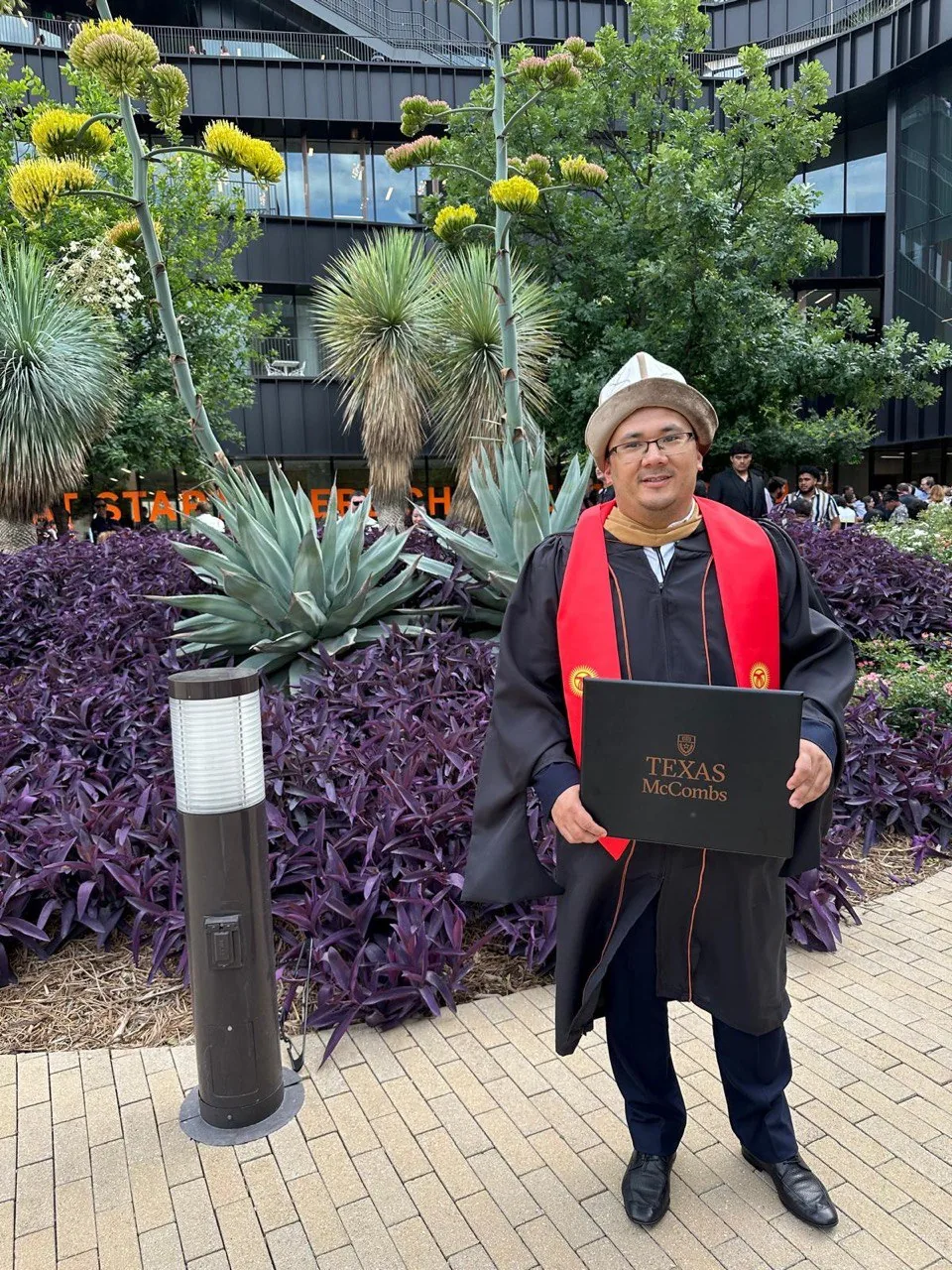
Almaz Edilbaev, City — Chicago, Managing Partner and Co-founder at chANGELS syndicate and venture studio, LinkedIn
About Me
I am from Kyrgyzstan, where I graduated from high school with a focus on physics and mathematics, and studied at the Faculty of Mathematics in Russia. In my fourth year of university, I began working in investments, which is how I entered this field.
In Russia, we were part of a prominent fund that executed major deals: for example, the Ivi project—an analog of Netflix—as well as projects similar to Booking.com, including Ostrovok.ru and ZenHotels, which has since become a fairly large company.
Afterward, I worked in several funds, including a Family Office, where we handled various types of deals: venture capital, startups, and investments in public markets—stocks and bonds worldwide.
After returning from Moscow, I worked in Kyrgyzstan at the Accelerate Prosperity accelerator, participating in its launch and serving as one of the first employees.
Later, I moved to the United States for an MBA and immersed myself in startup work: initially helping CEOs with fundraising and sales, and then, as a co-founder and operating partner, developing another project within our studio. We managed to make our first sales, get into a top-tier accelerator, and complete the first rounds of investment.
Having gained this experience, I am convinced that we can help startups at the Pre-Seed and Seed stages by sharing knowledge and support, as well as providing small investments to accelerate growth.
On the Specifics of Being an Investor
The main feature of an investor’s work is the ability to understand people. This is critically important because in startups, especially at early stages, the personal qualities of founders play a key role.
We work extensively with companies at the Pre-Seed and Seed stages, and the founder’s profile is of enormous significance here. This is the primary skill. Other aspects—such as market analysis, business models, and traction—can be evaluated more or less objectively. However, assessing the founder, their expertise, and personal qualities requires time and experience.
On Investment Experience
Over more than 13 years, I have worked at the Accelerate Prosperity accelerator in Kyrgyzstan, in venture funds in Russia, and now we invest as a syndicate.
In total, we have backed more than 50 projects, of which about 10–15 can be considered successful. My role varied across different projects: sometimes I was a junior analyst, sometimes I led deals, and sometimes I participated directly. Now, we are fully responsible for the entire process from start to finish.
Regarding recent investments, there have been no exits yet: we actively began investing as a syndicate in 2025, launching in mid-2024.
There have been quite a few unsuccessful deals. On average, about two-thirds are failures, while approximately one-third are successful.
Several key factors stood out among the reasons for failure:
— Incorrect bets on people. As I mentioned, it is important to understand the team and be able to “read” the founder. This skill comes only with experience.
— Insufficient market size. This is especially true in the Russian and other local CIS markets, where popular business models from the US did not always work: the market volume was too small, or the model simply could not be implemented under local conditions.
— Underdeveloped markets. In such markets, it is important to invest in a company that has a chance to become a leader. If the bet is on the “second horse,” it may simply not “finish the race” because all resources and support are concentrated on the leader. In such markets, there is practically no room for multiple players simultaneously.
On Investment Strategy
As a syndicate, we have so far only entered at the Seed stage—when a company already has traction, a team, revenue, and a clear market, even if it hasn’t fully achieved product-market fit yet, but is close to it.
These are usually rounds worth several million dollars, where we entered with a small check. This model seemed the least risky for private investors.
Over time, we realized that there are companies with potential at earlier stages—for example, when they have a minimum viable product and some traction. Such a project does not yet show the full scale or potential of the company, and investing in it is riskier, but it offers the opportunity to place a bet and achieve higher returns.
For such cases, we developed a format: syndicate + Venture Studio, which allows us to enter companies at early stages and work with them more closely. We help founders with fundraising, sales, and other tasks that often suffer at this stage. This approach accelerates company growth and allows us to see results earlier than at the next stage.
Our check size ranges from $25,000 to $100,000, with an average of around $50,000. Most deals come through partners—funds and syndicates with which we collaborate.
We hold investments for an average of three to five years, sometimes longer. These are long-term investments.
We are interested in projects at the Pre-Seed and Seed stages. Everything beyond that is usually less interesting to us, although, of course, we can consider such options.
We help startups not only financially. At the Pre-Seed stage, we strive to participate as an engaged partner—effectively as a venture studio. Especially in the US market, we can help with go-to-market strategies, i.e., entering the market and taking initial steps. We have experience in fundraising and a large network of partners worldwide: syndicates, angels, and funds at various stages.
Through our syndicate, we are ready to invest in companies, make introductions to potential clients, and support business development. We strive to work only with projects to which we can genuinely contribute “hands-on”—with sales, contacts, and strategy. This is especially important in the US market.
On the Kyrgyzstan Market
In Kyrgyzstan, we currently have no investments. All current deals involve companies that immediately pursue global projects, entering the US market or other international markets.
Kyrgyzstan is a small market, so we focus on founders who think globally from the start. The main factor hindering startups from attracting investment is market size. Investing solely in local development is difficult.
We see the same situation in other Central Asian countries: Kazakhstan, Uzbekistan, and Tajikistan. Strong founders and the first successful cases are emerging. The potential of the region is far from exhausted—everything interesting lies ahead.
Advice from an Investor
When preparing for a pitch and seeking investment, founders should:
— Communicate with other founders and learn from their experience
— Talk to funds not just for money, but for feedback
— Read articles, watch videos, and keep learning.
Next, it is necessary to understand which investors are right for you. Not all funds are your potential investors.
It is important to build relationships, meet at events, and understand who you are comfortable working with. Investment is a long-term partnership.
After that—prepare materials: pitch deck, data room, and proceed to fundraising.
The Tech on Telegram Follow The Tech on Telegram
Keep up with the latest technology and startup news.
Related reading






More from this author

Article Useful
How to protect your accounts from hacking: 8 settings you should check today
The Tech

Article Useful
500 Global: How the Accelerator Works and Who Can Receive Investments
The Tech

Article Interviews
Game Development in Central Asia: Arkady Moldavski on Developing Reverb and the Growth of the Industry
The Tech

Article Useful
Google, Tesla, BlackRock, and the IMF: Where to Apply for an Internship in Fall 2026
The Tech

News IT
Tesla unveiled the flying electric car Roadster
The Tech

News IT
Intero Biosystems startup won the Startup Battlefield at TechCrunch Disrupt 2026
The Tech