How to find an investor. "There is money in the country, you just need to get through," — how AloqaVentures helps startups grow
Looking for an investor and support for your startup? Read about how AloqaVentures works — from the initial $20,000 to global partnerships. The fund shares its strategy, selection criteria, approach to risk, and how it helps founders not only with funding but also with expertise.
The Tech AI
Get the key points in seconds - a short summary from The Tech AI.
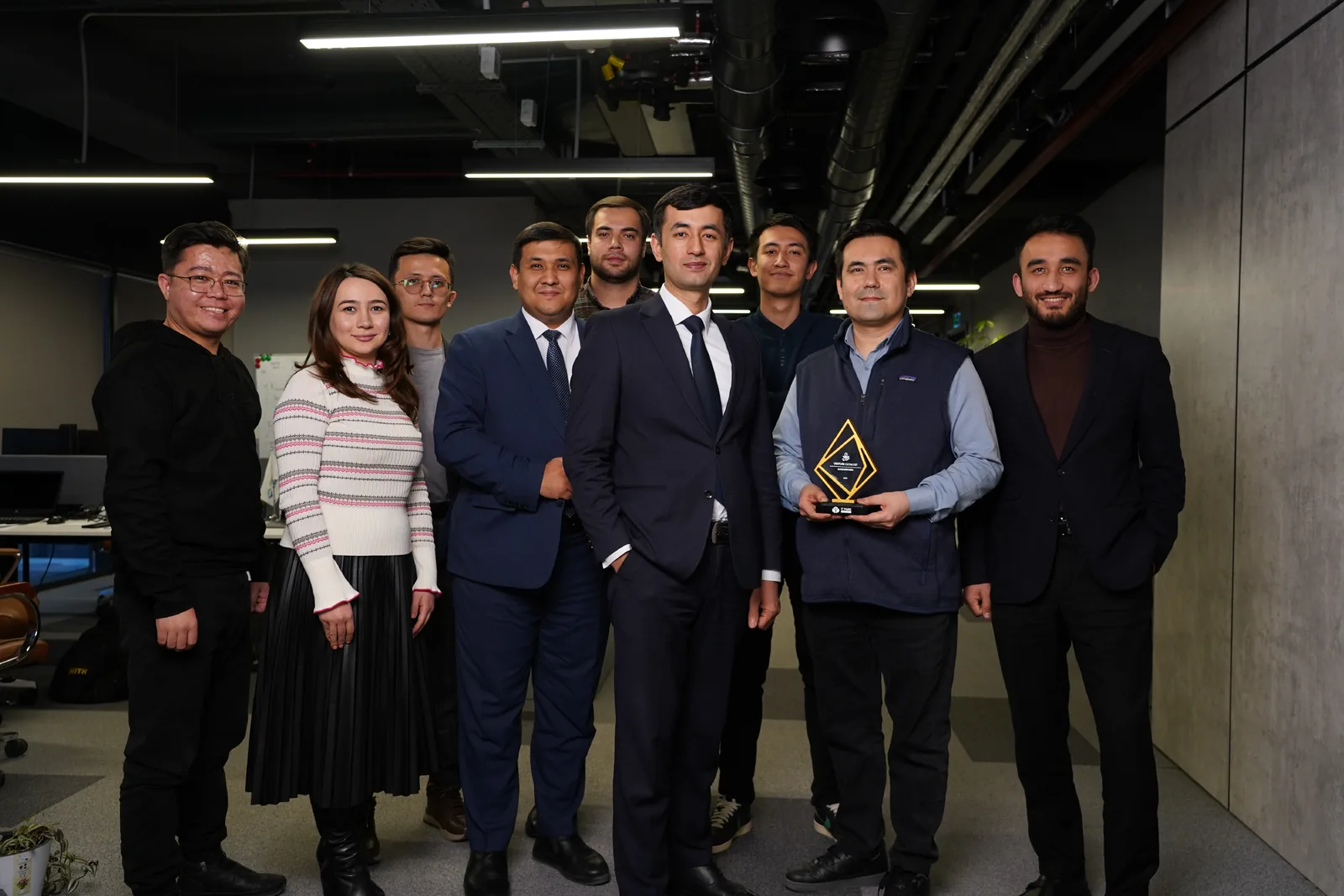
Miroslim Abdullaev, operating partner at AloqaVentures (Tashkent), has been investing in startups since July 2022. The fund has invested approximately $6.35 million in 52 projects at the Pre-Seed and Seed stages. Plans include expanding the portfolio to 100–120 companies and increasing investment volume to over $20 million.
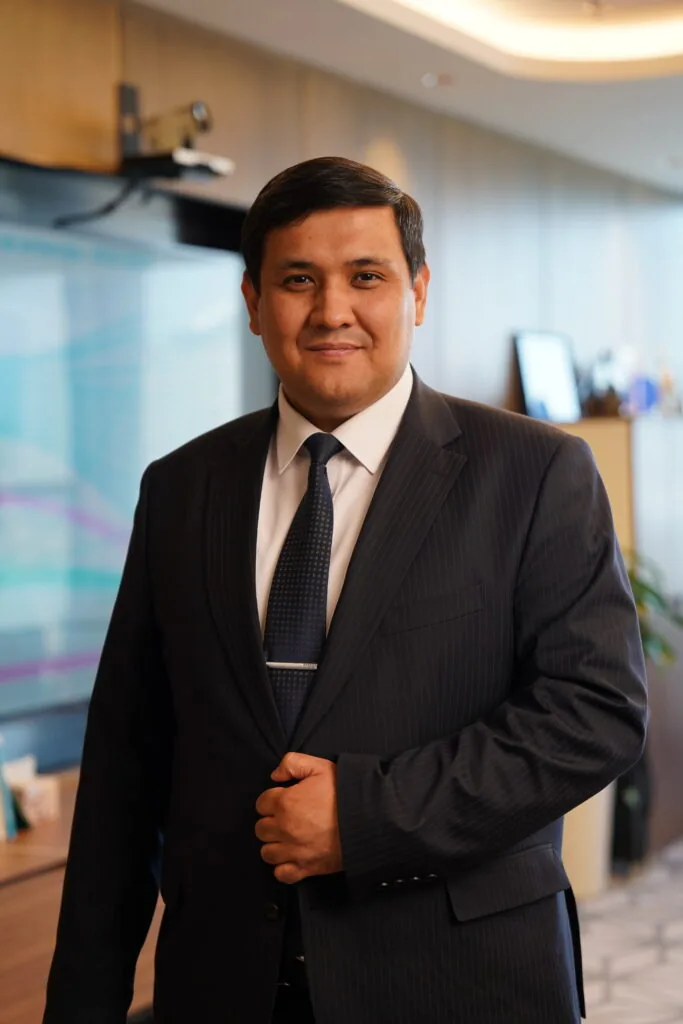
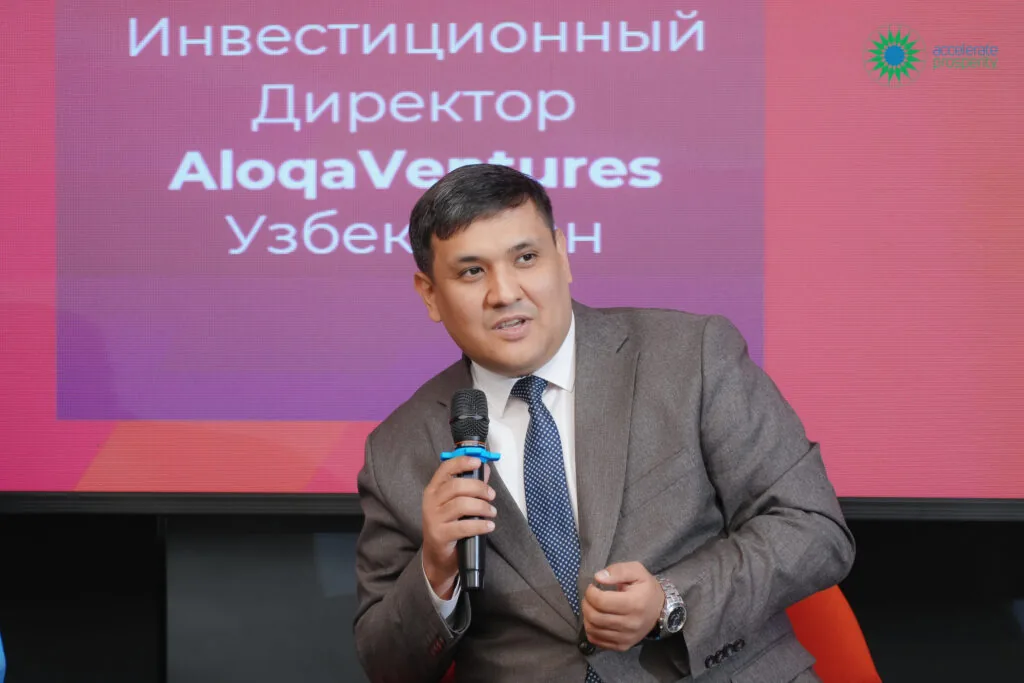
Mirolim Abdullaev, city — Tashkent, Operating Partner at AloqaVentures, LinkedIn
About Me
I am a financier by training and have built my career in the financial sector from the very beginning. Before entering the venture business, I held various roles: consultant at a consulting firm, lecturer at the Tashkent Financial Institute, manager, and sales development trainer at a distribution company. Then I gained experience in the IT sector, working in senior leadership positions at a large technology company, including serving as its CEO.
Since July 2022, I have been the operating partner of the AloqaVentures venture fund, established by Aloqabank in 2021 to support innovative startups. It was my interest in technology and understanding of how startups drive the economy that led me into the investment field. Currently, the startup market in Uzbekistan is growing rapidly—if in 2021 there were only 4 active venture funds in the country, by the end of 2024 there were 10. Seeing such changes and being part of these processes, I wanted to apply my experience to help new projects grow into successful companies. My main activity now is finding promising startups and investing in them on behalf of AloqaVentures, as well as supporting our portfolio.
The work of a venture investor is multifaceted. You need to be able to quickly understand new industries, assess risks, and evaluate the potential of ideas. Venture business is a long-term partnership where the investor not only provides money but also helps the company grow.
Here are the most important qualities of an investor:
— curiosity and openness to new things
— analytical thinking and intuition
— diligence and perseverance
— ability to build networks
— decisiveness and responsibility
— usefulness to the startup
— respect and empathy
— resilience and patience.
About Investments
Investing in startups involves a number of difficulties, and the main one is high risk. There are no guarantees that even with all our checks, a startup will "take off." Moreover, at the early stage, there is often no revenue or clear valuation—we are essentially investing in a dream and a team. This makes venture investments the most risky.
The second problem is the long investment horizon and low liquidity. If in the stock market you can sell shares at any time, then after investing in a startup, you will have to wait for years until the company grows to an exit. The average holding period for a venture stake is about five to seven years, or even more. This means that money is "frozen" for a long time, and patience is required.
Another challenge is the informational and operational gap. Startups at the initial stage may not have a complete picture of either the market or their business model. Often, founders are excellent engineers but inexperienced in business management. The investor faces the fact that they have to make decisions based on incomplete data. Problems may arise with proper market assessment, legal issues, hiring a team—the list is endless.
So how do we solve these problems? There are several approaches:
1. Thorough expertise. We study the startup as deeply as possible before investing. We analyze the product and demand for it, market size, competitors, financial indicators or at least forecasts, assess the team's skills and risks. Yes, it is impossible to predict success with 100% accuracy, but serious preliminary analytics allows us to filter out obviously weak projects and reduce risks for the rest.
2. Portfolio diversification. The golden rule of venture capital is not to put all your eggs in one basket. Understanding that many startups may not succeed, we invest small amounts in a large number of projects in different fields. This increases the chance that among them will be future "stars," the profits from which will cover failures. Our fund currently has 52 startups in its portfolio—a fairly wide base for risk distribution.
3. Active involvement and support. After investing, we do not remain passive observers. We try to help companies with advice, connect them with the right people, and share expertise.
4. Building an ecosystem and connections. Solving the problem of lack of information and resources helps by developing the startup ecosystem itself. At AloqaVentures, we closely interact with tech parks, accelerators, and state initiatives. For example, Startup Garage, IT Park Ventures, and other programs create infrastructure where startups can gain basic knowledge, access to expertise, and even co-financing. Our task is to be part of this ecosystem so that promising projects undergo preparation and come to us already more resilient.
5. Flexibility and long-term approach. Each startup is unique, so it is important to maintain a certain flexibility. If problems arise—whether gaps in the team, lack of money, or a change in strategy—we jointly look for a way out. Sometimes it is necessary to revise the strategy, increase investments somewhere, attract a co-investor from outside, or help the startup enter new markets to survive. A venture investor must think several steps ahead and be ready to support the project as long as there is potential.
During my time at AloqaVentures, I have participated in investments in many startups. Since mid-2022, the fund has invested in 52 projects, totaling about $6.35 million. Of these, 14 startups were under my personal supervision. We focus mainly on Pre-Seed and Seed stages.
At the moment, we have no failed investments—all startups in the portfolio continue to operate, and many have achieved impressive results. Some of our projects have already become notable players in the market. For example, Depozit.uz is a FinTech platform where users can compare and choose banking services. Another example is Mohirdev, an educational online platform for learning programming. There is also a medical startup, Cerebra, which uses AI for stroke diagnosis, a unique technology for our region. I can call these projects some of the bright successes of our portfolio.
Of course, every investor defines success in their own way. Some look at the X multiple return on capital, others at strategic results. In my understanding, success is when a startup achieves its growth goals and moves to the next stage. Many of our companies have already attracted the next round of investment, expanded their teams, and entered new markets. None of the projects have ceased operations—and this, I believe, is the best indicator that we are moving in the right direction.
If we single out the most financially successful ones—for now, given the early stage, it is too early to talk about exits with multiple profits. But already now, several of our investments have significantly increased in valuation. For example, Cradle, Didox, Platma, Royaltaxi, zypl.ai, and Mohirdev have substantially increased their user base and revenue, which is reflected in their market value. Some startups are preparing to scale into neighboring countries, which will also increase their value. We believe that the 2022-2023 portfolio will give its "hits" in a few years, and we already see the prerequisites for this.
Startup Selection Strategy
We have a carefully structured process for selecting startups for investment in our fund. I admit, first of all, we look not so much at the product itself, but at the people behind it. The startup team is our number one criterion. Practice shows that the personal qualities and drive of the founder are often more important than the idea itself. There were cases when we refused investment not because the idea was bad, but because we did not feel full commitment or unity in the team. And vice versa—a wonderful team with an initially imperfect product will most likely find a path to success.
The next key criterion is the market and niche. We assess what problem the startup solves, how relevant it is, whether there is a unique offering and scaling potential. We study competitors, trends, product stage, presence of an MVP, and metrics if the product is already on the market. This helps understand the project's potential.
Business model and monetization are also in focus. We evaluate the financial model—how the project plans to generate revenue, what growth forecasts are built in. Although at the early stage figures are conditional, it is important to understand the economics—unit economics, possible margin, need for investment until break-even. A startup seeking investment needs to convince us that with certain investments it can reach profitability and then scale profits. As a financier, I am particularly interested in the details here—I often help teams refine their financial plan early on, see bottlenecks.
Of course, we do not forget about risks. When assessing any startup, I try to compile a list of risk factors: technological, market, team, legal, and so on. For example, there may be a risk that a similar idea can be easily copied by a large competitor, or a risk of regulatory restrictions, or a risk related to dependence on one partner. For each significant risk, we think about how to mitigate it. Sometimes the presence of uncontrollable risks can be a reason for refusal—if there is no understanding of how to work with them. More often, we simply factor risks into the deal terms or into the post-investment support plan.
We definitely consider opportunities to invest in startups outside Uzbekistan. Although our fund was initially created to develop the local ecosystem, the startup world is global, and interesting projects can be anywhere. Moreover, AloqaVentures already has experience in international interaction. Our portfolio includes the projects GoDays and Cerebra—Kazakhstani startups that we facilitated in expanding into Uzbekistan. The fund also has partnership connections in Silicon Valley—we signed a memorandum with Astana Hub in Kazakhstan, Domino Ventures in Turkey, Sturgeon Capital in Britain, Plug and Play and Silkroad Innovation Hub in the USA, and others.
Priority is given to projects that can either enter our market or provide synergy with our portfolio companies. Of course, investing abroad requires taking into account the specifics of other jurisdictions, legislation, and market mentality. Therefore, here we often act not alone, but through co-investments with local partners or funds.
It is important to note that the geography of our interests is also expanding along with the growth of the fund itself. At the moment, in addition to local Uzbek startups, we are interested in projects from the entire Central Asian region. Moreover, we do not rule out participation in global stories—technology knows no borders. If an opportunity arises to invest in an ambitious project, say, from Singapore or Eastern Europe, which fits our strategy, we will discuss it.
However, there is a nuance: after all, our fund's mandate is primarily to support local projects and develop the national innovation ecosystem. Therefore, the majority of investments remain at home.
A good venture investor is valuable to a startup not only for money. I believe in the concept of smart money, where founders receive expertise and support along with financing. In my work as the fund's operating partner, a significant part of my time is spent helping portfolio companies. How else do we help, besides money:
— strategic mentoring and coaching. Relying on my management and financial experience, I help them develop a growth strategy, set clear goals. We discuss the development roadmap: what key indicators to achieve by the next quarter, how best to monetize the product, when to enter new regions. Sometimes I act as a sort of coach for the startup CEO—we analyze complex management situations together, team hiring, employee motivation. Essentially, I become a "sounding board" for ideas for the founder, sharing lessons I have learned so that he does not repeat others' mistakes.
— help in building a team. We help our companies find the right specialists, thanks to the fund's wide network of contacts. We can recommend strong candidates for key positions, know profile experts. We also advise on organizational structure: at what stage to hire which person, how to build HR policy. Sometimes we get involved in the startup's board of directors or advisory boards—in this format, it is easier to help with high-level vision and control of important indicators.
— networking and contacts. When a startup needs access to a new client or partner, we can often introduce them to the right people. For example, we facilitate contact for a FinTech project with banks, for a MedTech startup with clinics or the Ministry of Health, for an e-commerce product with large retailers. The fund has weight and name, and doors for our portfolio companies open more easily. Moreover, we introduce startups to each other—collaboration often arises within the portfolio itself.
— expertise and training. AloqaVentures strives to raise the level of knowledge of founders. We share market analytics, help with research—we have accumulated expertise in some industries that startups may not possess. We conduct workshops for teams, attract external trainers. Recently, for example, we published manuals on legal and investment issues for startups. I personally often conduct brainstorming sessions with teams: we analyze their business model, look at unit economics, discuss strategies for entering new markets.
— market integration and scaling. We help develop expansion plans, find foreign partners. Essentially, we become a guide for the startup into the world of big business. The fund provides both technical and mentoring support so that the company can grow not only on paper but also organizationally.
— psychological support and motivation. If something goes wrong, we sit down together to analyze problems, rather than just demanding reports. I think it is important for founders to feel that the investor is on their side. This gives them confidence, and us—transparency in communication.
As you can see, financing is only one facet of our role. We strive to be a partner and accelerator of development for the startup. It is no coincidence that they say: smart money is more valuable than just money. And I am pleased that many founders from our portfolio note the non-financial value of cooperation with the fund.
Investment Size
The size of the investment depends on the startup's stage and its needs. Within AloqaVentures, we have defined approximate ranges of amounts for different rounds. Usually, we invest in Pre-Seed and Seed rounds, and a typical amount can range from $50,000 to $500,000. If the project moves to Series A and still needs support—we can go further, but as a rule, at later stages, other funds with larger checks already enter.
Since recently, according to the Decree of the President of February 14, 2025, AloqaVentures provides investments equivalent to $20,000 to young startuppers to develop their ideas. For us, this is also a social mission—to grow a new generation of technological entrepreneurs.
How do we decide on the amount of investment in a specific startup? Several factors play a role here. First, the startup's need. We always ask founders: how much money do you need and for what? A competent founder usually outlines financing for 12-18 months of work ahead. If we see that the startup underestimated expenses or, on the contrary, over-insured, we can recommend adjusting the amount. Our goal is to have enough money until the next round, but not excessively much, otherwise, it reduces efficiency.
Second, valuation and stake. The investment amount is always linked to what stake in the company we receive. This is already a matter of negotiation: we assess the market value of the startup, growth prospects, and based on this, decide how much we are willing to invest for a certain percentage. We have our own internal metrics that help justify the valuation. We strive to be honest with founders: we explain why we offer exactly this amount for this stake. If the startup asks for more funds than we are willing to give for an adequate stake—we look for a compromise, possibly attracting co-investors, or dividing financing into tranches.
Third, the stage and risks of the project. At the earliest stages, risk is higher—usually smaller amounts. As the startup proves its viability, we are willing to invest more. Also, if the project is promising but risky, we may start with a small amount, and after testing hypotheses, increase the investment.
We strive not only to give money but also to save the startup money. Through our partnership agreements and experience, we advise on where to optimize spending so that investments last longer. For example, which services can be obtained at a discount, how best to hire gradually, where to focus on the main thing and not scatter the budget. Thus, when determining the volume of investments, we also think about how to use these funds effectively within the allotted time.
The planning horizon for exit for a venture fund is four to six years, and sometimes even eight years.
We hold the investment for a minimum of several years. The first two to three years are usually not about thinking about exit, but focused on the startup's growth. Somewhere on the horizon of four to five years, we start thinking with founders about exit strategies: when and how best to do this so that it is beneficial for everyone. But there are no strict deadlines—everything depends on the specific development of events.
It is important that we plan the exit in advance, even at the investment stage, we think about what it might be. We look at who could potentially buy the company. We also discuss these plans with founders. Sometimes the team itself does not want to sell quickly, striving for an IPO—we support them in this and wait together.
Investor Advice
How to prepare for raising investment:
1. Understand your business thoroughly. The investor will ask many questions: what is the value of your product, what problem are you solving, why will customers pay, who are the competitors and how are you better, what is your business model and monetization strategy. You must have clear answers. Write down your pitch deck—a presentation where all the main aspects of the project are briefly and vividly outlined: problem, solution, market, model, team, finances, plans. A potential investor should understand the essence and get interested within a few minutes of viewing.
2. Show proof of your concept. Bare ideas are hardly financed nowadays. It is desirable to have at least an MVP or prototype. If the product is still under development, collect demand confirmation: preliminary user registrations, survey results, pilot projects.
3. Prepare a financial plan and assess needs. Clearly calculate how much money you need and for what exactly. It is better to break down the amount by categories: for development, for marketing, for operating expenses, etc., and indicate how many months of work this will cover. A common mistake is to ask for either too little or unreasonably much. Also, think through financial forecasts: what growth in revenue, users, and which metrics you expect to improve. Even if forecasts do not come true exactly, they show your ambition and logic.
4. Polish your pitch and presentation skills. Energy is important—show passion for your business, infect others with your belief. But also be open to criticism, do not argue aggressively.
5. Get your affairs in order. Before searching for investment, settle legal and organizational matters: register the company, distribute shares among founders, protect intellectual property. Investors conduct due diligence, and it is important that there are no surprises: at the very least, that all contracts within the team are formalized, there are no disputes over ownership, the product belongs to the company, and so on. Also, think about the legal structure: for example, international investors may prefer that the startup be registered in a clear jurisdiction. At the very earliest stage, this is not critical, but being ready for this is a plus.
Where to find investors:
1. Present your project at startup events and competitions.
2. Apply to accelerators and incubators.
3. Look for profile investors and funds. Make a list of venture funds and investors who invest in your sector or at your stage. Currently, there are already more than a dozen venture funds operating in Uzbekistan, and business angels are active. The combined assets of funds have exceeded $136 million—there is money in the country, you just need to reach out. Study the websites of funds: many have a form for submitting applications. Do not be afraid to write directly to venture funds, send your pitch deck—just do it personally, with an understanding of why your project might be interesting to this particular investor.
4. Use personal networks and platforms. Actively tell about your project—on LinkedIn, Facebook, in professional communities. Talk to entrepreneurs who have already attracted investment—let them introduce you to their investors. Register on platforms like AngelList, Crunchbase—there you may be noticed. The main thing is to be persistent but polite, and have ready material.
5. Business angels and investor clubs. At the earliest stages, it makes sense to look for business angels—private investors who are willing to invest small amounts. In Uzbekistan, a community of angels is forming, there are clubs at C-Space coworking and others.
6. Do not be afraid of rejections. There will likely be many of them. Even outstanding companies initially received dozens of "no"s from investors. Collect feedback, improve, and try again. Persistence and belief in your business are key qualities that will eventually lead you to a successful deal.
Plans
We intend to continue expanding the portfolio, supporting the most promising and innovative projects. If we talk about which startups or sectors attract me the most right now, I would highlight several areas such as FinTech, artificial intelligence and machine learning, MedTech, EdTech, B2B SaaS and "smart business," projects with social impact and sustainability.
In the coming years, we plan to increase our total investment portfolio, possibly to 100-120 projects, and bring the volume of investments to over $20 million.
We want to integrate more firmly into the global venture network, so that we can open roads for our startups and participate in large deals ourselves. Already now, we are building connections with funds from Europe, the USA, and Gulf countries. Ideally, in a couple of years, I would like AloqaVentures to act as a co-investor together with prestigious foreign funds in rounds, and vice versa, invite them to Uzbek projects.
Personally for me, as an investor, the main plan is to find and grow "future unicorns." We look even beyond traditional sectors—whether it be VR/AR, Game Dev, cybersecurity—anything that can hit. I am sure that in Uzbekistan or Central Asia, there will appear companies with a valuation of hundreds of millions and even billions of dollars, capable of competing in the global market. And I would very much like to be part of the success story of such teams.
The Tech on Telegram Follow The Tech on Telegram
Keep up with the latest technology and startup news.
Related reading






More from this author

Article Useful
How to protect your accounts from hacking: 8 settings you should check today
The Tech

Article Useful
500 Global: How the Accelerator Works and Who Can Receive Investments
The Tech

Article Interviews
Game Development in Central Asia: Arkady Moldavski on Developing Reverb and the Growth of the Industry
The Tech

Article Useful
Google, Tesla, BlackRock, and the IMF: Where to Apply for an Internship in Fall 2026
The Tech

News IT
Tesla unveiled the flying electric car Roadster
The Tech

News IT
Intero Biosystems startup won the Startup Battlefield at TechCrunch Disrupt 2026
The Tech