How to Find an Investor. Askar Bilisbekov on the byb Capital Venture Fund and Challenges in Investing in Startups
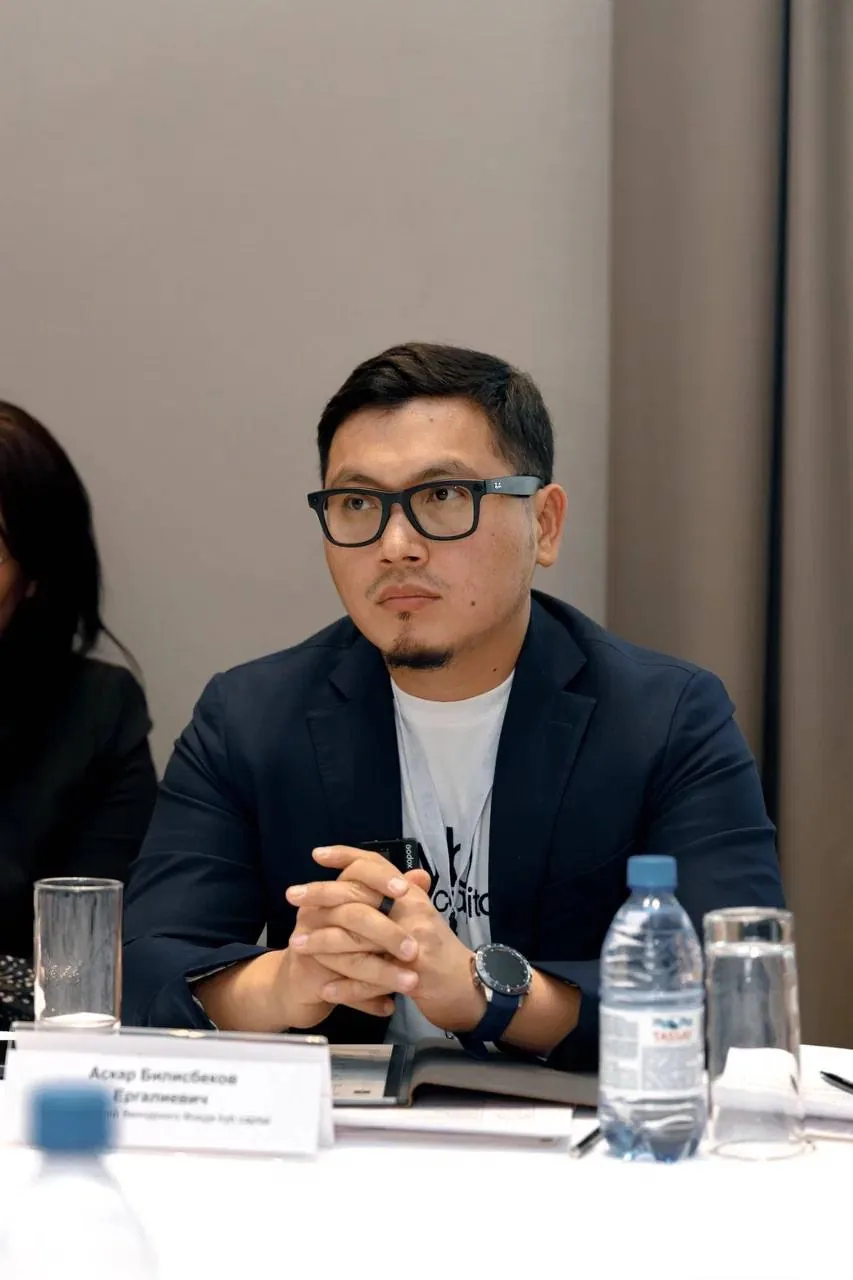
Managing Partner and CEO of byb Capital, Askar Bilisbekov, provided a detailed overview of investments in startups, discussed which types of startups are lacking in the market, and shared his future plans.
The Tech AI
Get the key points in seconds - a short summary from The Tech AI.
Askar Bilisbekov, managing partner of byb capital (Almaty), has invested in approximately 300 startups in the region over a year and a half. The fund's average check is $100–200 thousand, with an investment horizon of three to four years at the Seed stage. The company plans to launch an acceleration program and is considering investments in Private Equity of micro and small businesses.
Askar Bilisbekov, city — Almaty, Managing Partner, CEO byb capital, @askar_bilisbekov
About Me
I started building my career in entrepreneurship quite early. Even in school, I organized paid events and worked in children’s camps. My serious career began in Almaty at Astana Motors, within Nurlan Smagulov’s group, where I progressed from an intern in the sales department to the first head of a BMW distributor company in Kazakhstan. We launched the first Rolls-Royce showroom in Central Asia. In different years, I launched a communications bureau and engaged in investing in a publishing house. I was one of the first to distribute organic and gluten-free products in Kazakhstan.
Later, I worked in the Kazkom group, serving as Deputy Chairman of the Board, and subsequently headed the subsidiary JSC EMC. Additionally, I worked in the quasi-public sector, where I served as Chairman of the Board of JSC “SPK Almaty.” I was a deputy of the Almaty City Maslikhat of the seventh convocation, heading the budget and strategy commission. I invested in startups with very small amounts as early as mid-2010, although these investments were more experimental in nature.
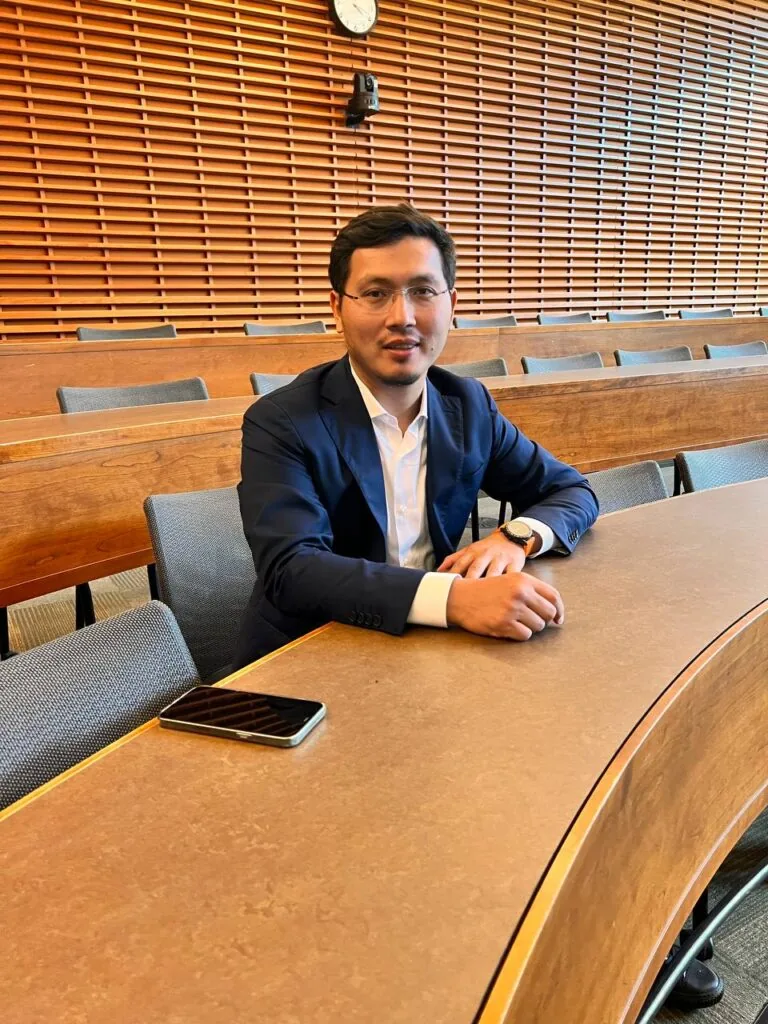
A turning point for me was studying at Stanford Graduate School of Business, where I realized that when you are at a stage in your life with a vast accumulated experience, knowledge, expertise, and network, you want to share all of this, help our entrepreneurs develop, and reach a new level.
About Investments
For an investor, three key qualities are important:
— measured decision-making. One must not “fall in love” with founders or the product to avoid losing objectivity. This is especially important in institutional investments, where the responsibility is significantly higher than in angel investing.
— industry insight and experience. It is important to have diverse experience and a multifaceted understanding of various fields and industries to make more objective and informed decisions.
Problems in investing:
Financial literacy. In our region, there is often a tendency toward haste and ignoring development stages. We have skipped some stages of investment development where venture capital is typically part of the investment ecosystem of more developed economies. This may be normal for us. However, the problem lies in the lack of financial literacy somewhere, and a general lack of understanding of venture approaches among both startup founders and investors. When people do not know basic things and lack practical experience, it complicates the process.
The perception of the venture industry as a space for young people is characteristic of Kazakhstan and the region. The majority of startups consist of individuals aged 18 to 25. This is not a problem, but if you look at Silicon Valley statistics, successful startuppers are aged 38–42. Why? Because these individuals already have industry insight and know how to not only lead a team but also retain it. Over a year and a half, we reviewed about 300 startups in the region, including Georgia, Armenia, Azerbaijan, Uzbekistan, Kyrgyzstan, and Kazakhstan. Most startuppers are well-versed in modern trends but face difficulties, not only due to a lack of financial literacy but also due to a lack of experience in team management, resource allocation, and legal matters. We do not consider this an excuse, so we support startups by helping them expand beyond the region.
There are few examples of successful startup investments in Kazakhstan and our region as a whole. It is simply too early to talk about this. Most startups are at the Pre-Seed stage, and many even earlier, at the idea or presentation level. Only about 10% of startups, in our opinion, are at the Seed stage, and of those, only 1–2% begin to gain any serious traction. But at this stage, it is too early to talk about true success. These are rather first steps: testing hypotheses, initial customer interactions, and finding ways to monetize.
Unfortunately, a paradigm has formed where startup success is often evaluated through the media. Rankings, social media activity, and coverage in publications create an illusion of success. However, the question is whether this is truly success?
Of course, some may disagree with me. But I believe that success is not just about recognition through media or hype. It is important that the story itself is strong, that the product is high-quality and in demand. Success is measured not by the number of views or media mentions, but by real sales and revenue. This is my subjective opinion.
In Kazakhstan and Central Asia, there are isolated successful cases, and one such example is the exit of HR Messenger in 2023. This is a significant event where an external strategic investor acquired a Kazakh startup. Such stories are rare. Most successful exits in the region are companies acquired by local conglomerates, which raises questions about the success of these deals. How successful the exit was from the startup’s perspective is unknown. Although we consider this a good and necessary dynamic.
Sometimes it creates the impression that as soon as startups achieve some success, their founders, even with little experience, begin to actively share this at forums, as if it were already a huge breakthrough. I am not saying this is bad. Perhaps it is necessary at a certain moment, but it should not become a constant practice.
I would like the situation to develop differently. Success, in my view, loves silence. It is necessary to observe the stories of those founders who have truly achieved results, made exits, or are negotiating with large companies. Such stories will say much more than articles on how to build a startup when no fund in the region can yet boast of a successful exit.
About Strategies for Selecting Startups
For byb capital and me as Managing Partner, the main criterion is people. We have highlighted three key aspects in the company’s slogan: People, Product, Future.
First of all, I evaluate the team: founders, co-founders, their cohesion, trust in leadership, and the management model: horizontal or vertical. Unfortunately, we often encounter chaos and disorganization, which hinders development.
Another problem is talent drain. It is not uncommon for key specialists to leave startups to create their own projects. For us as investors, it is important that the team remains stable at least during the cooperation period. If key people leave, it is a signal of internal problems.
The second criterion is the product, and the third is its future: what perspective it creates and how realistic that perspective is already today.
In my opinion, most of our startups resemble traditional businesses with a technological component rather than full-fledged technology projects. It seems that we are more adapting familiar business models than creating something truly new.
The selection strategy is based on experience and understanding. When a founder comes to a meeting, it is important to see their goals and willingness to dialogue. If a person is closed to receiving information, it becomes clear that we are not on the same path. The relationship between an investor and a startup is a partnership, similar to a “marriage process,” where the investor invests funds, knowledge, and experience, and the founder invests their time and efforts.
It is also important to consider how long the founders have worked in bootstrap mode. I always advise testing the idea with minimal resources at early stages, not rushing for investments, and not quitting the main job until the project shows viability. Many books have been written about startup success, but it is important to remember that this is the subjective experience of the authors. My conclusions are based on observations of the regional market, and I try to share what actually works.
byb capital’s strategy is based on three key pillars. The first pillar is operational focus: we are oriented toward investments in Kazakhstan, Central Asia, and the Caucasus. The second and third pillars concern foreign investments. Our current priority is the USA: Silicon Valley, New York, and Florida, although there are exceptions. We consider two directions: the first is participation in other funds, and the second is co-investments through our connections and contacts in the USA.
It is important to consider who manages the fund, their background, career, and achievements. If a person is closed regarding information, it is necessary to meet and communicate directly to ensure everything is open. We are proud of our experienced team with diverse skills. My approach is to choose partners and employees who are smarter than me, with a higher level of education, experience, and diversity of skills.
We have an international team, including both Americans and our specialists. With Kenes Rakishev, we have extensive experience in the corporate and entrepreneurial sectors, as well as in the public sector, covering areas such as commercial real estate, the automotive industry, manufacturing, distribution, retail, and traditional mining. We emphasize the importance of choosing the right investor, because an investor can replace expensive consulting companies. However, unfortunately, it often happens that after investments, the connection with the fund disappears, and people do not see value in feedback. This is not about our case, but about a broader situation I observe in the industry.
The selection of startups in our region is currently limited: according to our data, no more than 1,000 startups annually. The number is growing, but it has not yet reached a critical mass for successful investments. We see an upward trend, and the number of startups increases every year. Due to a shortage of startups, we consider different verticals and industries.
We prefer startups that have already taken their first steps in the market and started receiving payment, not just free subscriptions. These are more mature projects that have not yet found their PMF but are on the right path.
Our average check is from $100,000 to $200,000. We do not yet see the need to increase it, as we have not found such projects that require a larger volume of investment at the current stage.
The investment horizon at the Seed stage is usually 5 to 7 years at best, but more often 10 years. For us, the investment period is three to four years. The remaining six to seven years of the fund’s lifecycle are the period for exits.
Advice from an Investor
— pay attention to the team: who is the founder and co-founder, and how well you work together. This is an important but often ignored aspect for success. There is no need to change the team before meeting an investor, but it is important to have good interaction.
— during the presentation, it is important to have at least a superficial understanding of who you are talking to. Often, people come with superficial knowledge and make conclusions taken out of context. Time for the presentation is limited, so it is important to be precise, not to go off into stories, and to have a well-structured presentation.
— it is important to understand what the investor wants, rather than perceiving them as a sponsor. Many startups ignore this, which leads to a dependent mindset.
— a strategy does not necessarily have to be a document, but it is necessary to clearly understand where you are moving, what product you are making, what hypotheses you are testing, and what markets you want to enter. Do not show sharp jumps in the roadmap without clear explanations of how to achieve them.
Plans
We lack science-intensive startups and DeepTech projects where science plays a key role. The market is focused on B2C and popular trends like e-commerce, CRM, AI assistants. Many projects are related to the automation of contracts and signatures. This is normal. But for development, ambitious initiatives and startups with DeepTech dynamics are needed.
These startups exist, but they are developing in other markets. It is important for venture investors to pay attention to educational initiatives, as colleagues from MOST, BigGlobal, and Aset Abdualiev do in Silicon Valley. We see this need and support such efforts.
We plan to launch an acceleration program, where we will work with founders once a quarter, helping them understand the basics of the venture market and investment attraction strategies. We also plan to create a community that will develop in parallel with our acceleration programs. This is a slightly separate initiative from byb capital, but we see a large demand for the synergy of science and business, which we will discuss in detail in the new year.
In conclusion, we consider investments in traditional business, especially in Private Equity, focusing on verticals corresponding to our expertise. Checks will be small, with a focus on micro- and small businesses.
The Tech on Telegram Follow The Tech on Telegram
Keep up with the latest technology and startup news.
Related reading






More from this author

Article Useful
How to protect your accounts from hacking: 8 settings you should check today
The Tech

Article Useful
500 Global: How the Accelerator Works and Who Can Receive Investments
The Tech

Article Interviews
Game Development in Central Asia: Arkady Moldavski on Developing Reverb and the Growth of the Industry
The Tech

Article Useful
Google, Tesla, BlackRock, and the IMF: Where to Apply for an Internship in Fall 2026
The Tech

News IT
Tesla unveiled the flying electric car Roadster
The Tech

News IT
Intero Biosystems startup won the Startup Battlefield at TechCrunch Disrupt 2026
The Tech