How the Ala-Too International University prepares hardware engineers
Author - Mansur Ismagulov
The Tech AI
Get the key points in seconds - a short summary from The Tech AI.
Since 2021, the International University Ala-Too has been developing its hardware-focused program, training engineers through the Faculty of Engineering and Computer Science. Students use equipment such as Arduino, Raspberry Pi, and FPGA, along with software like Cisco Packet Tracer, Autodesk Fusion 360, and Python. The university collaborates with EPAM, JICA, and MegaCom, supports startups, and plans to open a cyber-physical systems laboratory.
On the development of the hardware direction at the university
The hardware direction has been actively developing at Ala-Too International University since 2021. During this time, the university has formed a broad-profile ecosystem for training specialists in the design, development, and implementation of hardware solutions: computer science and computer engineering, applied mathematics and computer science, quality management, and electronics and nanoelectronics.
The Faculty of Engineering and Computer Science, as well as specialized departments such as the Department of Computer Science and Computer Engineering and the Department of Applied Mathematics and Computer Science, play the main role in training hardware engineers.
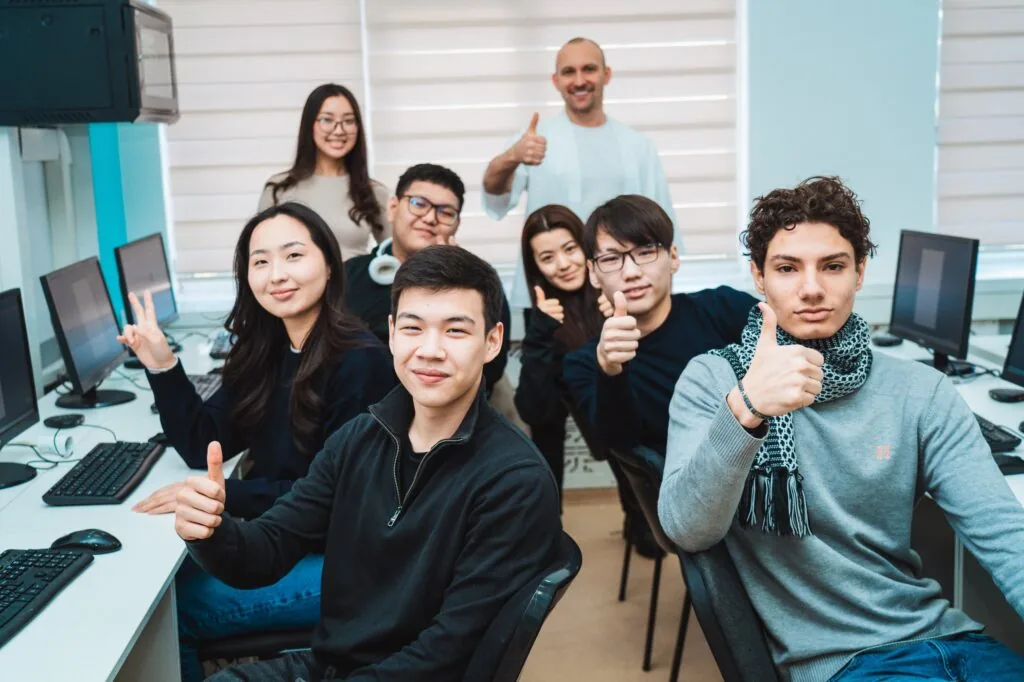
The university’s goal is to form a generation of leaders in software engineering capable of creating innovative solutions, integrating them into industrial processes, and developing technological entrepreneurship. The university focuses on practice-oriented education, interaction with the industry, and support for student initiatives.
Laboratories and classrooms
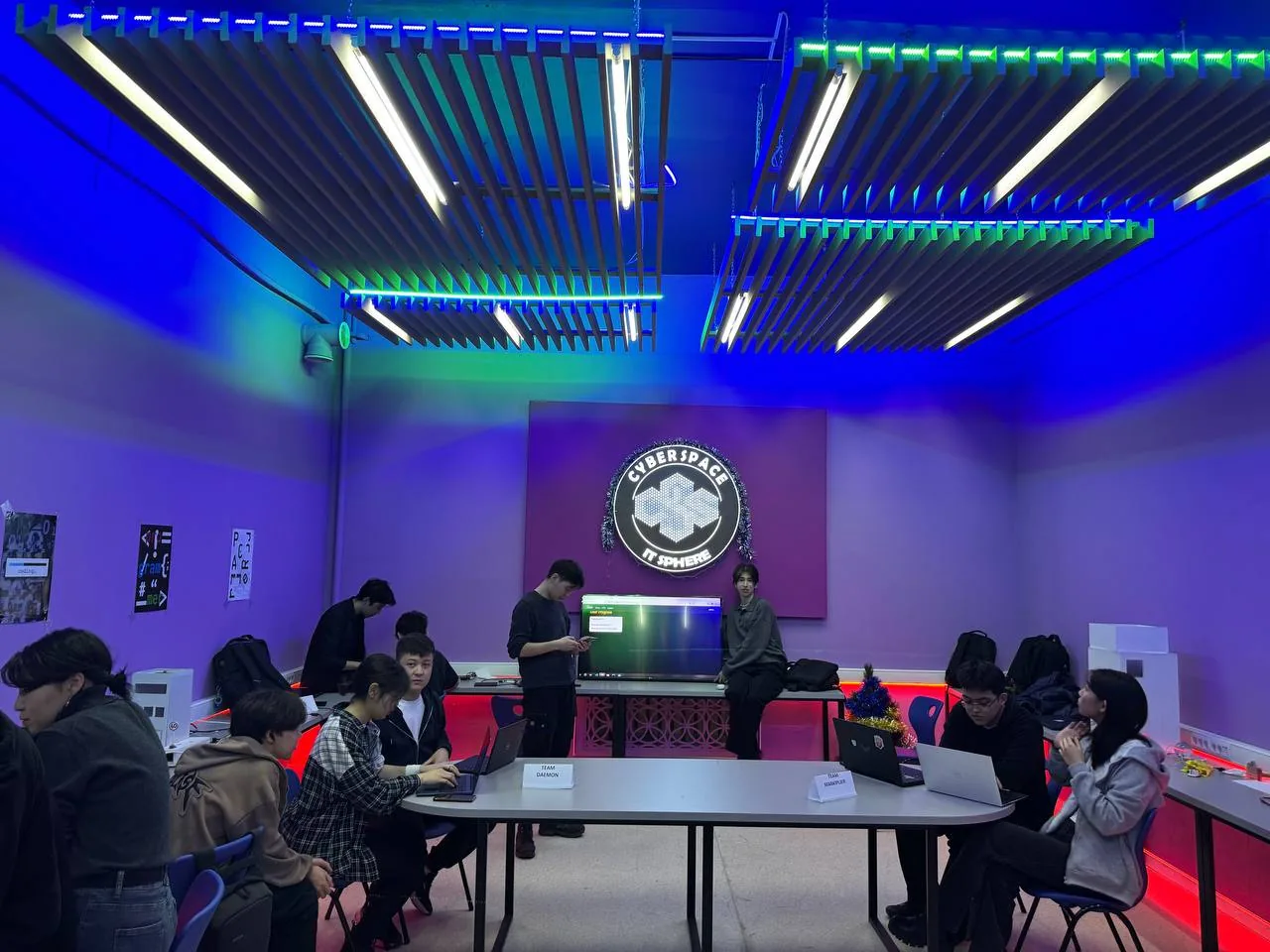
Students have access to an electronics and prototyping laboratory, four computer laboratories for working on software solutions, an Apple laboratory, and an Innovation and Research Center with four powerful computers capable of training AI models based on computer vision and deep learning. There is also the CISCO Academy Support Center, a certified center for supporting Cisco Learning Academies, and the Oracle Strategeast educational initiative.
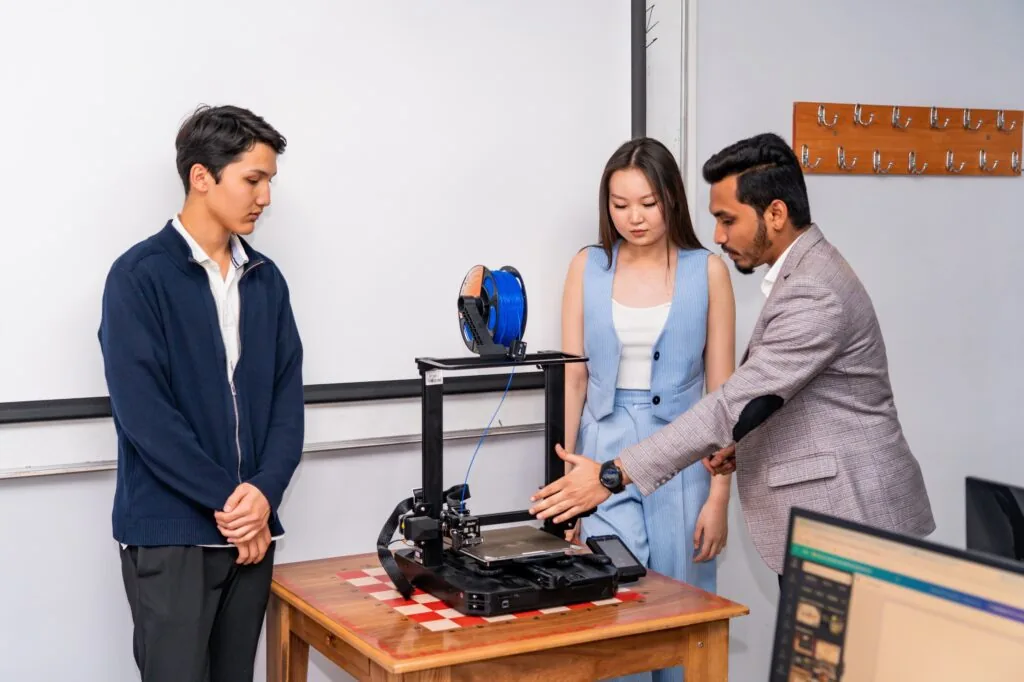
Modern platforms are most commonly used — Arduino, Raspberry Pi, NVidia Jetson Nano, STM32, FPGA modules, 3D printers, and laser engravers, Meta Quest 2, Clover 4 unmanned aerial vehicles, as well as classic tools, for example, soldering stations. Students also work with CAD/CAM systems and embedded software development environments.
The following categories of software can be identified as most relevant for working with hardware and low-level systems:
Equipment analysis and diagnostics:
— CPUID CPU-Z — a tool for monitoring processor, memory, and other PC component characteristics
— Microsoft Azure Compute/Storage Emulator — emulation of cloud services for testing distributed systems
— VirtualBox — virtualization for testing different operating systems and configurations
— Kali Linux — a specialized distribution for security testing and network equipment.
Development and programming for embedded systems:
— Cisco Packet Tracer — a network equipment simulator for designing and testing network configurations
— Intel C++ Redistributables — libraries for developing under the Intel architecture
— Python, Java SE Development Kit, Git — tools for writing and debugging code, including for microcontrollers and embedded systems
— Android Studio, Unity Hub – development of applications for mobile and IoT devices. Development of games and virtual reality applications.
Working with microcontrollers and FPGA:
— Autodesk Fusion 360 — a CAD/CAM system with support for designing electronic components
— PyCharm, Visual Studio Code — development environments with support for languages used in embedded systems
— DBeaver, PostgreSQL — working with databases relevant for data collection systems from sensors.
Testing and debugging:
— OBS Studio — recording and analyzing system performance in real time
— Wireshark — network traffic analysis
— 7-Zip, Torrent — auxiliary utilities for working with firmware and images.
The laboratories offer a wide range of software suitable for working with hardware, embedded systems, network equipment, and low-level development. The most important tools are:
— Cisco Packet Tracer, networks
— CPUID CPU-Z, hardware diagnostics
— VirtualBox & Kali Linux, testing and security
— Autodesk Fusion 360, design
— Python/C++/Java, programming for microcontrollers.
For more specialized tasks, additional software may be required, but the current set covers the basic needs of the hardware direction.
Curriculum and student projects
The curriculum includes specialized courses in circuit design, digital electronics, microcontrollers, embedded systems, industrial automation, IoT, robotics, and prototyping. Special attention is paid to interdisciplinarity — students also study the basics of startups and project management, public speaking, and interpersonal communication. As part of the educational process and individual projects, each student develops their direction along one of four key vectors:
- Startups — creating their own products and teams, participating in accelerators, and attracting investments.
- Patenting — developing unique technical solutions and obtaining patents.
- Scientific activity — participating in research, publishing articles, and working on scientific grants.
- Implementing ready-made solutions in production — collaborating with enterprises to adapt student developments to real-world production.
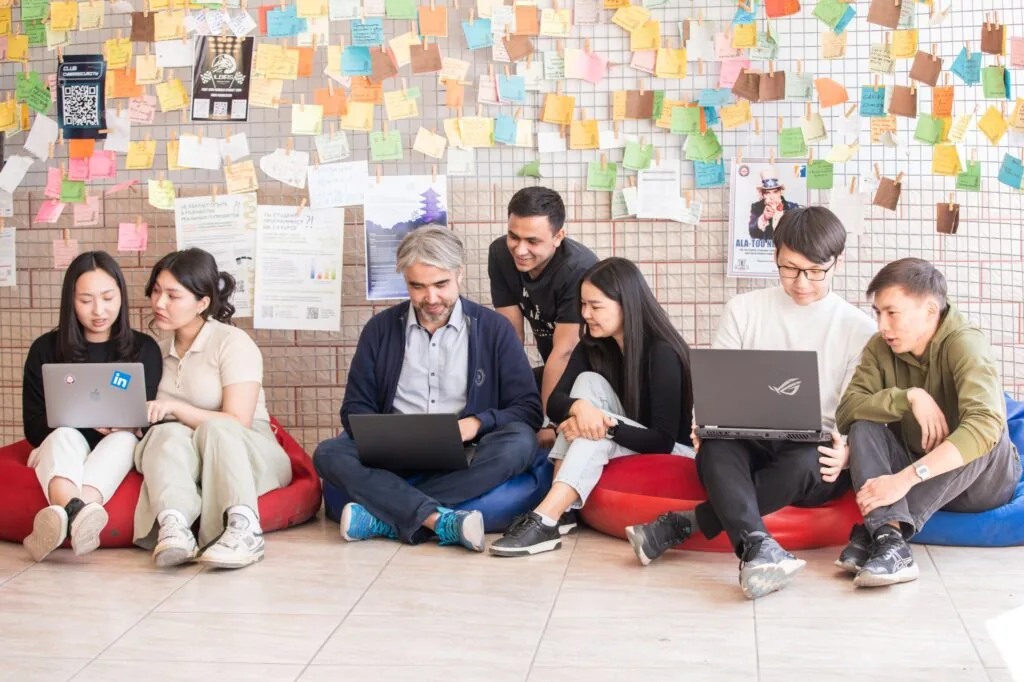
Student projects are actively supported both within the university and beyond. Students participate in research programs, the Accelerate Prosperity accelerator, and startup competitions Student Startup. The university provides mentoring support and infrastructure for implementing projects at all stages.
Ala-Too International University collaborates with domestic and international technology companies EPAM, JICA, Kyrgyz Industry, NurTelecom, MegaCom. Thanks to this collaboration, students have the opportunity to undergo internships and practical training.
Future and prospects
The university has already planned the opening of a laboratory for cyber-physical systems and computer vision and image processing using AI, as well as a robotic arm for performing precise processes in the field of electronics and microelectronics. Additionally, educational modules related to the application of AI in hardware systems and digital modeling of production processes are planned for implementation.
Successful graduates and students find employment in high-tech companies, launch their own startups, patent inventions, and participate in scientific projects. The university actively strives to facilitate employment and promote graduates to the market at the earliest stages of their educational journey.
The Tech on Telegram Follow The Tech on Telegram
Keep up with the latest technology and startup news.
Related reading







More from this author

News
zypl.ai begins operations in Japan and focuses on next-generation risk models
Mansur Ismagulov

News
Elon Musk's net worth has exceeded $700 billion for the first time
Mansur Ismagulov

Article Interviews
"Central Asian countries should build a joint ecosystem," — Bekhzod Ismoilov on the development of AI in the region
Mansur Ismagulov

Article Interviews
Bloom's Taxonomy and Engineering Levels: A Practical Growth Model
Mansur Ismagulov

Article Useful
How the IT industry in Azerbaijan developed in 2025: key events
Mansur Ismagulov

News
Tajikistan has become a new member of the regional innovation alliance Central Asian Innovation Hubs.
Mansur Ismagulov