How a content manager from Tashkent led the digital products division

The Tech AI
Get the key points in seconds - a short summary from The Tech AI.
Sabina Kasimova, Head of Perspective Products at ATTO (Tashkent), has approximately 12 years of experience in IT. Her career began with projects such as player.uz and Beeline Uzbekistan, where she transitioned from marketing to product management. Currently, she leads promising areas in urban technologies.
Head of Perspective Products at ATTO — she has progressed from early digital projects and content work to managing products in major IT and urban-tech companies. In the interview, she shares how her career in the digital space began, why rejection is a normal part of the journey, and which skills truly help build a career in IT: from initial internships to leadership positions.
Sabina Kasimova, city — Tashkent, Head of Perspective Products, LinkedIn
About Me
I am the head of a department at ATTO and oversee prospective projects, specifically leading the corresponding division.
By education, I am a marketer. Initially, I applied for an HR program, took entrance exams, but after two years, I decided to change faculties and switched to marketing. My education helped me better understand my strengths and weaknesses, identify my interests, and choose a development direction.
For employers, however, having an education is more of a baseline factor. Beyond that, professional skills — both hard and soft skills — play the key role.

About My First Job in IT
My career in the digital space began almost 12 years ago. If we talk about working in IT and holding leadership positions, I have been doing this for approximately the last five years.
One of my first jobs in the digital sphere was at player.uz — an online platform for movies and series, which was popular in Uzbekistan at the time. There were no major paid streaming services yet, and people searched for content through search engines. I was responsible for site content, content management, as well as partially marketing and SMM.
Later, major players with official content entered the market, making competition more difficult, and I started looking for a new job. That’s how I ended up at Beeline Uzbekistan. It was there, essentially, that my full-fledged IT career began. It was a large corporation with various divisions, where I joined the product team for the online cinema and then gradually moved into product and application management. I worked on developing digital services, and this became my first serious IT role, where I began to actively grow professionally.
When I worked at player.uz, I was about 20 years old. I joined Beeline Uzbekistan at around 24–25 years old. For the first year and a half, I worked in marketing, and then I transitioned into product development and application management, where I worked for several more years.
Now I am 30 years old, and I work at a company engaged in urban technologies and the development of public transportation in Uzbekistan. This is a large ecosystem that includes parking solutions, payment services, vending, and other digital products, including fuel cards.
Job searching mostly happened naturally — through people and professional connections. I was always open to communication, so I was often recommended or remembered when new vacancies opened. For example, my story with Beeline was also referral-based: I was offered a chance to try, I sent my resume, and went through the standard corporate selection process.

Regarding interviews, I always believe it is important to prepare in advance. I study the company, its product, the market, and the future role. This helps me understand whether the company and its work format suit me. Even things like schedule or workload level can be partially assessed in advance, allowing for a more conscious decision.
I also prepare from the perspective of my skills. If I see that a specific competency is important for the position, I try to quickly improve it or take additional training so that I can speak the same language as the team. It is important for me to come to the interview feeling that I have done everything possible to prepare.
Among personal qualities that have helped me in my career, I would highlight the ability to logically argue my position and present my own skills. Essentially, the hiring process is an exchange of value: you offer your competencies, and the company evaluates how well they match its tasks.
At the same time, I always tried to build this process honestly and without manipulation. It is important to me that the match is real. If a person and a company do not suit each other from the start, it will still show up later. In the long run, only honest expectations and transparency from both sides work.
Challenges
One of the main challenges at the beginning of my career was intense nervousness. When you are 18–20 years old, you lack self-confidence, and even good preparation doesn’t always help cope with internal tension. It happened that I would come to an exam knowing the material, but due to nervousness, part of the knowledge would seem to “switch off.” This was not due to lack of preparation, but precisely due to stress in the moment.
Over time, I realized that this is normal and that it passes with experience. When you constantly communicate with new people, attend meetings, and go through different situations, the level of nervousness gradually decreases. It is like driving a car: at first, you are tense and think about every action, but then it becomes a natural skill, and you can act calmly and confidently.
Another difficulty is rejections and failures in job hunting. But I take them calmly. For me, rejection is simply a mismatch, a “not a match.” It is not about someone being better or worse, but about the fact that in a specific context, it simply does not fit.
Over time, when you yourself become part of the hiring processes, you begin to understand this even deeper. You also make rejection decisions and see that it is always about matching the role, experience, and context. Therefore, I view rejections as a normal part of the process and as an opportunity to find something more suitable.
If we talk about difficulties already in the work itself, then for me the key factor is tasks. In any job, there is a certain pool of tasks that need to be solved. I always try to approach this systematically: how to solve the task most effectively.
I enjoy solving complex and new tasks, especially those that no one has encountered before. This is a source of motivation for me. Essentially, it is like puzzles: at first it seems difficult, but when you find the solution, there is a strong sense of satisfaction. And overall, work for me is a constant process of solving new tasks that gradually become more complex as I grow.
For beginners in job hunting, the key step is to understand what you are truly good at. People are different: some perform better in creative tasks, others in analytical ones. It is important not to try to be “a little bit of everything,” but to find what you are really strong at and develop it. I believe it is better to strengthen your strengths than to try to superficially cover all areas. First, you need to understand yourself, your strong qualities, then focus on them and develop them as deeply as possible. Then you become stronger in your zone and can stand out even in interviews, because you have clear expertise.
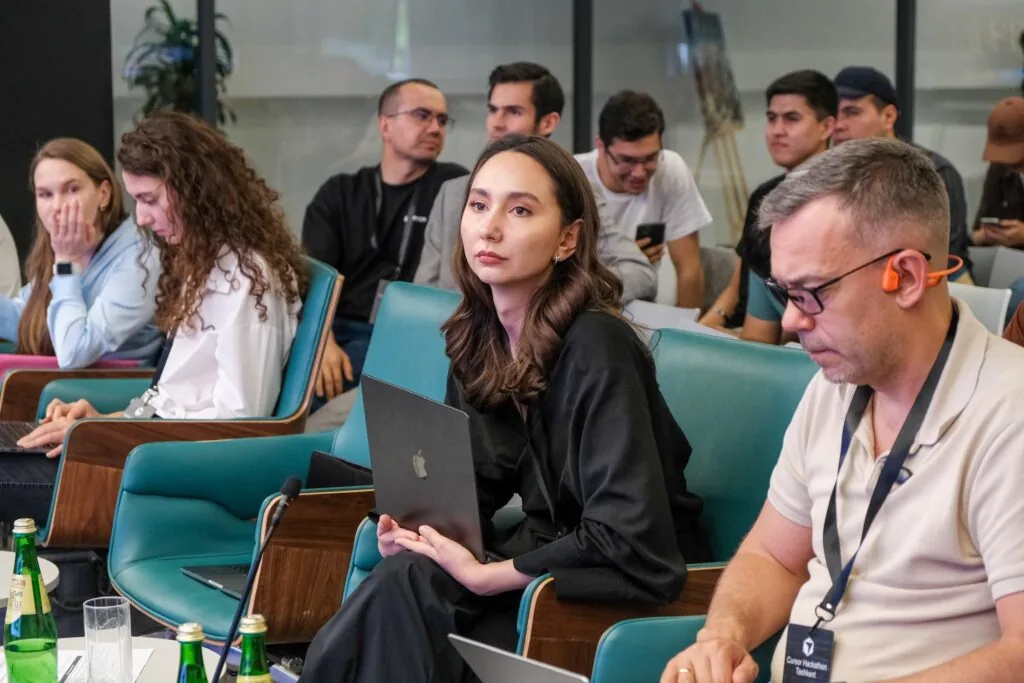
3 Tips That Will Help You Find a Job in IT
You need to be open because when you are new and inexperienced, you have a lot of energy, but not always enough experience or understanding. Here, openness and honesty are important.
I had many situations where I participated in volunteer and other projects, studied different areas, and accepted invitations to activities, even not fully understanding their practical value at the time. Over time, it turned out that all of this was useful: the accumulated experience and skills were subsequently really applied in work and professional development.
If an opportunity for growth appears, you need to try and not be afraid. And one more piece of advice that my manager taught me — do not be afraid of mistakes.
Many people live with anxiety since school that they will do something wrong and it will lead to bad consequences. In reality, things often turn out even better than you expect. Mistakes, rejections, and difficulties are part of the path and experience that develops you.
If you look back, we were all afraid of school exams, and now it seems insignificant. Similarly, in a few years, you will look at your current fears. Even if something doesn’t work out, it does not define you as a person — you still have life, and in the end, everything turns out better than you could have imagined.
The Tech on Telegram Follow The Tech on Telegram
Keep up with the latest technology and startup news.
Related reading






More from this author

Article Useful
How to protect your accounts from hacking: 8 settings you should check today
The Tech

Article Useful
500 Global: How the Accelerator Works and Who Can Receive Investments
The Tech

Article Interviews
Game Development in Central Asia: Arkady Moldavski on Developing Reverb and the Growth of the Industry
The Tech

Article Useful
Google, Tesla, BlackRock, and the IMF: Where to Apply for an Internship in Fall 2026
The Tech

News IT
Tesla unveiled the flying electric car Roadster
The Tech

News IT
Intero Biosystems startup won the Startup Battlefield at TechCrunch Disrupt 2026
The Tech