How Timely Soft is changing the IT community of Kyrgyzstan. Interview with Andrey Gurinov
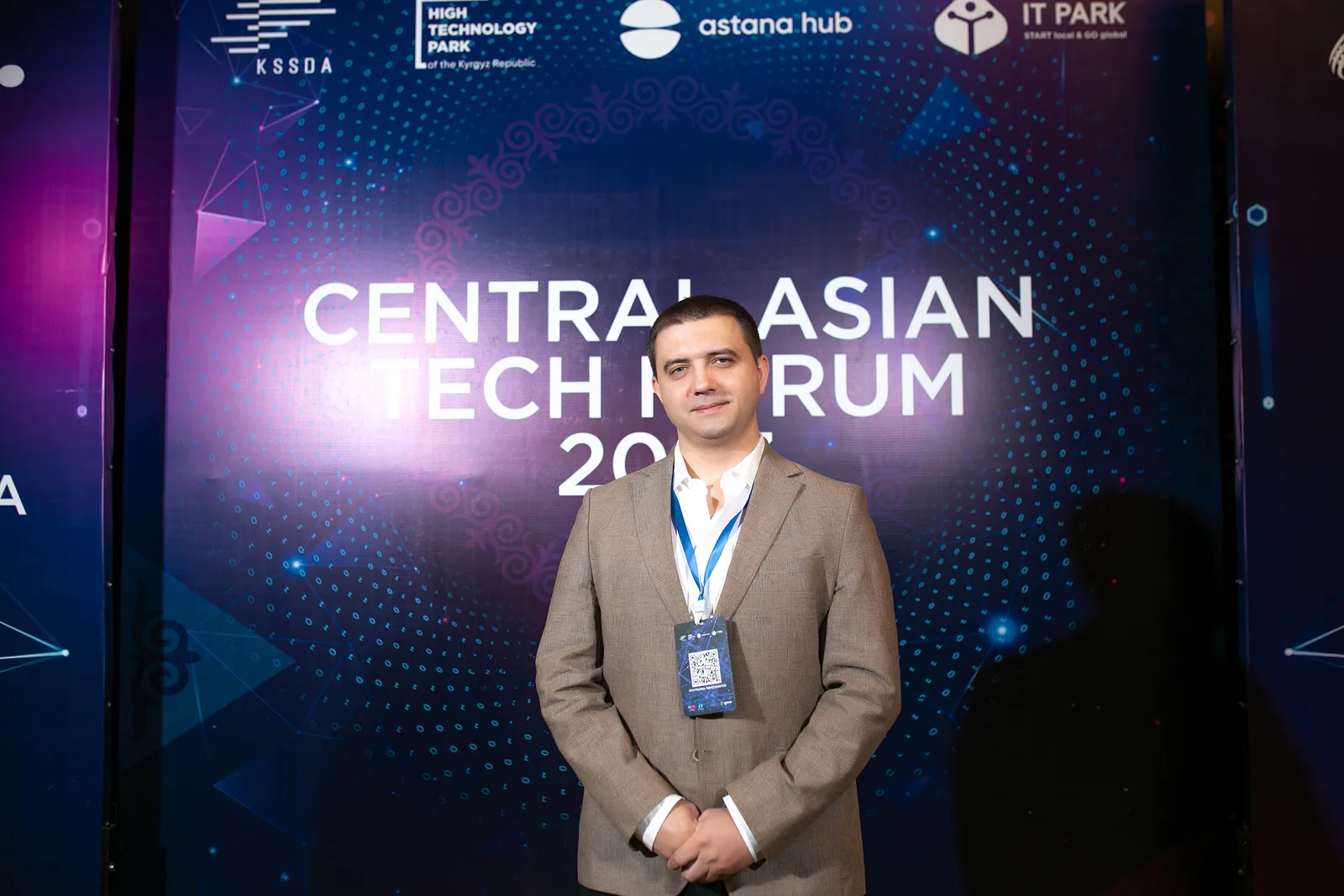
Our hero from Kyrgyzstan, founder of Timely Soft — Andrey Gurinov, shared insights on key challenges in the IT industry, the company's development, and his vision of how the company aims to impact society in the country.
Author - Mansur Ismagulov
The Tech AI
Get the key points in seconds - a short summary from The Tech AI.
Andrey Gurinov, founder of Timely Soft and Kanda CA in Bishkek, has merged the companies to work with the CIS and US markets. In 2024, the Timely Skills academy was launched for youth internships. The company is developing MedTech and BioTech, as well as partnerships with Amazon, and plans to expand into Central Asia and establish a Federation of Sports Programming.
Andrey Gurinov, city — Bishkek, Kanda CA Service Center, LinkedIn
About Me
I am the founder of Timely Soft. We started operations in 2013 and became the first company in our high-tech park. The company continues to operate and develop today.
Three years ago, we merged with the American company Kanda Software. This gave rise to a new company — Kanda CA, Kanda Central Asia, based in Bishkek, which became part of a large international corporation.
We divided our business as follows:
- Timely Soft handles projects for Kyrgyzstan and CIS countries.
- Kanda Software primarily serves the American market and other major international clients. Kanda serves as our headquarters and simultaneously as a hub for young specialists who, after training, transition to working on international projects.
In 2024, we launched the Timely Skills project — an academy for paid internships. As the chairman of the Kyrgyz Association of Developers and a teacher, I know that young specialists struggle to gain experience, as it is difficult to find a job without it. I advocated for creating demand for interns through accelerators and incubators, but this is often not cost-effective for companies.
Timely Skills provides the opportunity to complete internships on low-budget or social projects. In this way, we help young people gain practical experience and support sports and social initiatives.
On Global Changes and Trends
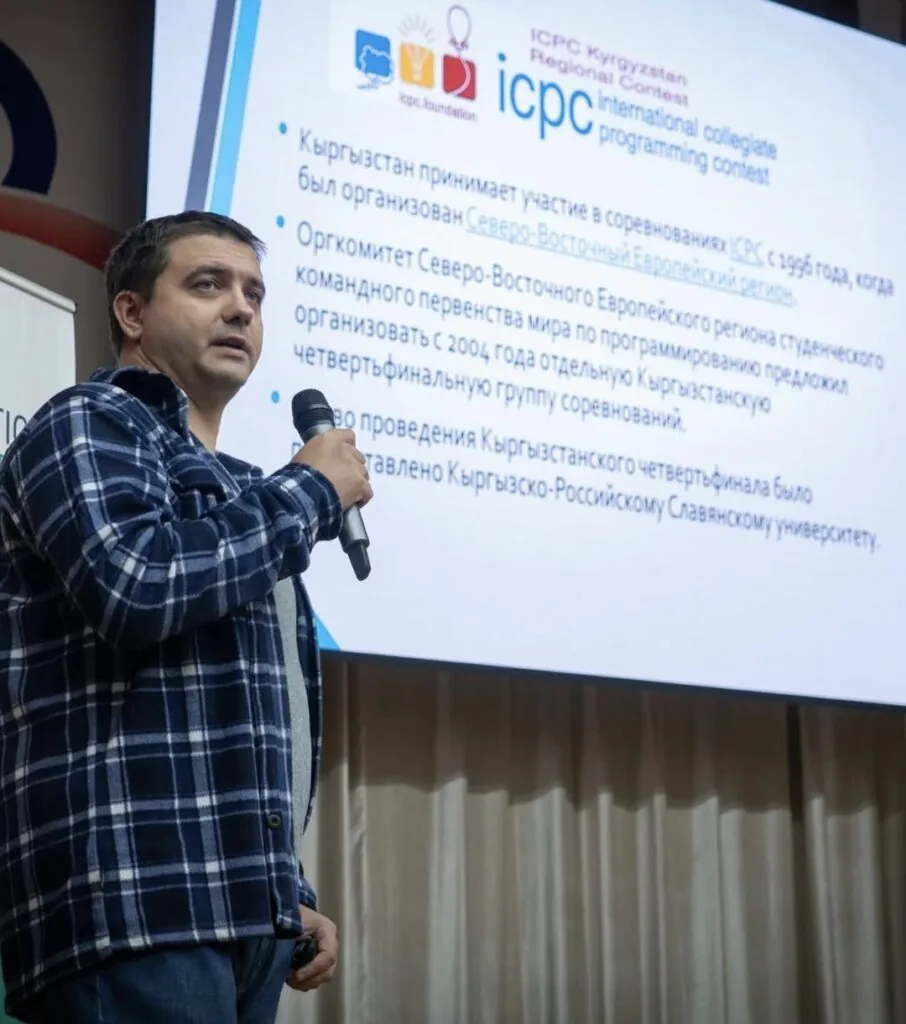
In IT, we constantly face various problems: sometimes there is a lack of computing power, sometimes we are attacked by hackers, sometimes "Year 2000" issues arise, sometimes there is a pandemic, and so on. In other words, challenges exist and will always exist. And each time, the question arises: "What will we do now?" I believe that the entire history of our IT, as a phenomenon and historical event, is built precisely around these challenges. Unlike mechanical engineering or other industries, revolutions and upheavals happen much more frequently here. Therefore, everything looks like constant fever. But I believe that fever is a normal working mode. You just look at the weather outside and put on the appropriate clothes.
It is clear that in the coming years we will react and adapt to artificial intelligence and other trends. It is completely unclear how the market will develop — at the moment it is far from stability and predictability. It is difficult to predict how the political situation will affect us. But overall, we have little influence on this, so we remain observers, watching where everything is heading and adapting. I repeat again — there is nothing surprising or catastrophic about this. Everything changes every day.
On the Role of New Technologies
If we talk about artificial intelligence, it has many different areas of application. AI helps compose emails and handle routine tasks — this is also part of our work. Clients come to us requesting solutions involving AI, and of course, we will hire specialists and develop our employees to provide such services.
AI is already seriously influencing the software development process. We see how Copilot and ChatGPT handle code writing excellently. Now a new era is beginning — integrated development environments like Cursor and Windsurf are appearing. In terms of capabilities, they significantly surpass existing assistants like ChatGPT. These tools will occupy their niche and change everything around them.
New technologies are emerging — we will adapt to them. We are IT professionals, and if we do not follow trends and implement new things, we risk falling behind. And we definitely do not want that.
On Future Employees
Over the last 10 years, everyone has been talking about soft skills. We must be communicative, tolerant, empathetic, organized, and self-motivated. Partly this is true, but it is necessary to understand that an IT company is primarily about technology, engineers, guys with a deep understanding of technology and mathematics. At the moment, the discussion often revolves around biology and other sciences — meaning it is important to understand not only software development but also the subject areas in which we work.
I feel I am not alone in this opinion: the future belongs to IT specialists who, in addition to technology, possess knowledge in applied industries. This is already happening. We have IT specialists who are microbiologists, specialists dealing with navigation, aerodynamics, computer graphics, and so on. Previously, an IT specialist was a universal soldier: it did not matter whether developing a game or office software. Currently, industry specialization is becoming increasingly significant.
Furthermore, the influence of AI imposes new requirements on interaction skills. The ability to correctly formulate a request and obtain a result is prompting, prompt engineering. The ability to formulate thoughts and convey them to the team for AI is becoming increasingly important.
On the Influence of Global Trends on Company Strategy
Economic trends strongly influence company strategy, especially since we mainly work in the American market, where these trends are more pronounced. Therefore, we have to adapt, while at the same time diversifying directions, searching for new markets and niches, and learning to live in a changing reality.
Today, we are actively developing in such areas as MedTech and BioTech, and we plan to strengthen our presence in these fields. One of our clients is Johnson & Johnson, their research division. Geographically, we are considering new markets less, but we do not exclude this option.
What the company will be like in 10 years
Our strategy is growth: next month we plan to open a representative office in one of the cities of Central Asia. We continue our expansion in the region: we have many employees from Kazakhstan and Uzbekistan, where a critical mass has already formed, and we want to create a separate office for the team from these countries.
We are actively developing partnerships with major brands. Recently, we received competency from Amazon on implementing high technologies in medicine. We are strengthening our presence with key partners and attracting new clients. In 10 years, I would like to see a company doing the same thing, but 20 times larger.
On the Role of the Company in the Future
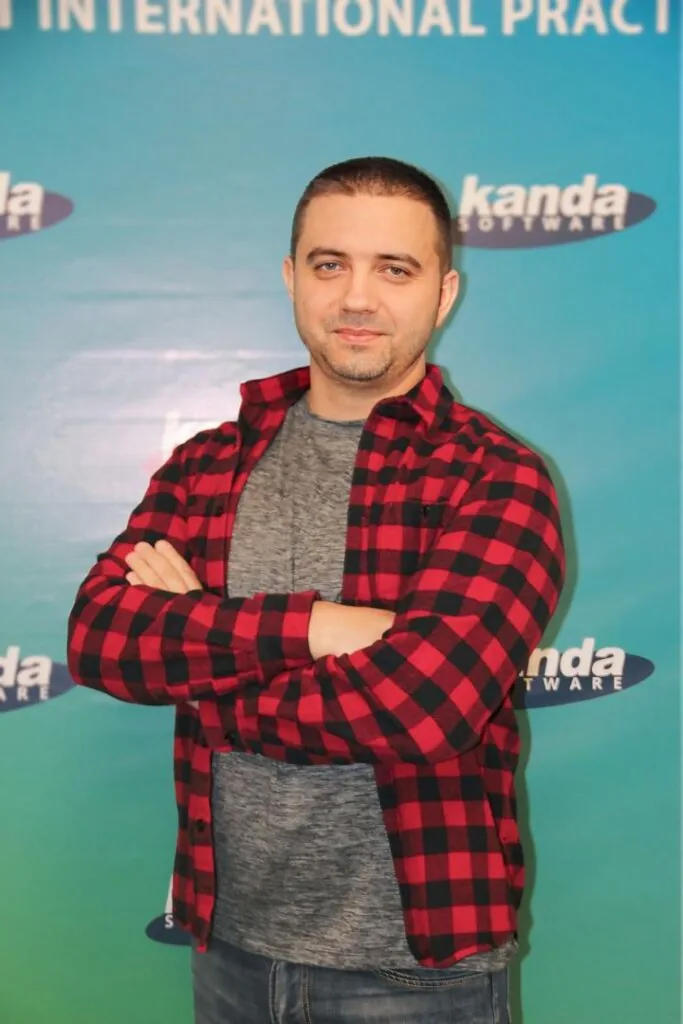
Our company strives to influence society through large-scale and high-quality development of the IT community in Kyrgyzstan and the region. For 13 years, we have been actively supporting education and promoting a healthy lifestyle among IT professionals. We are ambassadors of the international marathon movement Run The Silk Road, opening participation for all IT specialists in Kyrgyzstan and neighboring countries.
Additionally, we created the Kyrgyzstan Federation of Sport Programming and are developing the Olympic movement among young talents, supporting their participation in international competitions. The Timely Skills academy has been launched, focused on social development.
In the near future, we plan to organize the Robotics Association, which will start with educational programs for children and will attract major manufacturers to create new jobs and resources.
Our focus is social impact, which helps people develop, gain opportunities, and improve their quality of life. We are open to cooperation and invite everyone who shares our ideas to join us.
What a Future Leader Should Be Like
I was 22 years old when I was appointed head of a department in a bank. Since then, for over 20 years, I have been managing, not doing engineering. This is one of the key problems in IT: good programmers are often appointed managers, although these are completely different skills. This is absurd. Fortunately, today project managers, technical leaders, and managers are appearing, who are taught separately how to organize processes and manage. I believe this trend should only strengthen and develop. Personally, I missed the opportunity to avoid the administrative ladder, but I hope that the new generation of talented specialists will be able to build their careers around engineering tasks without moving into management positions.
I distinguish between leadership and management. Management should be done by professionals who know how to organize and manage. The stronger the management teams in companies, the better.
Leadership is not about giving orders. It is the ability to inspire and lead. The qualities of a true leader remain unchanged: courage, willingness to take conscious risks, the ability to explain clearly and charismatically, being a visionary and honest, keeping one's word. Then people will follow you.
I do not believe that the era of opinion leaders from TikTok will last long. Common sense will prevail, and people will listen to those who really know, do, and achieve results.
Overall, talent and leadership skills are a constant set of qualities.
The Tech on Telegram Follow The Tech on Telegram
Keep up with the latest technology and startup news.
Related reading







More from this author

News
zypl.ai begins operations in Japan and focuses on next-generation risk models
Mansur Ismagulov

News
Elon Musk's net worth has exceeded $700 billion for the first time
Mansur Ismagulov

Article Interviews
"Central Asian countries should build a joint ecosystem," — Bekhzod Ismoilov on the development of AI in the region
Mansur Ismagulov

Article Interviews
Bloom's Taxonomy and Engineering Levels: A Practical Growth Model
Mansur Ismagulov

Article Useful
How the IT industry in Azerbaijan developed in 2025: key events
Mansur Ismagulov

News
Tajikistan has become a new member of the regional innovation alliance Central Asian Innovation Hubs.
Mansur Ismagulov