How Kazakhstani companies can promote technologies abroad. The experience of Sergek Group
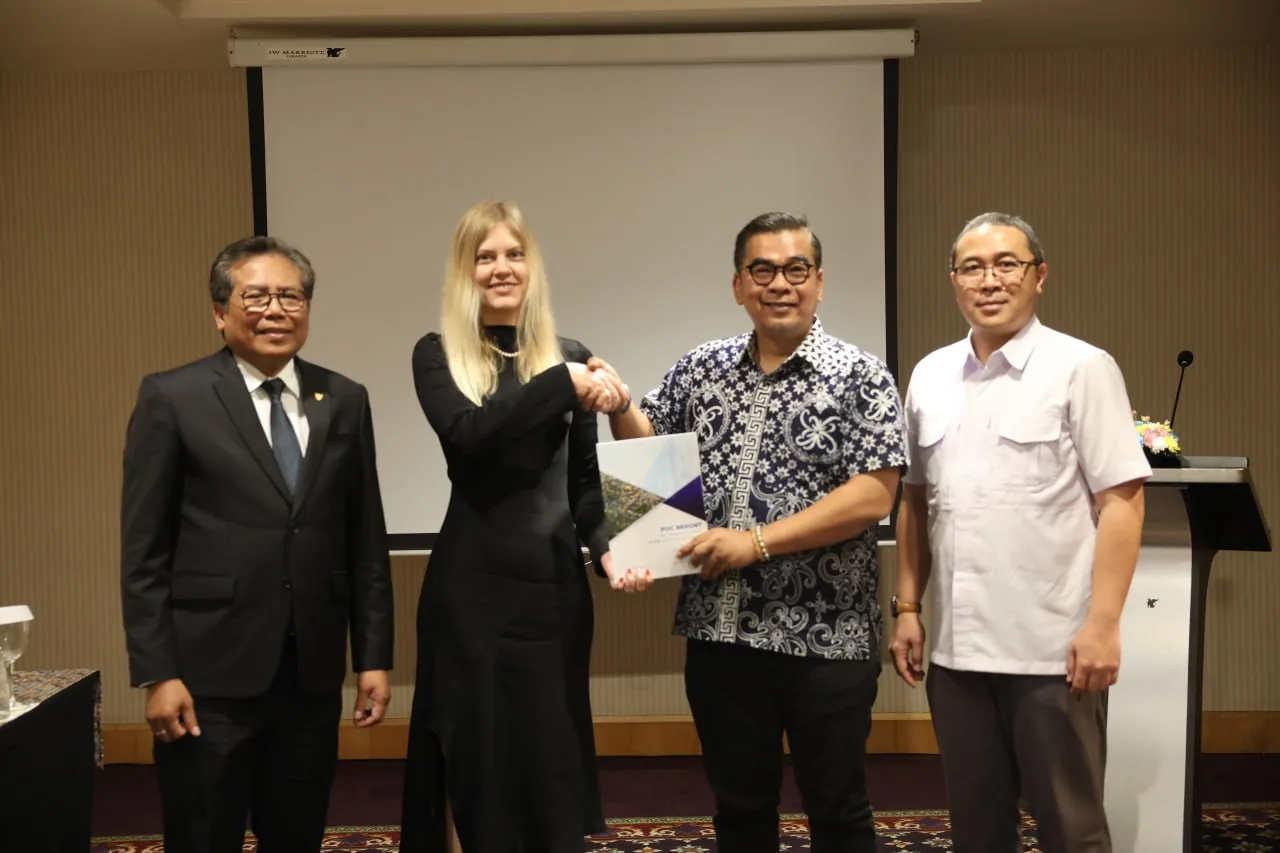
In late May, Kazakhstani developers received a VV&E (Verification, Validation & Evaluation) certificate for their AI-based traffic and mobility management platform. This certificate confirms that the features and capabilities of the Kazakhstani solutions comply with Indonesian state standards.
Author - Mansur Ismagulov
The Tech AI
Get the key points in seconds - a short summary from The Tech AI.
Alena Tkachenko, Director of Global Markets at Sergek Group, notes that Kazakhstan ranks 24th in the UN E-Government Development Index 2024. The company has been adapting its products for international markets for over two years, including a pilot project in the Indonesian capital of Nusantara with partners Cisco and PT Telkom Indonesia. Priority export markets include CIS countries, Southeast Asia (Indonesia, the Philippines, Malaysia), as well as the Middle East and South Africa.
Alena Tkachenko, Director of Global Markets at Sergek Group, discussed the challenges of promoting Kazakh technologies abroad and what companies should be prepared for when exporting their developments.
Alena Tkachenko, City — Almaty, Director of Global Markets at Sergek Group, @all.ona42
On the perception of Kazakh technologies abroad
It largely depends on the specific technologies and business sector. In my experience, when discussing Kazakhstan on the international stage, it is often necessary first to provide an understanding of the country specifically in a business context. While associations with Kazakhstan do exist—primarily due to its culture, history, and sports—in the business and technology sectors, we still have work to do to build a more recognizable image.
However, we have a significant advantage that we always highlight: Kazakhstan is making steady progress in the development of e-government and the digitalization of services. In the new 2024 UN E-Government Development Index, Kazakhstan ranks 24th out of 193 countries, moving up four positions, and belongs to the group of countries with a high level of e-government development. We also ranked 10th in the online services index, alongside leaders such as South Korea, Denmark, and Estonia, surpassing countries like Germany and Australia.
Today, it is particularly encouraging to see the Ministry of Digital Development, Innovations and Aerospace Industry of the Republic of Kazakhstan, as well as JSC “NIT,” taking important steps to popularize these achievements. Moreover, every Kazakh citizen, especially our compatriots living abroad, acts as a sort of ambassador for the country, because we see firsthand how easy it is to use our digital services, make instant online payments, or obtain certificates. We feel the presence and importance of such services most acutely when abroad, where they may be lacking.

Promoting services abroad
Having worked with exports for over two and a half years, I see that entering international markets requires time and a comprehensive approach—especially in B2G, where sales cycles are traditionally long. We spent about a year adapting our products to international standards, accounting for global trends, and making them intuitive for foreign clients. Another year was invested in developing a marketing strategy to account for the unique features and requirements of each new market, as well as to conduct pilot launches in target markets. All this preparation is not just a process of transferring a working model, but a comprehensive adaptation and rethinking of the product.
Furthermore, entering external markets requires not only a review of the product but also a change in mindset within the company: it is necessary to think more flexibly, consider other cultural and business standards, and be ready to adapt.
On the importance of developing proprietary technological solutions
Our experience in Kazakhstan shows that no one understands the nuances and specifics of local tasks better than local grassroots companies. A deep knowledge of local conditions and needs allowed Sergek to develop solutions that are truly effective and in demand in the cities of the republic.
When entering international markets, we follow this principle by building partnerships based on local needs and requests. We bring our experience and best practices that have proven themselves in our home market, while our local partners help adapt them to the specifics of new countries. Thus, we combine our “know-how” with local expertise, creating products that best meet the demands and realities of a specific market.
On the Sergek pilot in Indonesia
The idea for the Sergek pilot project in Indonesia arose after a meeting between the mayor of the new capital, Nusantara, and representatives of Astana. At one of the events in Astana, an agreement on the status of sister cities was signed between Nusantara and Astana. Nusantara is being built as a new administrative capital to ease the burden on the overcrowded Jakarta and to divide managerial functions between the two cities.
After signing the agreement, we contacted the Nusantara city administration and proposed a pilot project based on our successful experience in Astana.
Since the signing of the memorandum, we have outlined three key goals: first, to transfer the experience we have accumulated in Astana; second, to implement a pilot project that will demonstrate the capabilities of our technology and allow us to adapt it to the needs of the local market; and finally, to discuss the prospect of a full-scale project. At this stage, all three points have been successfully completed, and we are ready for further cooperation.
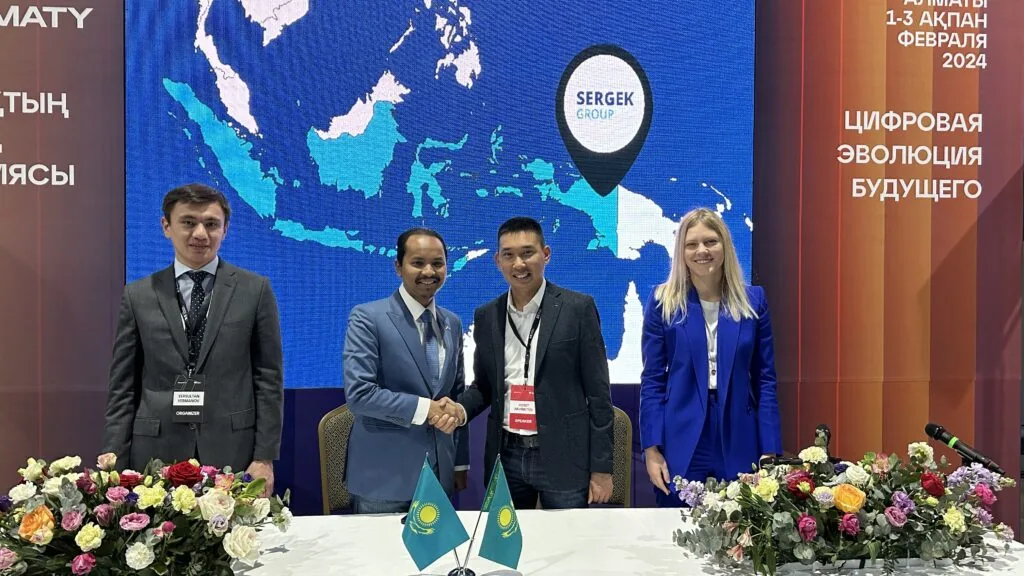
Sergek’s cooperation with international companies
We highly value partnerships and understand that Smart City is a comprehensive ecosystem where openness to cooperation and technological compatibility of different systems are important.
In the project for Nusantara, our key partners became the international company Cisco and the national telecom operator PT Telkom Indonesia, which allowed us to quickly and effectively launch the pilot project.
We are also exploring global cooperation opportunities, for example, with Amazon, to integrate our solution into the cloud environment. We are open to interacting with players in the server technology and telecom sectors, as well as with camera and video analytics vendors.
On the specifics of government partnerships in Southeast Asia
First, these are the technical and legal features of working with government structures, which are unique to each country. Each country has its own rules and procedures for public procurement, which requires adaptation and attention to detail when entering a new market.
Second, if we talk about requests from city administrations, they are often surprisingly similar: the problems we face in Kazakhstan—from traffic jams to road safety and pavement quality control—are characteristic of foreign cities as well. Everywhere there is a desire to make cities safer, improve road quality, and ease traffic flows.
The specificity of Southeast Asia lies in the significantly higher density of traffic flow: for example, in Jakarta, with a population of over 10 million people, there are about 17 million mopeds, not to mention the large number of cars. This leads to higher requirements for system performance, data processing speed, and recognition quality.
Why Southeast Asia
Our current priority is neighboring countries such as Tajikistan, Uzbekistan, Kyrgyzstan, Mongolia, and Azerbaijan. These are regions that are culturally and economically close to us, and we share a common ecosystem and a similar understanding of development approaches. In each of these countries, it is important to build partnerships correctly, taking into account the experience accumulated within the country, which we integrate into our projects.
Additionally, we pay significant attention to Southeast Asia, where we already have established experience, especially in countries such as Indonesia, the Philippines, and Malaysia; we also see prospects in Vietnam, although work there is at an early stage. In addition, we are interested in countries in the Middle East and North Africa, as well as South Africa, where we see potential for developing cooperation and further growth.
The Tech on Telegram Follow The Tech on Telegram
Keep up with the latest technology and startup news.
Related reading





More from this author

News
zypl.ai begins operations in Japan and focuses on next-generation risk models
Mansur Ismagulov

News
Elon Musk's net worth has exceeded $700 billion for the first time
Mansur Ismagulov

Article Interviews
"Central Asian countries should build a joint ecosystem," — Bekhzod Ismoilov on the development of AI in the region
Mansur Ismagulov

Article Interviews
Bloom's Taxonomy and Engineering Levels: A Practical Growth Model
Mansur Ismagulov
Article Useful
How the IT industry in Azerbaijan developed in 2025: key events
Mansur Ismagulov
News
Tajikistan has become a new member of the regional innovation alliance Central Asian Innovation Hubs
Mansur Ismagulov