How a Kazakhstani producer created the game Car Parking Multiplayer, which has reached 100 million downloads

Over 16 years in game development, Adilkhan has progressed from creating game mods and 3D models to producing major mobile projects with a multi-million audience. In the interview, he discussed the development of the gaming industry in Central Asia, the use of artificial intelligence in development, work on the Car Parking Multiplayer and CPM 2 projects, and shared practical advice for aspiring developers.
Adilkhan Tasimov, city — Astana, COO\Game Producer, LinkedIn
About Me
I represent O Games, where I have been working for nine years now. Our studio develops mobile games and specializes in the auto-simulator genre. At the same time, we constantly experiment with new directions, launch various projects, and strive to find new opportunities and promising niches in the market.
Career Path
I entered game development about 16 years ago, while still a student, when I was invited to work on web application development. I have always been passionate about games, and thanks to my artistic education, I was particularly drawn to working with 3D graphics and the creative aspects of development. I started by creating mods for games: making 3D models, working with sound and various game elements. At that time, game development was much less developed — there were no game studios in our city, so we had to learn through forums and enthusiast communities.
Currently, I hold the position of producer and work on defining project development strategies: I analyze trends, help choose development directions for games, and participate in key decision-making. At the same time, I continue to engage in art direction, helping the team maintain the quality of the visual component and participating in creative discussions.
It was much more difficult at the start than it is now. The internet worked through telephone lines, and access to educational materials was limited. We literally downloaded web pages, saved them, and tried to figure out the technologies on our own. Video tutorials and online courses were practically non-existent. Therefore, entering game development was only possible due to a strong interest and motivation. Today, there are significantly more learning opportunities, and entering the industry has become much easier.

About Projects
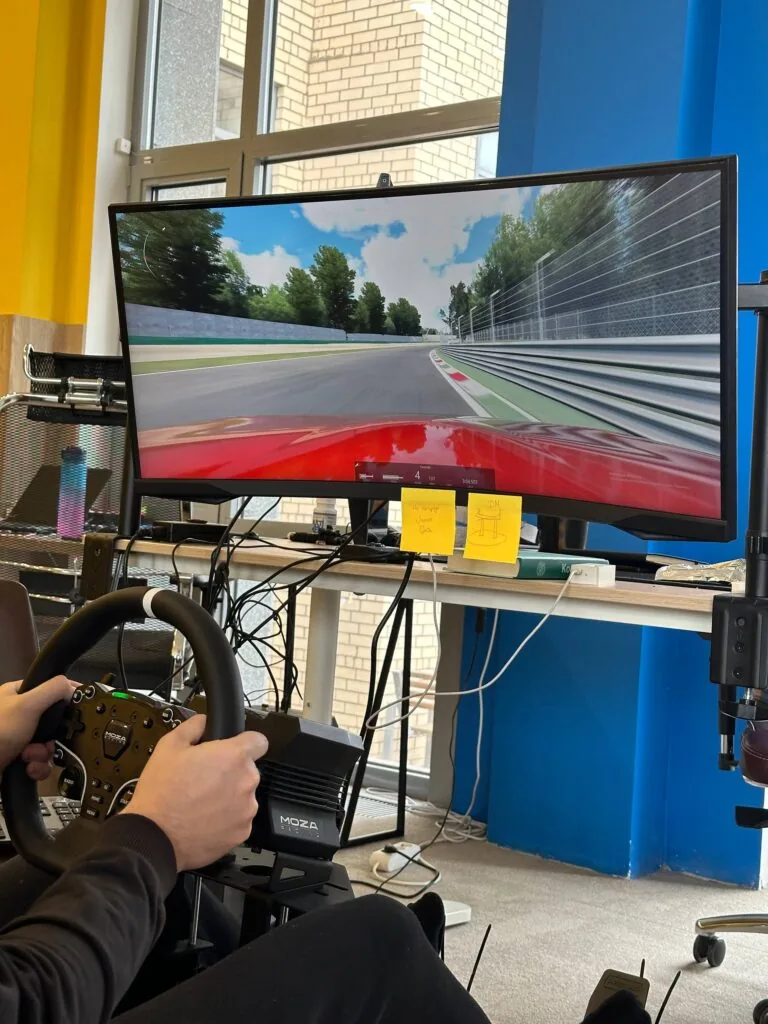
Currently, I am working on two key studio projects — Car Parking Multiplayer, which has already surpassed the 100 million downloads mark, and CPM 2. Both projects are developing in parallel and are strategically important for us. As a producer, I participate in discussions about game development: which updates to release, which cars and locations to add, and which mechanics will be interesting to players. We constantly monitor trends and new technologies, including actively exploring the capabilities of artificial intelligence to automate routine processes. This allows the team to devote more time to the creative aspects of development.
Beyond flagship projects, the studio also focuses on developing new teams and young specialists. We hosted our own hackathon, attracted students and aspiring developers, formed teams from them, and helped launch projects. This approach emerged partly because many juniors face a lack of opportunities to start their careers in the industry. It is important for us not only to create games but also to develop the game development market itself.
Game development is difficult to perceive as a regular job with a fixed schedule. It is more of a lifestyle and a constant creative process. Even outside of work hours, you continue to think about projects, analyze games, come up with new ideas and mechanics. For many developers, this is not just a profession, but a true calling.
As for challenges, we set ambitious goals for ourselves. One of our main principles is not to copy existing solutions or create clones of popular games. We strive to invent our own mechanics and new gameplay opportunities. Many ideas are born during team brainstorming sessions when we discuss what else can be improved or created for players. The constant search for new solutions and the desire to do something unique is what distinguishes us from many competitors and simultaneously remains the main challenge for the team.
Skills and Profession
When it comes to skills, the most important thing I would highlight is a genuine interest in game development and games in general. Perseverance and engagement in the process are also important. However, it cannot be said that there is a universal set of skills, because the gaming industry is very diverse: programmers, artists, testers, designers, and many other specialists work here. Nevertheless, an understanding of games and gaming experience still matter greatly, as they help better feel the product and the audience.
Regarding technologies and tools, Unity remains one of the most popular engines for mobile development. When it comes to 3D graphics, most developers today use Blender. If someone asked me where to start a career in game development from scratch, I would recommend a combination of Unity and Blender — especially for those who want to create their own projects independently.
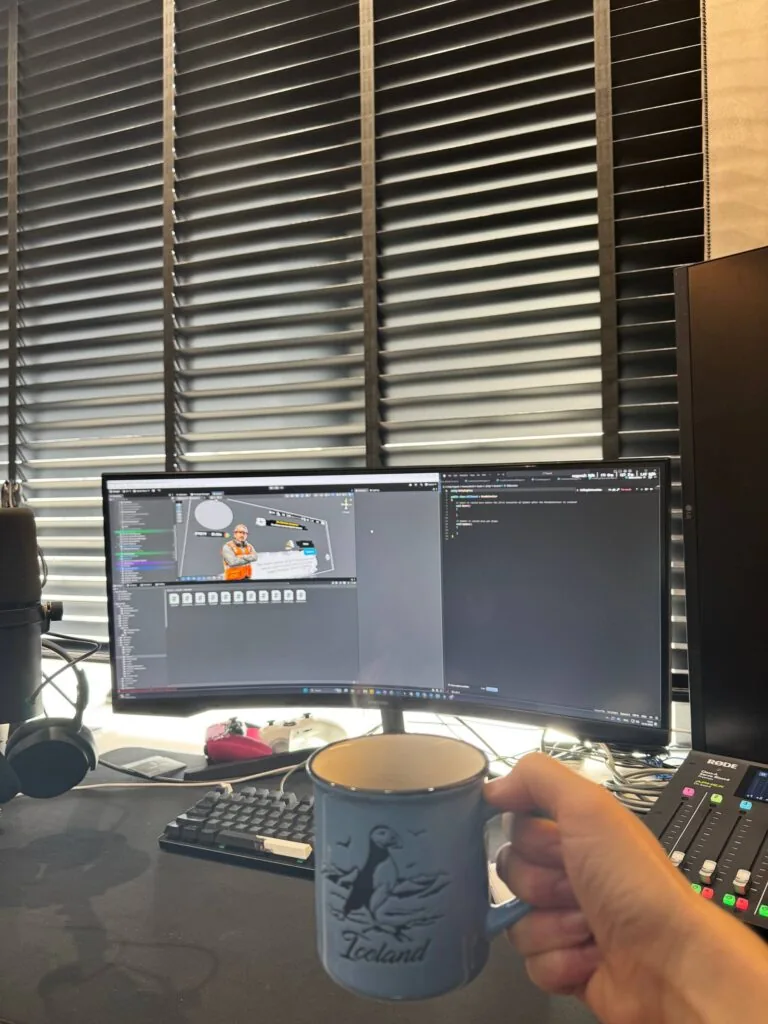
Furthermore, developers today need to leverage the capabilities of artificial intelligence. Such tools help speed up work, create prototypes, and solve many routine tasks. However, technology does not replace creativity. On the contrary, it is often the creative approach that makes projects more interesting and memorable. Therefore, skills related to creativity — drawing, music, design, and other creative fields — can be a significant advantage for a game developer. In my experience, creative people often create the most interesting projects.
How the Industry is Developing in Central Asia
There is currently good growth in the industry. A noticeable shift began approximately in the last two to three years, when the GameDev agenda began to actively develop in Kazakhstan. It turned out that we have many studios and interesting large projects that are not widely known outside the industry. In recent years, especially in collaboration with Astana Hub, marketing initiatives, hackathons, game development alliances, and specialized centers have begun to appear. Astana Hub also actively supports this direction — providing offices, resources, and helping to develop the ecosystem.
It is worth noting separately that interest in game development is also growing in neighboring countries, such as Uzbekistan, where this direction is also actively developing. Overall, the industry is currently showing significant growth — approximately 10 times compared to what it was 10 years ago. Leaders and companies that are driving the market forward are emerging, and this is very noticeable.
If we talk about what is lacking, first of all, it is specialized investors who understand the specifics of game development. Currently, there is a lot of non-specialized investment in the market, and misunderstandings often arise because game development is a high-risk industry where there is no guaranteed formula for success. Even large studios cannot always predict the outcome of a project. Here, it is important not just funding, but an understanding of the team, their experience, and potential.
At the same time, from the perspective of education and resources, the situation is already quite good — there are schools, courses, and programs, and there are no problems with basic entry into the industry. The main deficit now is rather in investments and professional understanding of the industry by investors.
Advice for Beginners
The main message for beginners: many aspiring developers try to make their first project too big and ambitious — as if they already have 10 years of experience. Even I, with 15 years of experience, always think about how to release a game, rather than just developing it endlessly. As a result, about 70-90% of such projects "stall" due to complexity.
I advise beginners to start with a small project that can be completed in one or two months. Now, with the help of artificial intelligence, this has become even easier. It is important to go through the entire process: understand the development structure, figure out how to release a game, how to work with advertising, and how to publish projects in app stores. This allows you to gain initial experience quickly, and then move on to more serious and large-scale projects. The problem is that many want to create their "dream game" right away and simply burn out in the process. Therefore, the main thing is to start small.
Regarding courses and training, I would not single out anything specific, because there is now a huge number of online resources, platforms, YouTube channels, and materials. In our time, there is no problem with access to knowledge — everything is open online. You can literally take a subscription to tools like cloud code or similar services and start figuring things out in practice, asking questions and learning along the way. The main thing here is desire and discipline, because today there are no restrictions on acquiring knowledge.
Plans
In the near future, I plan to release my new project, which I have been working on for about six months. During development, I used technologies new to me, including artificial intelligence tools and various modern mechanics. This is a fairly large and complex simulator project.
The game is called Landman Simulator. In it, the player develops their own oil company: builds oil rigs, manages the business, engages in micromanagement, upgrades the base, buys transport, and interacts with the game world from a third-person perspective. I performed almost all the work on the project — from graphics to programming code — independently, actively using the capabilities of artificial intelligence. The game is currently in the beta testing phase, and I plan to release the full version very soon.
If we talk about game development in general, I would advise developers not to be afraid to use artificial intelligence and master new tools. Many are skeptical about this, but AI is primarily a tool that helps bring ideas to life faster. Creating games today is not just about writing thousands of lines of code manually, but primarily about creativity. Artificial intelligence allows you to significantly speed up the development process and achieve results in a limited amount of time that previously required much more resources and time.
The Tech on Telegram Follow The Tech on Telegram
Keep up with the latest technology and startup news.
Related reading





More from this author

Article Useful
How to protect your accounts from hacking: 8 settings you should check today
The Tech

Article Useful
500 Global: How the Accelerator Works and Who Can Receive Investments
The Tech

Article Interviews
Game Development in Central Asia: Arkady Moldavski on Developing Reverb and the Growth of the Industry
The Tech

Article Useful
Google, Tesla, BlackRock, and the IMF: Where to Apply for an Internship in Fall 2026
The Tech

News IT
Tesla unveiled the flying electric car Roadster
The Tech

News IT
Intero Biosystems startup won the Startup Battlefield at TechCrunch Disrupt 2026
The Tech