How FinTech Helps Modernize eGov: The Story of Temirlan Amanbaev
Author - Mansur Ismagulov
The Tech AI
Get the key points in seconds - a short summary from The Tech AI.
Graduate of MIIT (2013), software engineer with experience in FinTech and e-commerce. Developed a LowCode platform for payment systems (Java 17, Spring Boot), increasing Libertex profitability by 20%. Since 2024, has been working as a Staff Software Engineer on the eGov 3.0 project, implementing microservices architecture, Apache Kafka, ClickHouse, and CI/CD, managing a team, and bridging business requirements with technical implementation.
About Me
I am an experienced development engineer. For several years, I worked in Central and Eastern Europe, specializing in creating FinTech products and high-load systems. My experience and deep knowledge allowed me to make a significant contribution to the development and optimization of modern technologies, helping companies reach new heights. However, my journey began long before that.
I graduated from the International University of Information Technologies (IUIT) in 2013. I started working full-time already in my fourth year, which gave me the opportunity to gain practical experience that became the foundation for my further career. Over the next few years, I gained experience in the Kazakh market, acquiring valuable skills in development and product management.
Active work on e-commerce and FinTech projects began in 2017, and by 2021, I had fully focused on the FinTech industry abroad. This experience allowed me to better understand the specific requirements and challenges in this field, which helps me successfully handle tasks of any complexity.
Development of a LowCode Platform for Global Payment Systems
One of the key projects I worked on was the development of an innovative LowCode platform designed for integration with global payment systems such as Visa, Mastercard, and PayPal, as well as local financial providers in Latin America, Asia, and Europe. This platform enabled companies to quickly and efficiently integrate with various payment services, minimizing time costs and technical complexities.
During the development process, I used advanced technologies such as Java 17, Spring Boot, PostgreSQL, Redis, DynamoDB, and Apache Kafka, which ensured high system reliability and performance. The implementation of this platform gave Libertex a significant competitive advantage, increasing its profitability by 20%.
Leading a Development Team for an Automatic Translation Platform
I also led a team of seven engineers who developed a platform for automatic translation of texts and websites using machine learning and professional translators. This system allowed companies to quickly and qualitatively adapt their products for various language markets, significantly reducing translation costs and accelerating the process of launching products into international markets.
In the framework of this project, I used technologies such as Python 3, Faust, FastAPI, Celery, Django, DRF, SQLAlchemy, and Docker. These tools ensured high system performance and flexibility, allowing for easy scaling to handle large volumes of data.
Challenges and Solutions in the eGov 3.0 Project
In early 2024, I accepted an offer to take the position of Staff Software Engineer in the eGov 3.0 project, aimed at the complete modernization of the state electronic services portal. This project represents a large-scale initiative to update state systems, implement modern technologies, and improve interaction between government agencies and citizens.
In this project, I play a key role, engaging not only in technical development but also in configuring teams for effective delivery of business features. My experience and skills allow me to successfully handle a number of complex technical challenges facing the project.
Personal Aspect: Inspiration and Motivation
I am not just a professional with extensive experience in developing high-load systems and FinTech solutions — I am also a person deeply passionate about the idea of improving state infrastructure. One of the products that has always inspired me is the Kazakh eGov — a platform that has changed the way millions of citizens receive state services over the last 10 years.
For more than ten years, I have been an active user of eGov, watching as the system evolved and became more user-friendly and accessible. I saw how eGov transformed from a simple platform into a powerful tool that allows receiving state services quickly and efficiently, without the need to visit government institutions. However, over time, I noticed that the pace of implementing new features began to slow down, which became a signal of the project's complexity and the need for further development.
This situation became a challenge that I could not ignore. Realizing that my many years of IT experience and passion for innovation could be decisive in the further development of eGov, I decided to join the project. For me, this became not only a technical challenge but also an opportunity to apply all accumulated experience to create a large-scale product that will make interaction between citizens and the state even more transparent, convenient, and accessible.
I strive to make the process of receiving state services as simple and intuitive as possible, so that people have more time to do what they really enjoy. I believe that modern technologies should serve people, making their lives easier and freeing them from routine tasks. This drive has become the motivating force behind my work on the eGov 3.0 project, and it is this inspiration that I put into every aspect of my work.
In the eGov 3.0 project, I play a key role, acting not only as a technical leader but also as a central link connecting business and technical teams. My many years of experience in programming and product management allow me to effectively solve tasks related to technology selection, development process management, and communication with various stakeholders.
Technology Selection and Strategic Planning
One of the main tasks in the project is selecting the technologies that will be used for the development of eGov 3.0. Deep knowledge in the field of modern technologies allows me to make informed decisions that ensure both high performance and system stability. I carefully analyze each technological opportunity, evaluating its alignment with project goals, scalability, and ability to handle high loads.
Technology selection is not just a technical aspect; it is a strategic decision that determines the long-term success of the project. I am responsible for implementing advanced tools and approaches, such as microservices architecture, Apache Kafka for asynchronous data exchange, ClickHouse for storing and analyzing large volumes of data, and CI/CD for automating development and deployment processes. At the same time, the latest version of Java LTS and Kotlin for asynchronous code are used, which allows creating high-performance and scalable systems that meet modern requirements.
Managing Blockers and Ensuring Smooth Development Process
I am also responsible for identifying and resolving blockers to ensure the development process runs as smoothly as possible. I closely monitor that all potential problems and delays are identified and resolved at early stages. This proactive approach allows the team to work without downtime and maintain a high development pace.
Being a leader with deep technical knowledge, I not only identify potential problems but also propose effective solutions that minimize the impact of these problems on timelines and development quality. My experience allows me to quickly find optimal ways to solve complex tasks and ensure the continuity of the development process.
Communication with Product Manager and Stakeholders
In addition to technical leadership, I play an important role in communication between the technical team and the business. I act as a bridge between the Product Manager and other stakeholders, ensuring that technical solutions align with business goals and expectations.
My ability to speak the language of both programmers and business managers allows me to effectively translate business requirements into technical tasks and vice versa. This is especially important in a project of the scale of eGov 3.0, where any misunderstanding can lead to significant delays or deviations from the plan.
I am responsible for ensuring that all parties are on the same page, that decisions are made quickly and with full understanding of the context, and that the project progresses according to the established course.
Role in the Project as a Connecting Link
I remain the central link connecting the business and the technical team. My unique combination of experience in programming and management allows me to effectively lead the project, ensuring its success at all levels. I am not only responsible for the technical side of the project but also actively participate in strategic planning, resource management, and communication with key stakeholders.
Microservices Architecture and Event-Driven Model
The transition to microservices architecture and the implementation of an event-driven model became one of the key steps in the modernization of eGov 3.0, significantly increasing the flexibility, scalability, and fault tolerance of the system. Separation into independent services simplified the development, testing, and deployment of new features, while the use of various communication protocols such as REST, gRPC, and SOAP provided flexibility in integration with various systems, including legacy ones.
The asynchronous event-driven model via Apache Kafka accelerated data transfer and reduced dependencies between services. The pub/sub pattern allowed services to react to events in real time, which increased system performance, while the use of Kafka Streams for processing events from one topic to another simplified the implementation of complex business logic at the data stream level, minimizing delays.
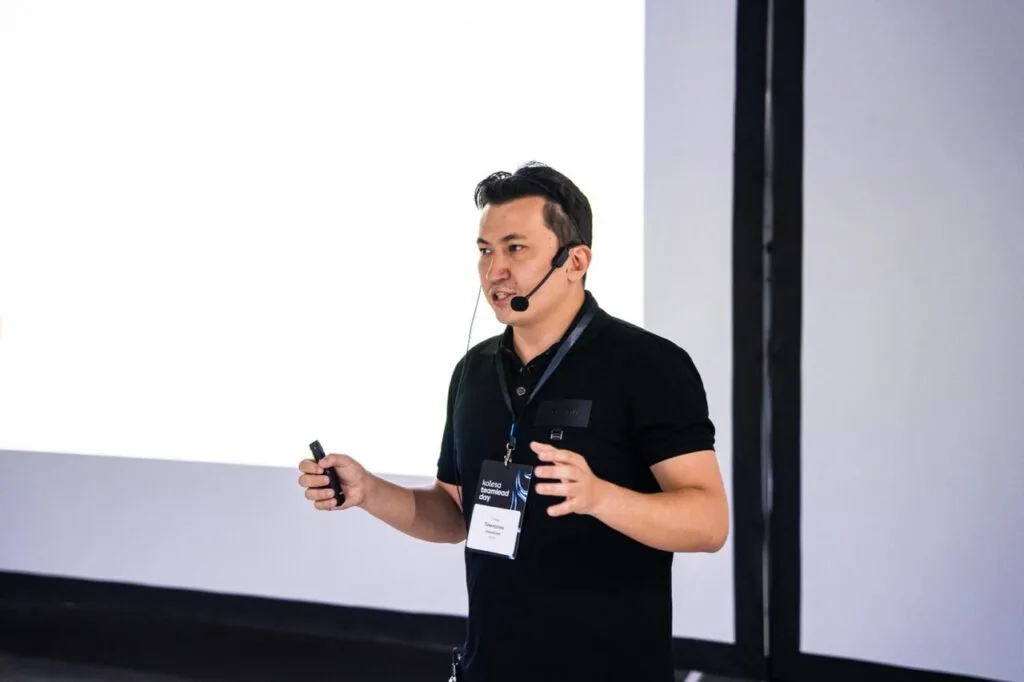
Migrating to the latest versions of Java LTS and implementing Kotlin for asynchronous code improved application performance and security, opening access to new tools and frameworks. Building a distributed architecture based on Apache Kafka and ClickHouse ensured system scalability and fault tolerance, allowing efficient management of large volumes of data and minimizing delays in their processing.
Implementation of Automated CI/CD Processes
Automation of the code delivery process from development to Production through CI/CD became an important part of the modernization strategy for the eGov 3.0 project. Implementing CI/CD significantly accelerated development, testing, and code deployment, ensuring its stability and quality.
Automation of the CI integration process allowed developers to quickly integrate changes into the main code branch, where they are automatically tested. This ensured early detection of errors and prevented their accumulation, which is especially important in projects with many microservices.
Continuous Delivery (CD) ensured automated deployment of code in various environments — from testing to Production. This allowed for the rapid delivery of new application versions with minimal downtime and reduced the likelihood of errors associated with manual deployment.
Tools such as Docker and Kubernetes, used within CI/CD, simplified containerization and orchestration of microservices, which allowed for effective scaling and system management. As a result, CI/CD ensured fast, reliable, and continuous delivery of updates, increasing overall system performance and flexibility.
Support for Agile/Scrum Principles
I actively support Agile/Scrum principles, which has become a key factor in the successful implementation of the eGov 3.0 project. In my work, I apply best practices of agile development, ensuring constant interaction within the team and maximum transparency of processes.
Daily stand-ups play an important role in maintaining team synchronization. Under my leadership, these short meetings help each team member stay informed about the current status of tasks, identify potential obstacles, and promptly resolve emerging issues. Thanks to this, the project moves forward without delays, and all participants remain on the same page.
Planning sessions under my leadership allow for clear definition of goals for each sprint, prioritization, and distribution of tasks in such a way as to maximize the effective use of team resources. I pay special attention to ensuring that every team member understands their role and contribution to achieving the common goal, which contributes to motivation and productivity.
Grooming, or task refinement, helps the team regularly review and improve the backlog. I ensure that tasks are detailed and understandable to every team member. This prevents misunderstandings and helps avoid wasting time on refining requirements during the sprint.
Review sessions provide an opportunity for the team to evaluate completed work, gather feedback, and identify areas requiring improvement. I emphasize constructive criticism and support a culture of continuous learning, where every mistake is viewed as an opportunity for growth.
Retrospective allows analyzing the past sprint, identifying successful practices and areas requiring improvement. Under my leadership, the team actively participates in discussing what worked well and what can be improved in the future. This contributes to continuous process improvement and increased work efficiency.
Results of Implementing Agile/Scrum under my leadership have already manifested in increased development speed, improved product quality, and better team adaptability to changes. These approaches not only help achieve set goals but also create a positive and productive atmosphere in the team.
My career and achievements in international companies, development of innovative FinTech solutions, and leadership of large projects such as eGov 3.0 confirm my ability to effectively handle the most complex technical and organizational tasks.
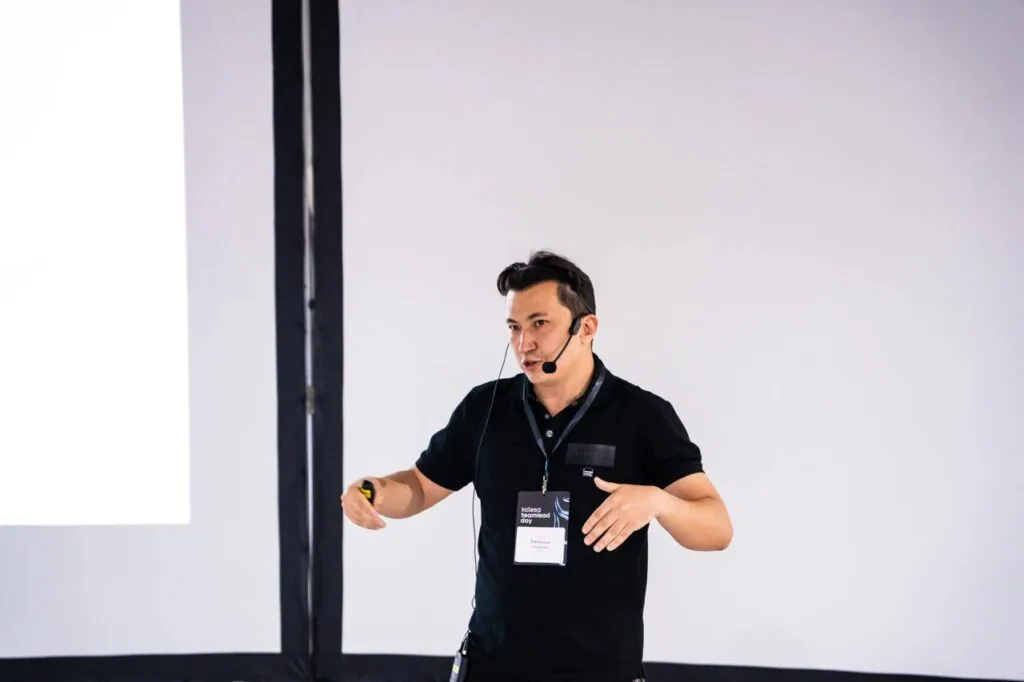
As a central link connecting the business and the technical team, I use my skills and knowledge to create large-scale and reliable systems that have a real impact on the lives of millions of people. My desire to make state services more accessible and transparent, as well as my willingness to accept challenges and implement advanced technologies, allow me to make a significant contribution to any project.
Considering all that has been achieved and the accumulated experience, I continue to move forward, striving for new heights in my career. I am convinced that modern technologies should serve people, and this conviction lies at the foundation of every project I work on. Not only talking about the future of technologies but actively building it, making this future more accessible and secure for everyone.
The Tech on Telegram Follow The Tech on Telegram
Keep up with the latest technology and startup news.
Related reading





More from this author

News
zypl.ai begins operations in Japan and focuses on next-generation risk models
Mansur Ismagulov

News
Elon Musk's net worth has exceeded $700 billion for the first time
Mansur Ismagulov

Article Interviews
"Central Asian countries should build a joint ecosystem," — Bekhzod Ismoilov on the development of AI in the region
Mansur Ismagulov

Article Interviews
Bloom's Taxonomy and Engineering Levels: A Practical Growth Model
Mansur Ismagulov

Article Useful
How the IT industry in Azerbaijan developed in 2025: key events
Mansur Ismagulov
News
Tajikistan has become a new member of the regional innovation alliance Central Asian Innovation Hubs
Mansur Ismagulov