How Central Asian University prepares hardware engineers
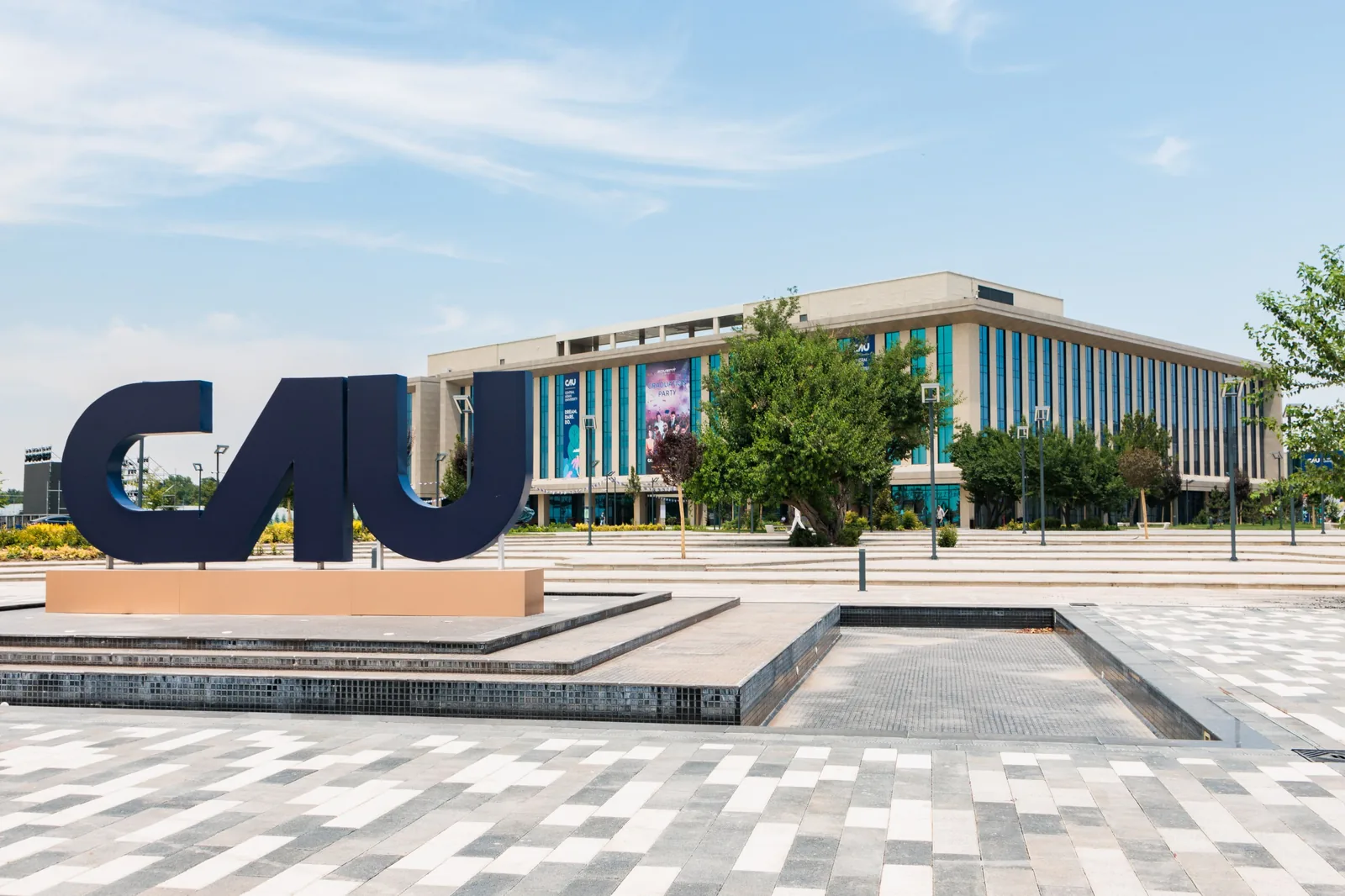
CAU is a modern university that combines comfort, safety, and advanced technologies. The university campus is designed to meet the highest standards for educational institutions, offering students and faculty ideal conditions for learning, research, and self-realization. The university has a strong material and technical base, modern laboratories, and educational equipment that enable the implementation of ambitious projects and the training of specialists in demand on the global market.
Author - Mansur Ismagulov
The Tech AI
Get the key points in seconds - a short summary from The Tech AI.
The hardware track at Central Asian University (CAU) has been actively developing since 2021. Key faculties include computer science, industrial engineering, and biomedical engineering. The university collaborates with partners such as Artel, Akfa Group, Texnopark, Imzo, Huawei, and Siemens Company. Plans are underway to open IoT and robotics laboratories for students.
On the development of the hardware direction at the university
The hardware direction at Central Asian University, CAU began to actively develop in 2021 within the framework of the Engineering School. Already in 2023, with the opening of new faculties — industrial engineering and biomedical engineering — this direction received a powerful impetus for growth.
The key faculties of the university are computer science, industrial engineering, and biomedical engineering.
The university strives so that its graduates not only receive a quality education but also become leaders in their professional field. Within the framework of this strategy, the following priority areas are being implemented:
— increasing technical expertise: providing students not only with deep theoretical knowledge but also with practical skills in hardware design, working with embedded systems, and microelectronics
— developing advanced research: supporting innovations in such areas as IoT, robotics, biomedical devices, and industrial automation
— expanding cooperation with industry: active interaction with leading companies, allowing students to apply their knowledge in real projects and internships
— modernizing equipment: creating laboratories equipped with the latest technology, where students can experiment and develop prototypes
— supporting startups: helping students turn their ideas into real products by providing access to resources, mentoring, and investments
— preparing graduates for the industry: developing educational programs taking into account the current requirements of the industry, ensuring graduates have all the necessary skills and certificates.

Laboratories and classrooms
There are functioning at the university:
— basic electronics laboratory, where students work on projects related to digital logic, embedded systems, and IoT
— biomedical engineering laboratory, with plans for Siemens in the new academic year, where devices for health diagnostics and monitoring are created
— industrial engineering laboratory, where students design mechatronic systems and implement "Industry 4.0" technologies.
All laboratories are equipped with everything necessary to bring ideas to life:
— microcontrollers: ESP32, Arduino Nano, Arduino Uno
— measuring instruments: oscilloscopes, multimeters, digital power supplies
— soldering stations and 3D printers for creating prototypes
— online simulators such as Wokwi and Tinkercad for quick testing of ideas.
Each classroom is designed as a space for creativity. Workstations are equipped with soldering stations, measuring instruments, and computers for programming, allowing students to work with both real equipment and simulators, testing ideas and finding optimal solutions.

Learning process and student projects
The educational programs cover all key aspects of hardware engineering:
— basics of electrical engineering and electronics
— biomedical signals and sensors
— electrical circuits and systems
— industrial automation and robotics
— pneumatics and hydraulics
— calculations and design.
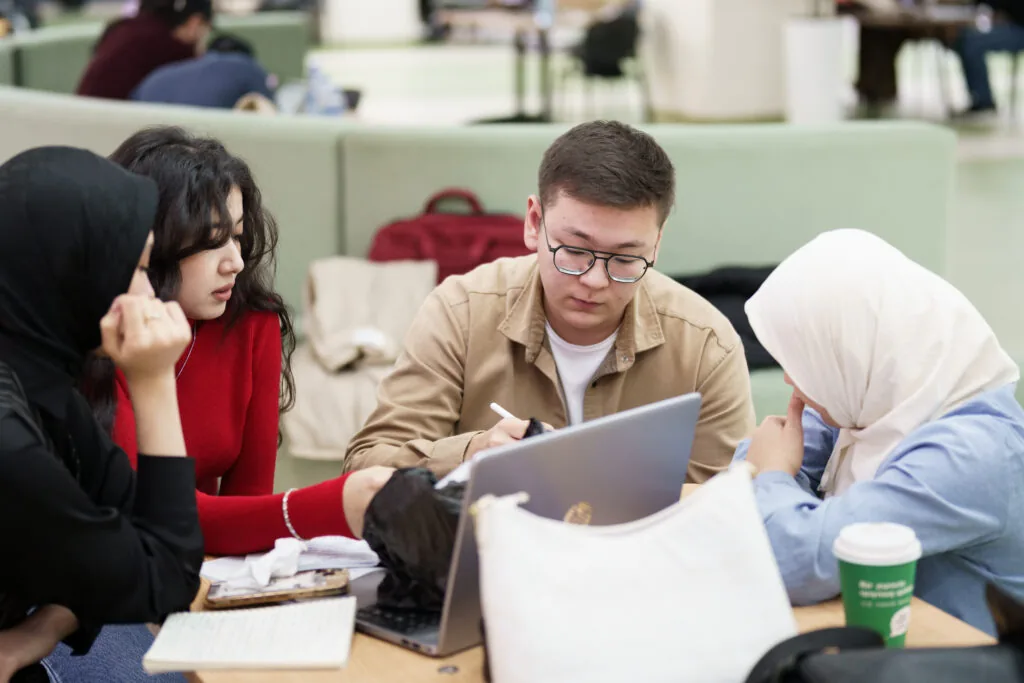
The university actively supports student initiatives: hackathons, championships, and innovation competitions are held. Students can apply for grants to fund their projects, as well as participate in startup programs, where they receive mentoring and access to investments.
Among the key partners of the university: Artel, Akfa Group, Texnopark, Imzo, Huawei, Siemens Company. These companies not only provide internships but also participate in joint projects, allowing students to work with real tasks and technologies.
Future and prospects
In the near future, the university plans to create a new IoT laboratory equipped with Raspberry Pi, FPGA, Jetson Nano, PIC microcontrollers, and a wide range of sensors, from temperature and humidity to biometric and RFID/NFC. Also planned is the opening of a robotics laboratory, where students will be able to study programming and robot control.
Graduates of the university are engineers who change the world. They work in such areas as:
— development of IoT solutions for smart cities and industry
— creation of embedded systems for autonomous devices
— design of robots and automation systems
— development of biomedical devices for diagnostics and treatment.
Many graduates also launch their own startups, integrating hardware and software to create innovative products.
Central Asian University, CAU is a place where ideas become reality, and students become architects of the future. The university campus combines comfort, safety, and a modern digital space, creating ideal conditions for learning, scientific work, and self-realization. The university is proud that its educational programs are developed taking into account the requirements of employers, and the laboratory base allows implementing any scientific ambitions.
The Tech on Telegram Follow The Tech on Telegram
Keep up with the latest technology and startup news.
Related reading







More from this author

News
zypl.ai begins operations in Japan and focuses on next-generation risk models
Mansur Ismagulov

News
Elon Musk's net worth has exceeded $700 billion for the first time
Mansur Ismagulov

Article Interviews
"Central Asian countries should build a joint ecosystem," — Bekhzod Ismoilov on the development of AI in the region
Mansur Ismagulov

Article Interviews
Bloom's Taxonomy and Engineering Levels: A Practical Growth Model
Mansur Ismagulov

Article Useful
How the IT industry in Azerbaijan developed in 2025: key events
Mansur Ismagulov

News
Tajikistan has become a new member of the regional innovation alliance Central Asian Innovation Hubs.
Mansur Ismagulov