How an architect from Kazakhstan creates projects for The Walt Disney Company
A Kazakh architect shares insights into working at Disney Imagineering and explains how immersive spaces are created—from concept and storytelling to AR and VR technologies that help design the experience before it is even built.
Manarbek Toleu, City — Los Angeles, Architectural Designer at The Walt Disney Company, LinkedIn
About Me
I am an architect specializing in the design of immersive spaces at the intersection of architecture, spatial storytelling, and augmented and virtual reality technologies.
My professional work focuses on developing architectural environments where space functions not only as a physical structure but also as a tool for shaping perception, emotional response, and memory.
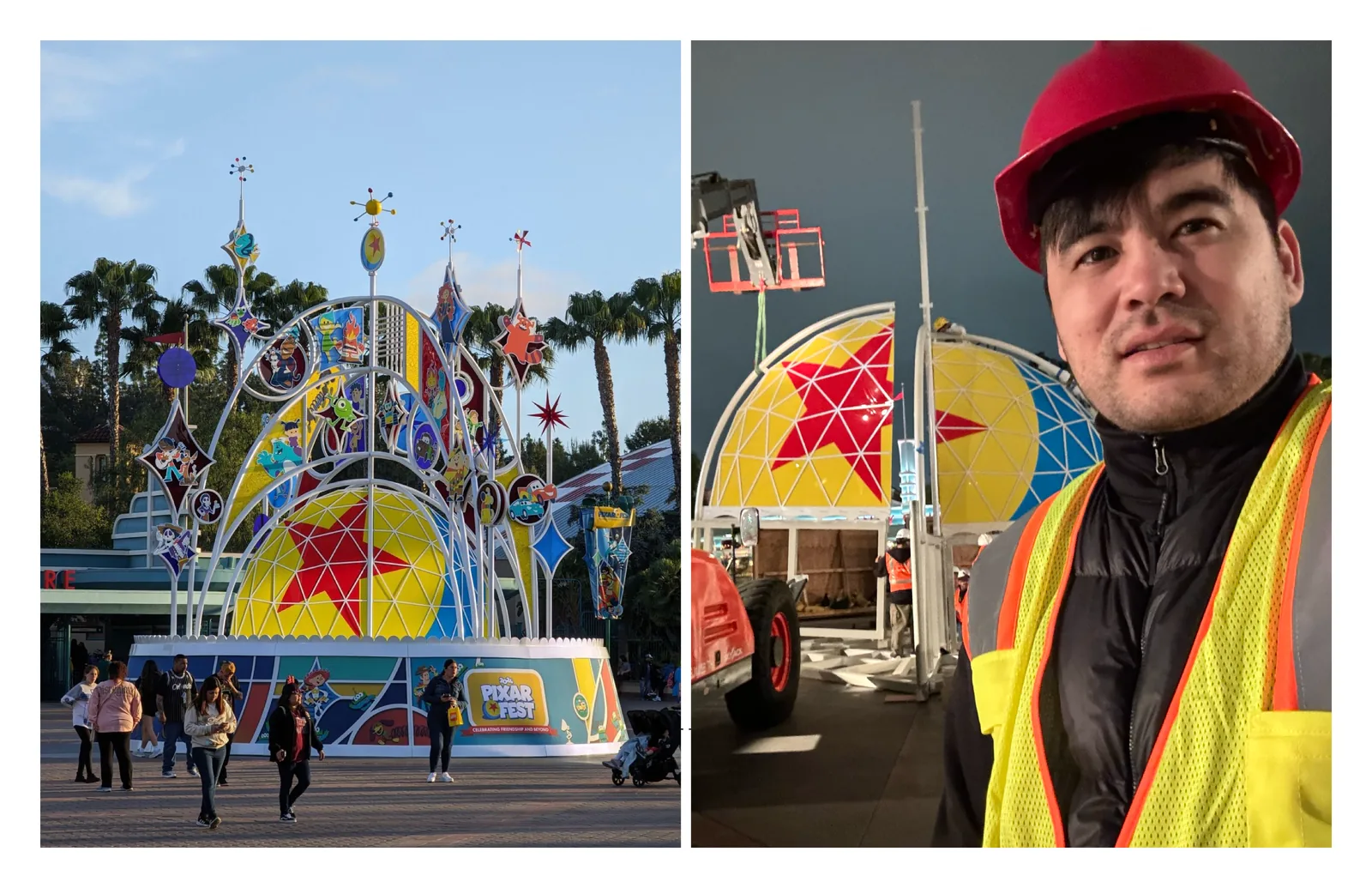
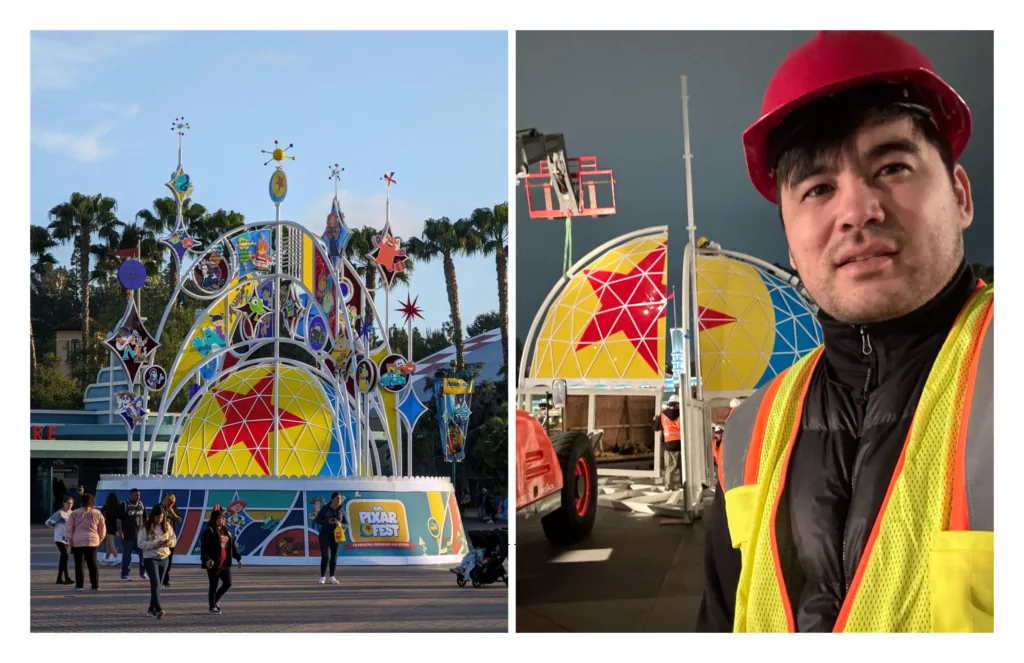
My portfolio includes projects of various scales, from EXPO 2017 Pavilions to themed and hospitality venues, including the Pixar Fest 2024 Esplanade Pavilion, Radiator Springs Cozy Cones Expansion, Napa Restaurant, Disneyland 70th Esplanade Castle Pavilion, projects for Disneyland Hotel, Grand Californian Hotel, Aulani Hotel, as well as work for Universal Studios.
A key focus of my work is integrating narrative logic into architectural design using AR and VR technologies for spatial simulation and pre-evaluation of user experience. This allows for designing architecture as a lived experience rather than a static object. This interdisciplinary approach represents an evolving field in immersive architecture and thematic design.
I work as an architect at Walt Disney Imagineering, the creative and engineering division of The Walt Disney Company, which is recognized as a global leader in the design of theme parks, resort complexes, and immersive environments. Imagineering develops concepts and implements theme parks, attractions, resort complexes, and immersive environments worldwide.
This is an interdisciplinary structure where architects, engineers, artists, writers, and technologists collaborate to create spaces visited by millions of people annually.
Within this framework, I participate in developing architectural solutions for large-scale international projects, including theme parks, hotel complexes, and commercial spaces.
Additionally, in my practice, I use AR/VR walkthroughs as a tool not only for visualization but also for analyzing the architectural environment: visitor flows, visual axes, scale, and functional scenarios. This enables more accurate design decisions at early stages and reduces the number of adjustments during implementation.
How to Join The Walt Disney Company
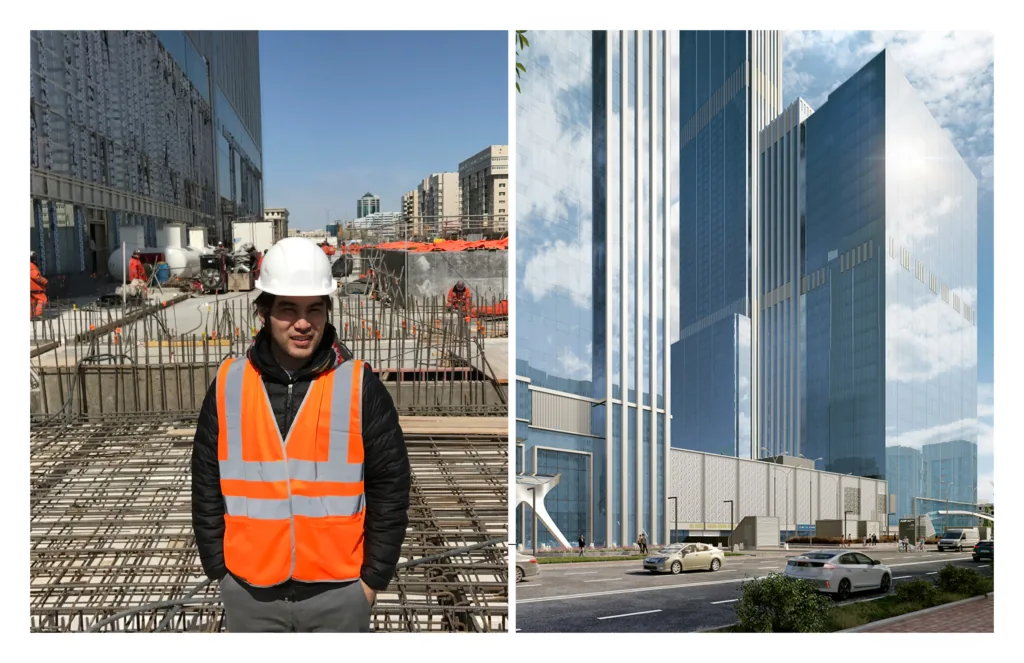
My path was the result of combining architectural education, experience working on large public facilities, and a strong portfolio demonstrating systemic thinking.
Beyond architecture, my understanding of the urban environment, principles of urbanism, and real estate development helped me. International companies value specialists who see a project not in isolation but as part of a broader ecosystem.
Professional contacts and networking also played a significant role. In the international arena, it is important not only what you can do but also how you communicate, interact, and build professional relationships.
The hiring process was multi-stage and included portfolio reviews, technical interviews, case discussions, and assessment of teamwork abilities.
It was important to demonstrate not only design skills but also the ability to independently lead tasks, make decisions, and take responsibility for results. The ability to work in a team while maintaining independent thinking and solving assigned tasks without constant supervision was evaluated.
Advice for Those Who Want to Work in an International Company
Develop systemic thinking. Architecture is not just about form; it is a whole system.
Do not focus solely on visualization. It is important to explain why you made a particular decision and how it affects the human experience.
In immersive architecture, every detail serves the story. If a detail is missing or unnecessary, the entire effect is lost.
Describe projects simply: task, problem, solution, result.
Work Features
I work in three main areas:
1. Theme Parks. Attractions and immersive environments for themed lands.
2. Hospitality. Hotel spaces focused on user experience.
3. Retail. Commercial spaces where architecture must support the story and ensure business efficiency.
The balance between emotion and functionality varies in each area. In theme parks, the immersion effect is crucial. In hotels, comfort and long-term memory of the stay are important. In retail, connecting experience with commercial logic is key.
My responsibilities include:
— developing conceptual architectural solutions
— integrating spatial narrative
— coordinating with interdisciplinary teams
— designing architectural elements that shape the immersive environment.
I actively use 3D modeling, BIM, and AR/VR walkthroughs. However, technology is just a tool. The foundation of the work is storytelling, details, sensations, memory, and nostalgia.
AR allows analyzing real space with a digital layer. VR provides the opportunity to test the future environment before construction. This helps evaluate scale, movement, and emotional perception.
The main challenge at work lies in balancing aesthetics, operational requirements, and safety.
An immersive environment must be emotional yet withstand high loads, meet safety standards, and be economically sustainable.
Successful work requires skills such as systemic thinking, attention to detail, teamwork, and understanding of cultural context. An architect must feel the audience and understand what triggers an emotional response in different cultures and generations.
Disney Imagineering strives to stay at the forefront of technology and creative approaches. There is continuous support for skill development and knowledge exchange between international parks. I interact with colleagues from Disneyland Paris and other locations, which broadens my professional perspective.
The company encourages visiting art exhibitions and research trips, which enhance artistic perception.
I have also learned an important principle from colleagues—it is important not only to create commercial projects but also to give back to society, participate in public initiatives, and help through design.
An international team requires a high level of communication culture, respect, and clarity of expression. Diversity of cultures and professional approaches enriches the project, adds depth, and expands perspective. At the same time, flexibility and the ability to account for different standards and regulations are required.
My professional activity takes place in an international environment and involves interaction with teams from various countries and cultural contexts. The projects I participate in are aimed at a global audience and receive millions of visitors from around the world annually.
Working in a cross-cultural professional environment requires adaptation to various regulatory requirements, safety standards, and cultural audience expectations, which enhances the complexity and significance of architectural solutions.
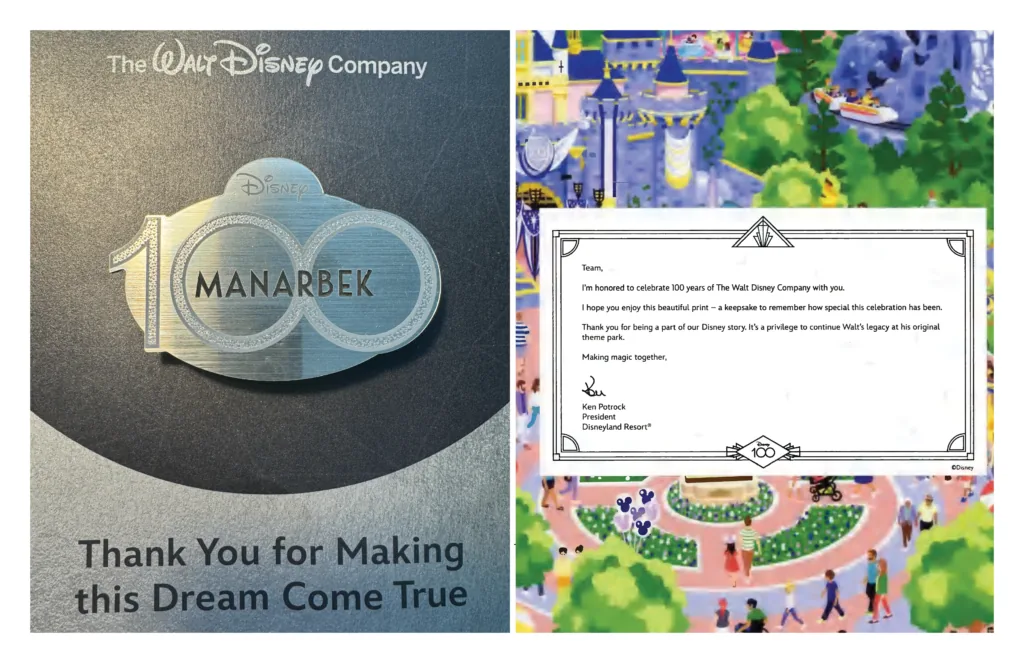
The most memorable moment for me at work was participating in projects dedicated to the 100th anniversary of The Walt Disney Company and the 70th anniversary of Disneyland. These projects were implemented as part of international initiatives and targeted a multi-million annual visitor audience.
As part of these events, the Disneyland 70th Esplanade Pavilion and infrastructure elements were realized. In one of the medallions for the 70th anniversary, a sketch inspired by my daughter’s drawing and Kazakh ornaments was used. For me, this became a connection between personal and professional history.
Visiting Disney archives and getting acquainted with original master plans of the first parks was an important inspiring moment.
For my contribution to the projects, I received official Disney 100 and Disneyland 70 pins.
For success at work, it is important to:
— understand that architecture is a narrative
— be able to combine technology, functionality, and emotional experience
— develop your own architectural vision.
I believe the future is linked to meta-architecture and new forms of spatial experience. True success is the ability to leave a legacy.
About Life Abroad
I view international experience as a stage of professional growth. I am a citizen of Kazakhstan and strive to apply the knowledge I have gained for the development of my country.
Working in the US provides strong professional growth but requires significant effort. Starting a career without local education is significantly more difficult.
The international environment implies strict professional ethics, focus on results, and a high level of responsibility.
My advice is to move for development and following your professional dream, not just for financial expectations. This is a competitive environment requiring constant growth.
Be ready to adapt, maintain curiosity, and develop professional confidence.
The Tech on Telegram Follow The Tech on Telegram
Keep up with the latest technology and startup news.
Related reading






More from this author

Article Useful
How to protect your accounts from hacking: 8 settings you should check today
The Tech

Article Useful
500 Global: How the Accelerator Works and Who Can Receive Investments
The Tech

Article Interviews
Game Development in Central Asia: Arkady Moldavski on Developing Reverb and the Growth of the Industry
The Tech

Article Useful
Google, Tesla, BlackRock, and the IMF: Where to Apply for an Internship in Fall 2026
The Tech

News IT
Tesla unveiled the flying electric car Roadster
The Tech

News IT
Intero Biosystems startup won the Startup Battlefield at TechCrunch Disrupt 2026
The Tech