"By 2030, crypto payments will account for up to 10% of the global market," says the CEO of Binance Kazakhstan on the new stage of the crypto industry's development.
In an interview with The Tech, Nurbek Koshimov, CEO of Binance Kazakhstan, explained why crypto has ceased to be an experiment and has become part of real infrastructure, how AI is changing the security system, and why it is important for companies in the region to think globally from day one.
Author - Mansur Ismagulov
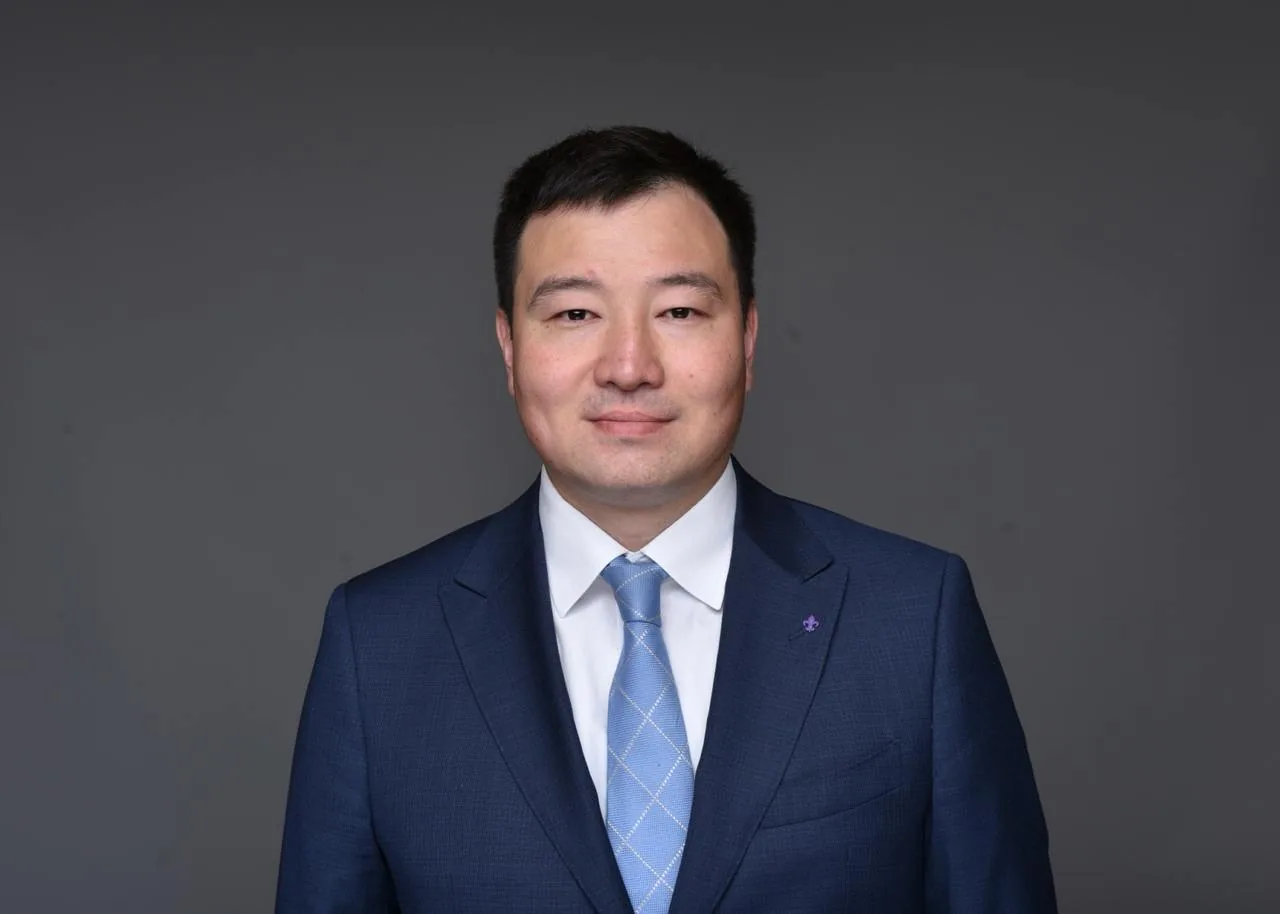
Nurkhat Kushimov, city — Almaty, CEO of Binance Kazakhstan
Vision and Strategy
The IT market in Kazakhstan and the region is undergoing a profound transformation, and this is best illustrated by the crypto industry. Crypto has ceased to be a "hype" and has become part of real infrastructure—from banking services to everyday applications. The memorandums between Binance, Freedom Bank, and Yandex Qazaqstan are the best example: just yesterday, such partnerships seemed impossible, but today they show that crypto is entering the life of the average user.
But the most important thing is why such integration became possible at all. The market has come a long way in terms of security and maturity. At the global level, Binance invests colossal resources in compliance, law enforcement training, and technological protection systems. From the end of 2022 to mid-2025, our systems prevented over $10 billion in potential fraudulent transactions and protected more than 7.5 million users. Independent analytical firms record a sharp decline in the share of illegal transactions, despite Binance processing volumes comparable to the combined volume of the next six largest exchanges.
These changes are creating a completely different culture in Kazakhstan as well. Regulation by the AFSA, licensing of local players, cooperation with state institutions, and official banking channels—all of this forms a space where crypto assets for the first time become a safe, legal, and transparent part of the country's financial life. When the infrastructure is reliable, users and banks begin to perceive crypto as a tool that solves real tasks: from daily payments to cross-border transfers.
Looking three to five years ahead, the potential only grows. Central Asia is forming strong IT teams, Web3 specialists, and infrastructure projects, while state support is accelerating digitalization.
Today, our strategy is most influenced by two global processes: the rapid maturation of the crypto industry and the sharp increase in the role of artificial intelligence in ensuring security. AI is no longer just a "technology for experiments" but has become a real tool that changes the rules of the game. We can quote Binance FIU Head Niels Andersen-Røed: "Investigating blockchain activity is not exact mathematics, but a combination of analytics, experience, and dozens of checks, where algorithms allow identifying connections that were previously inaccessible to the human eye."
We see this in our own processes as well. Over the past two years, Binance has conducted more than 400 training programs for law enforcement agencies worldwide, including the largest international training for investigators in its history, which brought together 1,300 specialists from 86 countries. In Asia, we conducted a series of in-depth practical seminars, as well as special trainings for prosecutor's offices and financial intelligence units in various countries.
At the same time, the crypto industry itself is undergoing deep institutionalization: regulated products are appearing, the role of stablecoins is growing, and asset tokenization is becoming not an experiment but a market standard. Institutional players are no longer just "looking at" crypto investments but are entering the market with real projects, infrastructure, and long-term strategies.
And this is exactly why Binance is changing. To meet the new reality, we are restructuring processes, strengthening compliance, developing AI tools, expanding partnerships with state structures, and creating an architecture that can withstand the scale of global finance. We are evolving because the market is maturing and because millions of users expect from us a level of security, transparency, and responsibility that should correspond not to yesterday's crypto market, but to the future financial system.
Technologies and Innovations
When we talk about technology implementation, for us there is always one main benchmark: every innovation must bring tangible and measurable value to the user. Technology must accelerate processes, reduce costs, increase convenience, or enhance security; otherwise, it is simply an experiment, and we do not work for the sake of experiments. We create solutions that change the real user experience, not just presentations.
The second principle is compliance with regulatory requirements and high security standards. We operate in the financial industry, where the cost of error is too high, and any new technological solution undergoes serious testing, risk modeling, and resilience checks at our company. Only after that can we integrate it into our products.
And finally, we always look at scale. Many ideas work well with a limited audience but cannot withstand the load of a global ecosystem. Therefore, we ask ourselves one key question: can the technology function stably when millions of people around the world use it? If yes, we move forward. If no, we continue to refine it. This approach allows us to build solutions that withstand reality, not just concepts.
For us, AI is already not a fashionable word, but a working layer of infrastructure. Within the company, we use our own secure solutions, such as SAFUGPT—an internal AI platform that helps teams write and check texts faster, understand documents, translate materials, prepare analytics, and at the same time not expose confidential data to external services. Essentially, this is our secure ChatGPT, integrated into Binance's daily work.
In the area of risks and security, AI has become the center of gravity of our processes. One example is Strategy Factory, our AI assistant for building rules in risk systems. Instead of manually sifting through thousands of logical conditions, it helps teams find working combinations of signals, reduce false positives, and respond faster to new fraud schemes. This directly affects the protection of logins, KYC, deposits, and withdrawals, making our solutions not only smarter but also much more transparent for analysts.
And finally, we look at AI as the foundation for future products. From internal assistants and automated investigations to AI agents capable of interacting with protocols and chains—all of this is gradually becoming part of the Binance ecosystem. We proceed from simple logic: AI should enhance security, speed, and the quality of decisions for users, rather than being a "feature for the sake of a feature."
If we look at technology development soberly and without illusions, it can be assumed that the next wave is the transition from generation to autonomy. We see how AI is no longer just a tool for creating text or images but is beginning to become an independent participant in processes. This refers to systems capable not only of analyzing data but also making decisions, interacting with protocols, conducting operations, and managing chains of actions without human intervention.
This evolution is directly related to asset tokenization. When value—from money to property rights—becomes digital and programmable, AI gains the ability to work with it at the infrastructure level. This logically leads to the formation of a machine economy, where devices, services, and autonomous agents interact with each other within clear rules, transparent mechanisms, and smart contracts.
Essentially, this is a possible new logic of Web3—smarter, automated, and distributed. And companies that are already adapting to this future landscape today may have a serious advantage tomorrow.
Today, a strong IT specialist is someone who can think systematically, learn quickly, and understand product logic. The need for just "technical hands" is disappearing—the ability to solve problems, see the architecture, and work in a team is coming to the fore.
Tomorrow, the ability to use AI as a tool will be especially important. Not just to "ask the model," but to integrate it into your work, understand its limitations, responsibilities, and risks. This will be as important as the ability to write code today.
And one more criterion is ethics. The more autonomous systems become, the more important specialists who understand the boundaries of responsibility and can make mature decisions will be.

Business and Markets
The potential of Central Asia has already been confirmed by real figures and systemic changes. According to the Minister of AI and Digital Development Zhaslan Madiev, over nine months, Kazakhstan exported $471 million worth of IT services to 95 countries, and the Astana Hub ecosystem added another $428 million in 2024. The engineering school is growing, international R&D centers are appearing, GovTech and infrastructure are developing—from 20 regional IT hubs to offices in the USA, Saudi Arabia, and Singapore. The region has ceased to be a local player and is beginning to confidently enter the global market.
It is also important that the region is strengthening its positions not only in classic IT but also in the rapidly growing digital assets industry. Kazakhstan is building a transparent crypto ecosystem: licensing of platforms has been implemented, state initiatives have been launched, and the first institutional crypto fund in the region, Alem Crypto Fund, managed by Qazaqstan Venture Group, has been created. The fund is serviced on the basis of Binance Kazakhstan, which provides it with world-class infrastructure—from digital asset storage to compliance and technical support—and allows it to operate according to international standards from day one.
If the pace continues, Central Asia could become a key technological and crypto hub between Europe, the Middle East, and Asia. The foundation is laid—now everything depends on the scale and speed of companies entering the global mainstream.
The main barrier to international expansion is not resources, but mindset. Many companies initially make products for the local market and think about scaling too late. Globality is not the next stage, but a principle that must be laid from day one: in design, UX, business model, and technology.
The second barrier is the lack of work according to international standards: corporate governance, transparency, compliance, data protection. For global partners, this is a key criterion of trust.
But these barriers are surmountable. There are already examples of companies from Kazakhstan, Uzbekistan, and Kyrgyzstan that have entered the world market precisely because they immediately built their operational model according to global rules.
Future
If we look at the dynamics of recent years, our mission for the next decade is to make digital assets as natural a part of the global economy as the internet has become part of our daily lives. Already today, more than $125 trillion in trading volume has passed through the Binance ecosystem, and users make an average of 217 million transactions per day—a scale comparable not to one country, but to the global financial system.
We see that crypto is no longer a niche technology: Binance Pay alone has processed over $230 billion and 300 million transactions, and users have saved $1.75 billion in fees. This is not an "industry of the future"—this is new global payment infrastructure that is already working.
Our task for the next 10 years is to make this infrastructure as safe as possible. We have already prevented nearly $10 billion in potential fraudulent losses and helped 7.5 million users preserve their funds. The wider the industry becomes, the higher security standards we must set.
I am inspired by how quickly cryptocurrencies are ceasing to be a niche and becoming a real tool of the world economy. Mass payments in stablecoins have already exceeded $10 billion per month, and EY forecasts that by 2030 they could account for 5-10% of global payments. Even SWIFT is implementing a blockchain ledger, recognizing the new format of financial infrastructure: faster, more transparent, simpler.
I am particularly inspired by the growth of Binance Pay. Over 300 million transactions totaling $230 billion have already been conducted, and users have saved $1.75 billion in fees. Integrations at the level of entire countries—from Pix in Brazil to the QR system in Argentina and the platform in Bhutan—show that crypto payments are becoming part of everyday life.
I am inspired by moments like these when technology ceases to be an idea and becomes a practical tool that makes people's lives easier. We are finally moving beyond theory—and now our task is to build infrastructure that ensures safe, global, and mass growth of the industry.
My advice to aspiring IT entrepreneurs is DYOR, Do Your Own Research. Always conduct your own research. In the world of technology and digital assets, there is too much noise and too many offers that are "too good to be true." Do not make decisions based on hype, others' emotions, or promises—check facts, the market, figures, and real application scenarios.
And secondly, keep learning. The industry is changing faster than any other, and those who win are not those who start loudly, but those who grow steadily, are cautious with risks, and understand how technologies work at a deep level.
The Tech on Telegram Follow The Tech on Telegram
Keep up with the latest technology and startup news.
Related reading







More from this author

News
zypl.ai begins operations in Japan and focuses on next-generation risk models
Mansur Ismagulov

News
Elon Musk's net worth has exceeded $700 billion for the first time
Mansur Ismagulov

Article Interviews
"Central Asian countries should build a joint ecosystem," — Bekhzod Ismoilov on the development of AI in the region
Mansur Ismagulov

Article Interviews
Bloom's Taxonomy and Engineering Levels: A Practical Growth Model
Mansur Ismagulov

Article Useful
How the IT industry in Azerbaijan developed in 2025: key events
Mansur Ismagulov

News
Tajikistan has become a new member of the regional innovation alliance Central Asian Innovation Hubs.
Mansur Ismagulov