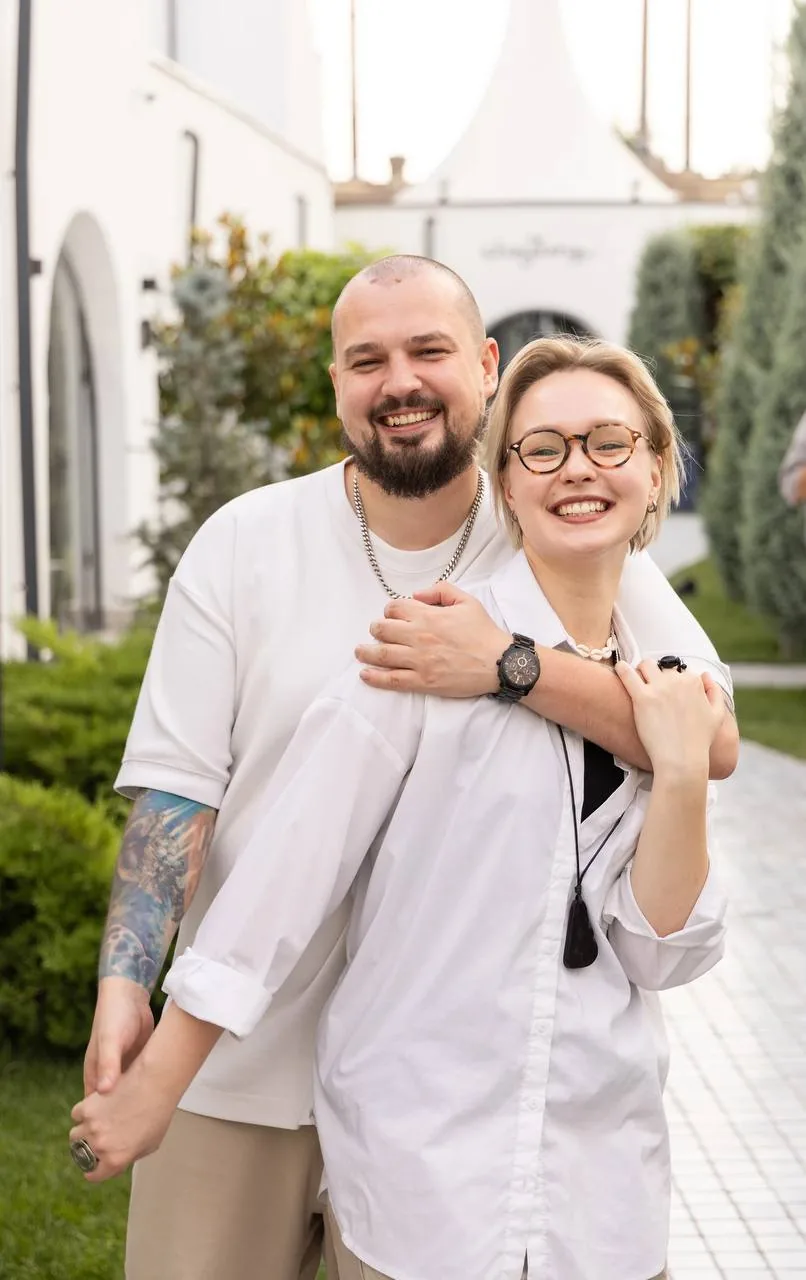
IT families: Artem Panferov and Anastasia Markova
An IT family from Uzbekistan shared their love story and how they manage to balance family life and careers in the IT field.
Author - Mansur Ismagulov
The Tech AI
Get the key points in seconds - a short summary from The Tech AI.
Artem Panferov and Anastasia Markova, who live in Tashkent, founded the IT companies EndCode and AI LAB. In March 2022, they moved from Vladivostok, where they met on Tinder, to develop their joint business. The couple shares work and household responsibilities, using IT skills to optimize family processes and finances.
Artem Panferov, city — Tashkent, serial entrepreneur, Senior business analyst, AI expert, Instagram
Anastasia Markova, city — Tashkent, founder and creative director of EndCode and AI LAB, Instagram
About Us
Artem. At the time of our meeting, I had already been living in Vladivostok for a year, where I had moved to work in the central office of DNS — one of the largest chains of home and digital appliances in Russia. Previously, I had also worked at DNS, but in a different region.
In the summer of 2020, I met Nastya. It happened through Tinder, where Nastya invited me for coffee. That’s how I ended up on the Vladivostok embankment, where we met for the first time.
Anastasia. At that time, I was finishing my last year at university and had been working in marketing agencies for several years. My professional field is managing creative teams in marketing, production, and design — this is my area of expertise.
Our meeting took place one August evening. I wrote: “If you come in 15 minutes, I’ll pay for the coffee.” Artem arrived in 10 minutes, and I had to keep my promise. After that day, we hardly separated.
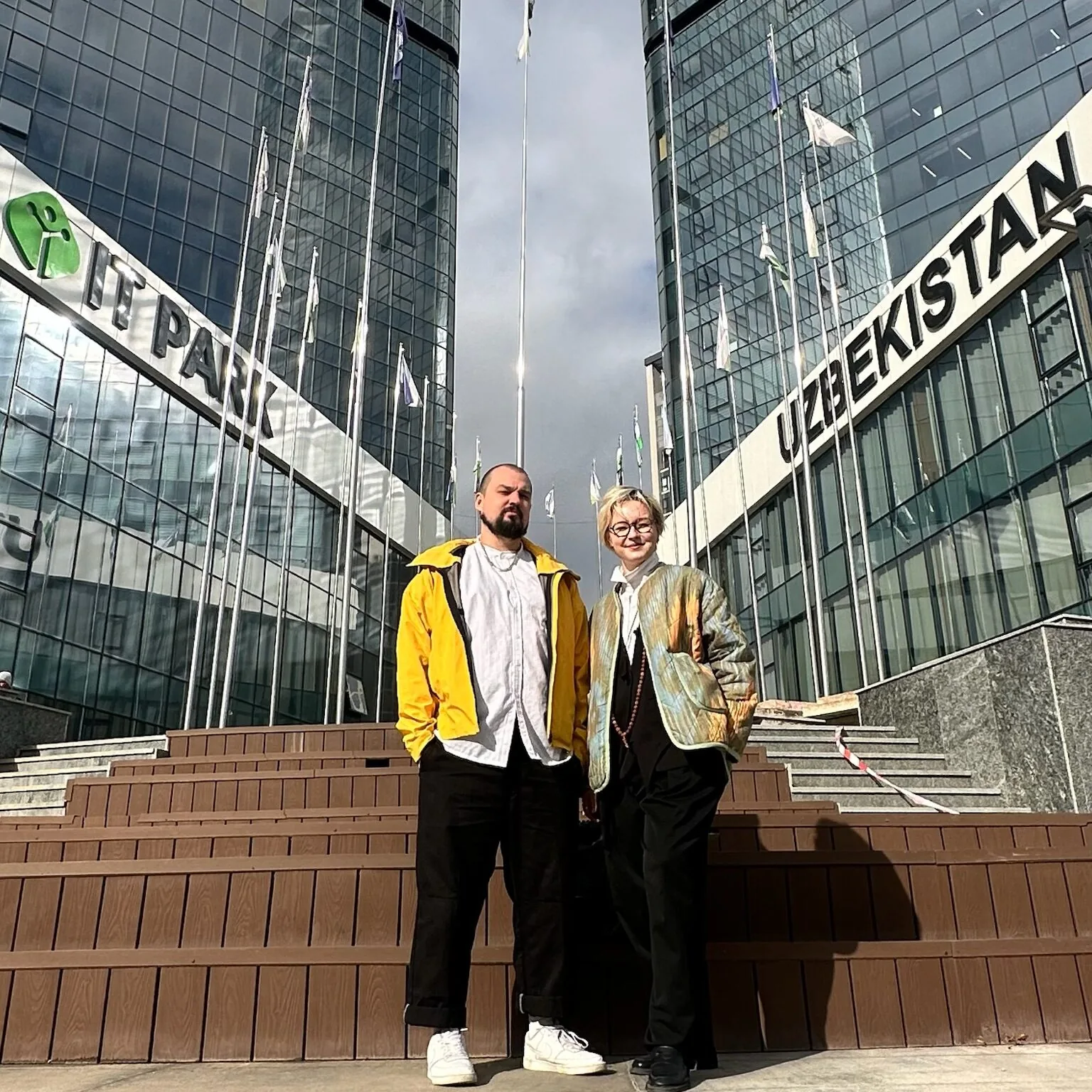
In March 2022, we decided to move to Tashkent, where we have since been developing our IT companies and building our business.
How we entered the IT field
Artem. DNS actively supported internal career growth. I was transferred from Yeysk to the central office in Vladivostok as a business analyst, and then I became the first Product Owner, developing two key products in the “Store of the Future” project:
1. A mobile application for employees of all stores in the chain.
2. A task assignment system that distributed tasks among employees through the app, optimizing workload.
After DNS, I continued my career at major Russian companies — Azbuka Vkusa and Ozon, where I also worked on optimizing business processes and managing development teams.
Anastasia. For the past six years, I have been managing creative teams, working on concept marketing, brand design, photo and video production. I started in marketing agencies, and then gained experience in HoReCa and IT. Today, in our family business, I manage promotion and creative content production.
When Artem and I moved to Tashkent, we started with consulting for a startup, but quickly realized: it’s better to invest effort in our own venture. Our roles complemented each other well: Artem handles the technical side, business analysis, and project strategy, acting as the frontman. I focused on creative communications and PR. Together, we became a team of Hustler, Hacker, and Hipster — ideal for a startup.
Division of responsibilities
Anastasia. Our work, projects, household chores, and lifestyle are not separated — everything is interconnected and considered an integral part of our lives. Our home is simultaneously an office where work literally goes on 24/7. We discuss projects over breakfast, come up with new ideas on vacation, clean up while exchanging plans. Work and household life go hand in hand for us.
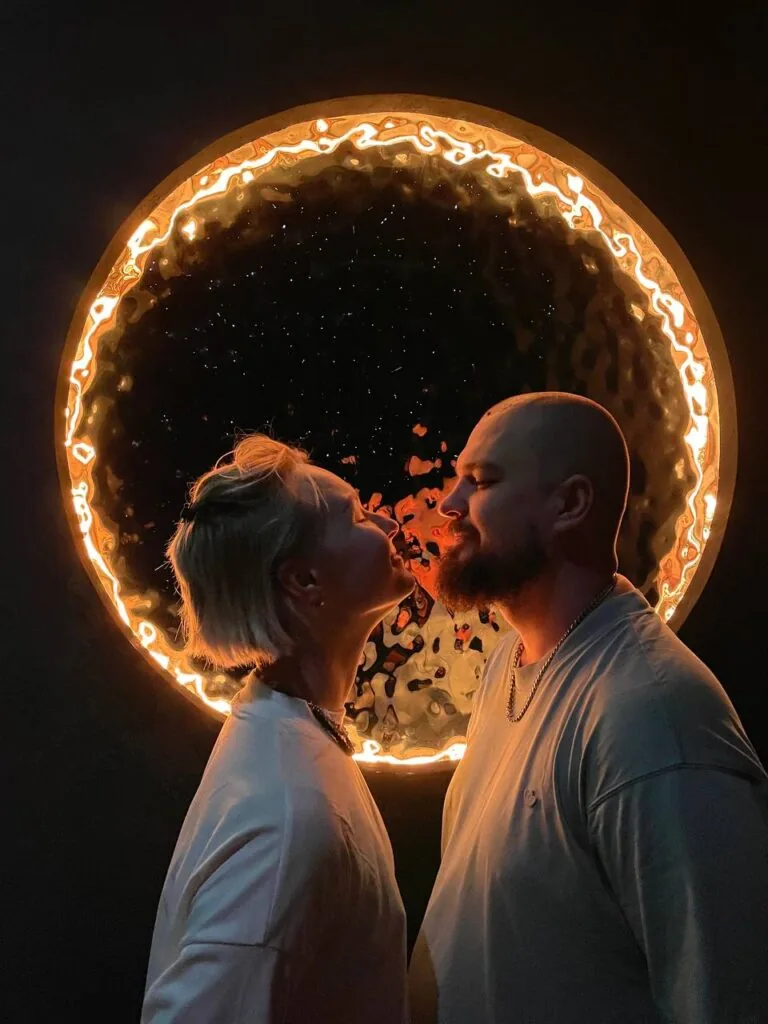
A feature of our relationship with Artem is partnership in everything. We share not only tasks in business but also household chores. For example, Artem is responsible for washing dishes, which I hate, and I am responsible for laundry. We try to distribute everything else equally. This approach extends to our daily life, creating balance.
In the evenings, we often discuss philosophical topics or politics. Our kitchen often turns into a real philosophical laboratory. When we manage to get out of the city, we enjoy going to nature to rest and recharge.
Family traditions
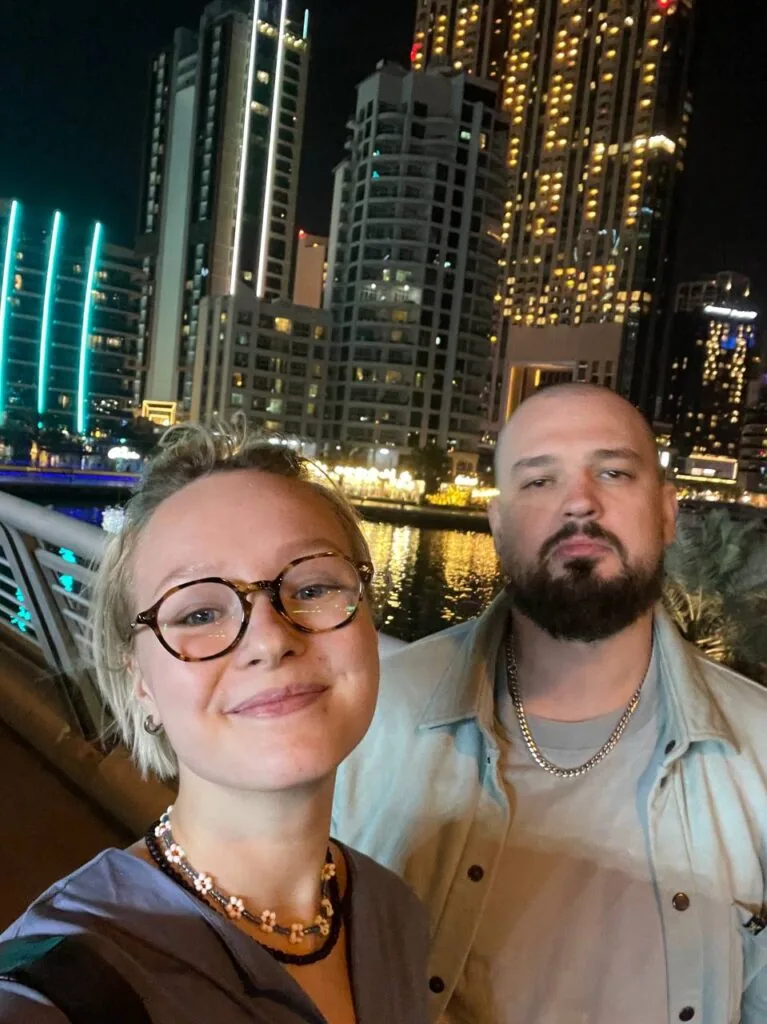
Artem. We try to travel every year, discover new places and cultures. For example, two years ago we spent three months in Thailand to feel the tropical atmosphere and change the scenery. Last year we visited Dubai, combining rest with work and gaining our first experience of pitching to foreign investors.
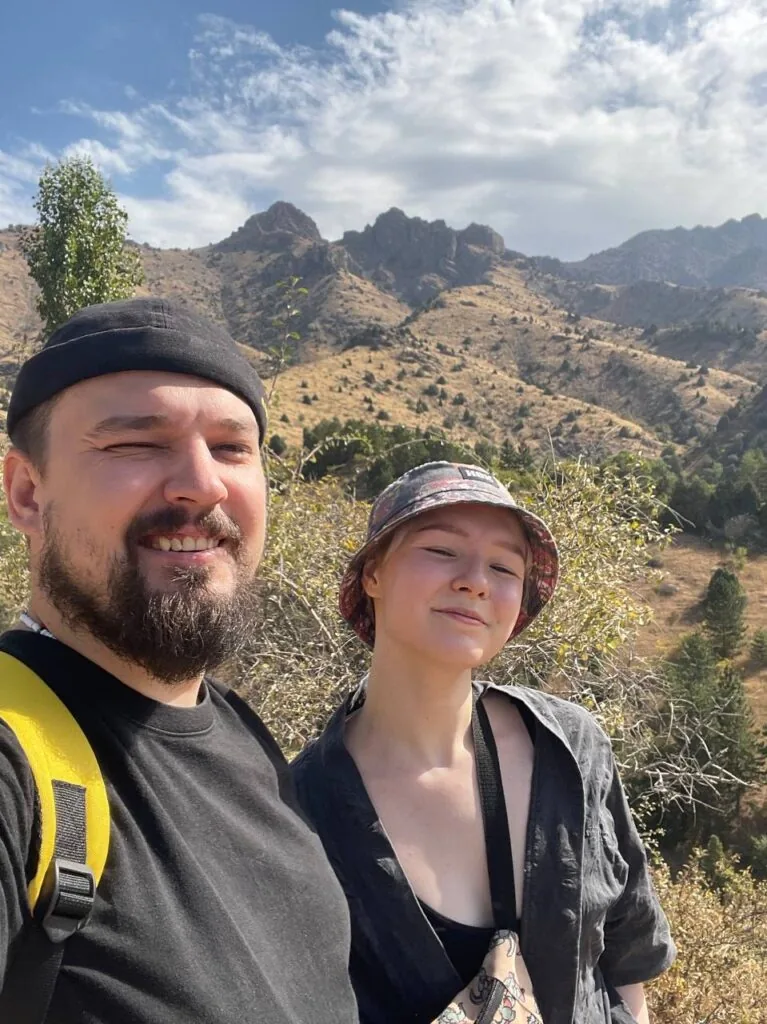
When we travel, we try to make trips not only pleasant but also useful. Uzbekistan holds a special place in our hearts. We love going to Samarkand — it is one of our favorite destinations. We often go to nature, for example, to the mountains. Over the past couple of years, we have made about 15 trips to mountainous areas, and we try to make even such excursions meaningful. Usually, we take garbage bags with us and collect trash along the way. Some people have hobbies like fishing or hunting, but ours is a kind of “collecting ecological trophies.” There are even photos of us competing over the number of collected bags.
When we get tired of the city hustle, we love to escape to the mountains for a day, find a remote dacha or sanatorium for a retreat. Sometimes, when work is particularly heavy, we wake up and realize we need to take a pause. There are days when everything is scheduled with tasks, but we wake up and ask ourselves: “What is all this for? Why not just take off and go on vacation?” So we cancel everything and go for a walk.
In Tashkent, we have a favorite route: we come to Tims coffee on Shevchenko Street, and from there we start a walking exploration of the center. We know every street, every corner that can be reached within an hour from this place. Such walks are like a reset for us.
In short, this is us: life, work, rest, and nature — everything is intertwined and becomes part of our story.
Anastasia. Even during walks, we often talk either about business and AI or about the philosophy of life.
Combining household life and work
Anastasia. Combining work and personal life is not difficult. Of course, the 24/7 work format imposes certain specifics: it is rare to completely disconnect, and even on weekends we have to discuss work matters. However, for us, this is more a matter of proper organization and the ability to negotiate.
Artem and I understand each other well, and our high level of communication allows us to find compromises, both in household matters and in work. If something is unsatisfactory or causes discomfort, we discuss it immediately and make changes. It is this flexibility and mutual understanding that make our life comfortable, despite the constant work rhythm.
Artem. The IT field forms a specific way of thinking that helps structure both work and life in general. The peculiarity of working on IT projects is that everything must be clearly organized and filed into its own “folders.” This approach teaches building processes, understanding how actions and their results are connected.
For example, when working with applications, a person learns to see cause-and-effect relationships: until one action is completed, the next one will not happen. To achieve a result, you need to go through certain stages. These seem like basic things, but in IT they are crystal clear and require maximum clarity, which gradually reshapes thinking.
When both partners work in IT, it simplifies communication and synchronizes their perception. Structured thinking helps find common ground and solve problems, and in conflict situations, we try to maintain a constructive dialogue and focus on solutions.
Our family credo is honesty with each other and the desire to negotiate. If both partners are ready to listen to each other, value mutual understanding, and work on resolving issues, everything else becomes achievable.
Anastasia. Skills you acquire while working in IT find application in everyday life. For example, Artem and I have a bot connected to our family budget that helps analyze our expenses and income. We developed it ourselves, and it turned out to be a useful tool in organizing finances.
When we assign tasks to each other, we try to do it in the SMART format — with clear criteria: what, when, and how it needs to be done.
Our skills came not only from IT but also from entrepreneurship. The ability to negotiate, plan, and reach agreements has become the foundation of our family communication. We discuss everything: budget, goals, future plans. Our format is such: sometimes we agree, sometimes we argue, but we always justify our opinions. We manage to avoid unnecessary emotions and maintain a constructive dialogue. This helps balance between a business approach and warm family relationships.
Recommendations for a happy family life
Artem. It is important to strive for agreement and honesty — two key rules for a successful marriage. We both consider our marriage successful. I can’t even imagine being with another person, because we know each other so deeply and our views are so strongly synchronized on many different topics, that it is incredibly valuable. This is considered the foundation for building happy relationships.
Anastasia. Relationships are not only about working on interaction with each other but also about working on oneself. This is primarily the development of emotional intelligence, resolving one’s own psychological problems and triggers. It is important to understand what causes a reaction in you in another person or in yourself, and work on that. Strive to become the best version of yourself so that it is comfortable not only for you but also for your partner.
Artem and I have a different philosophy: we are not halves, but complete personalities. Our formula is this: 1 + 1 is not 2, but 11. Our views, competencies, and inner qualities resonate with each other, enhancing each other. Artem makes me better, I make him better, and together we create synergy that helps us both in personal life and in business. I think this is the foundation of our happiness.
The Tech on Telegram Follow The Tech on Telegram
Keep up with the latest technology and startup news.
Related reading

More from this author
News
zypl.ai begins operations in Japan and focuses on next-generation risk models
Mansur Ismagulov

News
Elon Musk's net worth has exceeded $700 billion for the first time
Mansur Ismagulov
Article Interviews
"Central Asian countries should build a joint ecosystem," — Bekhzod Ismoilov on the development of AI in the region
Mansur Ismagulov
Article Interviews
Bloom's Taxonomy and Engineering Levels: A Practical Growth Model
Mansur Ismagulov
Article Useful
How the IT industry in Azerbaijan developed in 2025: key events
Mansur Ismagulov
News
Tajikistan has become a new member of the regional innovation alliance Central Asian Innovation Hubs
Mansur Ismagulov