IT Life Hacks. Productivity Tips from Sabina Rufullaeva
In this article, Sabina Rufullaeva, a software engineer, shares effective IT life hacks to boost productivity. Learn how to optimize workflows, automate routine tasks, and achieve better results in your professional career.
Author - Mansur Ismagulov
The Tech AI
Get the key points in seconds - a short summary from The Tech AI.
Sabira Rufullaeva, a programmer from Almaty, recommends focusing on important tasks using an IDE (PyCharm) and hotkeys. She advises putting away your phone to maintain concentration, keeping two to-do lists (Todoist and handwritten), breaking down tasks with AI, and applying the Pomodoro technique in a 15/5 format. It is also important to manage your energy by tracking sources of strength and drains, automate routine processes through CI/CD, and create step-by-step instructions.
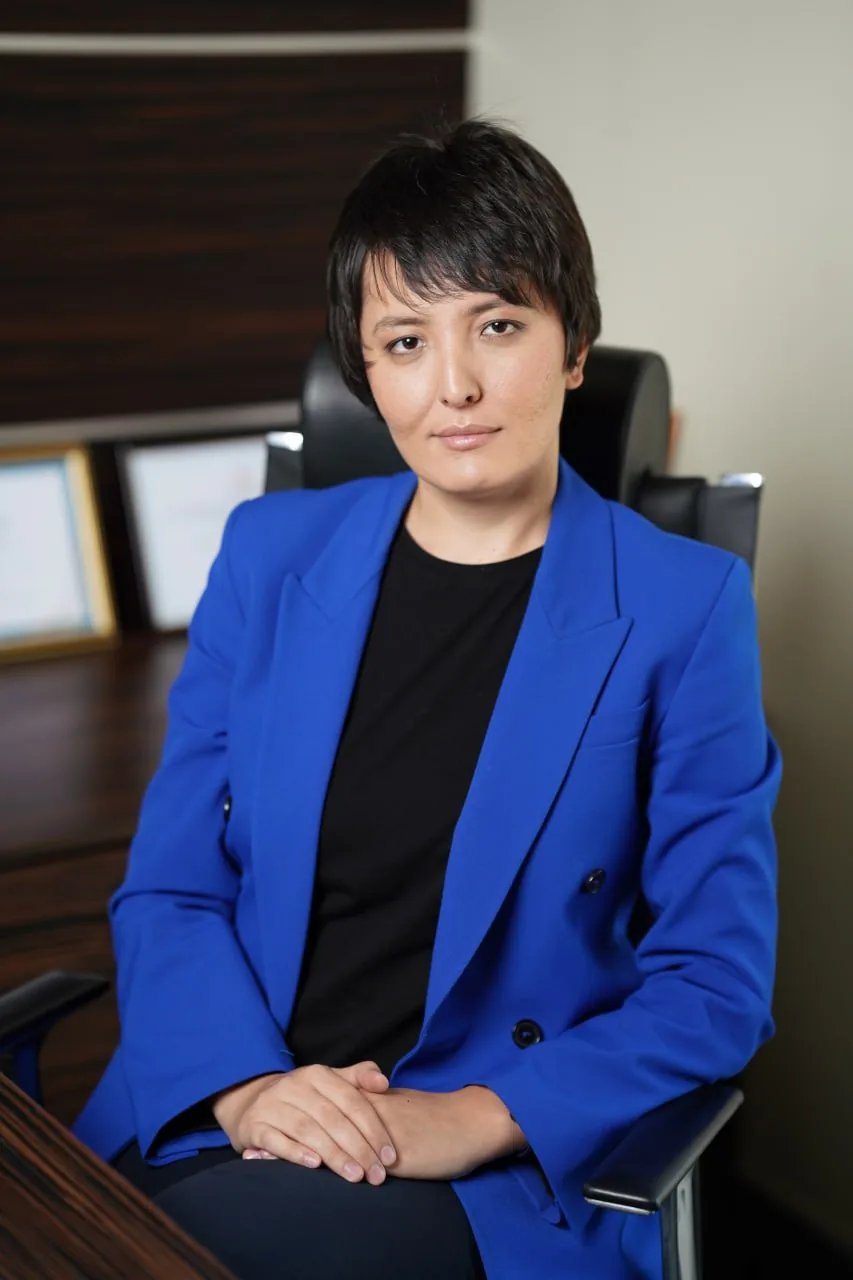
Sabina Rufullaeva, city — Almaty, software engineer
The most important thing: time management is not about getting everything done, but about courageously removing less important items from the list to focus on what truly matters.
Know your IDE capabilities
An IDE is the software where I spend most of my working time. I use PyCharm: it allows convenient direct connection to the database and viewing ER-diagrams without installing additional clients. It has built-in tools for project refactoring, code review, resolving merge conflicts, working with tests, integration with Jupyter Notebook, and many other features.
When starting a new project, it is worth immediately setting up debugging and other configurations, such as running from Docker, which will save time in the future. In addition, hotkeys significantly speed up work; knowing hotkeys is essential. PyCharm has a built-in tutorial on them, which I recommend completing. You can print their list and hang it in a prominent place. You can go even further and completely abandon the mouse, switching to vim.
Put the phone away
The phone is my main distraction. It steals the ability to concentrate just by its presence. As soon as I encounter something unclear or feel slight fatigue — my hand automatically reaches for it. And once I open social networks — two hours of life are lost unexpectedly. I recommend putting it out of sight, ideally in another room — concentration will noticeably improve. I usually cover it with a notebook or put it in my backpack.
Maintain two to-do lists
Among the many task management methods, there is no universal solution; everyone suits something different. I use one to-do list in Todoist. I keep the second list by hand — it is a list of completed tasks for the day/week/month. It is important because it helps notice your small victories and fight burnout and impostor syndrome. In addition, this list is considered excellent preparation for interviews, making it easier to argue your achievements.
Break down tasks
A common cause of procrastination is the feeling that a task is unclear or too large. There is no desire to tackle such tasks. To cope with this, it is important to break tasks into small, understandable units, which are much easier and more pleasant to perform. ChatGPT can help with this. Many task trackers, including Todoist, have AI plugins that allow breaking a task into subtasks and generating ideas for execution.
Perfectionist procrastinators often want to do everything either perfectly or not at all. They can be helped by focusing on imperfect task execution, for example, at 6/10. Any completed task is always better than an ideal but unfinished one.

Rest in advance and use Pomodoro 15/5
Due to the consequences of COVID-19, I get tired much faster. The best strategy is to rest before you get tired. I often work using the Pomodoro method, and when I feel that energy is declining, I switch from the standard 25/5 interval to 15/5 minutes of work and rest.
Monitor your energy
To maintain strength, it is important to do simple things: get enough sleep, eat well, and engage in physical activity — there is nothing new here.
However, for optimal energy expenditure, it is worth understanding where it goes. For this, you can use a simple exercise:
— on one side of the sheet, write down everything that gives you strength. For me, these are closed tasks, walks, breathing exercises, and music
— on the other side — everything that drains energy. These are long calls, jumping from one task to another, and clarifications in the form of calls instead of written communication.
After that, you need to think about how to optimize this. Energy drains can be delegated, reduced, or eliminated altogether. Energy sources, respectively, should be tried to add to your schedule. It is worth periodically returning to this exercise. Learning to argueatively say "no" will also help avoid overloading.

Automation and step-by-step instructions
Frequently occurring routine tasks should be automated, for example, by setting up CI/CD. If the nature of the task does not allow this, you can create step-by-step instructions. This will unload the brain, allowing you to focus on the code and see the next stage ahead. In addition, such instructions are convenient for delegating tasks to beginners — small units are easier to control and check.
The Tech on Telegram Follow The Tech on Telegram
Keep up with the latest technology and startup news.
Related reading


More from this author

News
zypl.ai begins operations in Japan and focuses on next-generation risk models
Mansur Ismagulov

News
Elon Musk's net worth has exceeded $700 billion for the first time
Mansur Ismagulov
Article Interviews
"Central Asian countries should build a joint ecosystem," — Bekhzod Ismoilov on the development of AI in the region
Mansur Ismagulov
Article Interviews
Bloom's Taxonomy and Engineering Levels: A Practical Growth Model
Mansur Ismagulov

Article Useful
How the IT industry in Azerbaijan developed in 2025: key events
Mansur Ismagulov
News
Tajikistan has become a new member of the regional innovation alliance Central Asian Innovation Hubs
Mansur Ismagulov