IT community from Central Asia: Data Community Uzbekistan
Author - Mansur Ismagulov
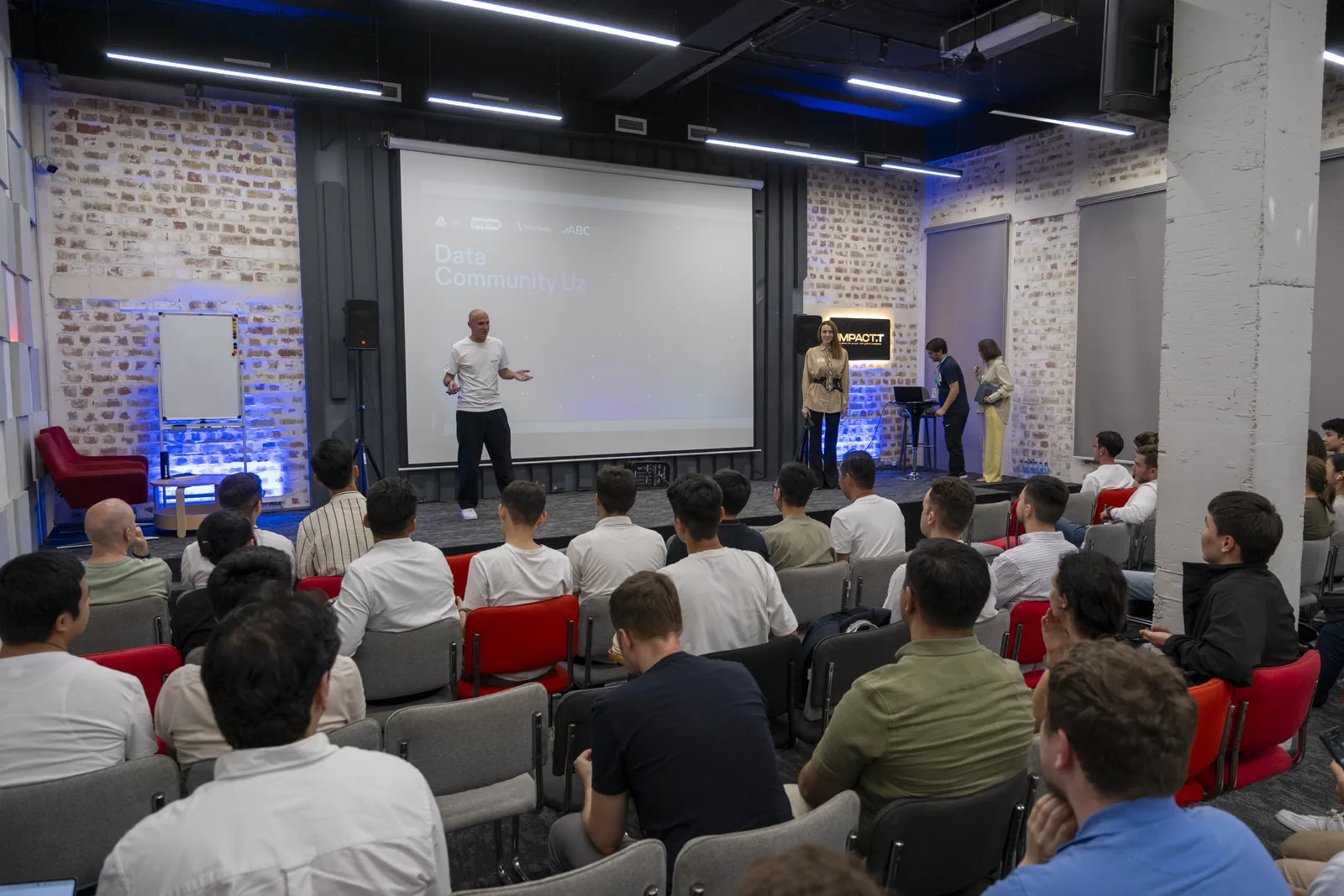
We continue to share stories about professional communities from Central Asia. Today, we introduce you to Data Community Uzbekistan — a community for professionals and enthusiasts where knowledge and competencies in the field of data are developed.
Dmitry Dolbilin, City — Tashkent, Head of Data, TBC Uzbekistan, LinkedIn
Anna Shibanova, City — Toronto, Co-Founder Data Community Uz, Partner A+ Solutions, LinkedIn
About the Community
Dmitry. About a year ago, we discussed how rapidly the data market is developing in Uzbekistan. Progress is noticeable, but the potential is much higher: expertise exists, but knowledge is fragmented. We decided to bring people together and create a platform for sharing experience.
We had many young specialists working with us who needed a practical foundation. Thus, the idea for the community emerged in late December, and by March, we held our first meetup. The hall was packed, and the conversion rate exceeded expectations; it became clear that this community was meant to be.
Informal communication after presentations proved especially valuable — exchanging experience, discussing challenges, and making new acquaintances. Now, we hold meetings every month — sometimes independently, sometimes with partners or invited speakers.
Data is still often perceived as part of IT, but it is a separate discipline. Data is a full-fledged business partner, on par with finance and technology. Our community helps specialists understand this, see the value of their work, and strengthen the position of data functions in the market.
At the first meetup, the event was hosted by a representative of the IT community in Uzbekistan — we are friends and consider this collaboration important. Today, technology is impossible without data, and data is impossible without technology.
Anna. The main task of the community is to create a space for networking and experience sharing, where specialists share real cases and approaches to solving problems. The second goal is to develop the culture of Data Management, Analytics, Engineering, Governance, and Data Science in Uzbekistan through meetups, lectures, and practical events. A mini-conference on product analytics has already taken place, and new topics are ahead.
We also strengthen the competencies of participants and support the professional interests of data enthusiasts. 80% of our community consists of specialists from the financial sector, while the rest come from retail, telecom, and other industries.
Working with data is the intersection of business, IT, and mathematics, so data specialists easily transition between industries. AI is just one element and is impossible without mature Data Governance, quality engineering, and analytics.
In the end, data is needed by business: companies that do not make decisions based on data almost always lose out in competition.
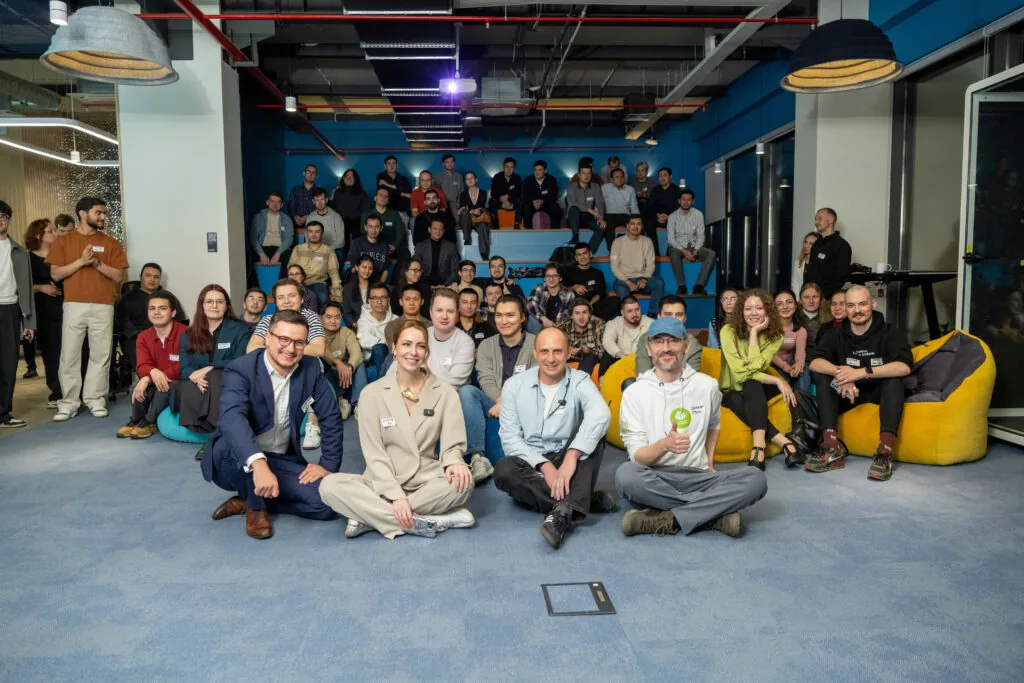
Community Members
Dmitry. Our members are people interested in data. Students, junior specialists, and heads of data departments join us. This creates lively and useful discussions. Currently, 70-80% of participants are specialists with two to three years of experience, sometimes up to four. We see a real snapshot of the market: many young, ambitious individuals and a smaller layer of experienced experts. It is particularly pleasant that both groups actively participate, and experienced specialists are eager to share their knowledge at our events.
Becoming a member of our community is simple: every month we announce events on social media — LinkedIn and Telegram. Anyone interested in Data can register, ask questions, speak, or participate in discussions.
To propose a speaking topic, you can use this link.
Contact for collaboration: Yulia Ivanova, LinkedIn PR Manager at TBC Uzbekistan, Telegram
Anna. We always have interactive engagement: at every meeting, we ask participants what they are interested in discussing next time and adjust the program based on their answers. Topics are formed not only by the organizers but also by the participants themselves, making discussions lively and relevant. For example, after the session on product analytics, interest in AI and data security grew, so in future meetings, we plan to focus on these areas.
Events for Community Members
Anna. Our events are aimed at data specialists — participants must have an education or profession related to the data field. This is the only restriction, and mostly, such people attend. To test enthusiasm, we once held a meeting on a weekend day: a small but motivated audience attended, confirming the interest of specialists.
Natural selection occurs through specialization and skills — those who know and want to develop in the data field participate. Currently, regular offline meetups are held in Tashkent, with participant numbers ranging from 50 to 150. Seven key events have already taken place: open tables, round tables, and mini-conferences.
We invite speakers from across the CIS and definitely specialists from Uzbekistan to exchange relevant experience. There were workshops on Data Governance and data architecture with demonstrations of real tools. One initiative was a six-month training program with Inha University in Tashkent: participants study data engineering, analytics, and governance. The program is designed for specialists with basic knowledge of data, SQL, and Python, and classes are conducted in English.

How the Community Helps with Development
Dmitry. There are several ways to develop professionally. The first is communication with colleagues in the field. It helps find solutions faster, avoid mistakes, and generate ideas that are difficult to come up with alone. Specialists from large companies and small teams come to us, and informal communication after meetings brings useful contacts and idea exchange.
The second part is speaking. We make our sessions practical, showing real tools and approaches. For example, workshops on Data Governance included theory and demonstrations of company tools with their pros and cons. The audience — from beginners to C-level executives — sees real cases and can apply the knowledge in their work.
We also showcase modern trends, including AI practices from global data hubs such as North America. Additionally, we provide support: people try new things, learn, share experience, and develop competencies by seeing high-level role models. Participants can propose their own topics for speaking, which helps develop their personal brand and influences career growth.
Successful Projects
Anna. Our collaboration began with the IT community of Uzbekistan: at the first round table, their speakers set an energetic and lively tone, motivating experience sharing and community development.
Currently, the community has about 1,000 members across all activity channels. One successful initiative was a practical program for students and future Data Engineering and Analytics specialists, providing a systematic understanding of profiles, competencies, and market opportunities.
Another successful collaboration was inviting speakers from large companies in Uzbekistan who share experience, cases, and industry development forecasts. Within the community, regulator initiatives are also discussed, difficulties are analyzed, and solutions are sought jointly, which supports the development of data culture in the country.

Plans
Dmitry. We have set several goals for ourselves.
First is the development of educational initiatives. We launched a special course at Inha University and want to invest resources in it to help young specialists choose a career in Data and apply their knowledge in the market. If successful, we plan to expand the program, as young specialists are the future of the field.
Second is the continuation of meetups. We are experimenting with formats, holding round tables and discussions, and next year we plan a full-scale conference with international experts to introduce participants to modern trends and tools.
Third is audience expansion. Currently, most participants are from the financial sector, but Data is universal, so we will attract specialists from FMCG, retail, and other industries for a more multifaceted exchange of experience.
Fourth is integration with the international community.
Anna. We are also interested in the growth of the industry as a whole and development across countries. The participation of members from other Central Asian countries will allow for a broader view of regional trends and practices.
The Tech on Telegram Follow The Tech on Telegram
Keep up with the latest technology and startup news.
Related reading







More from this author

News
zypl.ai begins operations in Japan and focuses on next-generation risk models
Mansur Ismagulov

News
Elon Musk's net worth has exceeded $700 billion for the first time
Mansur Ismagulov

Article Interviews
"Central Asian countries should build a joint ecosystem," — Bekhzod Ismoilov on the development of AI in the region
Mansur Ismagulov

Article Interviews
Bloom's Taxonomy and Engineering Levels: A Practical Growth Model
Mansur Ismagulov

Article Useful
How the IT industry in Azerbaijan developed in 2025: key events
Mansur Ismagulov

News
Tajikistan has become a new member of the regional innovation alliance Central Asian Innovation Hubs.
Mansur Ismagulov