The investor explained which AI areas already have leaders and where the market remains open.
Solo VC investor and a prominent figure in the venture capital world, Elad Gil, stated at TechCrunch Disrupt 2025 that artificial intelligence has become one of the most unpredictable technology booms he has ever witnessed. According to him, some segments have already solidified their leaders, but there remain many areas where anyone can still emerge victorious.
Author - Mansur Ismagulov
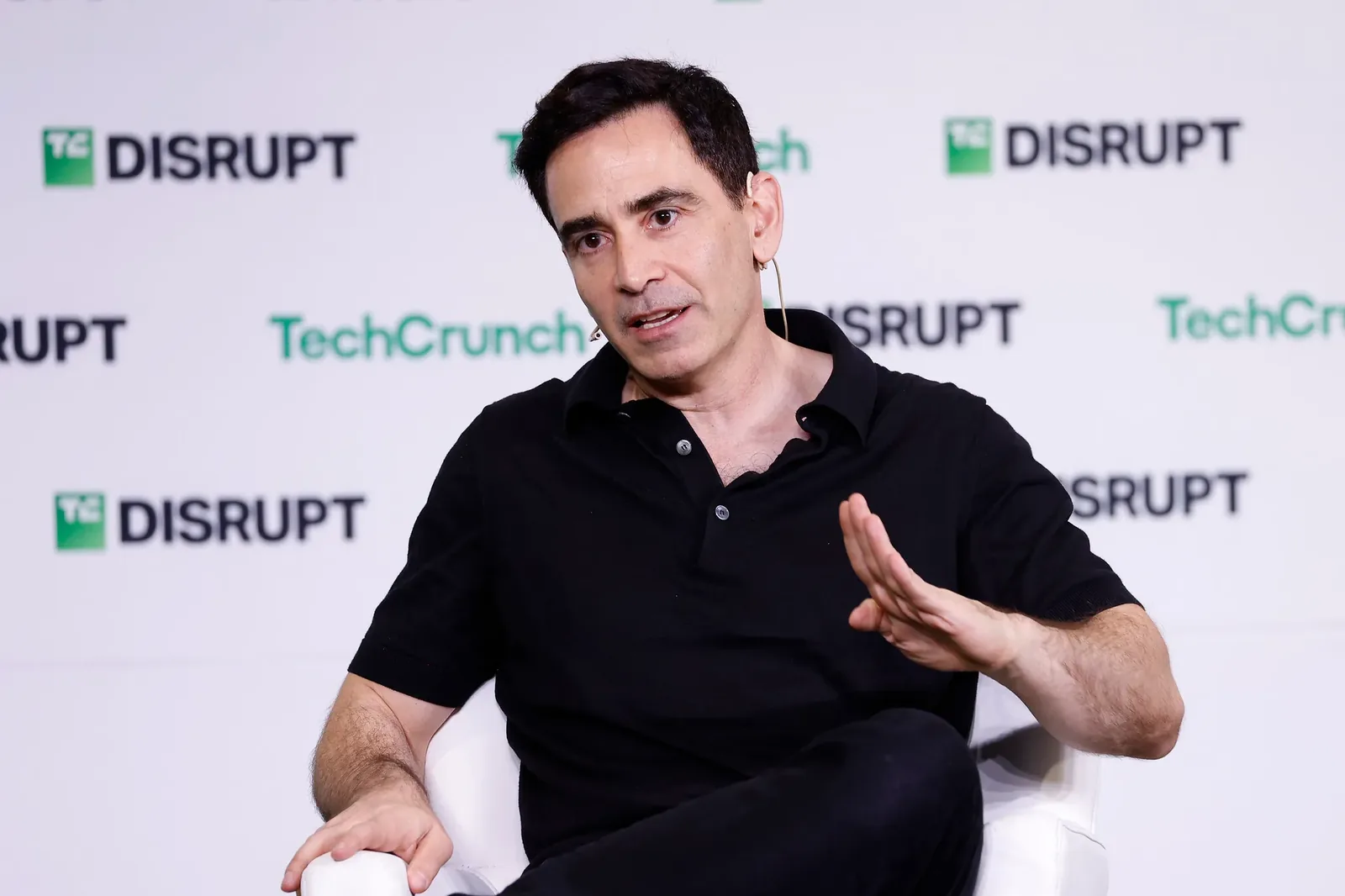
From early investments to explosive growth
Elad Gil is an investor in nearly every successful company of the last decade, including leading players in the field of artificial intelligence. Despite this, he notes that in the past year, some segments of the AI market have almost completely consolidated around their leaders. Beyond these areas, he believes, there remains a huge part of the market where the outcome is not yet predetermined.
Gil began investing in generative AI in 2021, when few paid serious attention to this technology. According to him, the colossal leap between GPT-2, released in 2019, and GPT-3, presented in 2021, showed how quickly the field was developing. He noted that large-scale patterns and growth dynamics indicated that this technology would become one of the key ones in the future. It was this that prompted him to support early-stage startups creating products based on large language models.
His investments include both developers of foundational models—OpenAI and Mistral—and applied companies such as Perplexity, Harvey, Character.ai, Decagon, and Abridge. In 2024–2025, the capabilities of foundational models increased rapidly: each new release led to a technological leap and literally upended the industry every few months.
Gil admits that AI remains a unique market where the more information he received, the less he understood what was happening. Usually, he notes, knowledge leads to better forecasting, but in the case of AI, due to high uncertainty, even experienced investors face fog.
Established leaders and saturated segments
Currently, Gil sees several areas where there are already obvious winners. The most striking example he names is the market for foundational models. Although there are hundreds of analogs in the world, and individual countries, such as South Korea, continue to develop national models on their own, the main leadership, in his opinion, belongs to a narrow circle of companies: Google, Anthropic, OpenAI, xAI, Meta, and Mistral.
After foundational models, one of the most consolidated areas has become AI programming. Gil believes that new participants will find it extremely difficult to catch up with the leaders. The market has been entered not only by developers of foundational models, such as Anthropic with Claude Code and OpenAI with Codex, but also by strong startups, including Cursor from Anysphere and Devin from Cognition, which acquired Windsurf. According to him, these companies have set a bar that is almost impossible to surpass. However, he also notes the presence of well-funded players like Magic—a startup that could become an exception to the rule—and Poolside, which are rapidly catching up with the leaders.
Gil believes that the medical transcription market is already effectively divided. Here, according to his observations, Abridge is the leader, while Ambience and a number of other companies hold significant positions. A similar situation is observed in the customer support sector—one of the first areas where both traditional AI solutions and a new wave of startup agents have arrived.
Among the leaders in this category, Gil names Decagon, a company from his portfolio, which raised $131 million in June 2025 at a valuation of $1.5 billion. In the same direction works the startup Sierra, founded by OpenAI chairman Brett Taylor. Major players, including Salesforce and HubSpot, are also actively adding AI features to their products, intensifying competition and reducing the chances of newcomers to establish themselves in this niche.
Open niches and new rules of success
Despite the emergence of stable leaders, Gil believes that there remain large and promising areas where the outcome is not yet decided. Among them, he highlights financial tools, accounting, AI security, and other areas that, in his opinion, are “interesting by default,” but it is not yet clear who will be able to realize their potential.
The investor emphasizes that the rapid growth of companies in the era of artificial intelligence is no longer a reliable signal of success. Chief executives of the largest corporations, according to his observation, are actively demanding that their teams develop AI strategies. Even companies that previously avoided experiments are now willing to try new technologies solely due to pressure from the trend.
This has led to the fact that new AI markets can quickly receive large orders from corporate clients, but this does not mean that they will be able to hold these positions. According to Gil, only after passing the phase of rapid growth does it become clear which products actually work and which gave false signals.
He gives the example of the legal AI startup Harvey, which, in his assessment, “really works.” The company conducted three major investment rounds in 2025, increasing its valuation from $3 billion to $5 billion, and then to $8 billion in just a few months, becoming one of the brightest examples of sustainable success against the backdrop of the general frenzy around artificial intelligence.
Source: TechCrunch
The Tech on Telegram Follow The Tech on Telegram
Keep up with the latest technology and startup news.
Related reading







More from this author

News
zypl.ai begins operations in Japan and focuses on next-generation risk models
Mansur Ismagulov

News
Elon Musk's net worth has exceeded $700 billion for the first time
Mansur Ismagulov

Article Interviews
"Central Asian countries should build a joint ecosystem," — Bekhzod Ismoilov on the development of AI in the region
Mansur Ismagulov

Article Interviews
Bloom's Taxonomy and Engineering Levels: A Practical Growth Model
Mansur Ismagulov

Article Useful
How the IT industry in Azerbaijan developed in 2025: key events
Mansur Ismagulov

News
Tajikistan has become a new member of the regional innovation alliance Central Asian Innovation Hubs.
Mansur Ismagulov