AI in the new season of "Black Mirror": what from science fiction is already close
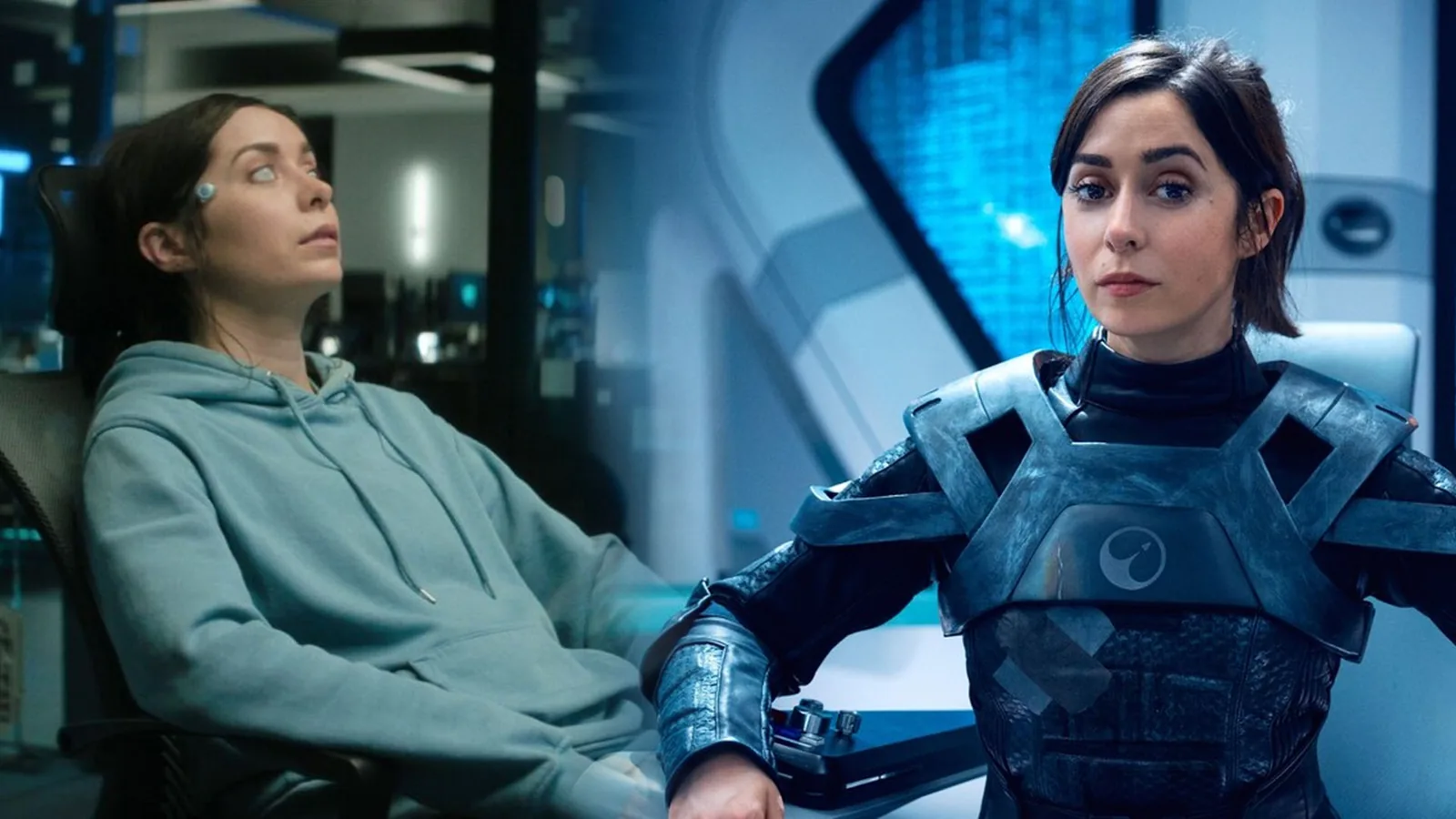
The seventh season of "Black Mirror" is one of the most "technological" in the entire history of the series. At the center of most episodes are artificial intelligence and its impact on humans, society, and the boundaries of reality. The creators continue to balance between unsettling science fiction and unsettling reality—because many of the technologies depicted already exist or are about to become part of our lives.
Author - Mansur Ismagulov
The Tech AI
Get the key points in seconds - a short summary from The Tech AI.
The article compares the plots of TV series with real-world technologies. Neuralink implants neurointerfaces for cursor control. Deepfakes, AR/VR, and the multiverse hypothesis alter our perception of reality. AI brings actors back to life, while NeRF creates 3D models from photos. Mind uploading remains a hypothesis for now.
Let’s figure out where the series ends and reality begins.
Brain chip with a subscription
Episode: Common People
The protagonist uses a cloud-based brain chip, but “consciousness work” requires a monthly fee. Without a subscription, you get ads in your head or a complete shutdown of functions.
In reality:
Elon Musk’s company Neuralink has already implanted a brain-computer interface into a third human patient. The technology allows the patient to communicate by training cursor control and using custom-built tools to accelerate typing, including a virtual keyboard with useful features like copy, paste, and undo.
Personal multiverse
Episode: Bête Noire
The main character can alter surrounding reality using a quantum device — literally “rewriting the world” to suit her needs.
In reality:
— Deepfakes and AI: using technologies like Runway Gen-3, one can create fake video memories and alter faces, voices, and intonations, making reality look completely different.
— AR/VR: headsets like Apple Vision Pro and Meta Quest 3 allow overlaying an alternative reality — whether it’s virtual reality or adding digital objects into the real world via augmented reality.
— Many-worlds hypothesis: the scientific community actively discusses theories suggesting that parallel universes may exist and that every possible version of events has its own path of development.
Although we cannot “rewrite” the universe itself, technology already allows us to change our perception of the surrounding world to the point where it’s hard to distinguish reality from its alternative.
Resurrecting actors in VR
Episode: Hotel Reverie
The film is shot in virtual reality using digital copies of long-dead actors. The viewer can fall in love with a “digital image” that disappears after filming ends.
In reality:
We have already seen the digital resurrection of Carrie Fisher, Marlon Brando, and other stars. Thanks to generative AI, photorealistic video and speech can be created without involving the actor.
Startups like Runway and Sora are making film production almost entirely human-free — based on text and AI.
VR memory
Episode: Eulogy
AI recreates past scenes based on photos and videos. You can literally “walk” through memories.
In reality:
Google and other companies are already working with NeRF technologies, which convert 2D photos into 3D spatial models.
VR museums, memorials, and historical reconstructions already exist. It’s only a matter of time before this becomes a mass-market tool.
Uploading consciousness into a body
Episode: USS Callister: Into Infinity
Consciousness can not only be copied into VR but also uploaded into a real body. Or multiple personalities can be merged into one.
In reality:
The topic of mind uploading is one of the most discussed in transhumanism.
AI can already emulate a personality based on data, messages, and videos.
However, transferring consciousness remains a hypothesis for now.
Science fiction that’s close by
The seventh season of Black Mirror doesn’t just scare — it makes you think. Technologies that seemed like crazy science fiction just 5–10 years ago are already being tested in labs and startups.
And the main question is no longer “is this possible,” but how far we are willing to go — and who will control the boundaries between mind, memory, virtuality, and freedom.
The Tech on Telegram Follow The Tech on Telegram
Keep up with the latest technology and startup news.
Related reading







More from this author

News
zypl.ai begins operations in Japan and focuses on next-generation risk models
Mansur Ismagulov

News
Elon Musk's net worth has exceeded $700 billion for the first time
Mansur Ismagulov

Article Interviews
"Central Asian countries should build a joint ecosystem," — Bekhzod Ismoilov on the development of AI in the region
Mansur Ismagulov

Article Interviews
Bloom's Taxonomy and Engineering Levels: A Practical Growth Model
Mansur Ismagulov

Article Useful
How the IT industry in Azerbaijan developed in 2025: key events
Mansur Ismagulov

News
Tajikistan has become a new member of the regional innovation alliance Central Asian Innovation Hubs.
Mansur Ismagulov