Golden Gate Ventures on the new office in Uzbekistan and strategy in Central Asia
Golden Gate Ventures has opened an office in Tashkent, making Uzbekistan its entry point into Central Asia. Michael Lints, the fund's managing partner for the MENA region, told The Tech why the fund is entering the market now, what startups it is looking for in the region, and how it plans to build a "two-way bridge" between Central Asia and the Middle East.
The Tech AI
Get the key points in seconds - a short summary from The Tech AI.
Golden Gate Ventures opened an office in Tashkent in June 2026 in partnership with UzOman, capitalizing on a 540% growth in venture investments in Uzbekistan. The fund focuses on FinTech, AI, and logistics, investing in companies with solid metrics and export potential. The project creates a "two-way bridge" between Central Asian and MENA markets to attract capital from Qatar and Saudi Arabia.
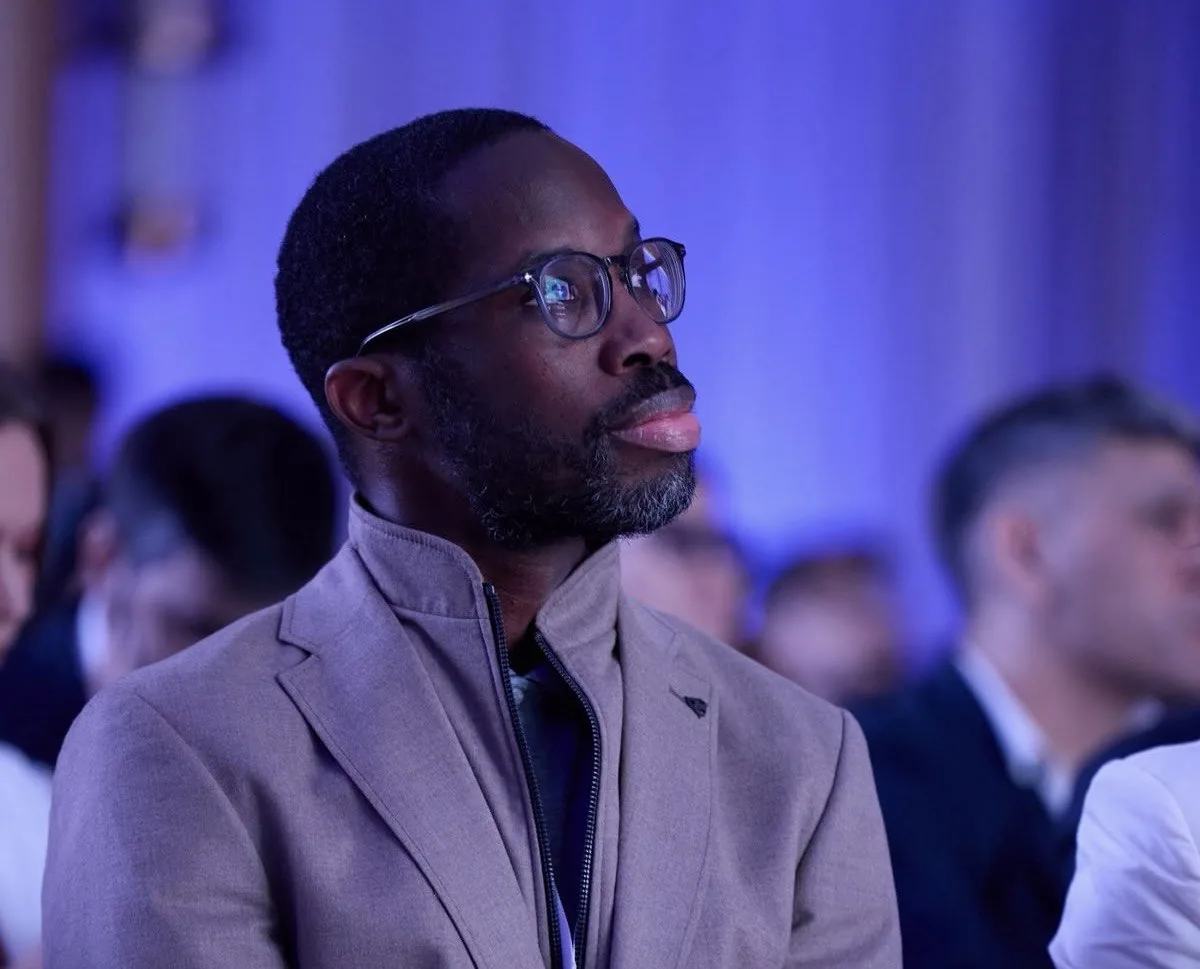
Michael Lints, Managing Partner at Golden Gate Ventures for the MENA region
Why Golden Gate Ventures is entering Uzbekistan right now
We opened an office in Tashkent in June, during the V Tashkent International Investment Forum TIIF 2026. This is a joint project of our Qatar Financial Centre unit and the Uzbek-Omani investment company UzOman. The timing was deliberate. In 2025, venture investment volume in Central Asia amounted to approximately $320 million, and in the first half of 2026, Uzbekistan showed the highest year-on-year growth in venture funding in the world—nearly 540%, according to preliminary data from Dealroom. In the first quarter of 2026 alone, residents of IT Park Uzbekistan exported services worth $191.8 million—about 25% more than in the same period the previous year. These early indicators are formed on a relatively small base, which is why we prefer to enter the market at its development stage, rather than after company valuations have already been established.
There are three main reasons why we chose Uzbekistan. First, the scale of demand: Uzbekistan is home to about 37 million people—almost half of the region's population, with a median age of less than 30 years. This allows founders to build large companies in the domestic market before expanding into international markets, which is rare for Central Asia.
Second, a developed institutional infrastructure. IT Park Uzbekistan and IT Park Ventures provide us with access to a pipeline of projects and partners for co-investments, with whom we have already signed memorandums of understanding.
Third, the partner. UzOman is an institutional investor with long-term commitments to the country and expertise in financial services, logistics, and real estate.
Although Kazakhstan currently holds a larger volume of capital in the region, Uzbekistan offers a larger domestic market and higher growth rates. We chose the entry point where we can bring the most value and gain experience the fastest.
Which industries interest the fund
First and foremost, we are interested in FinTech, AI-based B2B solutions, e-commerce, logistics, clean energy, and deep tech.
FinTech leads in the number of deals in both Uzbekistan and Kazakhstan, and this sector aligns well with our experience in MENA. In 2025, FinTech accounted for $4.4 billion out of $7.5 billion in venture investments in MENA—about 58%.
AI accounted for nearly half of Kazakhstan's venture investments in 2025, and Higgsfield's $130 million round demonstrated the region's ability to create companies competitive in the global market.
Logistics is important for structural reasons: this landlocked market, surrounded by other landlocked countries, faces real challenges in distribution, which often become the foundation for sustainable businesses.
Uzum's $65.5 million round and the company's growth to a $1 billion valuation show that consumer platforms in the region are capable of scaling. We are also tracking service companies that turn export revenue into their own products.

What the fund looks for in Central Asian startups
When evaluating startups, we look at real metrics, not the attractiveness of the story the company tells.
We prioritize facts over a beautiful story. We need real revenue, customer retention, and unit economics metrics that remain sustainable after growth spending ends. A large potential market is an additional argument, but not proof.
Second, we need a founding team that already knows how to build distribution in their market. In economies where bank card penetration and formal lending are still developing, successful companies are those that know how to find and retain customers, not just those that present their product best.
Third, the business must have the potential to expand beyond its home market. Since we invest in both MENA and Central Asia, we look for scalable models.
Fourth, the company structure must be suitable for international investors: a clear cap table, a holding structure capable of passing due diligence, and financial reporting that is already being maintained before we request it.
How the "two-way bridge" between MENA and Central Asia will work
The fund plans to connect the two regions through its infrastructure and partner network. The "two-way bridge" will operate through two offices and a unified balance sheet. From Qatar, we connect founders from Central Asia with capital, clients, and talent from MENA.
This has significant commercial importance: in 2025, MENA startups raised $7.5 billion across 647 rounds, with $5 billion going to Saudi Arabia and $2 billion to the UAE. Corporations and state-linked institutions behind this capital are actively seeking technology partners.
In the reverse direction, our portfolio companies from MENA gain access to a market with a population of over 80 million people, lower customer acquisition costs, and a strong engineering base.
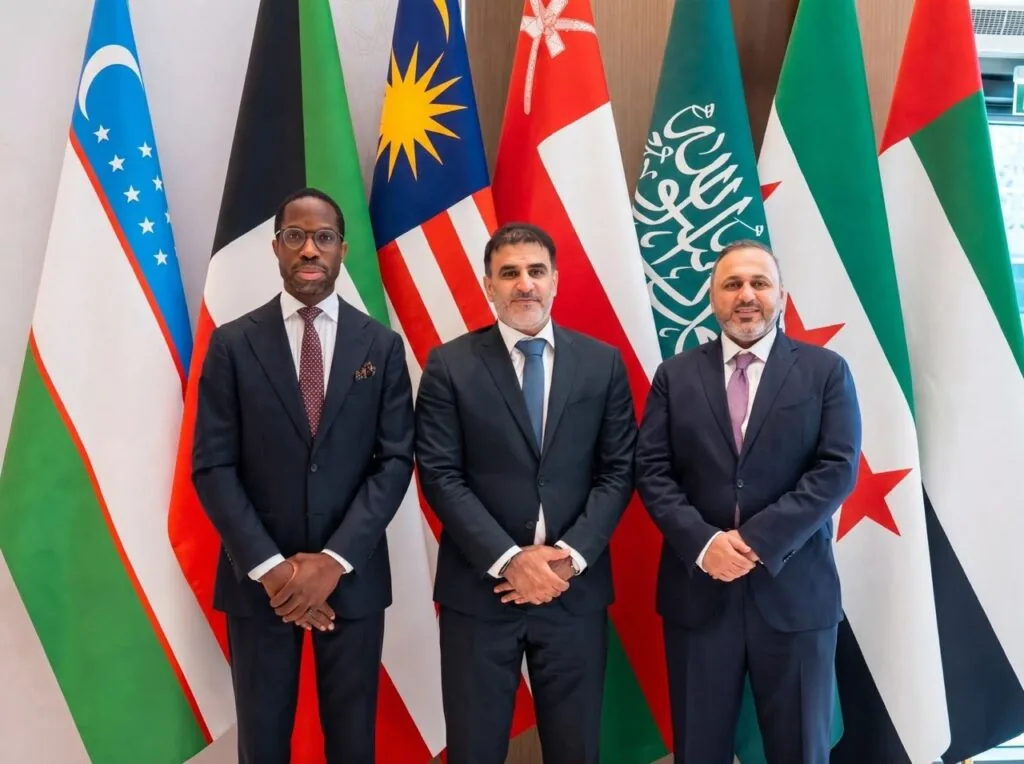
In practice, this means co-investments with UzOman and IT Park Ventures, targeted introductions to corporations and institutional investors from the Gulf countries, assistance with market entry and regulatory issues through Qatar Financial Centre, and a physical office where founders from both regions can interact with each other.
What startups from Central Asia will get through the office in Uzbekistan
Founders gain access to a market that is approximately 20 times larger in venture investment volume than their own. In 2025, MENA invested $7.5 billion compared to $320 million in Central Asia. This gap reflects the difference in capital depth and the number of paying corporate clients, not the quality of founders.
Through the office, founders get introductions to corporations and institutional investors from the Gulf countries, support in structuring international rounds, and access to the Golden Gate Ventures network, which through our Singapore team also includes Southeast Asia.
We also invest alongside local institutions, rather than competing with them. This allows companies to raise funds in a single round from us, IT Park Ventures, or UzOman simultaneously. As a result, the path from a local seed round to an internationally structured Series A becomes shorter.
What opportunities Central Asia opens up for MENA
Engineering talent, a young consumer market, and early-stage company valuations that are no longer available in the markets of Gulf countries.
IT Park Uzbekistan exported services worth $191.8 million in the first quarter of 2026 alone and continues to expand its technical base. The region's population exceeds 80 million people and is predominantly young, while the financial and retail infrastructure is still developing, not yet entrenched.
For MENA companies, this means lower distribution and engineering costs compared to home markets. For MENA investors, it means access to a rapidly growing market that remains largely untapped by international funds.
There is also another, often underestimated advantage—diversification. Venture market cycles in Central Asia do not correlate with the energy revenues of Gulf countries.
Kazakhstan and Uzbekistan: what are the strengths of the two markets
In terms of venture investment, Kazakhstan and Uzbekistan occupy different positions and rather complement each other than compete.
In 2025, Kazakhstan attracted $209 million out of $320 million in venture investments in the region. It has a more developed investor base and legal infrastructure, and companies are initially created with export in mind. Last year, artificial intelligence accounted for about half of all investments. Kazakhstan's strength lies in capital availability and the ability to structure institutional rounds in the local market.
Uzbekistan independently attracted $33.8 million in 2025—11 times more than in 2022. About 85% of the funds came from domestic sources, indicating the formation of its own capital base, rather than dependence on external financing.
Uzbekistan's strength is its domestic market of approximately 37 million consumers and rapidly developing state policy regarding the technology sector.
The main problem for both markets is the shortage of capital at later stages and exit opportunities. We want to help solve this problem.

What mistakes prevent startups from attracting international investment
When seeking international investors, four common mistakes repeat.
The first is building a presentation around market size rather than real metrics, adding up the populations of different countries despite differences in regulation, currencies, and payment systems.
The second is arriving at due diligence with an unprepared structure: an unclear cap table, holding companies in inappropriate jurisdictions, or unverified financial reporting.
The third is expecting international investors to act as distribution partners and handle market entry themselves, whereas investors primarily assess the team's ability to do this independently.
And finally, they perceive fundraising as a one-time event rather than a long-term relationship. Especially in MENA, capital follows trust and familiarity with the company. Rounds that close quickly are usually prepared over several months.
Recommendations for founders seeking investment in MENA
Start building relationships with the region before you need funding.
Relationships here are formed through several visits, and investors who have seen you deliver on your promises six months ago will act faster and offer better terms than those meeting you for the first time with a term sheet request.
Use this time to clearly define what exactly you need beyond capital: access to corporate clients in Gulf countries, regulatory licenses, or co-investors for future rounds. Vague requests usually receive vague answers.
Be open about your financial metrics, including existing problems. Founders often underestimate how much their credibility increases when they disclose problematic issues themselves before due diligence uncovers them.
The Tech on Telegram Follow The Tech on Telegram
Keep up with the latest technology and startup news.
Related reading






More from this author

Article Useful
How to protect your accounts from hacking: 8 settings you should check today
The Tech

Article Useful
500 Global: How the Accelerator Works and Who Can Receive Investments
The Tech

Article Interviews
Game Development in Central Asia: Arkady Moldavski on Developing Reverb and the Growth of the Industry
The Tech

Article Useful
Google, Tesla, BlackRock, and the IMF: Where to Apply for an Internship in Fall 2026
The Tech

News IT
Tesla unveiled the flying electric car Roadster
The Tech

News IT
Intero Biosystems startup won the Startup Battlefield at TechCrunch Disrupt 2026
The Tech