Game Development in Central Asia: Vladimir Pak on Game Jams, Indie Projects, and the Future of the Market
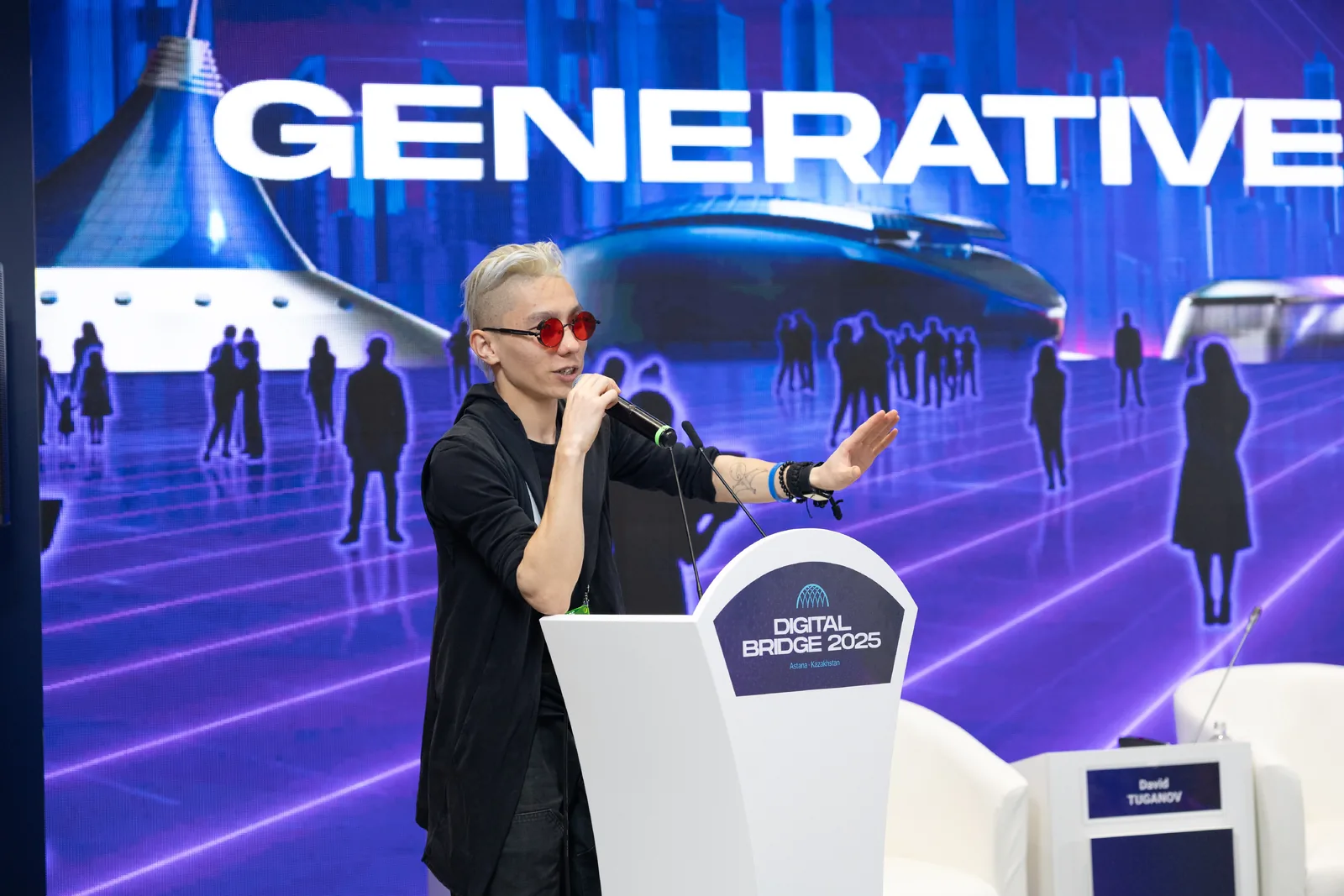
Vladimir Pak, known in the industry by the pseudonym Monomakh, is a game jam organizer, community manager, and indie developer from Almaty. He creates and supports student and regional communities, hosts large-scale events, helps beginners and professionals develop game projects, and researches the impact of video games on players' emotions.
Vladimir Pak, city — Almaty, event organizer and community manager in the GameDev and IT sectors, creator of the Almaty Game Developers Club AKIRA and the student IT community LYSTRA.KZ, Team Lead developer at an IT outsourcing company, head and founder of the GameTech AI research project EmoSDK.tech, indie game developer, Instagram
About Me
I am known in the gaming industry under the pseudonym Monomakh. Generally, I am primarily an IT professional. I work in IT outsourcing, engage in startups and business. I serve as CTO for outsourcing in several startups.
In game development, I am known for creating, producing, and growing communities. I have conducted numerous large-scale events, including republican and international ones, and participated in organizing GameJams.
I founded student clubs and the Almaty game development club, which unites designers and developers with a focus on offline meetings.
We host GameJams and conferences, participate in Digital Bridge, and plan trips to Digital Qazaqstan and other events.
I help with organization, preparing speeches and presentations, and overall — connecting ideas and helping to bring them to life.
Career Path
Since childhood, I have been interested in technology and creativity: I read, engaged in art, worked with technology, helped master machines, and even worked briefly as a welder. Initially, I wanted to become an architect or write books, but at age 10 or 11, a computer appeared that combined my interests in technology and art.
I started with websites, programs, and small experiments, then began creating mods and maps for games — Minecraft, CS, Dota. My works received 2,000–3,000 views, which inspired me to dive into the gaming sphere. Later, I discovered game engines, eventually choosing Unity and dedicating myself entirely to game creation.
The start of my career was difficult. In 2019, at age 17, I entered university and moved to the city with the hope of immediately finding a game studio. I entered Satbayev University on a grant but quickly realized that the industry in Kazakhstan was minimal at that time: a couple of online chats and some regional student GameJams.
I did not lose heart and decided to create game development in Kazakhstan myself. I gathered students around me who were passionate about IT and game development and created an IT community at the university. Primarily, we gathered around video game development. We even created a small demo. The project was difficult for students, many of whom had never written code before. But in 2020, the pandemic and the transition to online significantly slowed down our work. As a result, the project gradually fizzled out.

About Projects
Currently, I have many projects, including in game development. I handed over the Almaty Developers Club to a younger generation and remain there as a mentor, but I do not handle organization.
Currently, I am building a Central Asian-level community: a media outlet about video games where developers can publish projects and bloggers can create reviews. We plan to support regional hubs and hold an award ceremony for the best games in Central Asia, following the example of The Game Awards and Indie Game Awards.
This allows projects that might only be known within the region to reach a more international and prestigious level. They receive awards here, after which foreign media begin writing about them. At the very least, there is a chance to get published in a major outlet. This gives developers a certain background: behind them are already achievements, not just the status of students from a region that no one knows about.
This project is not officially launched yet — it is in the preparation stage. We have already discussed everything internally within the team, but we have not publicly announced it yet.
Simultaneously, I run my own indie video game studio. I am its founder, game designer, and lead developer. My team also includes a scriptwriter, musician, and sound engineer. In our free time, we work on our own game — an adventure dedicated to the themes of burnout and depression.
We are not seeking investments for this project nor do we consider it a commercial product. Primarily, we are making it because we enjoy it. We are interested in engaging in art and realizing our creative potential through video games.
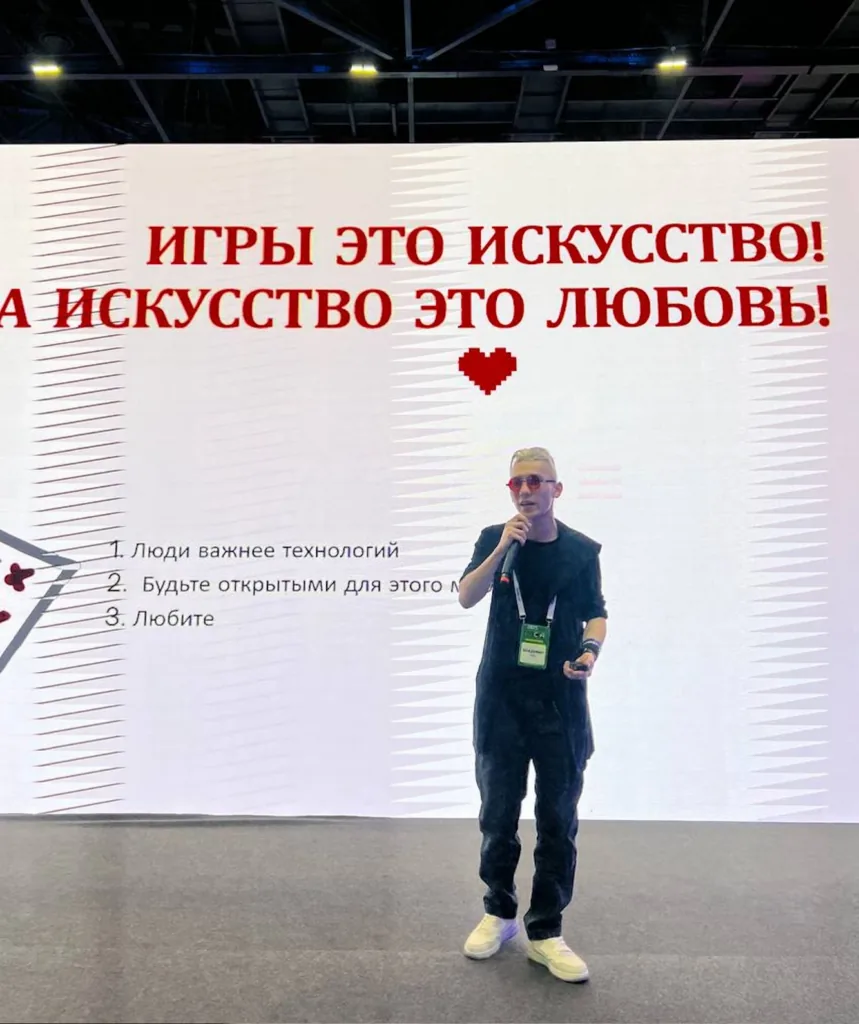
I consider video games one of the highest forms of art because they combine several disciplines at once. This includes text, visuals, music, interactivity, and immersion. All of this is combined into one format, which is why we are so interested in working with it.
Another project is the research company Emo SDK, which studies the impact of games on human emotions and attention. Currently, engagement assessment mainly occurs through questionnaires and tester feedback, but this is an outdated method.
We are developing a system that analyzes the player's emotional state using a webcam, microphone, mouse, and keyboard. It collects data from the player's face, sounds, and actions, allowing us to understand which elements of the game work best.
We already have a demo version that we plan to showcase at Digital Qazaqstan. For now, this is a research project, not a commercial product.
Achievements
I made a name for myself in the industry thanks to the GameJam we organized at Satbayev University. The idea was born together with my friend Salim, and we unexpectedly promised to host the largest GameJam in Kazakhstan and Central Asia for about 300 people, even though we had never participated in a GameJam ourselves before.
Despite our lack of experience, we held the event at the end of 2021. The university provided the venue, participants worked for 40–48 hours, creating about 50 game projects. During the preparation, I had to find judges, speakers, and mentors, and establish connections with the industry. The following year, the GameJam was even larger: more participants, speakers, and studios.
The main achievement for me is not one big event, but the fact that after this, new game jams began to appear in other universities and cities, and many participants from the first jams became organizers themselves. Thus, a culture emerged that continues to develop, and new generations are further advancing the industry.
However, the path was not easy. The main problem was funding: everything was done with our own funds, and finding sponsors is difficult because the game development culture in the region is still forming. To gather about 300 participants, a prize fund of approximately three million tenge was needed. Previously, there was almost no informational support — we had to explain to students what a GameJam was and what prospects existed in the gaming industry. Gradually, the situation is changing: now people participate even without large prizes because they value the experience.
Interestingly, there is a noticeable generational gap in the industry: many young developers and experienced specialists over 35, but almost no one aged around 25–30.

Skills and Profession
The gaming industry unites IT, art, and other fields, requiring specialists from various disciplines. Those who can present projects, find funding, and promote games are especially valuable — business communication skills are still lacking in many developers.
Currently, the industry needs people with a business mindset who can build models, financial plans, and attract investments, as well as artists, 3D artists, and technical specialists. Overall, everyone who wants to try their hand at game development is in demand.
In my projects, I most often use Unity — a flexible engine that does not require a powerful computer but allows for the creation of complex and high-quality games. For 3D graphics, I use Blender, and for sound, I use various tools depending on the task.
There are other engines: Unreal Engine allows for beautiful and technologically advanced games but requires powerful hardware. Godot is simpler and optimized, but it is more difficult for beginners to learn due to the smaller number of courses and materials.
Unity wins in terms of the quantity of educational resources: even a beginner developer can independently master this engine and create projects from scratch.
How the Industry is Developing in Central Asia
Central Asia currently has great prospects in the gaming industry. The region attracts outsourcing studios due to affordable labor, and local talented people have the potential to develop high-quality games.
The main problem so far is a lack of experience. The market emerged between 2005 and 2010; many studios were created then, but activity decreased from the mid-2010s. Now the industry is recovering, and it is important to accumulate experience to form new studios.
There is also a lack of funding. To reach an international level, investments are needed. Gaming culture is only forming: most people play popular session-based games like CS, Dota, or FIFA, while many other genres exist. Supporting diverse games will help develop the industry, and many future developers come from among gamers.
Beyond the financial aspect, the most important answer is people. The foundation of any industry is not technology, not funding, and not opportunities. It is people, because opportunities, technologies, and finances are created and brought into the industry by people. The more people who are interested in and passionate about this form of art, the more opportunities will appear here. And everyone can contribute to the industry.
International studios are showing interest in regional specialists. After the start of the war, some companies moved to Kazakhstan from Russia, and offices for G5 and studios like Sperasoft opened. Investors from China, Dubai, and Europe are already monitoring local projects, and one successful project is enough to attract serious investments.
Education in game development is evolving: several major technical universities teach video game development. This is important, but currently insufficient, and educational initiatives need to be supported to prepare specialists for the developing industry.
Advice for Beginners
Game development is just beginning, and it is often difficult to understand where to start. There is no right path — the main thing is not to be afraid and take action.
Many, upon learning about game jams, studios, and international conferences, gain confidence and start their own projects: they upload games to the internet, communicate in clubs, and gain experience. The main thing is to take action and not be afraid. A new boom in video games is happening now: the industry is a bit tired, and everyone is starting to play again.
Indie games are small projects by students or enthusiasts that sometimes take off and become popular. But success does not come in a couple of months: practice, learning, and hard work are required.
Successful developers spend years creating dozens of small projects, gathering feedback, and building processes. Often, the first successful project comes only on the fourth or fifth attempt, while the first ones are for learning. This can take three to eight years, and the projects are needed primarily for yourself and your loved ones. The main thing is to learn, strive, develop, and not give up.
Above all, experience is important: participate in game jams, create your own projects, learn, and gain practice. Everyone has their own path. Even top developers learned differently: some spent decades in universities, others at home, making dozens of projects that never took off, and learning from mistakes.
Plans
In our future plans is the creation of a Central Asian video game community. This will be a large portal where developers can publish projects and receive professional reviews, with the best works nominated at the end of the year. The website launch is planned for approximately mid-May, simultaneously with the start of media focused on developing gamer culture. We want people to be interested in playing, and then gradually engage them in the industry, collaboration with studios, and professional projects.
A gamer rave — a classic dance disco for an audience aged 21 and over — will also take place in Almaty. Young participants met the idea skeptically, while older participants supported the project, which inspired us to implement it.
We believe it is important to support gamer culture and love for video games as an art: holding exhibitions, showcasing game models, and drawing attention to lesser-known but artistically valuable projects.
Additionally, a demo day tour across Central Asia is planned in collaboration with partners from Kyrgyzstan and Uzbekistan. We will visit cities with exhibition stands featuring games from regional studios — Astana, Karaganda, Almaty, Shymkent, Tashkent, and Bishkek — to show projects that the general public does not yet know about.
Many beginning developers are unaware of the existence of studios and projects. Often, they focus on foreign games or abandon their own ideas due to a lack of opportunities. Our goal is to create a bridge between amateurs and professional studios, engage young people in projects, and train a new generation of developers.
The Tech on Telegram Follow The Tech on Telegram
Keep up with the latest technology and startup news.
Related reading






More from this author

Article Useful
How to protect your accounts from hacking: 8 settings you should check today
The Tech

Article Useful
500 Global: How the Accelerator Works and Who Can Receive Investments
The Tech

Article Interviews
Game Development in Central Asia: Arkady Moldavski on Developing Reverb and the Growth of the Industry
The Tech

Article Useful
Google, Tesla, BlackRock, and the IMF: Where to Apply for an Internship in Fall 2026
The Tech

News IT
Tesla unveiled the flying electric car Roadster
The Tech

News IT
Intero Biosystems startup won the Startup Battlefield at TechCrunch Disrupt 2026
The Tech