Wintering for IT professionals: Dubai, Bali, Thailand, or Vietnam — which to choose
Wintering in warm countries is becoming increasingly popular among IT professionals seeking to escape the cold and combine work with leisure. In this article, IT specialists from Kyrgyzstan and Uzbekistan share their experiences of living and working in warm countries, helping to determine the optimal place for wintering.
Author - Mansur Ismagulov
The Tech AI
Get the key points in seconds - a short summary from The Tech AI.
Maria Tsvetkova lives in Dubai with her family, spending about $5000 per month. She values safety, multiculturalism, and a winter climate ranging from +17 to +28°C, noting the high cost of living and the need for a visa for citizens of Kyrgyzstan. Andrey Mikhailov travels through Southeast Asia (Bali, Thailand, Vietnam) as a fullstack developer. His budget is around $1500 per month, including housing rent from $400–$700. He advises taking into account the rainy seasons, arranging documents in advance, and being able to ride a scooter.
Maria Tsvetkova, city — Dubai, frontend developer, @marusia_inside
About me
This year I retired, but it only lasted a year. Currently, I work at a startup engaged in corporate coaching. I live in two countries: Kyrgyzstan and the UAE.
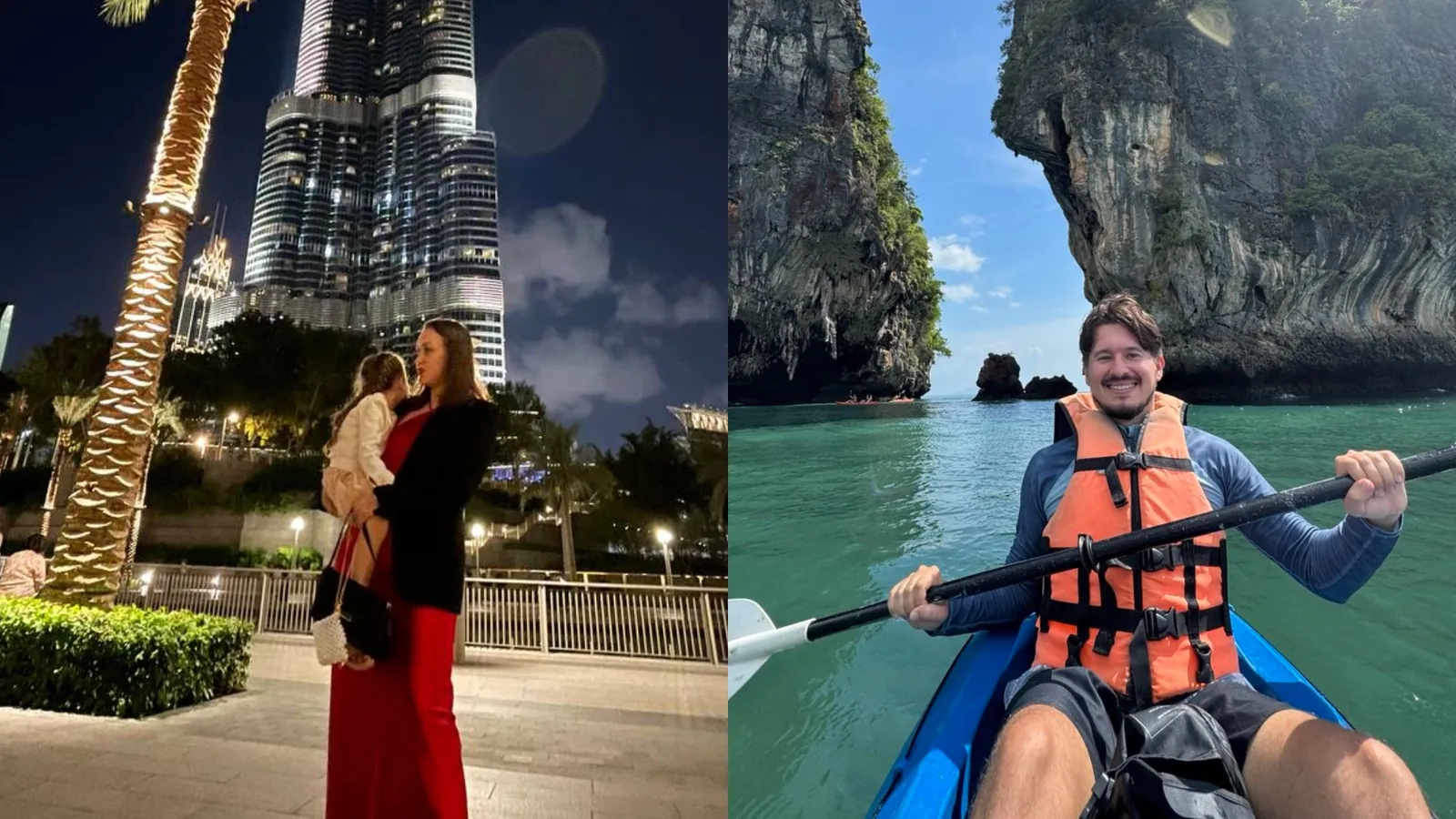
I received an offer in Dubai, and we decided to give it a try, then we got hooked and stayed. I like the safety in Dubai: we don’t lock our homes or cars, we calmly leave phones, wallets, and laptops in crowded places, and let our children play in shopping malls and on the streets. In the four years I’ve lived here, I have never heard insults, seen fights, or drunk people on the streets. I also like the multiculturalism: we celebrate Muslim, Christian, and Hindu holidays, and we treat other worldviews with respect and curiosity. My daughter is getting used to different cuisines, languages, and people of all shapes, colors, and sizes, which is very valuable to me. In the morning we eat Indian samosas, for lunch — Lebanese hummus, and for dinner — Vietnamese pho soup.
In winter, Dubai’s climate is especially pleasing — from +17 to +28 degrees. You can swim in a heated pool, take a walk, have a picnic, or go fishing.

Life in Dubai
Mostly apartments and villas are available here. We live in our own apartment. On average, renting a studio costs $1500 per month, and a three-room apartment is about $3000. You can also rent a sleeping place for $500.
The pros: safe, beautiful, clean, delicious. The city has a working atmosphere, surrounded by many ambitious, smart, and hardworking people. Driving past skyscrapers, you feel inspired and the desire to do something great. Dubai has a high concentration of wealthy people, which makes the market small but solvent. Everyone follows the rules: no rudeness, litter, or spitting — a cultural environment.
The cons: the market is small, the city’s population is only about three million people. Life is expensive, so Dubai is more suitable for active earning than for downsizing. Kyrgyzstani citizens need a visa, which costs about $300 for three months. Also, it is much more comfortable in the city with a car: there are large distances between districts, and you can’t get around on foot.
The budget for a family is about $5000 per month. With utilities and internet — $3000 for housing, food — $500, transport — $500, miscellaneous — $1000.
We live modestly by local standards.

Recommendations
It is important to do research. Dubai is not the easiest city to live in, and if you just want to lie under a palm tree and drink coconuts, it is better to choose something simpler. You should come to Dubai for the action, people, money, and realization of ambitions.
Andrey Mikhailov, city — Tashkent, fullstack developer, @andrew.pro.live

About me
I started working in IT back in 2009, while I was a college student. Over this time, technologies have developed rapidly, and I have changed several different fields. Currently, I work as a fullstack developer for a foreign company. My main tasks are developing a CRM system for the company’s internal needs and a high-load project oriented towards users.
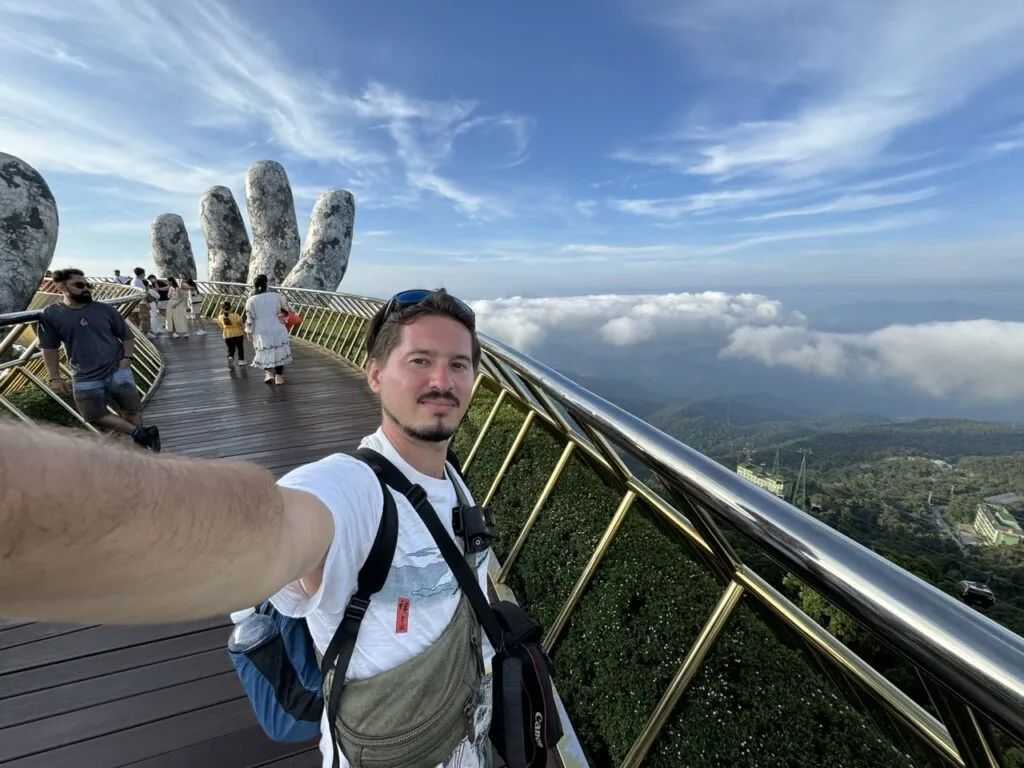
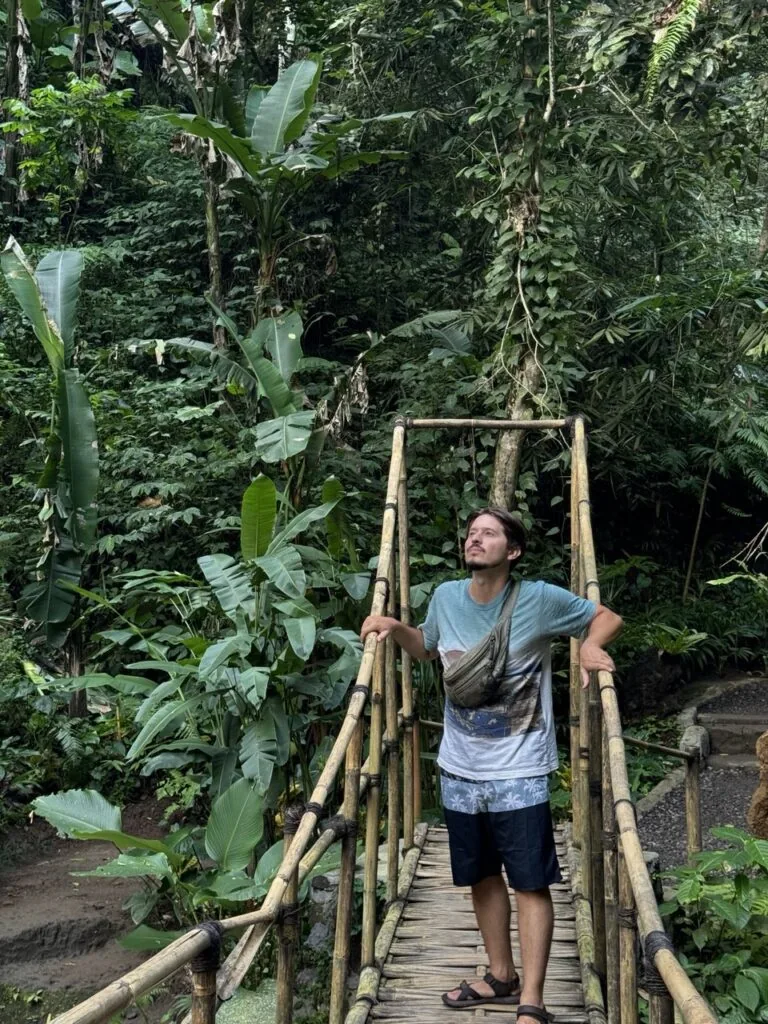
I like that the company has a flexible work schedule: this allows not only to solve tasks effectively but also to combine them with personal hobbies. For example, for the last year I have been traveling through Southeast Asia. During this time, I managed to visit Indonesia, the Philippines, Thailand, Malaysia, and Vietnam. Traveling allows not only to be inspired by new places but also to collect impressions. I am into photography and have already collected many interesting shots that may one day turn into a separate project.
This winter I plan to spend time in Bali and Vietnam. The choice of these places was dictated by several factors.
I decided to celebrate New Year in Bali: many interesting events, parties, and festivals are held here. Also, most of my colleagues currently work from the island, and this is a great opportunity to celebrate the holidays with friends.
However, from the end of December, the rainy season begins in Bali. During this time, the weather becomes less comfortable, so I decided to go to Vietnam. In the southern part of the country, the tourist season is just starting: a warm climate, affordable prices for housing and food make this place ideal for wintering.
In addition, I considered the western part of Thailand, such regions as Phuket, Krabi, Bangkok. The rainy season also ends there in winter, and you can enjoy excellent weather.
Life in Bali, Thailand, and Vietnam
For long stays, I usually choose apartments or small houses. They are convenient for work: there is always a desk suitable for a workspace, as well as a kitchen where you can cook food. If the stay is only for a few days, I can consider guesthouses or hotels.
Rental prices depend heavily on the country and type of housing. Prices are given for monthly rental:
— Bali: guesthouses — from $250-$300, apartments and houses — from $500-$700
— Thailand: guesthouses cost about the same, but apartments and houses are more expensive. For $500 you can find only small studios. However, the condominium format is common here, which often implies the presence of a pool and some additional zones on the territory
— Vietnam: here renting is the cheapest. Spacious apartments cost about $400, and if you rent for a long term, you can find even cheaper options.
Usually I book housing through Airbnb or Booking, but if you stay in one place for a long time, you can also look for options on the spot. This helps to find optimal conditions and save money.
Over a year of traveling, I have identified both pros and cons for myself.
Cons:
— constant flights. This is a process that takes time: pack things, go through customs, get to a new place, settle in. Over time, this becomes tiring, especially if moves are frequent. But you can always stay longer in one place and rest a bit from this
— preparing documents and planning the route. For example, to enter many countries in Southeast Asia, you need to obtain a visa, register, fill out customs declarations. Finding optimal tickets for flights, booking housing. These processes take time
— over time, you start to miss loved ones and friends.
Pros:
— constant warmth. You can get by with a minimal amount of things, without winter jackets and boots
— nature and sea. This gives a charge of energy, and activities like snorkeling or surfing become a great way to relax
— meeting new people. For example, in Vietnam I met my girlfriend, who also works in IT, and now we travel together
— communities. In each country, there is an IT community where you can exchange experience or just have a good time
— new experience. Living in different countries allows you to see new approaches to solving problems, household, and business. This is inspiring and can become a source of ideas that will later come in handy in work and which you can even bring to your own country.
The budget depends on the country. If you take average expenses, you can fit into $1500 per month.
Main expenses:
— housing rental. This is the largest part. Prices for apartments or houses are $400-$700 depending on the country
— transport. Renting a scooter will cost about $100 per month. This allows you to be mobile and save on taxis
— food. In Southeast Asia, it is affordable. Even when visiting cafes or restaurants, you can fit into $200-$300. If you cook at home, it is even cheaper
— entertainment and leisure. Visiting excursions, activities like snorkeling or surfing add $100-$300 to the budget.
Flights should be considered separately. If you take only wintering, the main expense will be the flight from your home country to Southeast Asia and back, about $700. Flights within Southeast Asian countries are relatively cheap — from $80 to $150 with luggage.
Recommendations
- Take into account the rainy seasons. Before choosing a country, it is important to find out when the weather will be comfortable in the region.
- Prepare documents. Visas, insurance, international driver’s license — it is better to do all this in advance. For example, in Bali or Thailand, it is difficult to rent transport without an international driver’s license.
- Learn to ride a scooter. This will significantly facilitate movement in most Southeast Asian countries.
- Insurance. It is better to have a policy than to face expensive treatment in case of need.
- Study cultural features. For example, electronic cigarettes are banned in Thailand, and in Bali it is better to observe local customs.
- Plan routes and housing in advance. This will help avoid stress and find the best options.
- Obtain several international cards in different banks, so in case of technical problems, there will always be a backup card for payment.
Travel gives invaluable experience, so I recommend everyone to try this format of life at least once.
The Tech on Telegram Follow The Tech on Telegram
Keep up with the latest technology and startup news.
Related reading







More from this author

News
zypl.ai begins operations in Japan and focuses on next-generation risk models
Mansur Ismagulov

News
Elon Musk's net worth has exceeded $700 billion for the first time
Mansur Ismagulov

Article Interviews
"Central Asian countries should build a joint ecosystem," — Bekhzod Ismoilov on the development of AI in the region
Mansur Ismagulov

Article Interviews
Bloom's Taxonomy and Engineering Levels: A Practical Growth Model
Mansur Ismagulov

Article Useful
How the IT industry in Azerbaijan developed in 2025: key events
Mansur Ismagulov

News
Tajikistan has become a new member of the regional innovation alliance Central Asian Innovation Hubs.
Mansur Ismagulov