GCIP Kazakhstan. How the program works and who can become its participant
Recently, in the Telegram channel The Tech, we held a live stream where we learned more about the Global Cleantech Innovation Program for "green" startups. We are sharing interesting thoughts in text format.
Author - Mansur Ismagulov
The Tech AI
Get the key points in seconds - a short summary from The Tech AI.
Olzhas Altayev, Director of the Department of Green Technologies at NAO "International Center for Green Technologies and Investment Projects," leads the GCIP Kazakhstan program, which supports GreenTech startups with the backing of UNIDO and the Global Environment Facility. The program's goal is to reduce CO2 emissions by 135,000 tons annually (direct) and 675,000 tons (indirect), offering winners a grant of 3 million tenge and access to a global forum in Istanbul. This year, 32 projects completed the acceleration phase, and globally, the program has helped over 1,100 startups secure $260 million in investments.
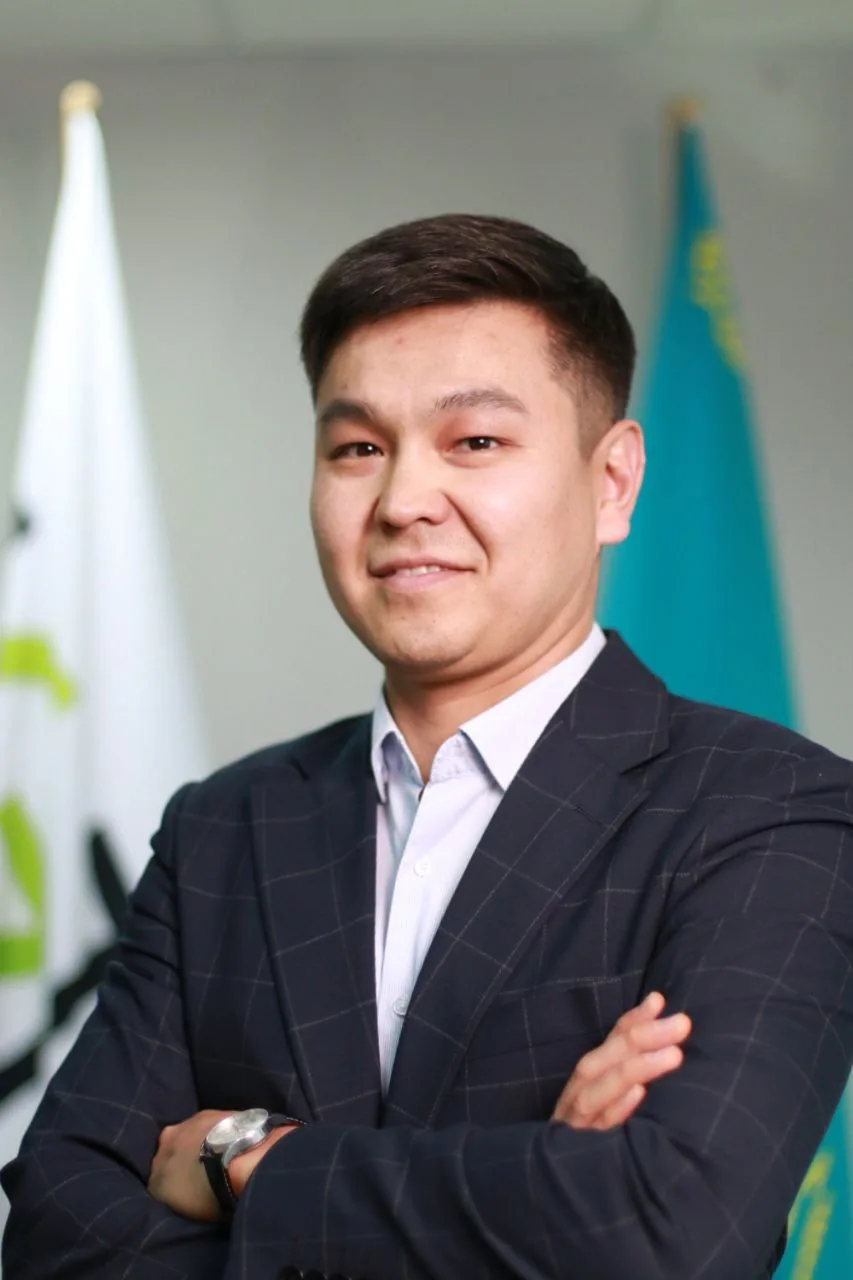
Olzhas Altayev, Director of the Department of Green Technologies, JSC “International Center for Green Technologies and Investment Projects”
About Me
I am the Director of the Department of Green Technologies at the International Center for Green Technologies and Investment Projects, a subsidiary of the Ministry of Ecology. I have been working in the field of innovation for over 13 years. My career began at the National Innovation Fund, where I was involved in the development of innovation grants—the first instrument for supporting innovation in Kazakhstan. Subsequently, the fund was transformed into the National Agency for Technological Development, where I participated in the creation of technology parks, support for business incubators, and the implementation of venture funds with foreign partners such as Quest Ventures and 500 Global.
I also worked on industrial projects, assessing their technical and innovative feasibility, and developed tools for private business incubators, including the successful MOST incubator. Since June 2024, I have been focused on developing the GCIP program and other projects in the field of green technologies.
About the GCIP Kazakhstan Program
The GCIP (Global Cleantech Innovation Program) is the only program in Kazakhstan supporting GreenTech startups that have a positive impact on the environment. It has been operating for over 15 years and covers 16 countries. The program is supported by UNIDO and the Global Environment Facility.
The goal of the program is to support innovations in clean technologies and environmentally sustainable solutions. It consists of two components: startup acceleration and the creation of an ecosystem for their further support. The main areas of the program include energy efficiency, renewable energy sources, water and waste management, green building, eco-friendly transport, and other technologies.
The program also takes into account the gender aspect, ensuring the participation of women and girls at a level of 35%.
Participation in the Program
The GCIP program is open to all startups that meet one or more of the seven main directions. Projects that do not fit a single direction but cover several of them are also eligible to participate.
Our main KPI is the reduction of CO2 emissions. The program aims to reduce direct CO2 emissions by 135,000 tons per year and indirect emissions by 675,000 tons per year. Startups must consider how their projects contribute to this reduction. Almost every GreenTech or CleanTech project in some way affects emission reductions, making this an important criterion for participation.
Startups at various stages of development can participate; evaluation is conducted using the TRL (Technology Readiness Levels) system. Participants must be of legal age, as the program involves travel and other activities.
The program is held annually, and this year it is being implemented for the second time. To participate, startups submit an application through the designated form.
To apply, it is sufficient to visit the program website, fill out the form with a project description, team data, information on CO2 emission impact, and attach presentations or videos. Additional documents, such as patents or other hypothesis confirmations, can be attached in the designated field, but this is not mandatory.
The GCIP program includes several stages: pre-acceleration, acceleration, and post-acceleration. At the first stage, there is an announcement, brokerage events, and activities to attract startups. Then, startups submit applications, which are checked for compliance with requirements. After that, an independent commission of experts, representatives of development institutions, and the venture industry selects startups for participation in the acceleration phase.
Next, a four-day national program takes place, where startups receive training and mentoring support from experts, including specialists from the American company Global Innovation Networks, which specializes in accelerating GreenTech startups. This is followed by online acceleration with daily sessions with mentors, tasks, and progress tracking of startups through working documents.
After acceleration, a semi-final takes place, where 30 startups are first selected, followed by 10 finalists. Five winners receive a grant of 3 million tenge and the opportunity to present their projects at a global forum, which will take place in Istanbul next year. This year, startups will be able to demonstrate their projects to an international audience, including investors and potential partners.
Experienced mentors such as Anuar Seifullin, Tatyana Khasanova, and Lenar Belyalov also participate in the program, helping startups improve their projects and prepare for pitching.
Successful Examples and Results
We have several successful examples. For instance, last year’s winners were able to present their projects at the global event Global Cleantech Days in Austria, where two Kazakh startups entered the top 6, and one of them took second place. This startup, working in the field of monitoring Kazakhstan’s water resources, attracted the attention of the Ministry of Water Resources, opening up prospects for further development.
Furthermore, in the post-acceleration phase, the program actively helps startups find clients, partners, and expand their opportunities. For example, a startup processing oil waste attracted interest from Turkish partners, and a startup processing plastic and creating building panels already has agreements with major construction companies and will be presented at a conference in Baku organized by the UN.
The GCIP acceleration program continues to follow global trends, especially in waste management—the direction with the highest number of applications. Waste processing is a relevant topic not only for Kazakhstan but for the entire world. In the global context, startups involved in waste management also make up a significant part of the project. Additionally, many projects related to water resource management and advanced materials have applied to the program.
The global program has helped over 1,100 startups in the last three years. The implementation of projects has reduced emissions by approximately 5 million tons of CO2, startups have attracted over $260 million in investments, and created 1,200 jobs. In Kazakhstan, 22 startups went through acceleration last year; this year, the number of applications has increased, and 32 projects have already successfully completed acceleration.
Recommendations
For a project to become scalable and successful, it is important not only to solve an actual problem but also to think through its economic model. Without a sustainable financial strategy, even the most innovative ideas may not survive to the implementation stage. A startup must understand how it will generate revenue and what resources it will need for this.
Using available state and international programs for startups is an important step, as many of them offer not only financial support but also mentoring, access to a network of contacts, and opportunities for international expansion.
One must be prepared for the fact that green technologies and sustainable projects often require significant time and financial investments. Success does not come quickly, and it is important to have patience and realistic expectations regarding payback periods and growth.
Plans
We plan to hold a Startup Weekend on November 30 and December 1, with the selection of finalists and intensive training for startups.
The program semi-final will take place at the end of November, and the final, including pitching and winner selection, will be held on December 12. This will be a national forum with the participation of global partners who will present a diagnosis of Kazakhstan’s ecosystem and recommendations. An investor-connect event will also take place for potential collaborations between startups and investors.
Additionally, we are developing a program focused on supporting startups from Central Asia.
The Tech on Telegram Follow The Tech on Telegram
Keep up with the latest technology and startup news.
Related reading







More from this author

News
zypl.ai begins operations in Japan and focuses on next-generation risk models
Mansur Ismagulov

News
Elon Musk's net worth has exceeded $700 billion for the first time
Mansur Ismagulov

Article Interviews
"Central Asian countries should build a joint ecosystem," — Bekhzod Ismoilov on the development of AI in the region
Mansur Ismagulov

Article Interviews
Bloom's Taxonomy and Engineering Levels: A Practical Growth Model
Mansur Ismagulov

Article Useful
How the IT industry in Azerbaijan developed in 2025: key events
Mansur Ismagulov

News
Tajikistan has become a new member of the regional innovation alliance Central Asian Innovation Hubs
Mansur Ismagulov