GameDev Goethe. Akmal Salikhov on the incubator supported by NVIDIA
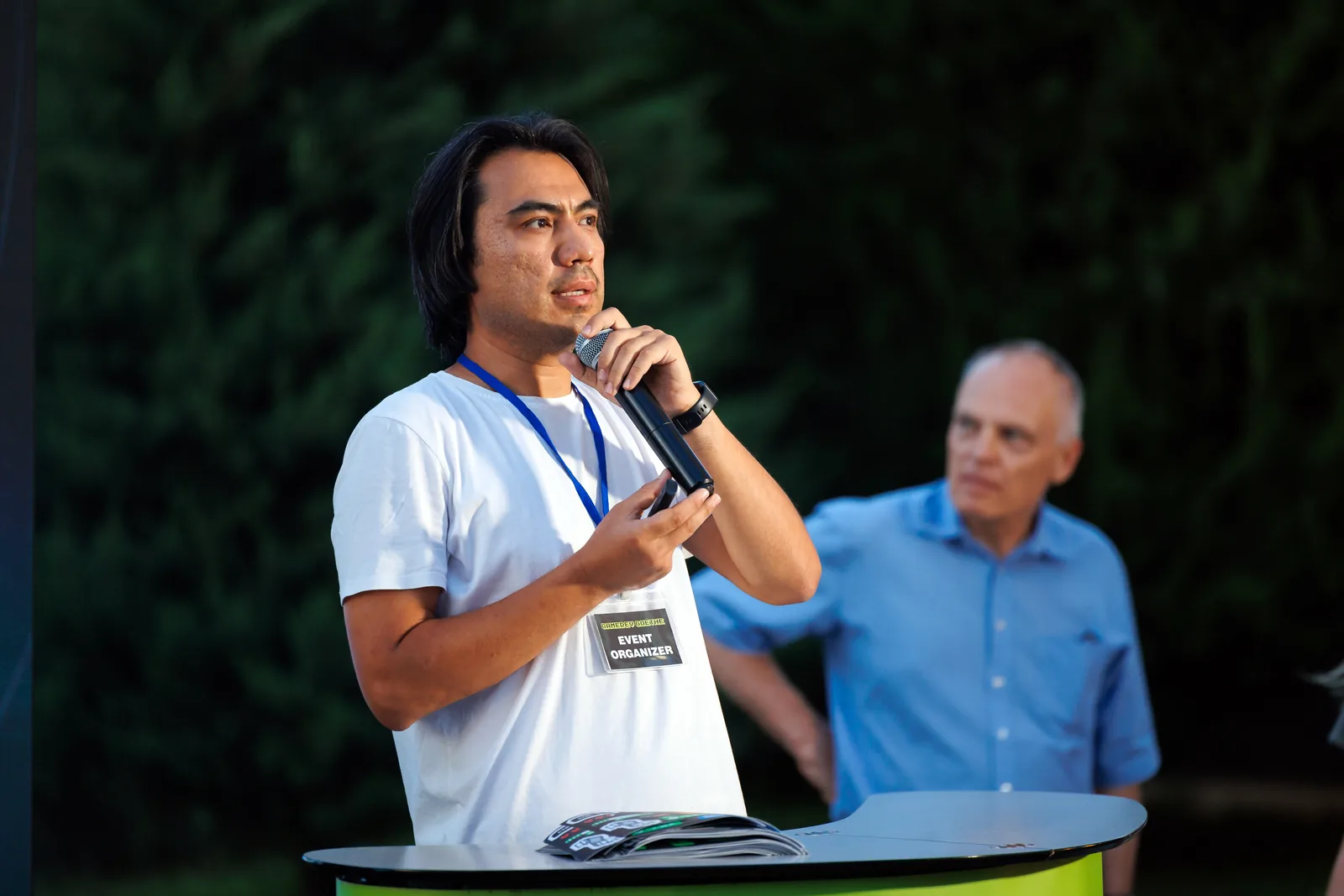
The founder of GameDev Goethe spoke about who can participate in the incubator, the requirements for participants, and future plans.
Author - Mansur Ismagulov
The Tech AI
Get the key points in seconds - a short summary from The Tech AI.
Akmal Salikhov, founder of GameDev Goethe in Tashkent, created an incubator to address the shortage of personnel in the Uzbek gaming industry. The first season started in March 2020 with the support of the Goethe-Institut; participation is open to those aged 12 and above with basic skills. In 2024, NVIDIA became an official partner, providing moral, material, and educational support, including prizes in the form of GeForce RTX graphics cards. A launch of an accelerator with state support is planned to bring projects to market.
Akmal Salikhov, city — Tashkent, founder of GameDev Goethe, @salikhovakmal
About Me
My path into game development was quite unusual—I got there through music. I was involved in creating electronic music and even had my own recording studio. Then, guys from one of the first Tashkent studios that made games reached out to me, asking me to create sound effects and voiceovers for their projects. This work gradually captivated me.
About a couple of years into this freelance collaboration, I fully joined their team, where I worked for many years. I started as a sound designer and eventually rose to become the head of a major project related to children's fairy tales. My experience in audio recording proved to be extremely useful.
My choice of game development was driven by the fact that I am a creative person, but I am also interested in technology. There are professions that are entirely focused on creativity, such as artist or musician. And then there are those that combine both creativity and technology—I call this Creative Tech. Game development is considered an ideal field where you have programming, visual effects, and sound—it is a true balance between technology and creativity. That is exactly why I chose games.
About the GameDev Incubator
The incubator was launched after I had already started working on my own games and creating game products for the local market. At that time, I faced a shortage of people in my team and realized that the industry needed more specialists. When the industry is small—only 100-200 people—it is difficult to develop. Large companies can attract professionals, but small studios, like mine, rely on enthusiasts.
This is how the idea for creating an incubator emerged—to bring talented young people together and solve the problem of staff shortages. Once a year, the incubator gathers several teams that start creating something. This system works—many teams have already formed that develop games and fulfill orders. The incubator helps both with finding and hiring talented specialists for the team and with the development of the entire industry.
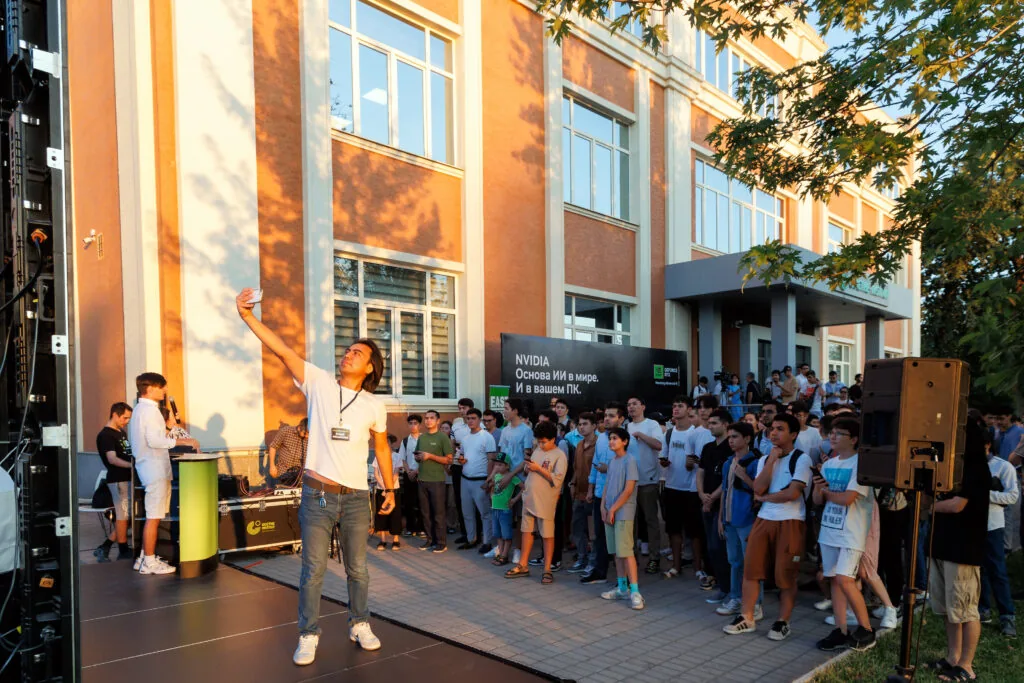
The idea for the incubator emerged in 2019, and the first season started in March 2020. Initially, it was planned that the incubator would take place offline at the Goethe-Institut, which supported this idea by providing space and budgets. However, in March, the pandemic began, and we switched to an online format, making it hybrid. Currently, the incubator works in this format: the opening and closing events take place offline, while all other activities are online.
At the moment, we do not impose strict restrictions on participation. The recommended age is 12 years and older, as the youngest participant in the history of the incubator was 12 years old. However, if a 10-year-old boy comes who is ready to work, we will also accept him without any problems.
It is important to understand that the incubator does not teach how to create games—it motivates them to do so. Participants should already possess basic skills: understand how game engines work, be familiar with 3D graphics to be useful in a team. Usually, a team needs a developer and an artist, whether 2D or 3D. Therefore, minimal knowledge in programming or design is necessary to participate. It is also important that participants are gamers who have a good understanding of games and are eager to create them.
However, we add a mentoring system to this. The largest game studio in Uzbekistan, East Games, agreed to help us, and the studio's team will support the participants. They will not, of course, teach, but they can guide participants in the right direction, give advice, and thereby improve the quality of the games being created.
About NVIDIA
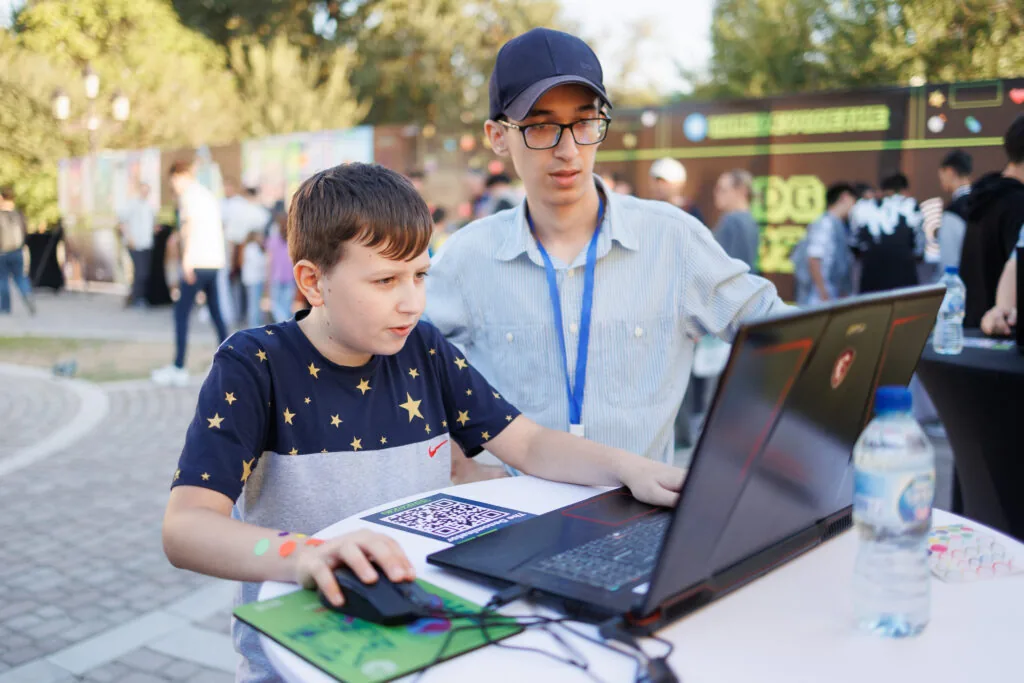
NVIDIA is a huge brand, and we are proud to be their official partners in 2024. Our relationship began two years ago when a team from NVIDIA became interested in the gaming community in Central Asia and learned about us. Since then, we have collaborated in the format of lectures.
This year, I proposed that NVIDIA become a partner and sponsor of the incubator, and they agreed, which was pleasing for us. NVIDIA supports the incubator in three ways:
- Moral support. The very fact that such a large brand is interested in a small community in Uzbekistan has already become a significant motivational stimulus for participants.
- Material support. NVIDIA allocates a budget for prizes and marketing of the incubator. This year, the five best games will receive GeForce RTX graphics cards, which will be purchased thanks to NVIDIA's support.
- Educational support. We hold lectures with NVIDIA employees, and we plan to conduct several more such online meetings within the framework of the incubator. This will help participants improve their knowledge of modern technologies and stay up-to-date with the latest trends in the industry. NVIDIA employs experienced specialists who are happy to share their knowledge with our participants.
It is planned that colleagues from NVIDIA will come to us for the final exhibition, demo day, and final game showcase. They will be on the jury, evaluating projects, providing feedback, and sharing their expertise. This is great because these two factors allow us to invite other international guests. We can attract more attention from the international community to our event, or at least they can participate in the online format. Now we have a brand known worldwide, especially among those involved in game development. This increases trust: if we invite, for example, a developer from Poland to our exhibition, it will be easier for him to make a decision knowing that the project is supported by NVIDIA.
Plans
The main plan is to help young people reach a new level by creating an accelerator. We have been thinking about this for several years because the incubator helps create raw prototypes, but to bring them to the market, an accelerator is needed. For this, budgets, experts, and mentors are required. In this matter, state support is indispensable. A partner is needed because this is not quite a business activity yet, and the state will definitely benefit from it. Participants in the accelerator will either create a successful game or find a job and contribute to the economy. But at early stages, investing in inexperienced teams is risky, and private investors will be cautious until there is the first success story. I have been in dialogue with the state for several years to launch an acceleration program that will allow financial support for teams formed within the incubator. This will help them either complete the started game or create a new one from scratch, already at a higher level, to further seek investment, a publisher, or release the game independently. When you have a finished product, there are many options.
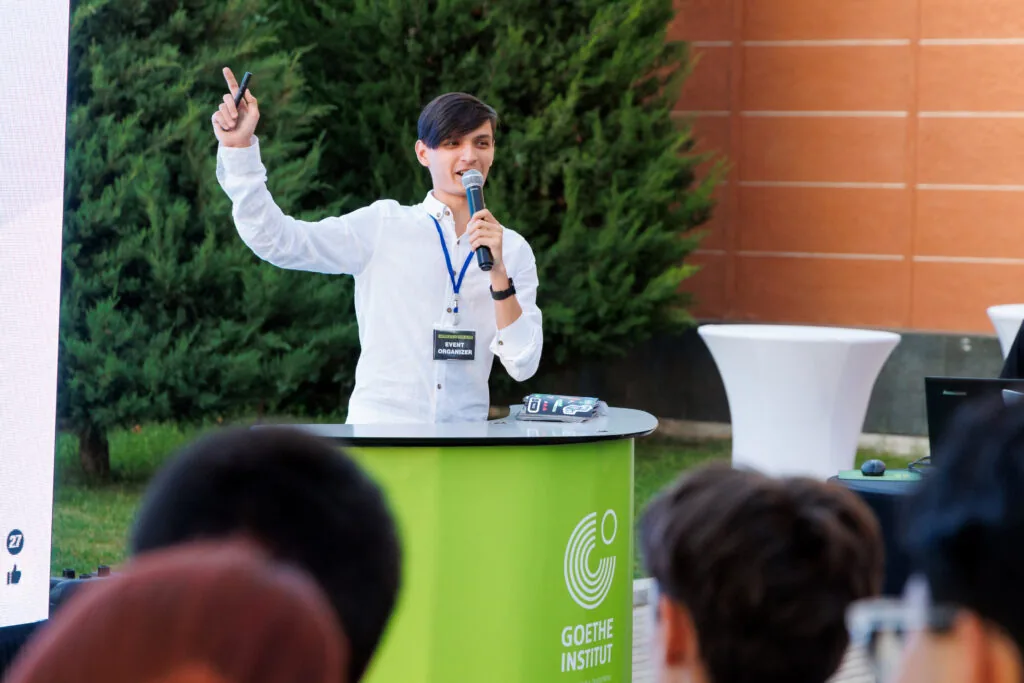
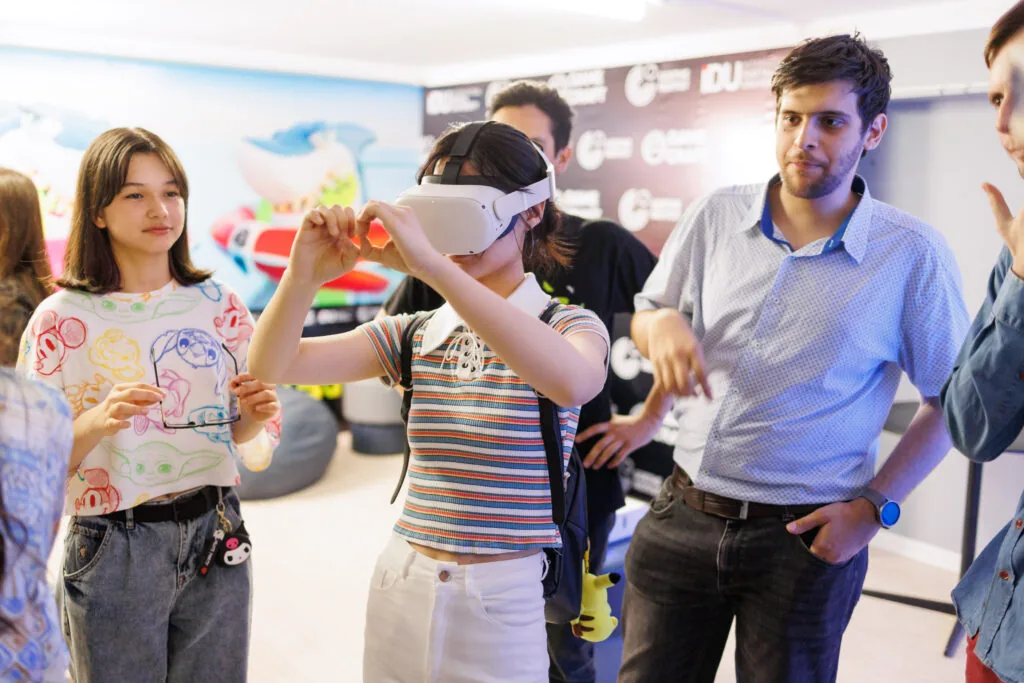
As for cooperation with other technology giants, if our partnership with NVIDIA is successful, it would be great to work with one partner. Each new partner means a new dialogue, three to four months of work and communication. For example, GameDev Goethe is named so because the Goethe University is the main organizer and partner that annually helps launch this event. If NVIDIA is satisfied with the results, we will try to continue working with them. However, this does not exclude partnership with other technology brands, such as laptop manufacturers, for example, MSI, Acer, Asus, or Meta, which makes VR headsets. These companies do not directly compete with NVIDIA. Adding such "hardware" partners that produce equipment for game developers and gamers would be good support. This year, with the help of NVIDIA, we connected two local partners—Nout uz and G-Shop. They are not equipment manufacturers, but sellers who sell computers and gaming laptops. In this regard, we also feel support.
The Tech on Telegram Follow The Tech on Telegram
Keep up with the latest technology and startup news.
Related reading



More from this author
News
zypl.ai begins operations in Japan and focuses on next-generation risk models
Mansur Ismagulov
News
Elon Musk's net worth has exceeded $700 billion for the first time
Mansur Ismagulov
Article Interviews
"Central Asian countries should build a joint ecosystem," — Bekhzod Ismoilov on the development of AI in the region
Mansur Ismagulov
Article Interviews
Bloom's Taxonomy and Engineering Levels: A Practical Growth Model
Mansur Ismagulov
Article Useful
How the IT industry in Azerbaijan developed in 2025: key events
Mansur Ismagulov
News
Tajikistan has become a new member of the regional innovation alliance Central Asian Innovation Hubs
Mansur Ismagulov