Game of Drones: A Kazakh Startup That Conquered 23 Countries
The Tech AI
Get the key points in seconds - a short summary from The Tech AI.
Kazakhstani startup Game of Drones, led by Ilya Abylaikhan (Almaty), has created an international project for drone management. The team secured investments from Jas Ventures and the Science Fund ($750,000), overcame technological challenges in real-time data transmission for speeds exceeding 200 km/h, and established a partnership with Kcell operator to deploy 5G infrastructure. The project is among the top 100 startups in Asia, known to more than 10,000 users from 23 countries, with plans to enter Asian or MENA markets.
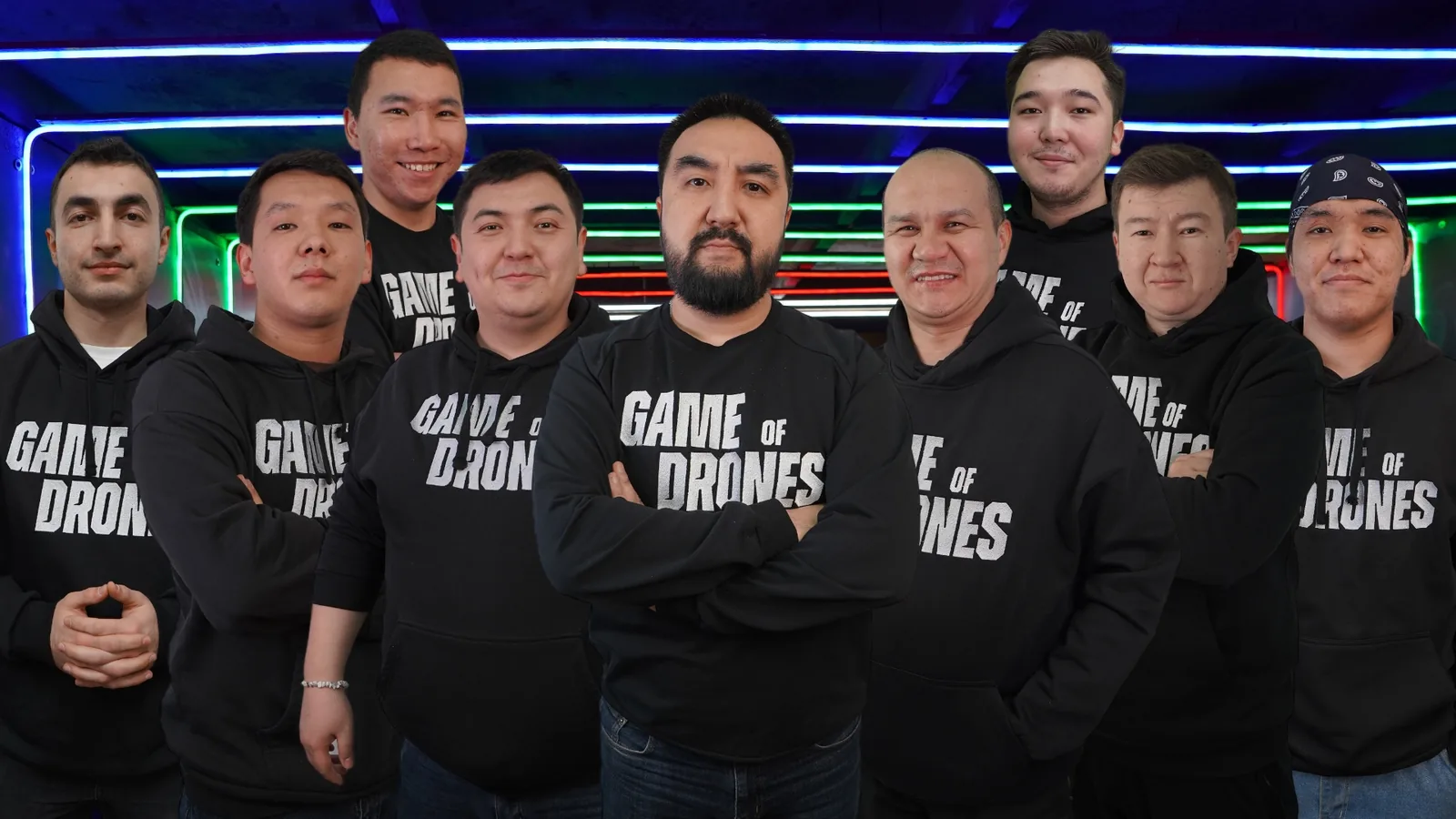
Game of Drones is a Kazakhstani startup that began with the idea of drone control and evolved into an international project. Ilya Abylaikhan, CEO of the startup, shares the challenges he faced, how he managed to build a strong team, and why it is important to target an international audience.
Ilya Abylaikhan, city — Almaty, CEO of Game of Drones, Instagram
How It All Began
In Almaty, I have always developed within the IT sector, specifically in the oil and gas industry. I always had a parallel business. After closing my first startup, I was left with many single-board computers, such as Raspberry Pi. I thought I could use them and decided that if I connected cameras and drones to them, I could create Game of Drones. That is how the idea was born. After that, I went through acceleration, the first certification, and a program at Astana Hub.

Startup Launch
We entered the top 100 startups in Asia in 2018, traveled around the world, and met with various investors. Then we began developing an MVP, launched it to the market, and observed how players reacted. The technological complexity of the product complicated its implementation. First, at that time, connectivity was not yet sufficient — in fact, we were developing a product for 5G internet before it even existed. Second, there were no investments. We received our first funding only five years later — from Jas Ventures. A year after that, we managed to attract $750,000 from the Science Fund.
About the Team
First of all, we needed to understand whether people were interested in remotely controlling objects. Therefore, we created an MVP using a radio channel — implementing control over it is relatively simple, as it is an old technology. We tested it in Grand Park and saw that the project generates revenue and interests people. Then we began developing online gameplay.
The first five years were spent creating a video transmission system that works faster than Zoom and other similar solutions. Our drones reach speeds of over 200 km/h, and at such speeds, any latency makes control impossible. If you press “left” and the turn happens after a second, the drone will have flown 20 meters in that time. We needed real-time data transmission.
Many specialists we hired could not handle the tasks, so we had to conduct a rigorous selection process. Only after long searches did I find a CTO — a two-time champion of Kazakhstan in automotive sports and one of the strongest hardware engineers. He put his heart into the project. The team was formed through trial and error.
Target Audience
Our users are adult “boys,” men who haven’t grown out of playing. The main audience is 18 years and older, primarily aged 18–45. More than 30% of players are men aged 30 and above. They play in the evenings after work.
Today, more than 10,000 people from 23 countries know about us. Many have paid for and tested the game, helping us refine it. We regularly release updates, and our closed community tests them and provides feedback.

Incubation Programs
For the first five years, we funded the project ourselves — we took on side jobs, taught, and looked for any opportunities to earn money. We also won a competition organized by the Ministry of Defense and occasionally received small sums from hackathons.
We have been collaborating with Astana Hub since its very first cohort — since 2018. I have participated in more than 15 accelerators — both Kazakhstani and international. This was a period when we actively engaged in fundraising. As soon as we received investments, the need to participate in accelerators disappeared.
Challenges
The main challenge in Kazakhstan is the lack of trust in technologically complex projects. Investors prefer to invest in quick and understandable projects — for example, software that can be quickly developed and sold.
A startup that develops over seven to eight years seems too risky. However, telecom operators like Kcell immediately saw the potential of the project and became our partners. They fully deployed 5G infrastructure for our game, provided test stations, and even changed the protocols of all 5G towers in Almaty to optimize the performance of our product.
Other difficulties arise because we are creating a unique technology. We cannot simply copy a solution from competitors — there are none. Any improvement requires purchasing new equipment, and there is no guarantee that it will work. Startups that will develop something similar in the future will have it easier — they will be able to partially borrow our developments.
My advice to aspiring startup founders is to avoid limiting yourselves to Kazakhstan. Not because our conditions are bad, but because the market is small, and there is not much money within the country. With the internet available, you should create global products. Our game is played in 23 countries, and the number of players outside Kazakhstan already exceeds the number of Kazakhstani users, which is great. This means they spend money, and that money comes into Kazakhstan. It is better to work in other markets — you can earn more there.

Achievements
Our achievements include attracting investments, building a large-scale gaming infrastructure, high profitability, receiving grants, and securing foundation support. But most importantly, we have assembled a strong and professional team.
Plans
We have launched the game, and now our task is to establish ourselves and confirm its success in the local market. This includes Kazakhstan, Uzbekistan, Russia, and other CIS countries, where players can comfortably use our product.
After that, by the end of the year, we need to enter two new regions. We have two options: Asia — if we locate servers in Korea, then all of Korea, Japan, Southeast Asia, and part of China represent more than 800 million potential players.
The second option is entering the Arab regions, MENA. There are also advantages there. By the end of the year, we will conduct an analysis and decide which market to enter next.
The Tech on Telegram Follow The Tech on Telegram
Keep up with the latest technology and startup news.
Related reading







More from this author

News IT
Google has solved one of the main problems in quantum computing
The Tech
News IT
20 startups from Central Asia presented their projects at TechCrunch Disrupt 2026
The Tech
News IT
Kyrgyzstan and Armenia will consider the possibility of creating a joint AI enterprise
The Tech

News IT
Now on Kaspi.kz, you can trade in your old iPhone for a new one
The Tech
News IT
IT Park Uzbekistan became the best knowledge zone in the Asia-Pacific region
The Tech

Article Useful
How to protect your accounts from hacking: 8 settings you should check today
The Tech