Former Amazon engineer, now in the world of startups. What's the difference between the two worlds?
What does it mean to transition from a large corporation to the dynamic world of startups? Learn about the key differences between these two worlds.
Author - Mansur Ismagulov

The Tech AI
Get the key points in seconds - a short summary from The Tech AI.
Dara Tumenbaeva, founder of Doro AI, compares working in a corporation (Amazon) and a startup. In a corporation, there is a clear career plan, a stable salary with up to 30% annual growth, and support from company mentors, but there is a lack of freedom in decision-making. In a startup, there are no guarantees of success (a 5% chance), a long period of working at a loss, but there is higher earning potential upon selling the business and the ability to independently choose advisors from the Advisory Board. The author prefers the dynamics of a startup over the comfort of a corporate "cage."
Dara Tumenbaeva, Founder and CEO of Doro AI, @okdara
I divide my life into "before" and "after," which is directly related to the transition from corporate employee to startup founder.
In my previous life, until I was 25, I was controlled by other people's opinions and advice. I didn't live by the principle of "I want," but rather: "I will prove to everyone that I can achieve everything without my parents' help." When I reached my goal and satisfied my need for recognition, my life goals changed.
Now I live as I want. I don't care what others say. The period I went through is called the fourth crisis, which is also described in Mark Manson's book "The Subtle Art of Not Giving a F*ck."
Corporate life was comfortable, but terrifyingly boring. Yes, my salary was higher than it is now, and I aim to surpass it, but there was little happiness in that job.
Let's break down how these two worlds differ and how to determine which life suits you. Maybe neither will suit you, but you will definitely know that these options are not for you, which is already quite a lot.
Rhythm of Life
In a corporate structure, you have a clear plan for how your career should develop over the next few years. At Amazon, my entire career path up to the C/VP level was laid out in detail. There is a clear separation between work and personal life: on weekends, unless it's an on-call situation, no one bothers you.
In a startup, every day is like being on a battlefield. You are constantly walking on a minefield, and you never know where the explosion will come from. You don't have a clear path to success; you only have goals, and there are a million ways to achieve them. You can also change your idea, make a pivot. For example, we started with a dating app and moved to AI in skincare.
Support
At Amazon, I was immediately provided with a manager and a mentor. A senior engineer on the team helped me. It was great because I could grow without fearing mistakes, and I could always ask for help. However, all these people were chosen by the company, not by me.
At Doro, we have an Advisory Board consisting of Anvar Bakiev, Bakht Niyazov, Vinson Tai, and Sergio Utami. Thanks to their support, we move forward and roughly understand that we are heading in the right direction. You choose these people yourself, which gives you more freedom in deciding who you work with. I gathered them from my network based on who I would like to work with, and their value to the company is obvious.
Salary
In a corporation, your income grows by 30% per year at best. The starting salary can be good right away if you do everything right. But I often compare this to golden handcuffs: it seems good, but you don't make the decisions; your boss does.
There is a saying, "All startup founders are poor." It's true: for a long time, you work at a loss, not knowing if the project will succeed, especially in the beginning. Much later, a working business model appears, and with experience, you can turn a profit.
If you play your hand right, you can earn more with a startup by selling it. This more than compensates for the amount you could have earned in the corporate world. However, the chance of success is only 5%.
Conclusion
Choose your own battle. I like living on this minefield; I like waking up every day and being attacked from all sides: about the product or business, by potential investors or partners. I like building the product with the team and directly providing value to the customer.
Being in the corporate world for me is equivalent to being in a cage. For someone else, it might be comfortable. So, the choice is yours.
The Tech on Telegram Follow The Tech on Telegram
Keep up with the latest technology and startup news.
Related reading



More from this author

News
zypl.ai begins operations in Japan and focuses on next-generation risk models
Mansur Ismagulov

News
Elon Musk's net worth has exceeded $700 billion for the first time
Mansur Ismagulov
Article Interviews
"Central Asian countries should build a joint ecosystem," — Bekhzod Ismoilov on the development of AI in the region
Mansur Ismagulov
Article Interviews
Bloom's Taxonomy and Engineering Levels: A Practical Growth Model
Mansur Ismagulov

Article Useful
How the IT industry in Azerbaijan developed in 2025: key events
Mansur Ismagulov
News
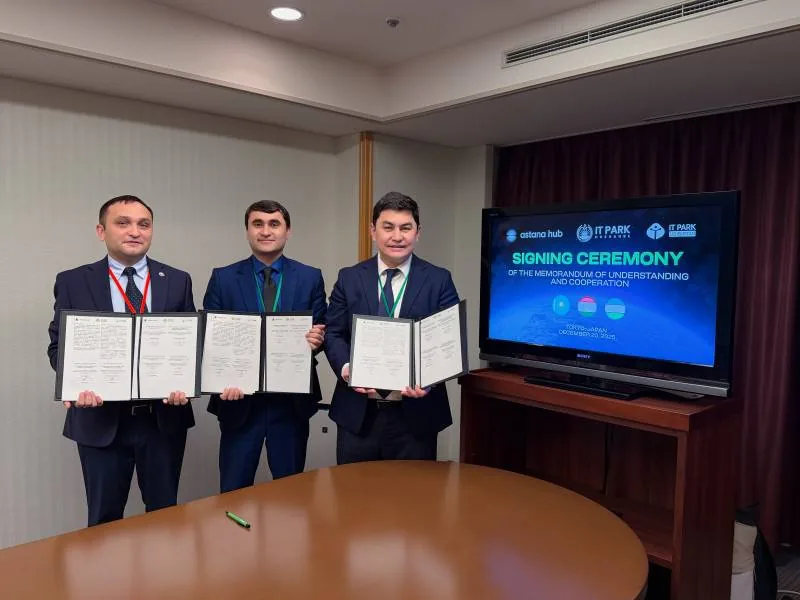
Tajikistan has become a new member of the regional innovation alliance Central Asian Innovation Hubs
Mansur Ismagulov