The Attention Economy, the Future of Marketing, and an Ecosystem Approach: An Interview with Maida Seyengalieva
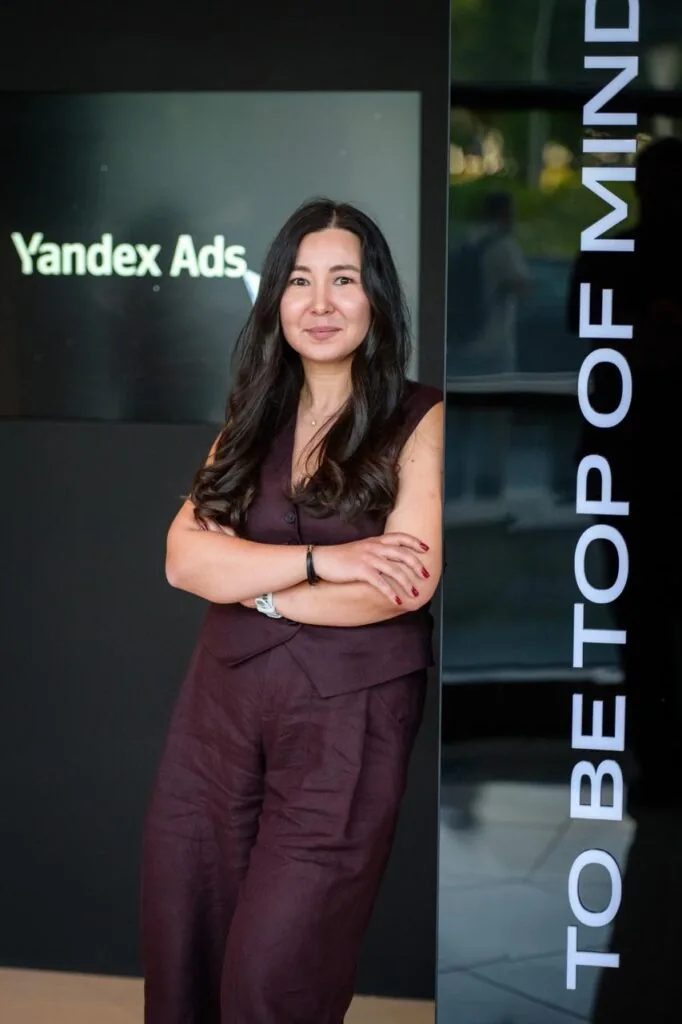
Madin Seysenkaliyeva, Head of Yandex Ads in Central Asia, discussed in an interview with The Tech how the interaction between brands and users is changing, the role artificial intelligence plays, and why human-made content remains valuable.

Madina Seisengalieva, Head of Yandex Ads in Central Asia
About the company and role
Yandex Ads develops technologies and services that enable businesses—whether large corporations or small flower shops—to find and retain their customers, increase sales, and unlock greater growth opportunities. Our tools and services connect millions of users both within the Yandex Qazaqstan, Yandex Uzbekistan, and Yandex Kyrgyzstan ecosystems and among partners in the advertising network. In Kazakhstan alone, this includes more than 45,000 resources in Russian and Kazakh.
My team’s mission is to serve as a strategic partner for businesses in Central Asia, helping companies build systematic communications and identify growth opportunities through advertising services and technologies. It is important to us to support businesses at every stage of the marketing funnel: from increasing awareness and loyalty to driving conversions into sales and scaling successful strategies.
Before joining Yandex Ads, I worked across various industries—from cotton export to data analytics—in both B2B and B2C sectors, which has helped me deeply understand the challenges and pain points of industry-specific businesses. My journey in IT began at NielsenIQ, where my team and I developed analytical tools and technology solutions as a service (SaaS).
What I enjoy most about my work is that our services genuinely improve the lives of people and businesses: from instant answers to questions in Neuro and discovering new places in Yandex Maps, to grocery delivery, office lunches, and comfortable, safe rides home via taxi. And, of course, working with a team of professionals who invent, test, and launch breakthrough services and technologies is a huge daily motivation.
Business challenges in customer engagement
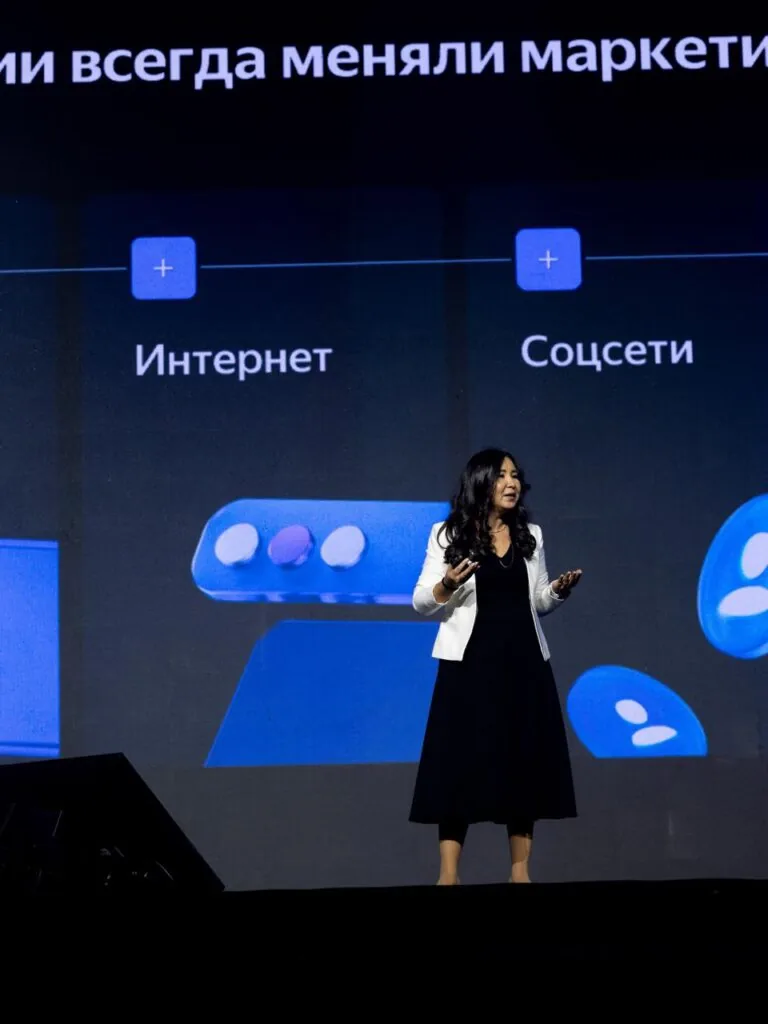
One of the key challenges is the changing focus of customer attention. In the past, brands needed only a few touchpoints to drive a customer to purchase; today, significantly more touchpoints are required. This complexity is compounded by the fragmentation of channels through which users receive information throughout the day: dozens of services across different devices, multiple social networks, marketplaces, delivery and taxi services, and offline formats.
To help audiences navigate through petabytes of content and ensure platforms remain relevant to each user, services, social networks, and advertising platforms build recommendation systems and algorithms. These systems process millions of signals to create a highly personalized experience for every user.
News feeds, video recommendations, and curated selections influence the automated distribution of attention. Users’ social activity, including likes, views, and comments, directly impacts content recommendation formation. All of this leads to an increase in reactive attention: we tend to respond more to stimuli than to follow our own plans. As a result, attention has become an economic resource over which technologies and services compete.

How brands can capture attention
First and foremost, brands must build communication with users at every stage of the funnel. In recent years, we have heard more about performance marketing focused on the lower levels of the funnel, which is undoubtedly important. However, building awareness and loyalty at the top of the funnel remains not only relevant but more critical than ever.
Brands need to be present at as many customer touchpoints as possible, taking into account the user experience. This ranges from search engine results and banner ads to social networks and integrations within ecosystems where users spend their time shopping and placing orders daily. Although the visibility of individual formats—such as static banners—is typically lower than that of interactive advertising, including video formats, they allow brands to reach a broad audience more quickly and cost-effectively.
Interactive brand mechanics within services increase the duration of user contact and create new experiences for customers, directly influencing brand recall and loyalty. Therefore, a balanced media mix plays a key role: it is important to select the right mix of formats depending on business objectives and not limit oneself to just two or three tools.

About the Yandex Qazaqstan ecosystem
The Yandex Qazaqstan ecosystem includes Search, Maps, Taxi, Music, Food, and many other services that users actively engage with throughout a single day. In this context, a question arises: is such frequent interaction with the ecosystem an advantage for advertisers, or does it risk overwhelming users?
This is undoubtedly a significant advantage, but it also comes with substantial responsibility. Thanks to the ecosystem of services, we can accompany users through various life scenarios during the day and help them solve their everyday tasks. For brands, this opens up great opportunities: they can communicate with audiences not only through “classic” advertising formats but also through diverse user scenarios within the ecosystem.
More than 10 million people in the country use Yandex Qazaqstan services every month. They search for information, order deliveries, listen to music, watch movies, plan routes, and more. Moreover, we are likely the only non-banking ecosystem where business partners can implement user interaction mechanics of varying complexity: long-touch interactions, transactional and gamified formats, and integrated projects across multiple services.
We are consistently developing this area together with key brands in the market—both global and local. This is a good example of synergy, where we simultaneously address advertisers’ goals and create additional value for our users. It is precisely the ecosystem approach, combined with media advertising and performance campaigns in Yandex Direct, that allows achieving maximum results for businesses.
When developing partnerships with brands, we bear significant responsibility for the user experience within the ecosystem. New marketing mechanics, projects, and familiar advertising formats are all part of the user experience, which directly impacts our services’ metrics.
This is why, in every comprehensive project with advertisers, we strive to find a win-win approach. It must not only solve partners’ business challenges but also be interesting, useful, and relevant to our audience. It is crucial for us to avoid advertising clutter within the ecosystem and provide advertising network partners with high-quality and safe monetization tools.
The role of AI in advertising
Against the backdrop of the rapid growth of AI-generated content, there is increasing discussion about whether “human” content is becoming more valuable and in demand.
I would compare this to the evolution of cinema. In the past, films were shot entirely “live,” using real sets and extras. After the advent of chroma key technology, the industry adapted relatively quickly, and modern technologies have further simplified and accelerated the film production process.
Did films become worse as a result? No. On the contrary, we see examples of impressive cinema that would have been unimaginable before the development of such advanced technologies. Has production become more efficient? Undoubtedly. Yet today, some films continue to be shot on film—and this is not necessarily perceived as a premium format.
The same will happen with content: AI helps optimize many routine and labor-intensive processes, but human creativity, involvement, and decision-making will remain important. For example, we see how AI in Search simplifies information retrieval for users: what previously took minutes, or even hours, can now be obtained in Neuro in seconds.
A significant portion of programmatic advertising has been operating on ML models for decades, long before generative models became widely discussed. Of course, these models have become more complex and efficient over time.
For instance, Yandex Ads uses Yandex Neuro Ads technologies—a combination of generative AI based on Alice AI, heavy deep learning models, and classic machine learning. In 2025, the effectiveness of the advertising system increased by 38% thanks to these neurotechnologies. This means that technologies deliver more conversions in Yandex Direct at comparable promotion costs.
AI is a powerful tool for process optimization and data analysis. Neural networks can be delegated routine tasks: analyzing data, building scenarios, and assessing risks. However, strategy, final decisions, and accountability remain with humans. I like the metaphor that AI is like a co-pilot, but the main decision always rests with the human.
The future of marketing
Brands will be able to understand customer needs more deeply and quickly, responding to them instantly, while communication will become hyper-personalized.
Many professions within the industry will transform, and AI will become a permanent tool for specialists—much sooner than in 10 years. Some roles related to routine and operational tasks will change significantly. At the same time, new roles will emerge, focused on data management, strategy, and working with AI tools and new technologies.
The Tech on Telegram Follow The Tech on Telegram
Keep up with the latest technology and startup news.
Related reading






More from this author

Article Useful
How to protect your accounts from hacking: 8 settings you should check today
The Tech

Article Useful
500 Global: How the Accelerator Works and Who Can Receive Investments
The Tech

Article Interviews
Game Development in Central Asia: Arkady Moldavski on Developing Reverb and the Growth of the Industry
The Tech

Article Useful
Google, Tesla, BlackRock, and the IMF: Where to Apply for an Internship in Fall 2026
The Tech

News IT
Tesla unveiled the flying electric car Roadster
The Tech

News IT
Intero Biosystems startup won the Startup Battlefield at TechCrunch Disrupt 2026
The Tech