The Unified Operator has called on Kazakhstan's IT community to jointly develop the digital marking ecosystem.
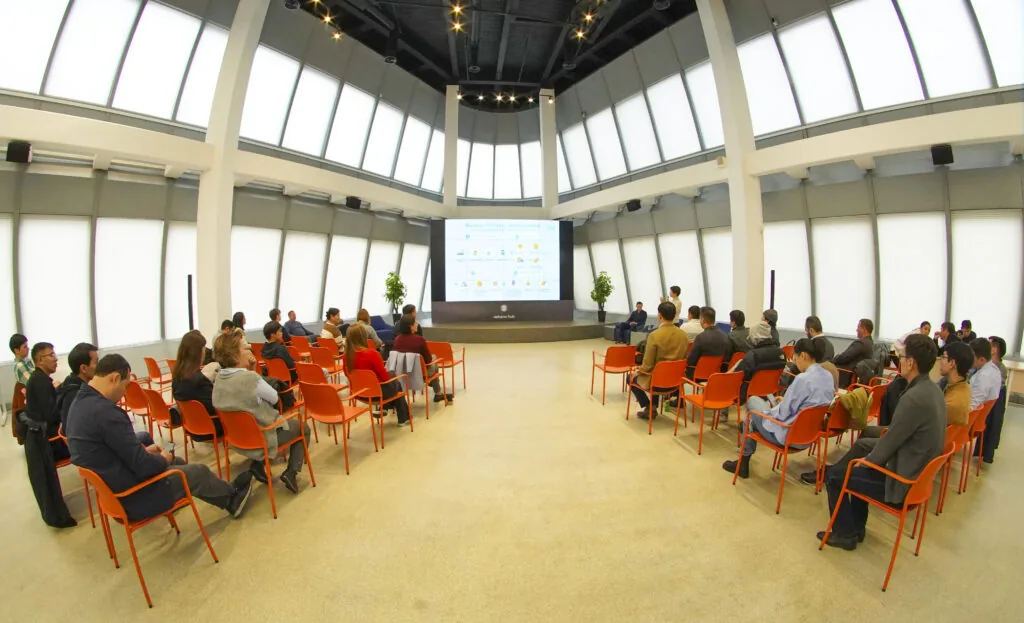
On October 20, at the Astana Hub venue, the project office for digital marking under the Unified Operator JSC "Kazakhtelecom," together with Kazakhstan's IT community, held an open dialogue on the development of the digital marking ecosystem.
Author - Mansur Ismagulov
The Tech AI
Get the key points in seconds - a short summary from The Tech AI.
The event aimed at developing the digital labeling ecosystem brought together around 30 representatives of the IT industry. The CEO of JSC "Center for the Development of the Digital Economy," Bikes Kurmangalieva, and speaker Askhat Kitebayev discussed the integration of labeling into the economy and examples of process automation. Mandatory labeling has been introduced for fur, tobacco, footwear, and pharmaceuticals to protect consumers. A Telegram chat has been created for communication.
The goal of the event is to engage the IT community in jointly shaping and developing the digital marking ecosystem, making this process comfortable for businesses.
Bikesh Kurmangalieva, General Director of JSC "Center for the Development of the Digital Economy", Project Office of Digital Marking, Unified Operator JSC "Kazakhtelecom"
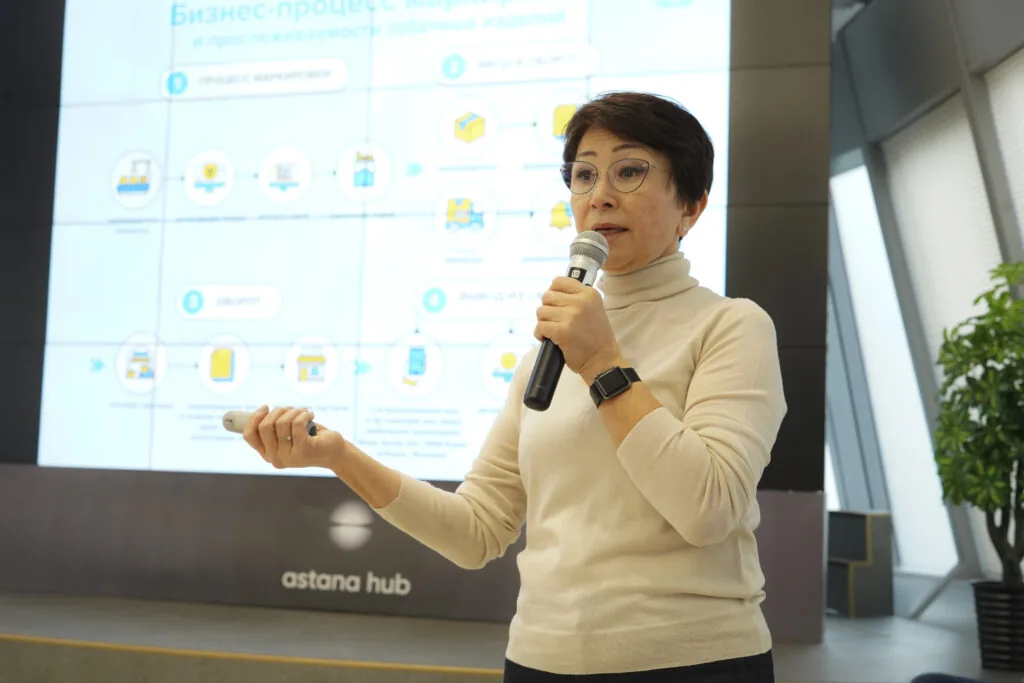
Marking is an element of the digitalization of our economy. Digitalization is necessary, and our goal is to implement it in the economy in such a way that it is comfortable for businesses. I invite you to this platform to discuss possible scenarios for joint cooperation – because it is the IT community that can and is ready to provide interesting, and most importantly, convenient services for both businesses and end consumers.
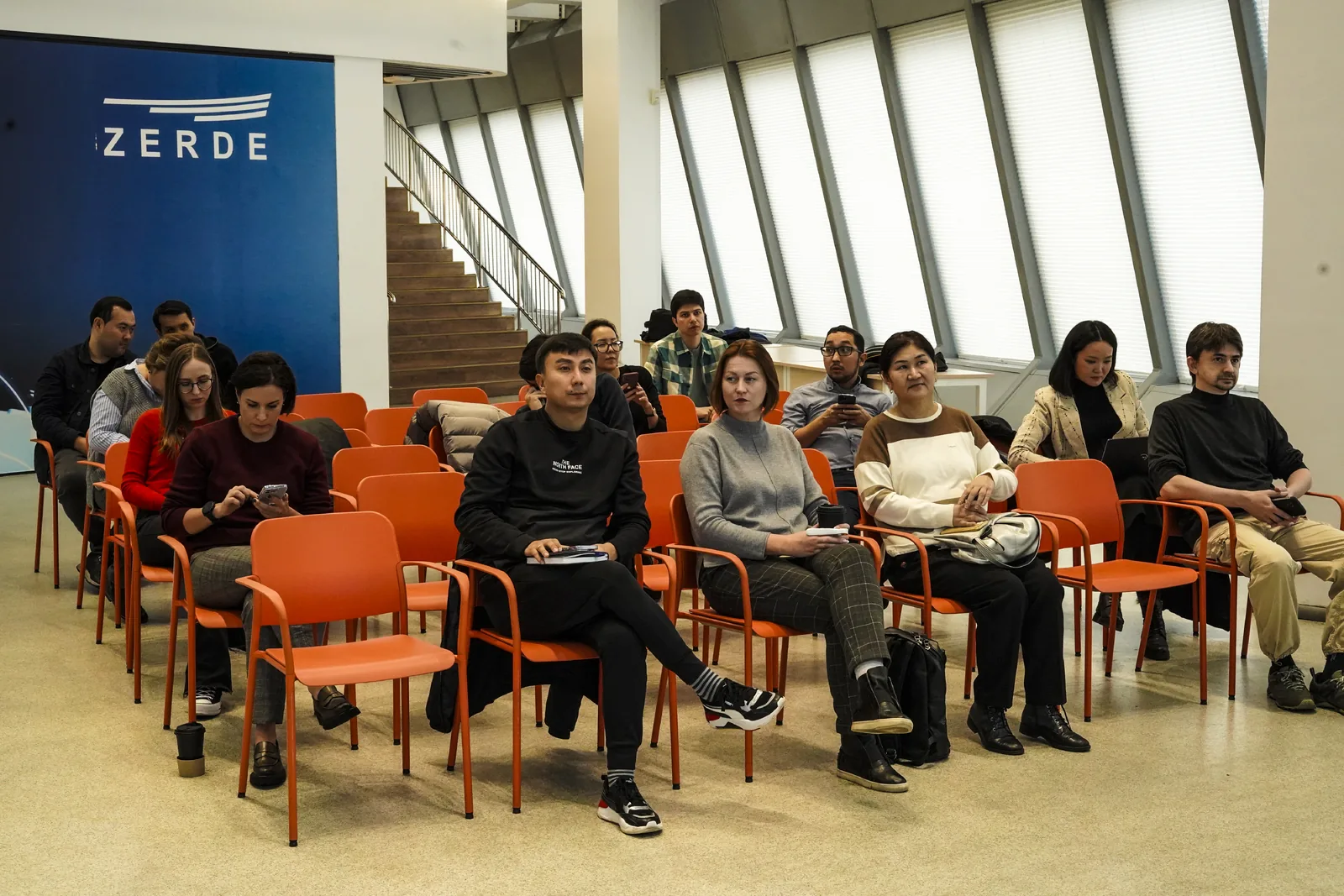
The speakers demonstrated the existing processes and infrastructure for product marking, and answered all questions from the IT community. In total, the event was attended by approximately 30 representatives of the IT industry involved in the marking ecosystem.
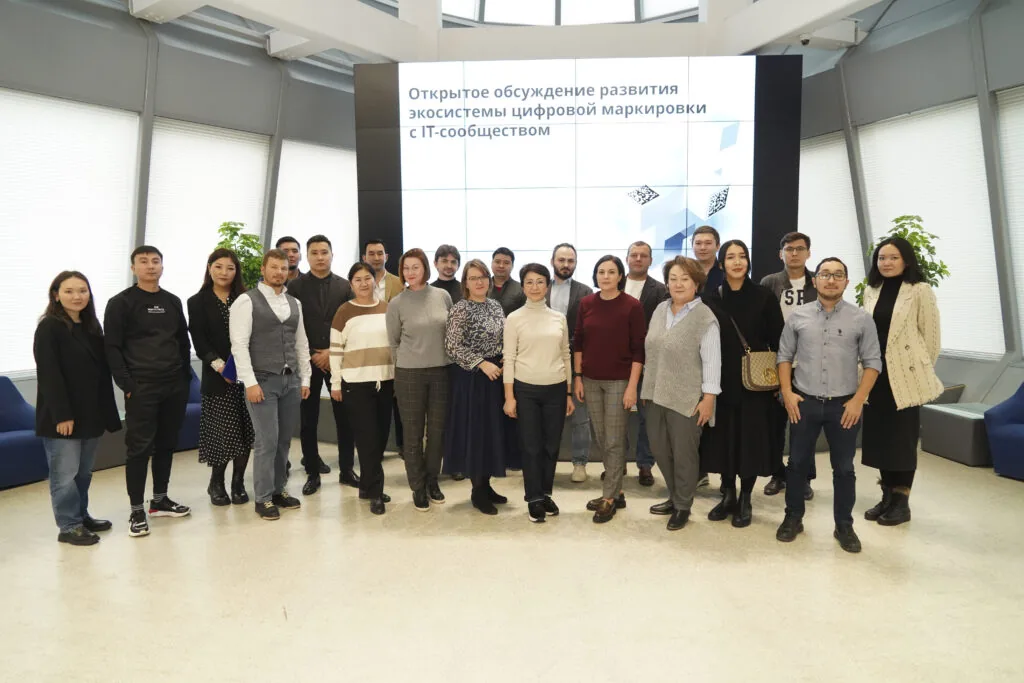
Meeting participants expressed high professional interest in this topic. Some representatives of the IT community shared their experience of implementing marking at commercial facilities, where the need for marking arose directly from business representatives from various sectors of the economy. Among the participants were also representatives of the IT industry who have experience implementing marking and loyalty programs for consumers in foreign countries.
Askhat Kitebayev, Co-founder and General Director of IT company Kit Systems
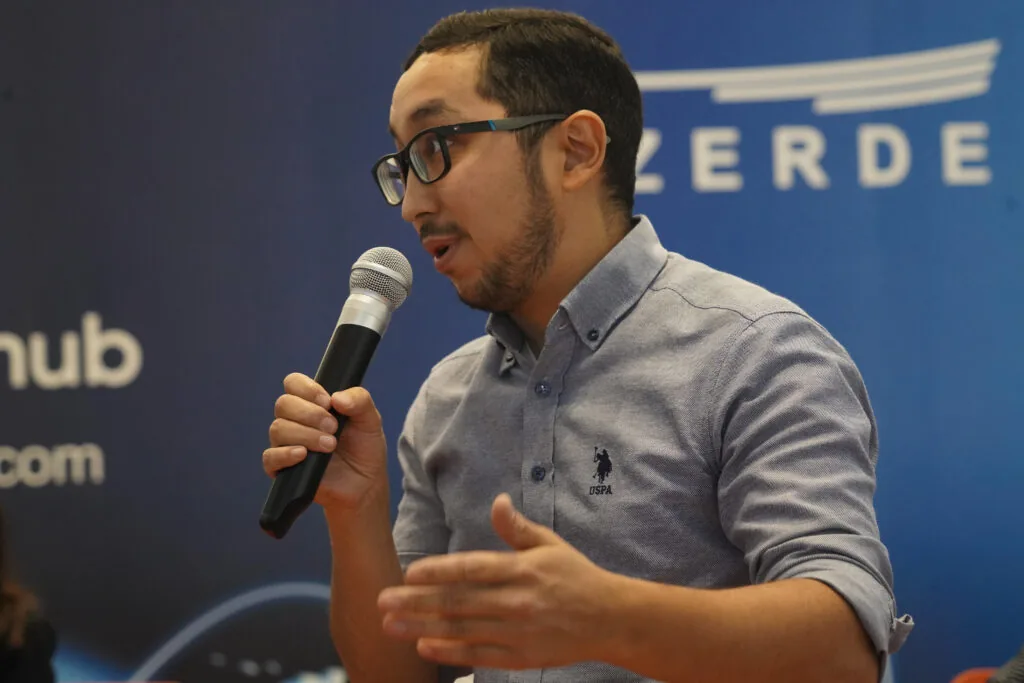
This year, we developed four systems with corporate marking. We fully automated one of the largest Kazakhstani wine production facilities, where we print the marking codes ourselves and stick them on bottles. We also offered our marking solution for clothing for oil workers, medical laboratories, and a company engaged in shoe logistics. We help motivate people to scan wine bottles and thereby contribute to the development of marking in Kazakhstan, receiving bonuses in the form of cashbacks and other rewards.
This dialogue platform will operate on a permanent basis, with the ultimate goal of making marking adaptive for businesses in those product groups subject to mandatory marking. As a communication platform specifically for participants, a Telegram chat titled "Development of the Digital Marking Ecosystem" was created, which any representative of the IT community who can contribute to the development of the digital marking ecosystem can join: https://t.me/+g2JKiiTL1vs2MDdi.
The goal of mandatory marking is to stop the illegal circulation of goods and protect consumers from purchasing low-quality products. Let us remind you that mandatory marking has been introduced for products made of natural fur (since March 31, 2019), tobacco products (since October 1, 2020), and footwear (since November 1, 2021). Since July 2022, mandatory marking for pharmaceuticals has also been introduced.
The Tech on Telegram Follow The Tech on Telegram
Keep up with the latest technology and startup news.
Related reading







More from this author

News
zypl.ai begins operations in Japan and focuses on next-generation risk models
Mansur Ismagulov

News
Elon Musk's net worth has exceeded $700 billion for the first time
Mansur Ismagulov

Article Interviews
"Central Asian countries should build a joint ecosystem," — Bekhzod Ismoilov on the development of AI in the region
Mansur Ismagulov

Article Interviews
Bloom's Taxonomy and Engineering Levels: A Practical Growth Model
Mansur Ismagulov

Article Useful
How the IT industry in Azerbaijan developed in 2025: key events
Mansur Ismagulov

News
Tajikistan has become a new member of the regional innovation alliance Central Asian Innovation Hubs.
Mansur Ismagulov