What is Area AI and how is it turning Dushanbe into a global AI hub?
Firuzjon Sodikov, Head of the Area AI Consortium, provided a detailed overview of the development of the world's first AI Free Zone in Dushanbe, the achievements of the national artificial intelligence ecosystem, and the region's prospects in the field of technology.
Author - Mansur Ismagulov
Also, we remind you that on October 25, AI Conf 2025 will take place in Dushanbe — an international conference that will bring together AI experts, government representatives, investors, startups, and the regional IT community. More details on the website: aiconf2025.com
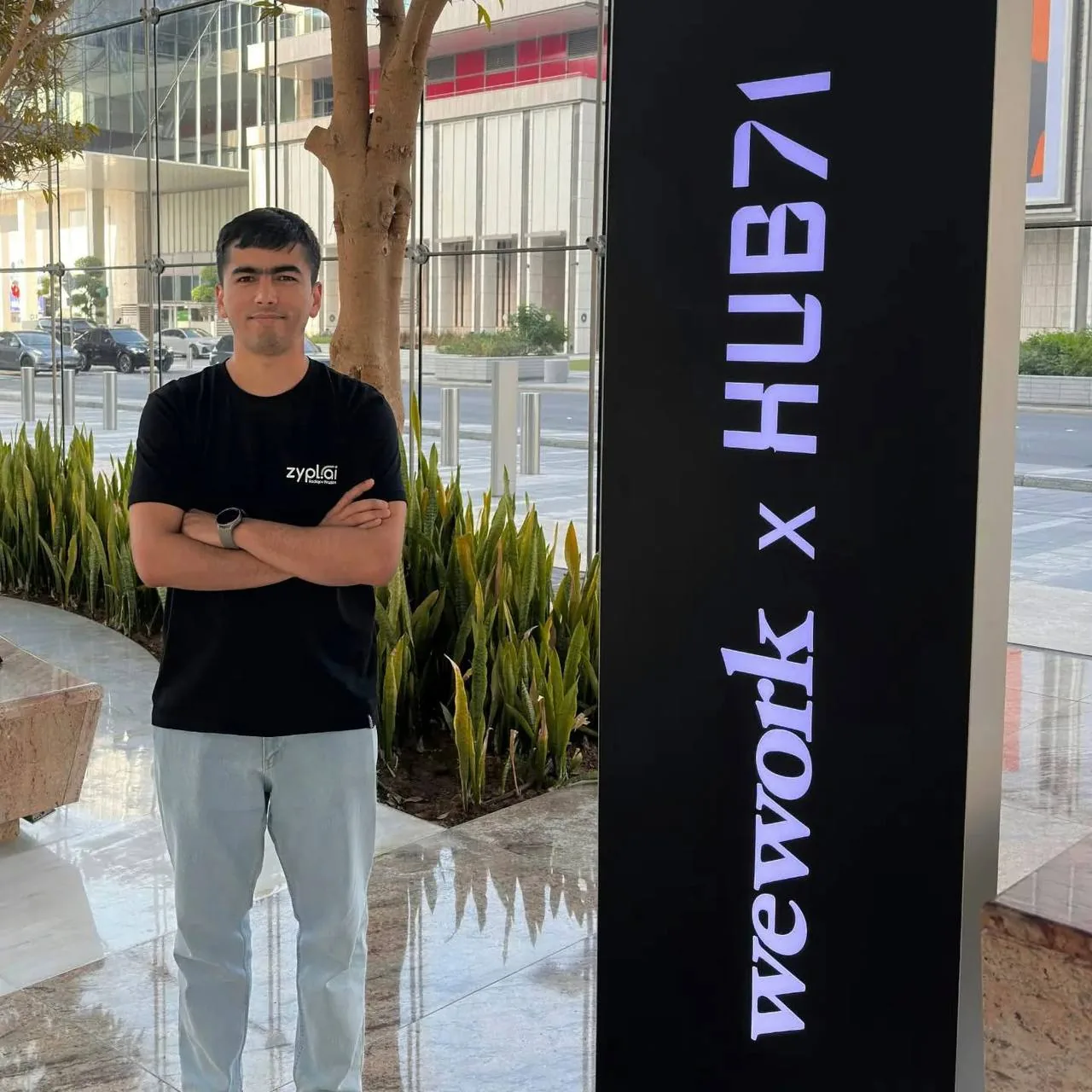
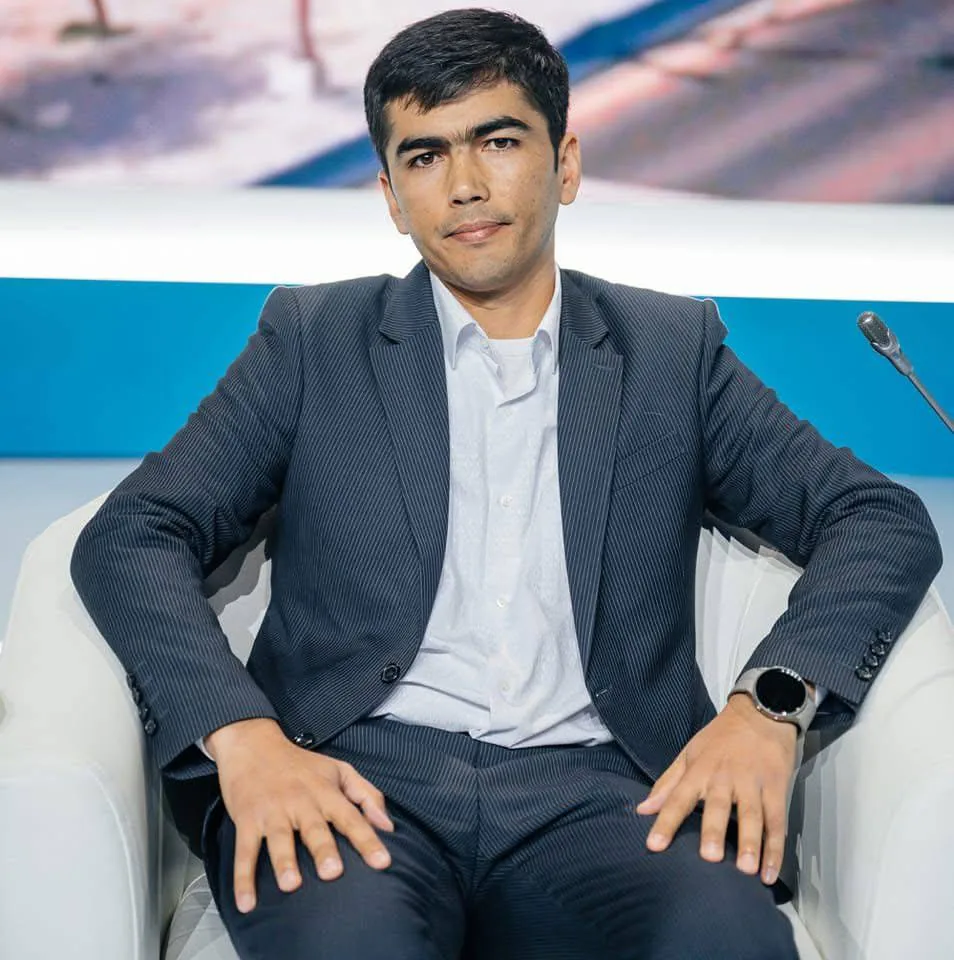
Firuzjon Sodikov, city — Dushanbe, Head of the Consortium Area AI
About Me
I am the Deputy Chairman of the Council on Artificial Intelligence under the Ministry of Industry and New Technologies of the Republic of Tajikistan and the Head of the Area AI Consortium — the world’s first special artificial intelligence zone.
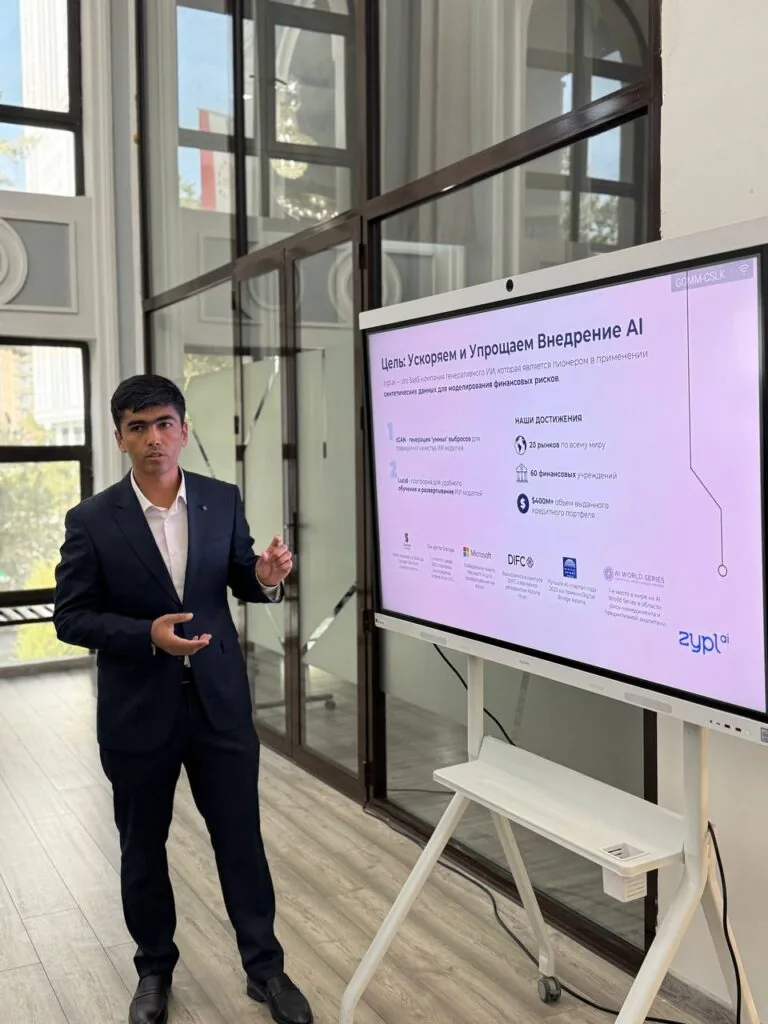
Previously, I served as the Chief Operating Officer of zypl.ai, where I coordinated the implementation of AI solutions in Central Asia and the CIS countries. This experience helped me combine management and technological approaches and understand how to build a sustainable AI ecosystem that connects the state, business, and science into a single innovative chain.
Idea and Project Launch
The idea for creating the Area AI Consortium emerged naturally as a result of the internal growth of the national artificial intelligence ecosystem and the success of the first Tajik AI companies, such as zypl.ai, epsilon3.ai, zehnlab.ai, and others.
We realized that the next logical step was to unite all directions into a single platform that creates infrastructure for education, research, computing, and the implementation of AI products.
Dushanbe became a natural venue for launching the project, as all key conditions have already been created here:
— The National Strategy for Artificial Intelligence until 2040 has been adopted, designating AI as a strategic direction for the economy
— With the support of the President of the country, Tajikistan-initiated resolution on the self-regulation of artificial intelligence was adopted at the UN
— Modern infrastructure has been created with access to green hydropower, necessary for environmentally friendly AI computing
— And most importantly, successful AI companies have appeared in the country, proving that Tajikistan is ready to become a technological hub of the region.
Goals and Achievements
The main goal of the project is to build an artificial intelligence ecosystem that unites education, science, industry, and governance.
Today, tangible results have already been achieved:
— Key documents in the field of AI have been adopted
— The Darya.ai high-performance computing center, powered by renewable energy, has been launched
— Hundreds of engineers and analysts have been trained through the Artificial Intelligence Academy
— The “AI in Education” program has started: the pilot project for 2024-2025 covered 25 schools, and in the 2025-2026 academic year — already 100 schools and 10 universities; by 2028, coverage is expected to reach 4,000 schools and over 2 million students.
The creation of the AI Free Zone opens up unique opportunities for the country at the intersection of technology, investment, and industrial policy.
Such a zone forms an ecosystem in which education, science, business, and the state are united. This creates a favorable environment for startups, accelerates the implementation of innovations, and contributes to attracting international partners.
The “free zone” regime provides a whole range of incentives to support research projects and export-oriented AI products. Thanks to this, the country becomes an attractive venue for global technology companies looking for a reliable and sustainable jurisdiction to locate their AI operations.
A separate area of development is related to “green computing” — Green Compute. The use of renewable energy, specifically hydropower, allows for the creation of sustainable data centers and GPU clusters, turning the country not only into a developer of solutions but also into a supplier of “clean” computing power for the entire region.
The AI Free Zone also forms a new regulatory model based on the principles of self-regulation and ethical application of artificial intelligence — this is especially important against the backdrop of global discussions about AI safety, trust, and transparency.
Ecosystem and Infrastructure
Area AI is an innovative cluster including five key development zones:
1. AI Academy / AI Factory — educational programs, courses, and retraining in the field of artificial intelligence.
2. Applied AI Hub — implementation of applied solutions in industry, finance, and the public sector.
3. AI R&D Labs — laboratories for developing foundational models and multimodal systems.
4. Green AI Compute Clusters — environmentally friendly computing power based on hydropower. For example, the Darya.ai project, with a potential capacity of up to 1 GW by 2030.
5. Regional AI Center — an international center under the auspices of the UN for the exchange of knowledge, research, and policies in the field of AI.
Today, the AI Academy and the Darya.ai cluster are actively working, creating solutions for banks, government agencies, telecommunications, and educational systems.
Partnerships and Investments
The Area AI Consortium is building strategic partnerships with global leaders: Presight AI from the UAE, Mistral AI from France, and Perplexity AI from the USA. Cooperation has also been established with UNIDO, UNICEF, and the UAE Council for Advanced Technologies (ATRC). Currently, the total volume of investments in Tajikistan’s AI companies has already exceeded $10 million, and the industry’s potential by 2030 is estimated at hundreds of millions.
Among the key solutions developed within the ecosystem:
1. zypl.ai — generative models and synthetic data for the financial sector.
2. epsilon3.ai — AI-GOV platform for the digitalization of public services and governance.
3. zehnlab.ai — research in the field of language models and fundamental architectures.
4. Qulla AI — application of artificial intelligence in unmanned aerial systems.
5. SoroLLM — a Tajik language model with 27 billion parameters, demonstrating high accuracy on regional data.
About the Future
In five years, Dushanbe will become a world-class AI hub, where industry, science, and education are connected into a single technological ecosystem.
Tajikistan will be able not only to use AI but also to export its own intellectual solutions, strengthening the country’s status as a regional center for digital innovations and sustainable development.
In the long term, Area AI will become the foundation for forming an AI economy, where technologies created in Tajikistan will be applied from energy to healthcare — across the entire Central Asian region and beyond.
The Tech on Telegram Follow The Tech on Telegram
Keep up with the latest technology and startup news.
Related reading







More from this author

News
zypl.ai begins operations in Japan and focuses on next-generation risk models
Mansur Ismagulov

News
Elon Musk's net worth has exceeded $700 billion for the first time
Mansur Ismagulov

Article Interviews
"Central Asian countries should build a joint ecosystem," — Bekhzod Ismoilov on the development of AI in the region
Mansur Ismagulov

Article Interviews
Bloom's Taxonomy and Engineering Levels: A Practical Growth Model
Mansur Ismagulov

Article Useful
How the IT industry in Azerbaijan developed in 2025: key events
Mansur Ismagulov

News
Tajikistan has become a new member of the regional innovation alliance Central Asian Innovation Hubs.
Mansur Ismagulov