Robotics and Artificial Intelligence Competitions: How School Students Prepare for the AI Era
In the previous article, the author from USTEM Foundation explained how STEM education in Kazakhstan is transforming schools and preparing children for the future.
Author - Mansur Ismagulov
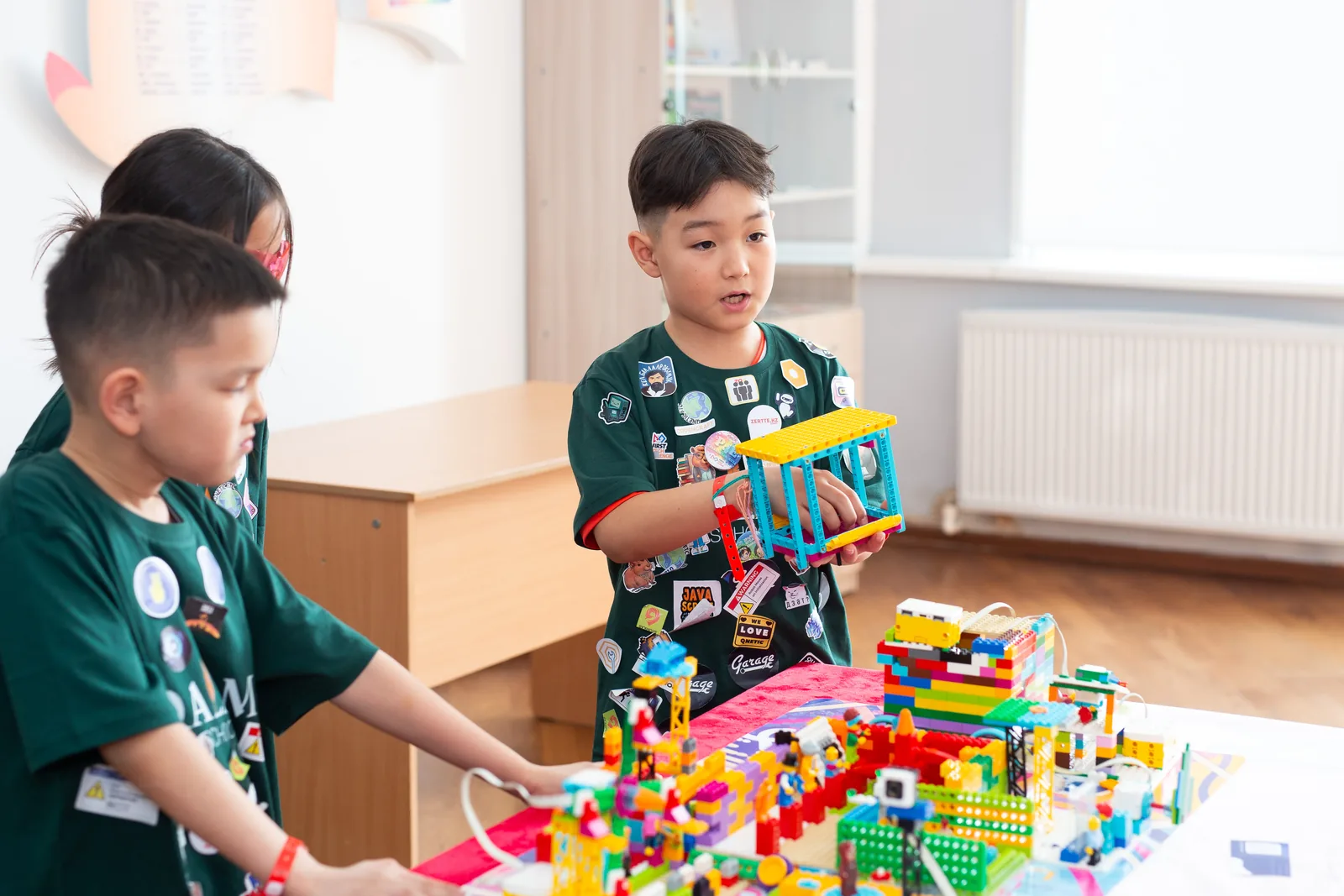
In this article, we will explore how robotics competitions are becoming a new model for STEM development in the country.
Asylbek Murzakhmetov, city — Almaty, director of the USTEM Foundation public fund
The future of artificial intelligence is being shaped not only in Silicon Valley and the laboratories of Google DeepMind or OpenAI. Currently, schoolchildren are joining the creation of a new technological landscape — children and teenagers who build robots, write simple neural networks, and learn to make decisions based on data.
The international FIRST — For Inspiration and Recognition of Science and Technology movement has become a global elevator into the world of technology. More than 3.2 million schoolchildren from 110 countries participate in it. In Kazakhstan, the operator of the programs is the USTEM Foundation, which in recent years has transformed school projects into real preparation for the digital economy and brought the country to the world stage.
From LEGO to neural networks
When engineer Dean Kamen launched FIRST in the late 1980s, he wanted to show that science could be as exciting as sports. Today, participants solve problems that seemed to be at the university level just a short while ago.
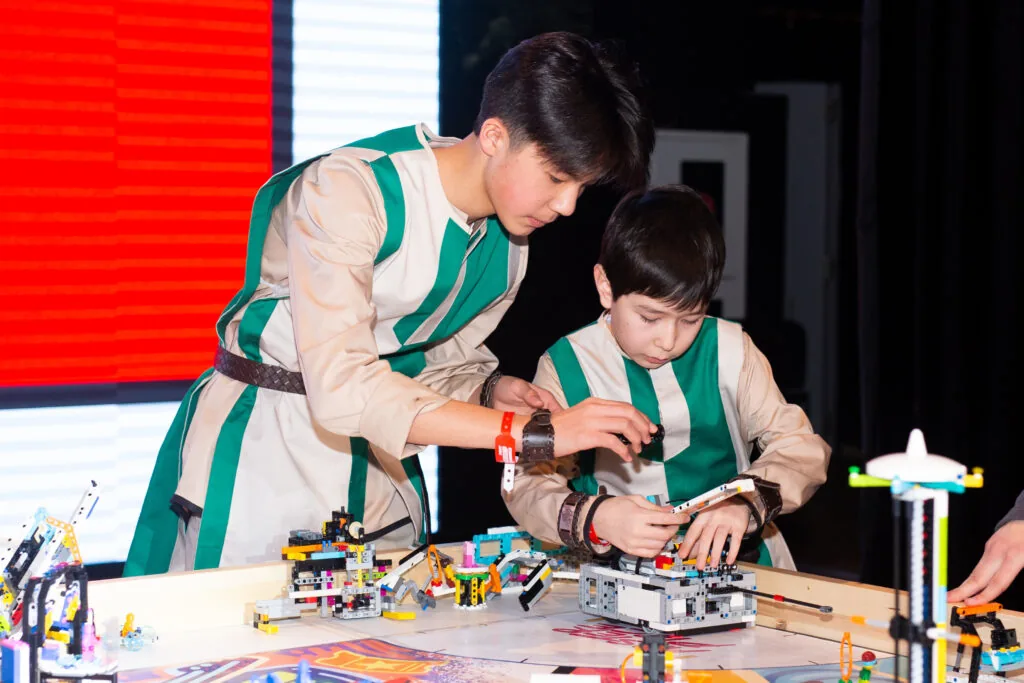
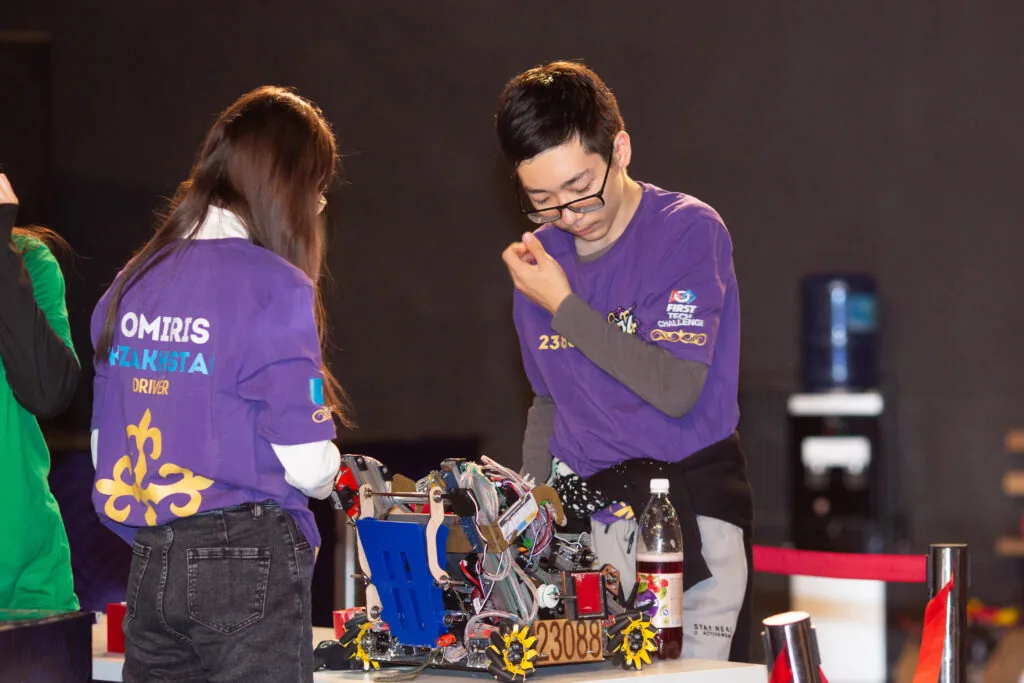
FIRST is a whole line of educational programs for different age groups. For the youngest, there is FIRST LEGO League, where children from the age of four build models from LEGO and learn to program simple mechanisms. Teenagers move on to FIRST Tech Challenge: here they design more complex robots that move autonomously, recognize objects, and perform tasks using computer vision. The final level is FIRST Robotics Competition, where high school students assemble full-size robots weighing up to sixty kilograms and compete in conditions as close as possible to real engineering tasks.
Even in lower leagues, schoolchildren already use computer vision technologies. In FIRST Tech Challenge, robots operate autonomously for part of the time. To do this, teams apply TensorFlow Lite and the FTC-ML system, which allows training custom object recognition models.
Schoolchildren effectively gain experience working with neural networks by training computers to recognize custom objects. This is an exciting moment when a child sees that the robot “understands” the image and reacts to it.
In the senior category, FIRST Robotics Competition, technologies become even more complex. For the first thirty seconds of the match, the robot performs tasks autonomously, relying only on sensor data and machine learning algorithms.
From coding to project management
Participation in FIRST develops not only technical competencies. The project lasts for six months, and each team member has their own role: programmer, mechanic, project manager, presentation designer.
Schoolchildren learn to distribute tasks, monitor deadlines, and present results. This is experience similar to a real business project.
Research confirms that FIRST graduates feel more confident in STEM. By their fourth year of university, 81% continue in technical fields. The growth in engagement among girls is particularly noticeable: they are increasingly choosing IT and engineering.
This trend is also confirmed by our new project, STEM Hanym — a joint initiative of Samruk Kazyna Trust, ExxonMobil, and USTEM Foundation. Launched in 2025 in the Atyrau region, it has already received more than 1,000 applications from women ready to develop in the field of STEM and share knowledge with others. The project aims to engage women in teaching and leadership: teachers, mothers of children with disabilities, women with special needs, and anyone who wants to become a mentor in technological education.
Participants undergo training, gain access to equipment, laboratories, mentoring support, and a community. And most importantly, they begin to implement STEM in their schools and lead their students.
Kazakhstan: from local tournaments to world records
In recent years, Kazakhstan has made a leap. The national team has won the FIRST Global Challenge three times in a row — in Geneva in 2022, in Singapore in 2023, and in Athens in 2024.
In Singapore, schoolchildren set a world record for points among 190 countries. The jury specifically noted not only the technical level but also teamwork with other participants.
Kazakhstani schoolchildren already possess computer vision technologies and know how to program complex logic. Their robots used intelligent algorithms — from object recognition to trajectory optimization. This is what allowed them to compete with the strongest schools in the world.
After these victories, interest in the competitions grew exponentially. If previously only two schools participated in the regional championship, a year later there were eight, and now there are already more than 1,000 teams from all over Kazakhstan. Moreover, champions themselves become mentors for new teams, passing on knowledge about algorithms and computer vision.
USA, China, Taiwan: different strategies, one goal
FIRST covers more than 110 countries, and each builds its own ecosystem.
In the USA, the movement has long become part of school culture: hundreds of thousands of participants annually, support from corporations like NASA, Google, and Boeing, and special university programs for graduates.
In China, AI education is becoming mandatory, and Kazakhstan is following this path. Starting in 2025, every school will introduce hours dedicated to artificial intelligence: from basics in primary school to complex projects and systematic thinking in high school. The Ministry of Education calls this the formation of “AI literacy” for every schoolchild.
In Taiwan, the Raid Zero team initiated a national machine learning program. Experienced schoolchildren became mentors for hundreds of other students. TSMC, Foxconn, and MediaTek joined the initiative to ensure that even low-income schools have access to AI.
Teachers and mentors — the key to success
Even the most talented child will achieve little without a good mentor. Where there is an active teacher, a strong team emerges.
USTEM conducts training for educators on AI and robotics.
Scaling: from clubs to a system
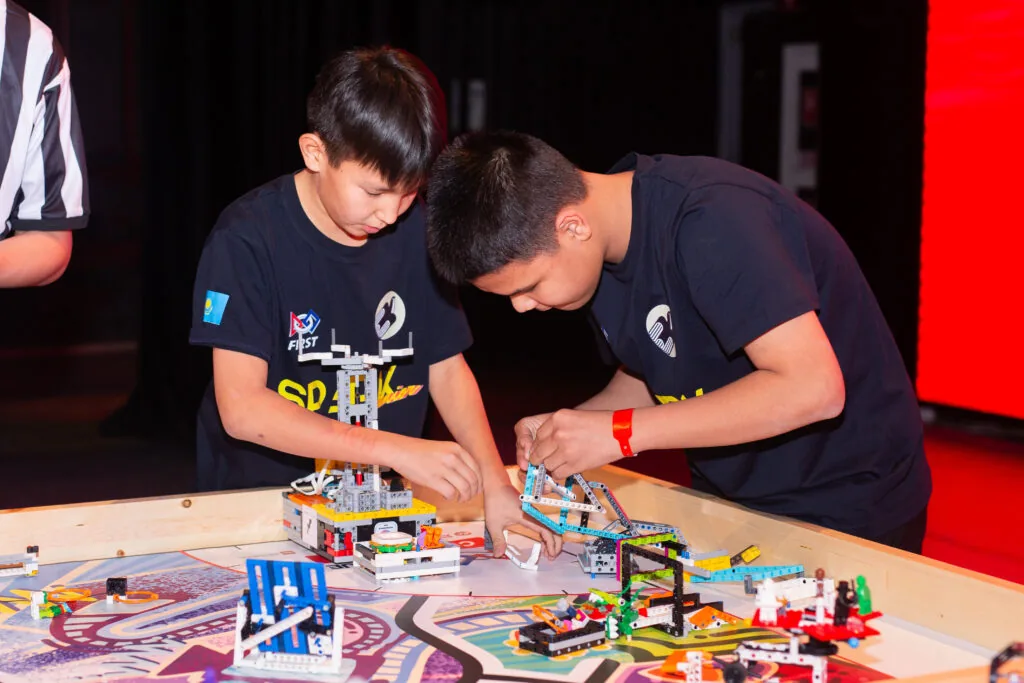
Today, robotics in Kazakhstan mostly exists as extracurricular activity. But USTEM is working to integrate the basics of artificial intelligence directly into school curricula.
Imagine if in all schools, tenth graders would take a module on “Fundamentals of Machine Learning,” using simple sensors and robotic devices. This is realistically achievable within a few years.
Resources are needed to develop such projects — equipment, computers, logistical support. At present, the state and business are actively investing in infrastructure and understand the strategic importance of STEM education. The question of creating regional centers is already being raised, which will make it accessible even for rural schools.
AI literacy as a new basic competency
UNESCO adopted the Beijing Consensus on AI in Education as early as 2019, and in 2025, the World Economic Forum stated that AI literacy is a new basic literacy, alongside reading and writing.
We must give children the keys to the world of AI — teach them to understand algorithms, critically evaluate their results, and create their own models. A person who understands the language of AI can meaningfully use all the benefits of the digital age. And those who do not understand will always depend on others’ decisions.
By studying artificial intelligence, schoolchildren become smarter in the most human sense: they learn to solve complex problems, work in teams, and be creative.
The Tech on Telegram Follow The Tech on Telegram
Keep up with the latest technology and startup news.
Related reading







More from this author

News
zypl.ai begins operations in Japan and focuses on next-generation risk models
Mansur Ismagulov

News
Elon Musk's net worth has exceeded $700 billion for the first time
Mansur Ismagulov

Article Interviews
"Central Asian countries should build a joint ecosystem," — Bekhzod Ismoilov on the development of AI in the region
Mansur Ismagulov

Article Interviews
Bloom's Taxonomy and Engineering Levels: A Practical Growth Model
Mansur Ismagulov

Article Useful
How the IT industry in Azerbaijan developed in 2025: key events
Mansur Ismagulov

News
Tajikistan has become a new member of the regional innovation alliance Central Asian Innovation Hubs.
Mansur Ismagulov