The Future of Clubhouse
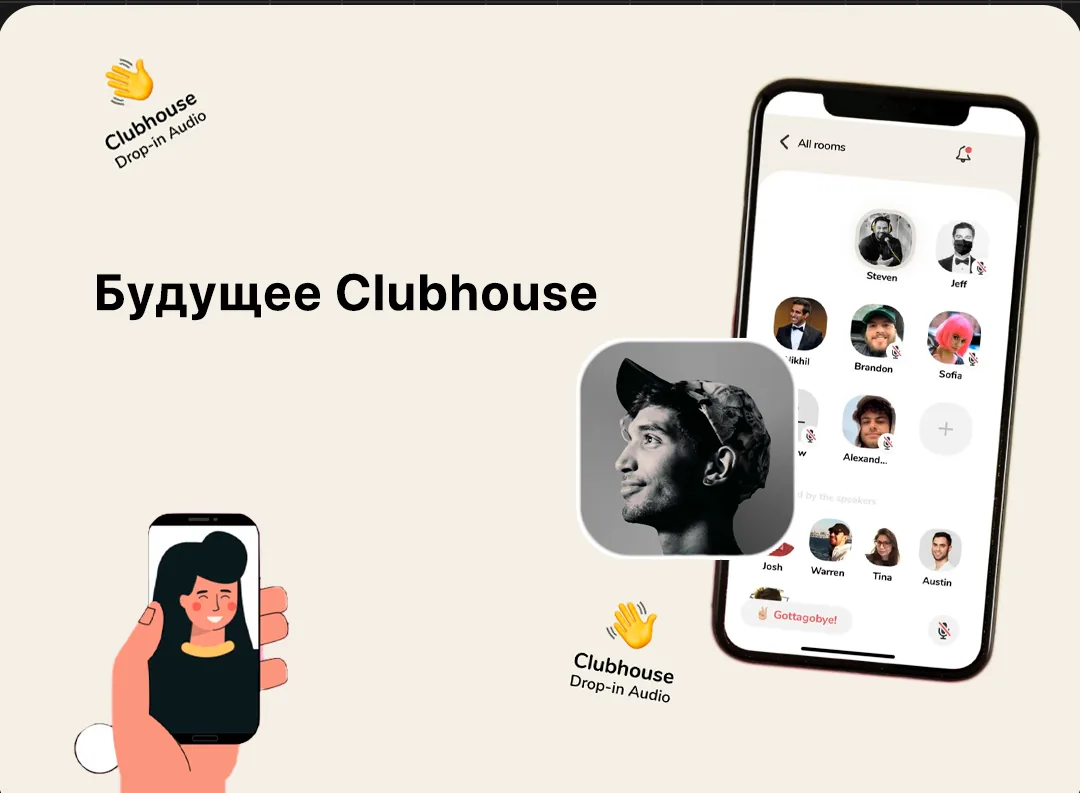
In the past couple of weeks, the closed social network Clubhouse has become a phenomenon. People are hunting for invites in hopes of joining an online room with Elon Musk and others, while venture capitalists have already turned the startup into a "unicorn" — but what will happen to Clubhouse after the hype?
Author - Mansur Ismagulov
The Tech AI
Get the key points in seconds - a short summary from The Tech AI.
Clubhouse faces risks related to commercialization, moderation, and data storage amid growing competition. The app is vulnerable to hacking of audio chats and uses the Chinese startup Agora Inc., raising concerns about data security under Chinese law. To successfully compete with Twitter and Facebook, Clubhouse needs to increase its user base by 180 times, while competitors like Spotify and Zoom hold stronger market positions.
The platform faces three risks: difficulties with monetization, moderation of discussions, and data storage. Additionally, competition from other companies is growing.
[caption id="" align="alignnone" width="534"]
Monetization
We have already written about possible monetization methods for Clubhouse — donations, private rooms, premium subscriptions. Currently, there are no consumers of paid content in the app, yet technical capabilities need to be expanded. If this does not happen, the app will repeat the fate of Vero. This initially exclusive app also grew rapidly, and in 2018, Vero topped the App Store charts. However, the success lasted less than a month due to an increase in complaints. The app constantly froze because it could not handle the growing user traffic. An excessive drive for profit could ruin the "special atmosphere" of Clubhouse.
Data Storage
Clubhouse's quasi-free data is not stored anywhere. The administration bans users who attempt to record conversations. This sounds like an ideal online environment where no one collects your information. But could this freedom become an obstacle to advertising models? Moreover, users grant the service access to their contacts. How does this differ from the Getcontact case? (The app went viral in 2018; it showed how a mobile number was saved in other people's contact lists, allowing the service to collect users' personal data).
Data Privacy
Clubhouse has encountered its first security issues. One developer found a way to stream Clubhouse audio chats to a third-party website. Clubhouse blocked the user, but the app is not as secure as it seemed.
Others have devised ways to "ghost listen" to rooms without displaying user profiles — essentially eavesdropping. Users in China can use the app via VPN, even if the app is blocked in the country.
Competition
Clubhouse captured the zeitgeist and has an advantage, but it struggles to compete with Twitter and Facebook on scale. Six years ago, Twitter killed the Meerkat app simply by revoking its access to the social graph. Clubhouse has its own graph and is a specialized platform for live audio, whereas Spaces still seems secondary to Twitter's main feature: text. However, Clubhouse will need to increase its user base 20-fold to match the number of Twitter's daily active users, who will soon have access to Spaces; and 180-fold for Facebook.
[caption id="" align="alignnone" width="562"]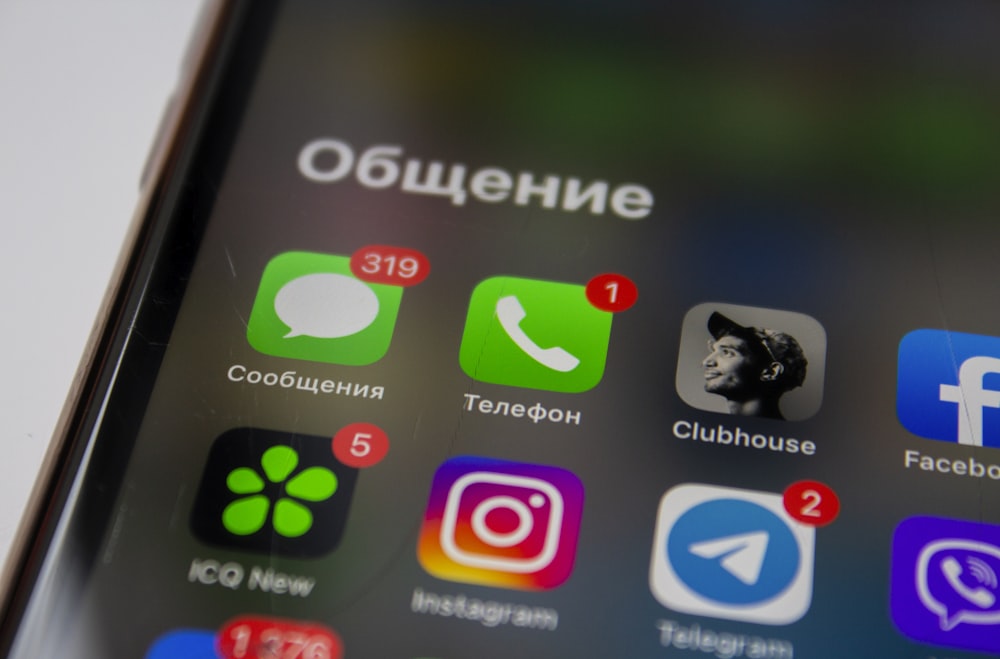
Content Moderation
Meanwhile, Clubhouse faces other pressing issues: how to improve its algorithm; how to track hate speech and malicious content; how to ensure that user data does not fall into Chinese hands. Clubhouse uses the Shanghai-based startup Agora Inc. for internal operations, including data traffic processing and audio production. Chinese legislation requires companies to provide information upon request and even collect data on behalf of Beijing if it serves national security interests.
User expectations will rise once the beta testing ends. How will Clubhouse retain its audience when the novelty wears off? Retaining the community is not just about technology. Does Clubhouse have long-term value? The pandemic will end, and the world will return to normal — where face-to-face communication will be valued. Will Clubhouse be able to offer anything in a normal world, or will it lose out to traditional podcasts that become interactive, or to Zoom, which is available on Android.
It depends on how quickly podcast platforms react. The outcome of this war depends on top music streaming services like Spotify, which has signaled a focus on audio. Podcasts have stronger odds, backed by history and habit. Besides streaming services, there are other competitors: Mark Cuban has already promised to launch a live podcast service called Fireside with built-in monetization tools this year.
[caption id="" align="alignnone" width="569"]
The Tech on Telegram Follow The Tech on Telegram
Keep up with the latest technology and startup news.
Related reading







More from this author

News
zypl.ai begins operations in Japan and focuses on next-generation risk models
Mansur Ismagulov

News
Elon Musk's net worth has exceeded $700 billion for the first time
Mansur Ismagulov

Article Interviews
"Central Asian countries should build a joint ecosystem," — Bekhzod Ismoilov on the development of AI in the region
Mansur Ismagulov

Article Interviews
Bloom's Taxonomy and Engineering Levels: A Practical Growth Model
Mansur Ismagulov

Article Useful
How the IT industry in Azerbaijan developed in 2025: key events
Mansur Ismagulov

News
Tajikistan has become a new member of the regional innovation alliance Central Asian Innovation Hubs.
Mansur Ismagulov