Big Tech or Startup: Which Path Should an IT Specialist Choose
To build a successful career in IT, you need to decide whether to work at large technology companies or to start your own startup. Each path has its own advantages and disadvantages. In this article, our author discusses the benefits of working at Big Tech and the opportunities that startups offer.
Author - Mansur Ismagulov

The Tech AI
Get the key points in seconds - a short summary from The Tech AI.
At the Mixere event in Bishkek, experts from Google, Meta, Cash App, and the founder of Bookinglane discussed the choice between a career in Big Tech and startups. Big Tech offers stability and high compensation, while startups provide freedom, speed, and risk. Participants noted that these paths can complement each other. Programs such as Accelerate Prosperity: Prosperity Cup incubation and the Central Asia Startup Cup championship were also announced.
Aizhan Alisheva-Duymaz, city — Bishkek, Head of Acceleration Programs
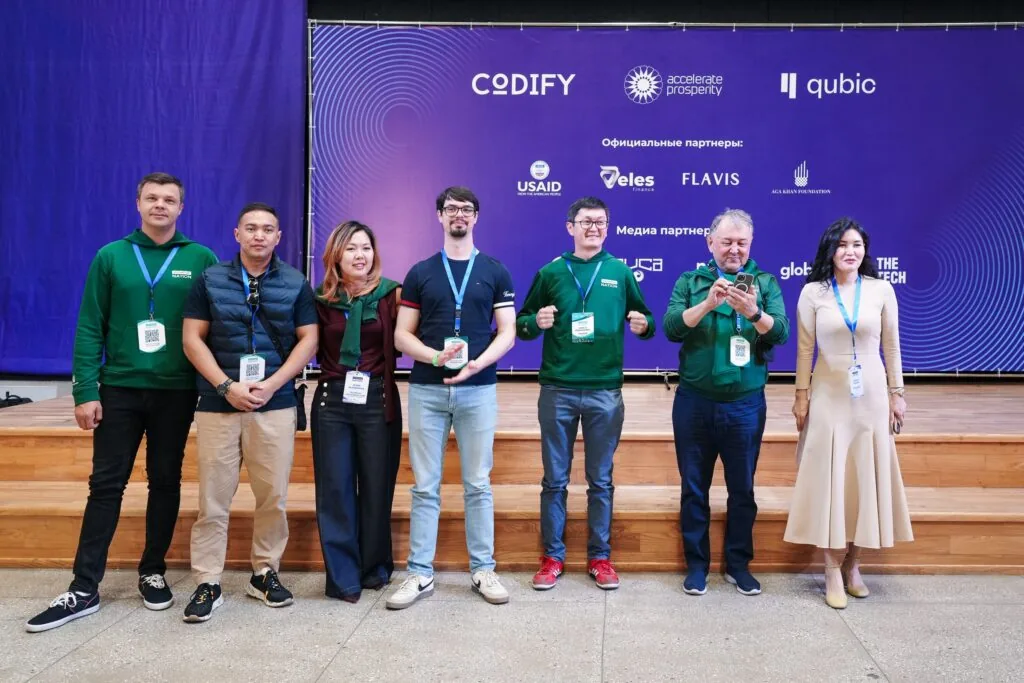
We attended the Mixere event, where developers, product managers, and startup founders gathered to discuss a critical question that concerns many in the IT industry: should you choose a job at a large technology company or launch your own startup?
Here is what we found out. Working at large technology companies is undoubtedly associated with stability, scale, and numerous opportunities. Speakers who have worked at giants like Google and Facebook shared their stories and experiences with the interview process.
Experts from Google, Meta, Cash App, and the founder of the startup Bookinglane participated in the discussion. Their opinions vividly reflected two different approaches to career development.
Big Tech is about stability and scale:
Pros:
— Working at Big Tech provides the opportunity to solve cutting-edge problems and gain experience that will be useful in the future
— Compensation in such companies is usually significantly higher than in startups
— Working conditions in large firms often take all aspects into account, including health, leisure, and work-life balance.
Cons:
— Limited ability to quickly implement ideas
— Feeling of stagnation.
Startups, on the other hand, are about risk, freedom, and speed
On the other hand, life in a startup is constant drive and the opportunity to influence every aspect of the product. However, this path requires special energy and readiness for risks.
Pros:
— Unique opportunity to shape the product and its strategy from idea to implementation
— Startups have no restrictions or bureaucracy, allowing for more free implementation of creative ideas
— The possibility of scaling and entering larger markets can lead to significant success.
Cons:
— Working in a startup throws you into a multitasking environment where you perform many functions, sacrificing your time or completely giving it up for a period
— Startups often face financial and operational difficulties, which can lead to stress.
Experience of those who have taken both paths
Many participants in the panel session noted that they often start their careers at Big Tech to gain the necessary skills and connections, and then move to startups. Others choose a hybrid approach — working at a large company while simultaneously launching their own projects. The main thing is to realize what you need: solving large-scale problems or creating something of your own.

Main Insight
As this exchange of opinions showed, Big Tech and startups are not opposite worlds, but stages of a career that can complement each other. The choice depends on your personal preferences and goals.
Opportunities for Startups
At AP Mixere, new programs from Accelerate Prosperity were also announced, including incubation for startups at the idea and MVP stage — Prosperity Cup, and the upcoming large-scale regional startup championship Central Asia Startup Cup.
Don't miss the chance to develop your startups and take advantage of new opportunities!
The Tech on Telegram Follow The Tech on Telegram
Keep up with the latest technology and startup news.
Related reading







More from this author

News
zypl.ai begins operations in Japan and focuses on next-generation risk models
Mansur Ismagulov

News
Elon Musk's net worth has exceeded $700 billion for the first time
Mansur Ismagulov

Article Interviews
"Central Asian countries should build a joint ecosystem," — Bekhzod Ismoilov on the development of AI in the region
Mansur Ismagulov

Article Interviews
Bloom's Taxonomy and Engineering Levels: A Practical Growth Model
Mansur Ismagulov

Article Useful
How the IT industry in Azerbaijan developed in 2025: key events
Mansur Ismagulov

News
Tajikistan has become a new member of the regional innovation alliance Central Asian Innovation Hubs
Mansur Ismagulov