An Azerbaijani has created a platform that simplifies entry into the legal markets of other countries.
Mirza Chiragov is a lawyer from Baku and co-founder of the Dejured and Digital Law Lab projects, which make law more understandable, accessible, and technologically advanced in Azerbaijan and throughout the region. His work combines reference legal systems and a research laboratory at the intersection of law, technology, and education.
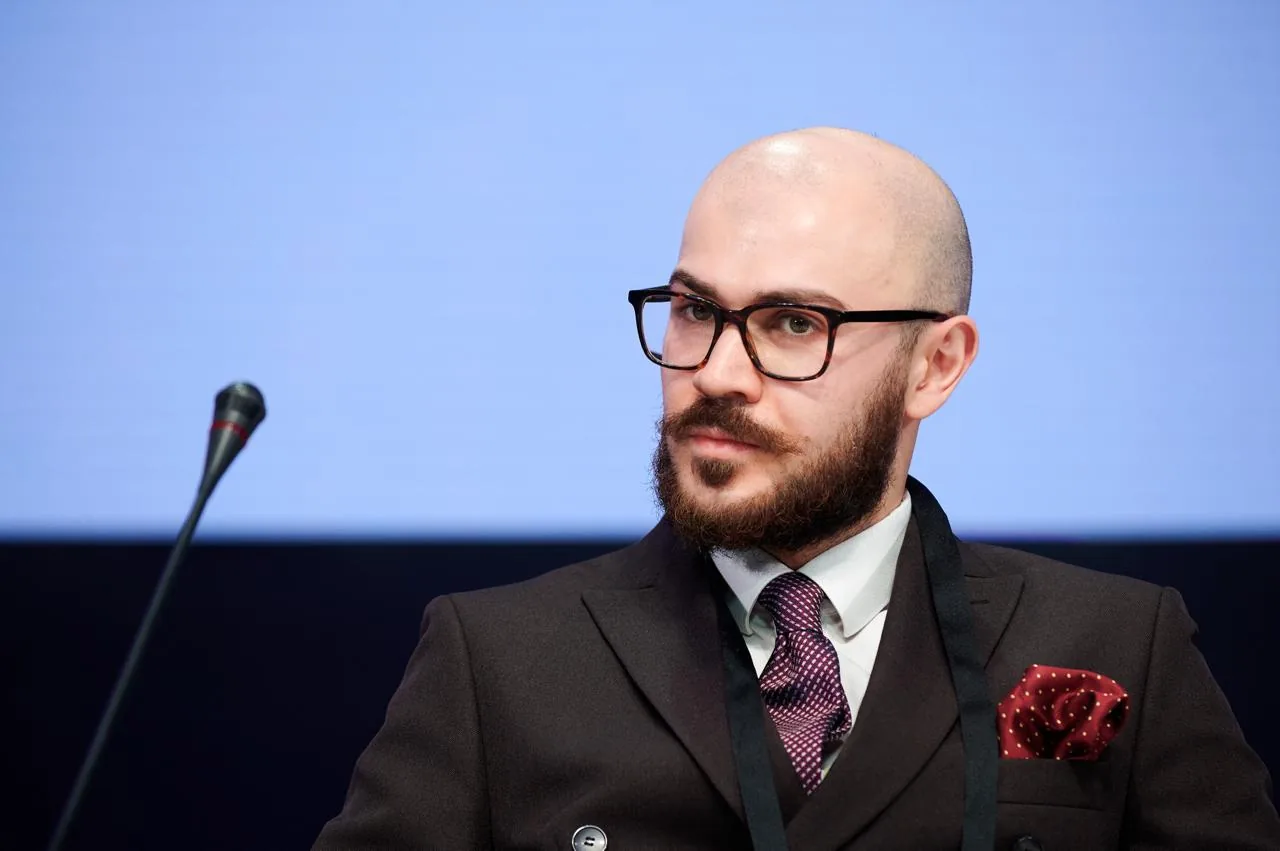
Mirza Chiragov, Baku, lawyer, Dejured, Digital Law Lab, LinkedIn
How It All Began
I am a lawyer who has worked in this field for a long time and gone through all the key stages of practice. I hold two master’s degrees in law. At some point, I realized that legal work needs to be automated—it requires a “pinch of technology” to eliminate routine tasks. I specialized in complex legal matters: corporate relations and bankruptcy.
However, most solutions are not created by lawyers, and developers often fail to understand real-world needs. As a result, important tasks remain overlooked. Lawyers and entrepreneurs seem to exist in different worlds, so many products turn out to be ineffective. In my view, these products should be created by people from within the industry.
As a representative of the European Legal Technology Association, I see the same problem at conferences: products are launched that lawyers do not need. For example, there are dozens of solutions for contract automation, even though this is not the most pressing task.
This is precisely why I came up with the idea to launch a project in our region, where the challenges of automation are even more acute.
We decided to develop several LegalTech solutions simultaneously because there are many tasks, and they vary in scale. For instance, at our hackathons, teams build products in three days that can already scan websites and identify errors.
Startup Launch
In 2021, we launched our first LegalTech project; in 2022, we launched Digital Law Lab; and in 2023, we entered the public arena, finally confirming market demand. Our main product is a legal reference system similar to LexisNexis and ConsultantPlus. There are similar solutions in the region, but they operate with limitations, making this our key project.
It requires working with large volumes of data: collecting, structuring, and making them easy to search, including morphological analysis. At the same time, we were among the first in the region to raise issues regarding technology regulation—for example, the topic of personal data.
This is how Digital Law Lab emerged—a knowledge base about technologies, startups, business, and AI: interviews, research, and analytics. When Kazakhstan introduced an AI bill, we immediately prepared and published an overview. All materials are published in English and aimed at an international audience.
Our task is to show the world our region: here there is regulation, expertise, and specialists with whom one can collaborate. Currently, there is an information gap, and the lab helps bridge it.
From the very beginning, we had a strong team: many participants are still involved in the project. Additionally, we have formed a pool of experts from Europe, the US, Canada, and the UK.
However, not everyone immediately understood the specifics of the startup: proactivity is crucial here, rather than waiting for tasks. This is not a corporation, and this is critical at the start.
Pitching LegalTech is difficult: it is almost impossible to explain the value in a couple of minutes, especially outside the industry. Therefore, classic pitching works less effectively—we focus on personal communications, explaining the product and context in detail. This helped build a network of contacts and increase brand awareness.
Target Audience
I would divide the target audience into two areas: Dejured as a startup and Digital Law Lab as a laboratory.
Regarding LegalTech products, everything is still at the early stage—it is an MVP. There are preliminary agreements with companies, but it is too early to evaluate results.
The situation with the lab is clearer. Its main audience consists of law students, practicing lawyers, and companies with legal departments. We are gradually expanding to the international level.
If we talk about the product, in the first stage, we focus on Azerbaijan: lawyers, advocates, students, and businesses with legal departments. Next, we plan to expand to Georgia, Kazakhstan, and Uzbekistan.
Our task is to create a convenient system where a lawyer from one country can work with the law of another: find case law, understand regulations, and receive information in a language they understand.
Currently, this is a problem: to enter a new market, it is often necessary to immediately engage local lawyers even for initial analysis.
We want to simplify this stage: so that a lawyer can independently study basic regulations, understand the tax system, risks, and opportunities for market entry. This does not replace full-fledged legal work but significantly simplifies the first step and reduces costs for businesses.
Incubation Programs
We did not win at classic pitch events, although we participated many times. Main agreements and partner attraction happened afterward—through personal communications. This is, as I say, the “underwater part of the iceberg” that is not visible on stage.
In 2025, we reached the final of TechCrunch Eurasia, and I consider this a strong result, especially for LegalTech. The niche itself is complex: you explain the product, but the audience is not always ready to understand and accept it immediately.
A separate experience was the Law.com award in Milan. We got there through other activities—we were noticed and invited to apply. Until the last moment, I was not sure if this was a serious selection: among the participants were legal departments of large international companies. In the end, we made it to the final and went to Milan.
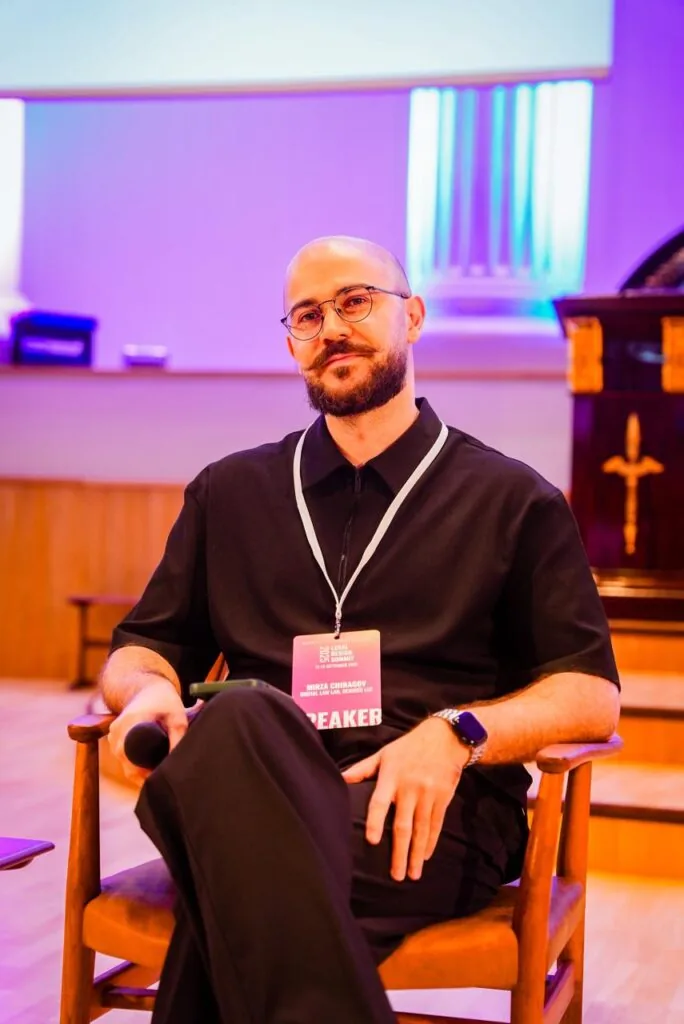
Also, last year I spoke at the Legal Design Summit in Helsinki, where I talked about contract formats and the specifics of our region’s legal system. European approaches are not always applicable to our realities—we have a different context and stage of development of the legal environment.
Currently, we are developing the intellectual property direction. This is one of the most underestimated topics in the region. Many startups do not secure key assets—code, algorithms, databases. As a result, rights often remain unregistered, and when the team changes, these assets can be effectively lost. Therefore, it is important to secure them from the very beginning—this is both protection and a foundation for attracting investment.
Overall, we work in the logic of understandable law: so that a person can immediately understand a contract, rather than deciphering complex multi-page documents. This is one of the key principles of Legal Design.

On Difficulties
The main difficulty is conveying the product’s value in a market where it did not previously exist. We constantly have to explain complex specifics to an audience that has not encountered them before.
Most of the work is a long background process without quick results. Therefore, the idea of “being first” is not the goal in itself—systematic work is more important. The hardest part is doing the same thing well for a long time without seeing an immediate effect. This is normal for such projects, but psychologically difficult. I relate to the analogy with sports: results come not immediately, but over time. To maintain balance, I try to alternate this with tasks where the effect is visible immediately—for example, in household matters like cooking.
Many products are unclear to the market at early stages, and education plays an important role here. This is where the logic of the laboratory arises. In Silicon Valley, investors are increasingly disappointed in small startups with low KPIs. Against this background, interest is growing in “laboratories” that constantly create knowledge and new solutions.
The idea is that knowledge can be a more sustainable asset than a single specific startup. Currently, an MVP can be built in three to five days, but then the question arises—how to invest in this at the early stage.
There is also a problem with delays in accelerators: funding sometimes arrives months or even a year later, and by that time, the product may lose its relevance. This raises the question of “fake digitalization,” when processes are formally established but do not work effectively.
It is important to distinguish between the laboratory and the startup: the laboratory is a non-profit structure focused on knowledge and education, while the startup is a commercial product and monetization. They are connected but organizationally separate.
Achievements
We have a number of awards, including an international award in Milan and the European Legal Innovation & Technology Awards, as well as national awards in the field of technology and education.
We are developing the LegalTech direction, which includes products, public activity, and reference services. We are also considering the intellectual property direction.
Our laboratory is the only one in Azerbaijan verified as an AI consulting institution. We are also members of the European Legal Technology Association and participate in international analytics and discussions on AI regulation.
Separately, it is worth noting the Netty award: we entered the top 3 in the technology and digital education category. This is one of the oldest awards in the region.
However, sometimes experts cannot fully evaluate the project due to limited access to the technical part of the product. This shows that any evaluation is always multi-layered. Overall, our work is constant testing of hypotheses at the intersection of technology and law.
Plans
We are separately looking for researchers and partners from Central Asia and Georgia—this is an important direction for us. Currently, the formula “Central Asia +1” is often used, but we look wider—more like “+2,” including Georgia. It is important for us to build partnerships in these countries and work with local experts.
If we talk about the laboratory, our goal is to expand into new regions and launch new products. We strive to become a regional factor that combines expertise and applies it in different jurisdictions. This is one of the key tasks of the current stage.
Currently, we are at a stage where we are ready to move to the first commercial results. In discussions with representatives of Big4 and large legal departments, the request is almost always the same: “give this to us, we need it.” This is an important signal for us.
Therefore, this year we expect to shift most of our work into the commercial sphere. The team has done a large amount of work without immediate results, and this is a normal story for complex products.
It is important to emphasize the role of the team. This is the most valuable asset. People who have stayed in the project at this stage should see the result in the form of contracts and real cases.
Next is the international agenda. London and several events in Europe dedicated to AI and LegalTech are ahead. There, we will represent the region and discuss technology regulation in our countries.
The Tech on Telegram Follow The Tech on Telegram
Keep up with the latest technology and startup news.
Related reading






More from this author

Article Useful
How to protect your accounts from hacking: 8 settings you should check today
The Tech

Article Useful
500 Global: How the Accelerator Works and Who Can Receive Investments
The Tech

Article Interviews
Game Development in Central Asia: Arkady Moldavski on Developing Reverb and the Growth of the Industry
The Tech

Article Useful
Google, Tesla, BlackRock, and the IMF: Where to Apply for an Internship in Fall 2026
The Tech

News IT
Tesla unveiled the flying electric car Roadster
The Tech

News IT
Intero Biosystems startup won the Startup Battlefield at TechCrunch Disrupt 2026
The Tech