Askar Aytov on what opportunities Google for Developers provides to IT professionals from Central Asian countries
Askar Aytov, responsible for supporting Google for Developers programs, detailed his work in a live stream on our Telegram channel. We share the most interesting thoughts in text format.
Author - Mansur Ismagulov
The Tech AI
Get the key points in seconds - a short summary from The Tech AI.
Askar Aytov supports GDG, WomenTechMakers, and Google for Startups in Central Asia and Mongolia. The region has 60 Community Builder DevRel professionals collaborating with 20 universities in Kazakhstan and Uzbekistan. The Silkway Accelerator was launched through Astana Hub, and participants entered the top 10 of the Google Solution Challenge for the first time.
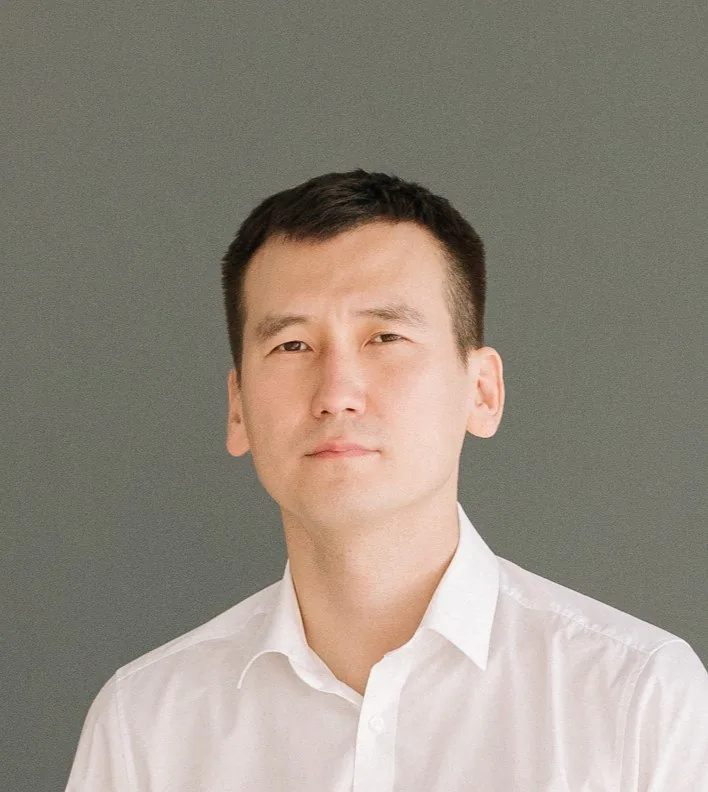
Askar Aytov, responsible for supporting GDG, WomenTechMakers, Developer Student Clubs, and Google for Startups programs in Central Asia and Mongolia, @askarai_
About Me
From 2015 to 2017, I helped my friend Andrei organize Google for Developers meetups in Almaty. At that time, I participated as a volunteer; it was my hobby. As organizers, we were often invited to Google’s headquarters, received various forms of support, and were provided with materials for events.
Later, I moved to Astana for work, where I also organized GDG Astana. When I returned to Almaty, I took over GDG Almaty. At the same time, the Women Techmakers program existed and developed.
In 2020, I worked at a local venture fund. After investing in a Tashkent-based startup, I wrote a post on LinkedIn about the Central Asian startup ecosystem. Some time later, Google representatives contacted me—they wanted to launch an accelerator in our region and found my article. Initially, they asked for help in finding venture funds and accelerators, and then offered me a full-time job to launch projects and support GDG communities and programs.
About My Role
There are three types of DevRel specialists at Google. Some work on products, gathering feedback from developers and users. Others are called Developer Advocates—they create educational content and serve as technical experts. The third type is Community Builder, which is what I do. We provide support to people who develop GDG communities in their cities. Currently, there are 60 such individuals active in Central Asia.
As a Community Builder in DevRel, I help with organization, provide materials, and invite speakers, including from countries such as Spain, the UAE, the USA, and India. We carry out the necessary work to facilitate their travel to us. We also organize skill-development programs for community builders—sending them to various countries to gain experience.
Together with Google for Developers, we launch educational programs on Google technologies at various levels. For example, last year we collaborated with 20 universities in Kazakhstan and Uzbekistan.
We train students to participate in the Google Solution Challenge hackathon. Last year, for the first time, participants from Central Asia made it into the top 10. We also prepare Google Experts—individuals who have deep expertise in a specific technology. They are invited to speak at conferences and share their experience on a voluntary basis.
I also participated in the creation of the Google for Startups accelerator. Such projects are launched in two formats: directly by Google or through a partner. In our case, it was the second option—through Astana Hub. We created the Silkway Accelerator, developed the program, and found mentors, while Google provided free resources that help startups, such as Google Cloud.
Work Specifics
I used to think that everyone working at Google earns well. It turns out that salaries vary significantly depending on the region and are tied to the country’s economic development. Income levels can also be influenced by social or political factors.
If you want to eventually relocate to Mountain View, it’s best to start your career at Google in the USA. There are almost no cases of someone working in Turkey for 10 years and then receiving a promotion with a move to the US.
I remember meetings with foreign specialists who come to us as guest speakers. I was impressed by Indian experts—they write efficient code and can validate an idea in literally half an hour. I was amazed to learn that in the UAE, there is a law requiring the state to assign 15% of IT projects to local startups to help them develop.
The situation in Central Asian countries is different. In Uzbekistan and Kyrgyzstan, the real sector of the economy rarely commissions projects from local IT companies. Therefore, outsourcing services have developed significantly in these countries. For example, in Tashkent, there is a company that remotely develops projects for the US. The situation in Kazakhstan is different: there are large players, such as banks and telecommunications corporations, which develop their own IT solutions, and small companies that work on government contracts. As a result, IT exports are not yet well developed in our country.
Future Plans
Within the Google ecosystem, we are selecting new leaders for Google Developer Student Clubs. Participating students will receive cool gifts and be able to take part in various programs. We are also recruiting experts who wish to obtain the Google Expert status.
We are preparing a large series of events—meetups and workshops on building applications using Gemini AI and Gemma.
If you want to participate, write to me—I am always in touch.
The Tech on Telegram Follow The Tech on Telegram
Keep up with the latest technology and startup news.
Related reading







More from this author

News
zypl.ai begins operations in Japan and focuses on next-generation risk models
Mansur Ismagulov

News
Elon Musk's net worth has exceeded $700 billion for the first time
Mansur Ismagulov

Article Interviews
"Central Asian countries should build a joint ecosystem," — Bekhzod Ismoilov on the development of AI in the region
Mansur Ismagulov

Article Interviews
Bloom's Taxonomy and Engineering Levels: A Practical Growth Model
Mansur Ismagulov

Article Useful
How the IT industry in Azerbaijan developed in 2025: key events
Mansur Ismagulov

News
Tajikistan has become a new member of the regional innovation alliance Central Asian Innovation Hubs.
Mansur Ismagulov