500 Global in Georgia. How to get into an international accelerator and whether it's worth going through it
Laura Eralieva shared how participating in 500 Global in Georgia helped her secure funding, expand her network, and improve her company's legal structure.
Author - Mansur Ismagulov
The Tech AI
Get the key points in seconds - a short summary from The Tech AI.
Laura Yeralieva, founder of Yaya from Almaty, completed the 500 Global accelerator program in Georgia. The program helped the company increase its turnover to 130 million tenge and prepare for a seed investment round. The startup now plans to scale into the markets of Uzbekistan, the Middle East, and Southeast Asia.
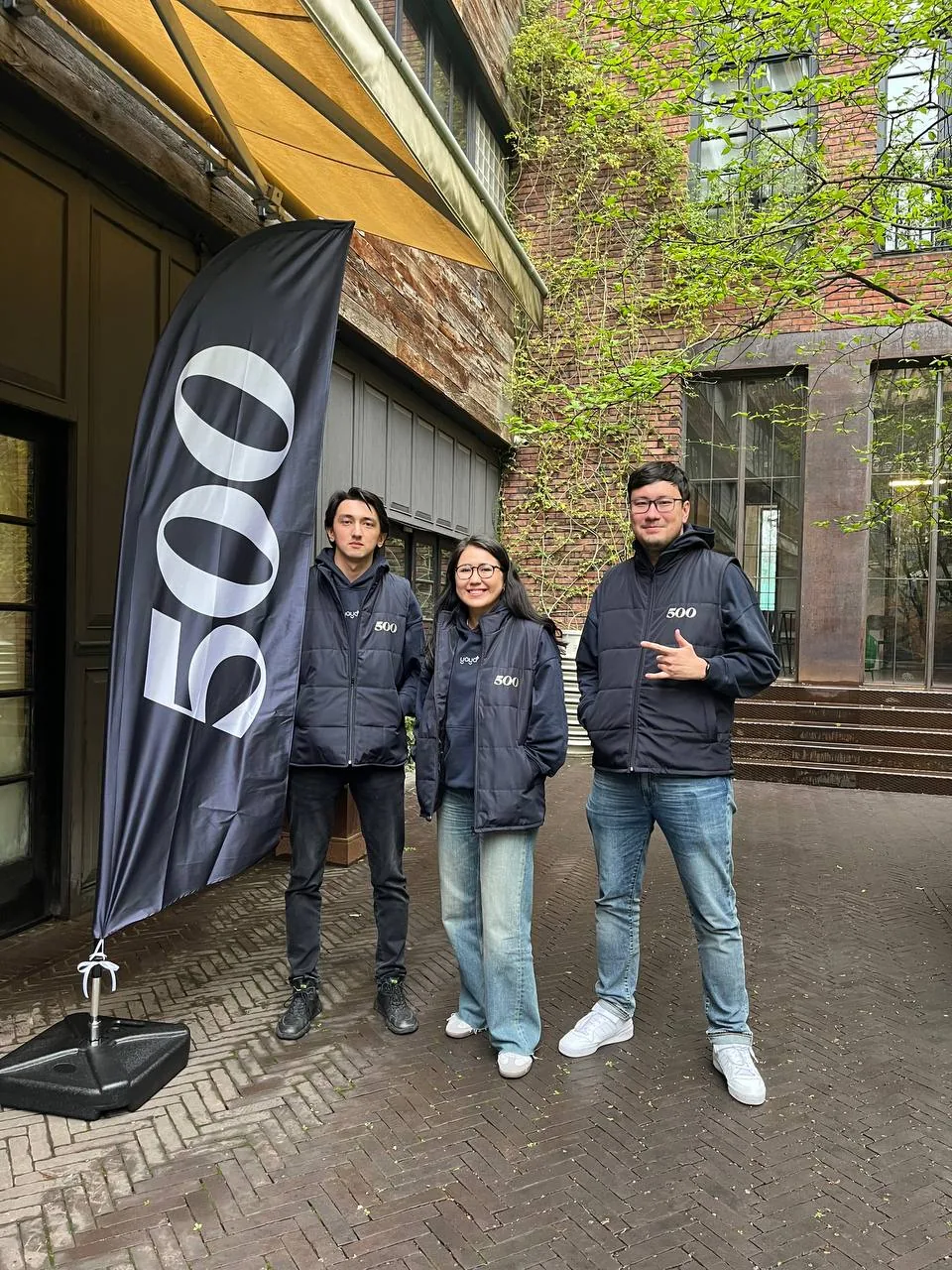
Laura Eralieva, city — Almaty, CEO and founder of Yaya, @llaucam
About myself and Yaya
I am the founder of Yaya. It is a unified children’s subscription service. Currently, we operate in Almaty and Astana. We already have more than 500 partners among children’s centers of various directions. Since September last year, we have successfully raised several rounds of investment totaling approximately $283,000 and completed the PSO Global acceleration program.
After completing the accelerator from MOST Hub, we increased our turnover from 2 million tenge in September to 130 million tenge in June. The team grew to more than 50 employees. We have become a significant player in the children’s services market, collaborating with banks and attracting interest from international investors. We are preparing for the next seed round, and major players are already expressing interest in investing in our project.
About 500 Global in Georgia
I had heard many positive things about 500 Global from acquaintances who had already participated in their programs. They often shared good reviews. Given our excellent performance and rapid growth, I decided to apply, even though we had only initial experience participating in accelerators. We applied in February, and although we did not initially have high expectations, we passed the first selection. This gave us confidence that we are interesting to international investors, since 500 Global in Eurasia is managed by Pedro — a Silicon Valley specialist with extensive experience in venture capital. The interview was challenging, with many difficult questions testing product knowledge and confidence in the idea. It was important to demonstrate that we had found our product-market fit, as criteria for different startups can vary.
Our key metrics are turnover and growth. Customers pay an average of $1,000, and we tripled our size in just a few months. In the interview with 500 Global, the main focus was on the financial model, as they work with pre-seed startups and require confidence in scalability. It was necessary to demonstrate success in other markets and provide convincing forecasts and figures.
Investors also asked how much money we needed and whether it would be enough for product growth. Our team, consisting of senior specialists and market leaders, presented their cases and development plans in the AI sector, which became a positive factor in selecting our project. It is also important to understand whether you have benchmarks. If no one has invested in similar directions, the market may not be interesting to investors. Therefore, it is necessary to show that there are successful benchmarks in other countries.
The first important factor is the team. Even a small team of two or three experts in their field with successful cases is a big plus. Team size does not determine success; the main thing is competence and experience.
The second important factor is the market. The idea itself is worth nothing; what matters is how in demand it is and how you implement it. For us, the criterion was how much customers are willing to pay and how much your figures grow month by month.
For DeepTech startups, it is important to prove the uniqueness of the technology. Investors want to see that you are building a competitive technology, not just copying existing solutions. You also need to show how well you understand the numbers and how to sell your product.
Competition was high: there were 400 applications from all of Eurasia, including the Baltics and Central Asia. Investors looked at the founder and their ability to sell their product.
How the preparation for the acceleration program went
The program was intensive and lasted three months. We submitted our application at the end of February. Selection and interviews took place in March. We received many written requests by email: it was quite funny due to the time difference: I sleep, and at three in the morning, a message comes from Pedro asking about managers' salaries.
The program took place in Tbilisi: two weeks in April were offline, then all of May and early June were online, and at the end of June, another two weeks were offline. Offline presence was a mandatory condition.
The program started with basic knowledge that all startups and founders should know, even though many of us already had experience in various accelerations and incubations. We were introduced to how to build a product and test marketing channels. These things were partially new, partially already familiar. In startups, it is always important to develop industry insight, constantly test, and experiment. We received new knowledge and immediately implemented it into our product.
It is important not just to receive theory but to apply it in practice immediately, otherwise, the knowledge will be quickly forgotten. Our team in Almaty immediately tried new hypotheses, communicating via video calls and discussing new channels. We constantly worked together with mentors. Each startup had its own mentor who helped in the relevant field.
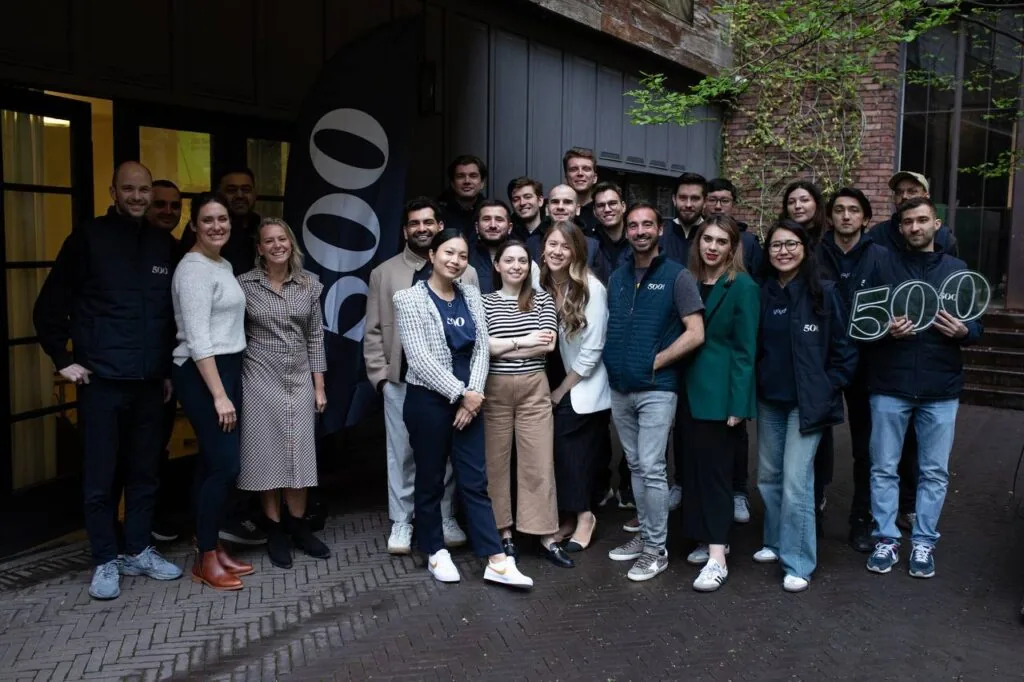
The program ran from morning until lunch. Eight startups sat in the office; we were given tasks and homework. The next day, we had to show that we had applied the theory we received in practice. After lunch, there was work with each mentor according to an individual plan.
At the beginning of the program, we built a 12-week plan, breaking it down into sprints. We defined the metrics we wanted to achieve and checked progress weekly. Mentors working with international startups gave useful advice and shared cases, which helped us orient ourselves toward global standards and adjust strategies. For example, we improved our financial model to meet international requirements and attract investors.
I recently returned from Georgia, where we spent two weeks preparing for the next rounds of investment. For us, a new mentor specializing in investments was invited. We were developing a fundraising plan, structure, templates, valuation, and so on.
We were also prepared for the demo day. Every day we practiced presentations, removed unnecessary elements, learned to focus, and answer investors' questions correctly. Our pitch decks improved dramatically thanks to this preparation. The level of presentations we achieved is high, and I recommend everyone who wants to participate in 500 Global to watch our demo days on YouTube as soon as they become available.
Investment from the venture fund 500 Global in Eurasia
I like that 500 Global guarantees investment upon meeting certain conditions, which accelerators in Kazakhstan do not offer. For example, they require company registration under international standards, and we registered ours in Delaware.
Also, 500 Global helps to put the legal structure in order. Before that, we made internal agreements and an option program ourselves, but according to international standards, it should be structured for four years with a one-year cliff. We restructured our legal structure to meet these requirements.
After registering the company in Delaware, 500 Global carefully checks the jurisdiction. Some startups that were already registered there received investments at the beginning of the program. We received the funds at the end of the program, as the process of registration and opening a bank account in the US was delayed.
500 Global uses its own KISS agreement, which is similar to SAFE but has its nuances. For example, a $100,000 investment is divided into two parts: $50,000 under one set of conditions and $50,000 under another, related to post-money valuation. The conditions depend on negotiations and how well you can position yourself for an exit.
Advice based on our experience: during the initial discussion of valuation, we did not fully understand international standards and thought we should provide a discount due to the accelerator. Therefore, we agreed to the proposed conditions. Later, when communicating with other funds, we realized we were mistaken, but since we had not signed the term sheet, we were able to revise the conditions according to our metrics. If you reach the stage of discussing valuation, be careful. It is not worth inflating your value at an early stage, but it is important to reasonably prove your value. Investors can be strict, and it is better to fully understand how deal conditions are formed to avoid misunderstandings. Be confident in your valuation and knowledge of the product's value. Also, remember that sometimes valuation and investments depend on meeting certain conditions or achieving KPIs.
I consider agreements with funds and investors based on post-money valuation good practice. This allows negotiating a fair valuation based on achieving certain results. It is good practice for future negotiations with other VCs.
Should other startups from Central Asia apply to 500 Global
If you have no experience participating in accelerators, I strongly recommend applying to 500 Global. It is the best choice compared to local accelerators. Some teams that tried to get into Y Combinator faced rejections, but 500 Global has an excellent reputation.
After my speech at D-M&A, I was invited to Georgian investors who checked our results. The head of the acceleration program, Pedro, confirmed our achievements, and investors were ready to invest.
This case shows what a respectable reputation 500 Global has and how participating in the accelerator helps attract investors. 500 Global serves as a signal of trust, confirming that the startup has been vetted and is not considered fraudulent.
Moreover, 500 Global has an extensive network of branches worldwide, including America, Indonesia, and soon Japan. This facilitates entry into new markets and networking.
I communicated with Kazakh startups that had already participated in 500 Global, and they all left positive reviews. Recently, I contacted participants from different countries and confirmed that 500 Global indeed provides powerful support.
Plans
500 Global gave us confidence in the correctness of our path and strengthened our belief in our product. Now we are focused on entering international markets, starting with Tashkent. Then we will analyze the Middle East and Southeast Asia. The seed round of investment will help us scale.
The Tech on Telegram Follow The Tech on Telegram
Keep up with the latest technology and startup news.
Related reading







More from this author

News
zypl.ai begins operations in Japan and focuses on next-generation risk models
Mansur Ismagulov

News
Elon Musk's net worth has exceeded $700 billion for the first time
Mansur Ismagulov

Article Interviews
"Central Asian countries should build a joint ecosystem," — Bekhzod Ismoilov on the development of AI in the region
Mansur Ismagulov

Article Interviews
Bloom's Taxonomy and Engineering Levels: A Practical Growth Model
Mansur Ismagulov

Article Useful
How the IT industry in Azerbaijan developed in 2025: key events
Mansur Ismagulov

News
Tajikistan has become a new member of the regional innovation alliance Central Asian Innovation Hubs.
Mansur Ismagulov