WomenInTech. Stories of women who overcame stereotypes and built careers in IT
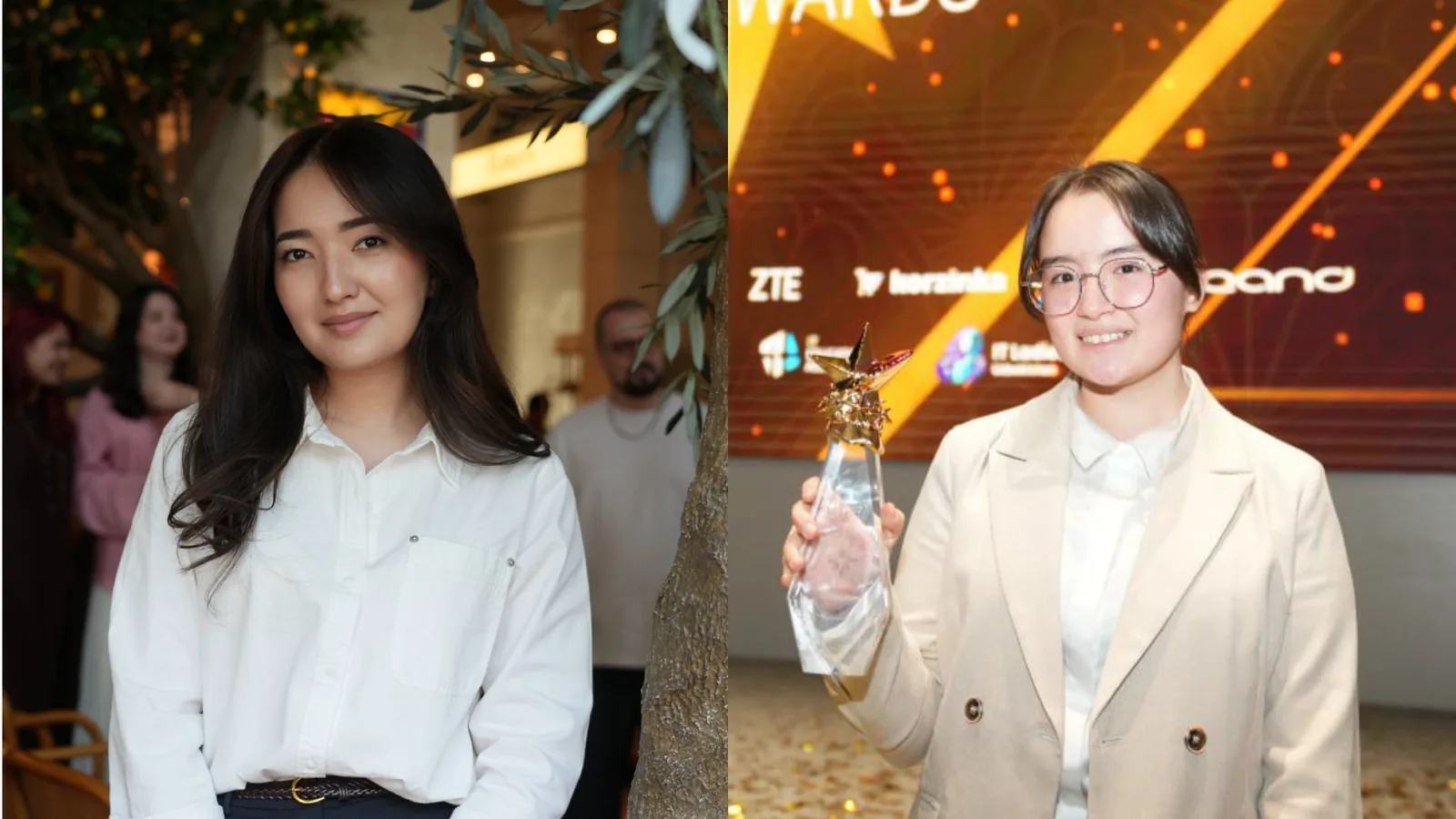
We continue the WomenInTech series, where we introduce you to women who are developing the technological ecosystem of Central Asia. In this new episode, Duradona Shavkatova, PR Manager at IT Park Uzbekistan, and Aziza Nematova, a cybersecurity specialist, shared their stories. They talked about how they entered IT, the stereotypes women face in the industry, and the qualities that help build a successful career.
Duradona Shavkatova, city — Tashkent, Public Relations and Outreach Specialist, PR Manager at IT Park Uzbekistan, LinkedIn, Instagram
About Me
I am a communications and PR specialist with over five years of experience in media, social projects, and the public and private sectors. My educational background is in journalism and mass communications, with a focus on PR.
Currently, I work in the PR department of the startup division at IT Park Uzbekistan. I promote Uzbek startups, prepare communication materials, and interact with media, partners, and the international community.
My professional journey began with volunteering and working with non-governmental organizations, where I realized that it is important not only to implement a good project but also to tell its story correctly. Later, I worked in international educational initiatives, covering the stories of young people mastering modern professions.
Then I joined an analytical think tank, where I handled PR, media relations, event organization, interviews, podcasts, and communication campaigns. This experience taught me how to build communication with experts, international organizations, and a wide audience.
One of the most significant projects for me was a media project against gender disinformation, implemented with the support of the European Union and an international media organization. Over six months, we created content on media literacy, gender stereotypes, and disinformation, reaching over 7.5 million people. This experience showed me that even a small project can have a big impact if you speak to the audience in a clear language and build communication effectively.

How I entered the IT profession
I entered the IT field quite naturally. It wasn't a decision "from scratch," because even before working at IT Park Uzbekistan, I had already participated in projects where technology intersected with education, youth, and communications.
One of the first such projects was an initiative to develop IT skills among girls and young women, implemented with the support of an international embassy and the Ministry of Public Education. Within the framework of the project, I handled communications: prepared materials, conducted interviews with participants, found interesting stories, and created news hooks.
For me, this was an important stage because I saw the IT field from a different perspective. Not through code or technical jargon, but through young women who wanted to learn, develop, and try themselves in a new direction. Many of them faced stereotypes: that IT is more of a "male sphere," that girls will have a harder time, or that they should choose a more familiar profession. Thanks to these interviews, I began to better understand how important it is not just to say that girls can work in IT, but to show real stories of those who are already taking their first steps.
Later, I worked at an IT academy, where I became closer acquainted with IT education, youth, and the professional community. I worked with young people studying IT fields, saw their motivation, initial results, and how education influenced their confidence. I especially remember the stories of young people from the regions. We filmed materials about how they learn, develop, and discover new opportunities thanks to IT.
Probably, it was then that I formed the understanding that IT is not only about technical professions. It is a large ecosystem where education, communications, community, media, PR, content, and the ability to explain complex things in simple language are important.

About stereotypes
I think almost every woman on her career path encounters stereotypes at some point. Especially if you are young, work in communications, interact a lot with people, initiate projects, and want to grow professionally.
In my case, prejudices were often related to age, gender, and the perception of PR as an "easy" profession. Sometimes it seems that if you are a young woman, you need to prove more that you can take responsibility, lead projects, work with partners, media, and international organizations. Sometimes people are cautious about your ideas at first, and then, based on results, they understand that there is real experience, preparation, and a systematic approach behind them.
Another common misconception is that PR and communications are just about writing a post or organizing a publication. In reality, there is a lot of work behind this: understanding the audience, conveying the meaning correctly, strategy, reputation, risk management, language, context, and trust. Especially in IT and social projects, it is important not just to tell, but to explain why this is important and what value the project brings to people.
Another stereotype is that IT is only for technical specialists. But my experience shows the opposite: the IT ecosystem needs different professionals. We need people who know how to build communication, work with communities, tell startup stories, build trust in products, and make complex technologies understandable to a wide audience.
I cannot say that I fought stereotypes through conflicts. Rather, I overcame them through work, results, and constant development. For me, it is important not just to talk about my capabilities, but to show them through projects, responsibility, and the quality of work. Over time, results start speaking for you.
Barriers for women in IT
One of the difficulties women may face in their careers is being underestimated. In my case, this was related not only to the fact that I am a woman but also to the fact that I was a young specialist. Sometimes I had to put in more effort for my opinion to be taken seriously and for me to be entrusted with responsible tasks. Over time, I realized that in such situations, results work better than explanations.
A separate challenge for me was the transition from the social sector to IT. If previously communications were built around people and social initiatives, here you need to quickly understand technologies, understand the value of the product, and be able to tell about it to different audiences — journalists, investors, and potential partners. This requires not only communication skills but also a willingness to constantly learn and ask questions, even when it seems like you should already know everything.
I still overcome such barriers through work, responsibility, results, and constant development. I try to perform my tasks with high quality, finish what I start, take the initiative, and show in practice that I can be relied upon. For me, it is important not just to talk about my capabilities, but to confirm them with action and constantly grow professionally.
Working with different projects and teams also helped me become more confident. I realized that not every difficulty should be perceived as a personal failure — sometimes it is related to established stereotypes. In such moments, it is important to continue doing your job, take responsibility, and not be afraid to show initiative.
For me, the main way to overcome such barriers is professionalism, a willingness to learn, and confidence in my abilities. Ultimately, people are convinced not by age or gender, but by the quality of work and real results.

Recommendations for those just starting their path
The most important thing is to love what you do, or to find a cause that is close to you. Because when a person loves their work, it is always visible. Their eyes light up, they relate differently to the process, tasks, people, and the result. They do not just do the work for the sake of a deadline, but try to do it better, with higher quality, and deeper.
Do not be afraid to take responsibility. Responsibility develops a person greatly. When you take on a task, start figuring it out, look for solutions, ask questions, try, and finish what you start, you grow as a specialist. Even if something does not work out the first time, it is important not to give up halfway, but to continue and go to the end. Mistakes should not be scary. Those who make mistakes are those who work, try, and do something. Those who do nothing may not make mistakes, but they also do not develop.
It is also important not to undervalue small steps. Volunteering, internships, the first project, the first publication, the first independent task — all of this matters. Sometimes it seems like something small, but it is from such stages that a career path is built.
Professional growth does not happen in one day. It is made up of small steps, mistakes, experience, and the desire to continue.
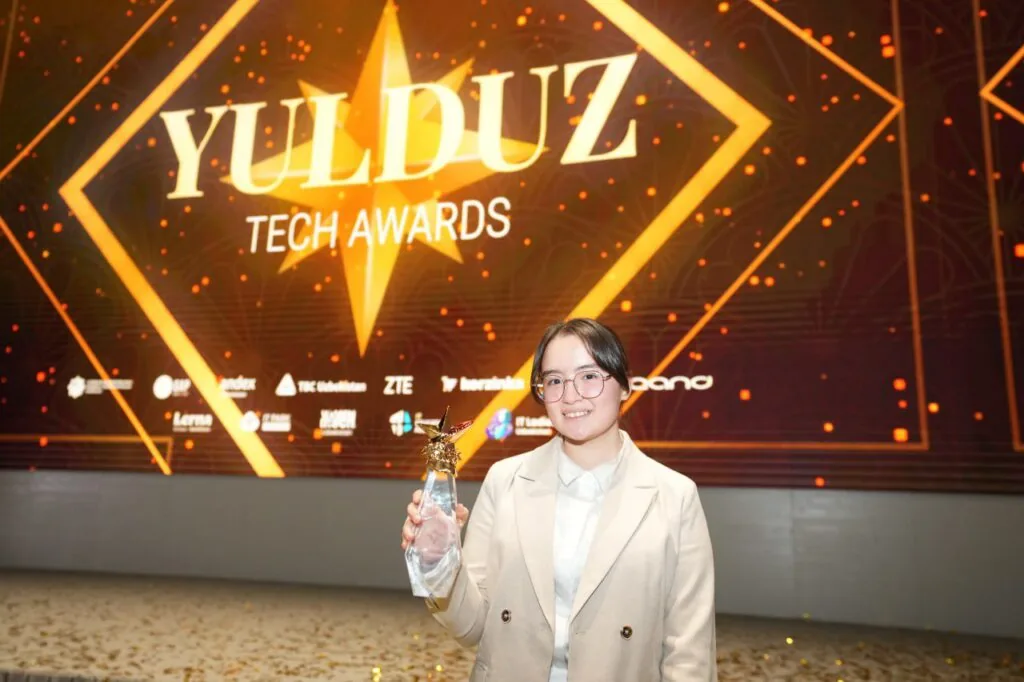
Aziza Nematova, city — Tashkent, Cyber Security Student at New Uzbekistan University, Instagram, Telegram
About Me
I am from Navoi. Over the past few years, trying myself in different fields — from design to startups and robotics — I realized that cybersecurity best suits my interests and desire to be useful. Currently, I am studying cybersecurity at New Uzbekistan University and interning at the National Center for Cybersecurity in the Security Operations Center.
Aside from studies and practice, I am involved in public activity. As a regional ambassador of the Ministry of Digital Technologies in the Navoi region, I inspire girls to choose a career in IT. We are also launching the Navoi Tech Teens 2.0 project for the second time, which introduces teenagers aged 14-18 to cybersecurity.
How I entered the IT profession
My path in IT began with participating in a cybersecurity club at the Cybersecurity Center. It was there that I met experienced specialists and realized that logical thinking, a love for technology, and a systematic approach are what I really want to do.
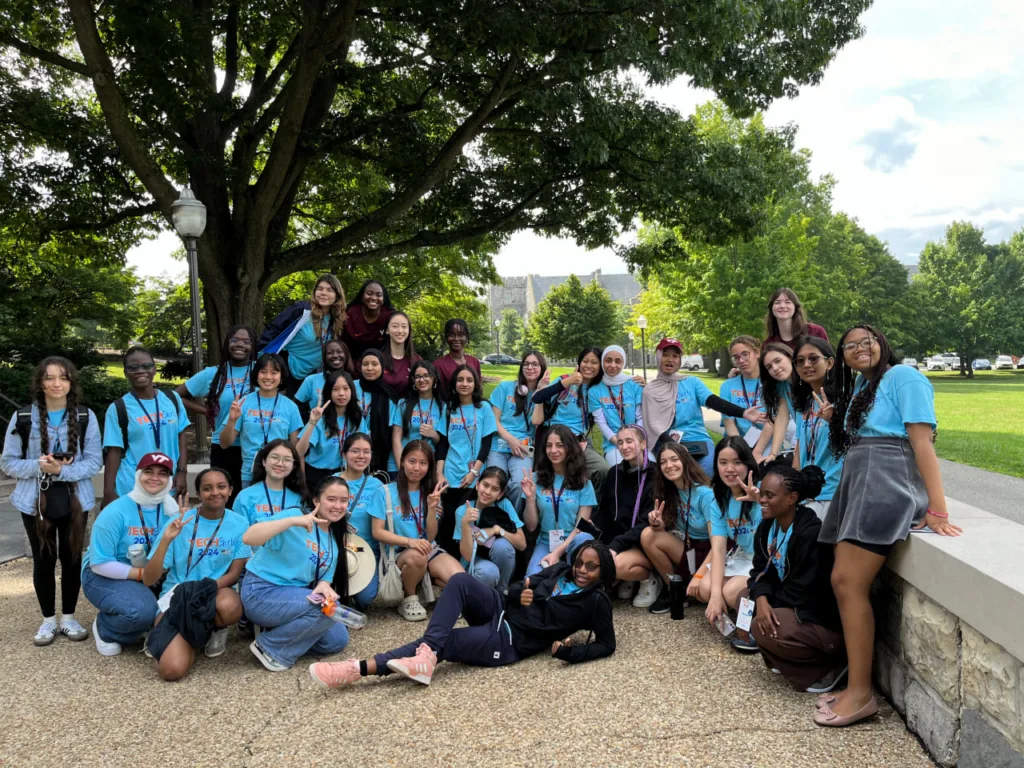
At that time, I realized that all the previous projects and programs I participated in — TechGirls, Quantum Research, internships, and other initiatives — were not separate achievements, but steps toward a future profession.
For me, it was important to develop as a T-shaped specialist — combining technical knowledge with personal growth. I am convinced that in technology, it is not enough to be strong only in your own field. Equally important are responsibility, the ability to work in a team, effective communication, staying calm in stressful situations, and constant learning. A true professional is not only a strong specialist but also a mature, reliable person.
I tried myself in different fields and even considered a career in medicine, politics, and management. But in the end, I realized that technology is my field. I am inspired by the opportunity to create products that people use and to see that my work brings real value.

About stereotypes
My interest in technology appeared thanks to my father. He did not convince me that IT was promising, but simply showed how technology helps solve everyday tasks. New devices constantly appeared at home, and I was interested in figuring out how they worked. Thanks to this, I confidently used computers and basic programs in school, and computer science classes seemed too simple. A real interest in technology was developed during my studies at the Presidential School and the A-Levels program.
At the same time, the strongest stereotypes were not from others, but from myself. For a long time, I believed that mathematics, programming, and engineering were more male professions, and girls were better suited for other fields. Everything changed after I entered the Presidential School, where teachers and classmates helped me look at these beliefs differently. One question stood out in particular: "Does code work differently if a girl writes it?" It was then that I realized that abilities have nothing to do with gender.
Over time, I stopped focusing on others' expectations and chose computer science, even though I understood that I might be the only girl in the group. By that time, I was already programming and doing web development, so it would have been wrong to give up what I really liked.
Today, I work in the field of cybersecurity and sometimes think about how much my views have changed. Once, I myself considered technology a "non-female" field, but now I am building a career in this industry and understand that abilities do not depend on gender.
I know that many girls still have to face prejudices. But I am convinced that the best way to overcome them is to constantly develop, strengthen professional skills, and let your results speak louder than any stereotypes.
Barriers for women in IT
One of the main difficulties is constant judgment from others. People often evaluate not only professional qualities but also things that have nothing to do with work: age, voice, appearance, marital status, or education.
You cannot always change someone else's opinion immediately, so it is better to talk about yourself through actions. Professionalism, a willingness to help others, and real results eventually turn out to be stronger than any stereotypes.
Another important piece of advice is to learn to value your time. Almost any skill can be developed if you regularly pay attention to it and work on yourself. Consistency and discipline help overcome many limitations and become the foundation for professional growth.
Recommendations for those just starting their path
Try to see not only the details but also the big picture in your professional field. Do not rush to talk about your first steps — first, gain experience. Make useful connections and develop your professional network. Learn to manage your time effectively, maintain professionalism, and constantly work on qualities that may hinder your development as a specialist. And, of course, stick to your own principles: do not take credit for others' achievements, respect others, and treat mistakes as a natural part of the learning process.
To those who are just about to start their path in IT, I advise not to be afraid and just start. Study different areas within your chosen field, do not limit yourself to blindly copying others' solutions. Ask questions, strive to understand why each line of code or each action is performed exactly that way.
Good luck, and remember: difficulties exist in any profession, but today technology is a field where your knowledge and skills are truly in demand.
The Tech on Telegram Follow The Tech on Telegram
Keep up with the latest technology and startup news.
Related reading



More from this author

Article Useful
How to protect your accounts from hacking: 8 settings you should check today
The Tech

Article Useful
500 Global: How the Accelerator Works and Who Can Receive Investments
The Tech

Article Interviews
Game Development in Central Asia: Arkady Moldavski on Developing Reverb and the Growth of the Industry
The Tech

Article Useful
Google, Tesla, BlackRock, and the IMF: Where to Apply for an Internship in Fall 2026
The Tech

News IT
Tesla unveiled the flying electric car Roadster
The Tech

News IT
Intero Biosystems startup won the Startup Battlefield at TechCrunch Disrupt 2026
The Tech