WomenInTech. Stories of women from Central Asia who are building careers in technology and breaking stereotypes
Girls from Central Asia are increasingly building careers in technology, launching projects, and advancing within international companies. In this article, the heroines share their journeys in IT, the stereotypes they had to face, and offer advice for those just starting their careers. Read their stories and recommendations in more detail below.

Habiba Aslonova, city — Tashkent, IT Recruiter at Ayan Capital, LinkedIn
About Me
I work at Ayan Capital, a company that finances car purchases according to Sharia principles. My main task is to hire employees, primarily IT specialists.
My journey in IT began at Alif Academy in Dushanbe. In 2020, I joined as a course curator. I mainly worked with students and instructors, monitored their activity, and assisted with employment after course completion. It was from this moment that I started my career in IT.
How I entered the IT profession
I studied at Moscow State University (MSU) in the Faculty of State and Municipal Administration. In my fourth year, I became interested in working and joined a call center at "Alif" as an operator. At that time, it was "Alif Sarmona," now known as "Alif Bank" in Dushanbe.
After working there for about a year and a half, I began looking for new opportunities. "Alif" actively supports employee development and provides rotation opportunities between teams. Thus, I ended up at Alif Academy, a programming school in Dushanbe, one of the leading ones in Tajikistan, and started working as a course curator.
Then I moved to a project manager position. As a curator, I mainly worked with students: communicated with them, selected students, graduated them, prepared recommendation letters, and helped with employment by contacting companies. In the managerial role, I took on new tasks: studying the IT market as a whole, writing project proposals, and participating in obtaining grants to conduct courses.
After some time, I was offered the position of Director of Alif Academy, which I held for three and a half years. My career change was not planned: I got married and moved to Tashkent. I loved my job and still keep in touch with my colleagues.
Our team consisted of only six people, five of whom were women. We implemented interesting large-scale projects and collaborated with universities. However, working remotely turned out to be more difficult than being on-site.
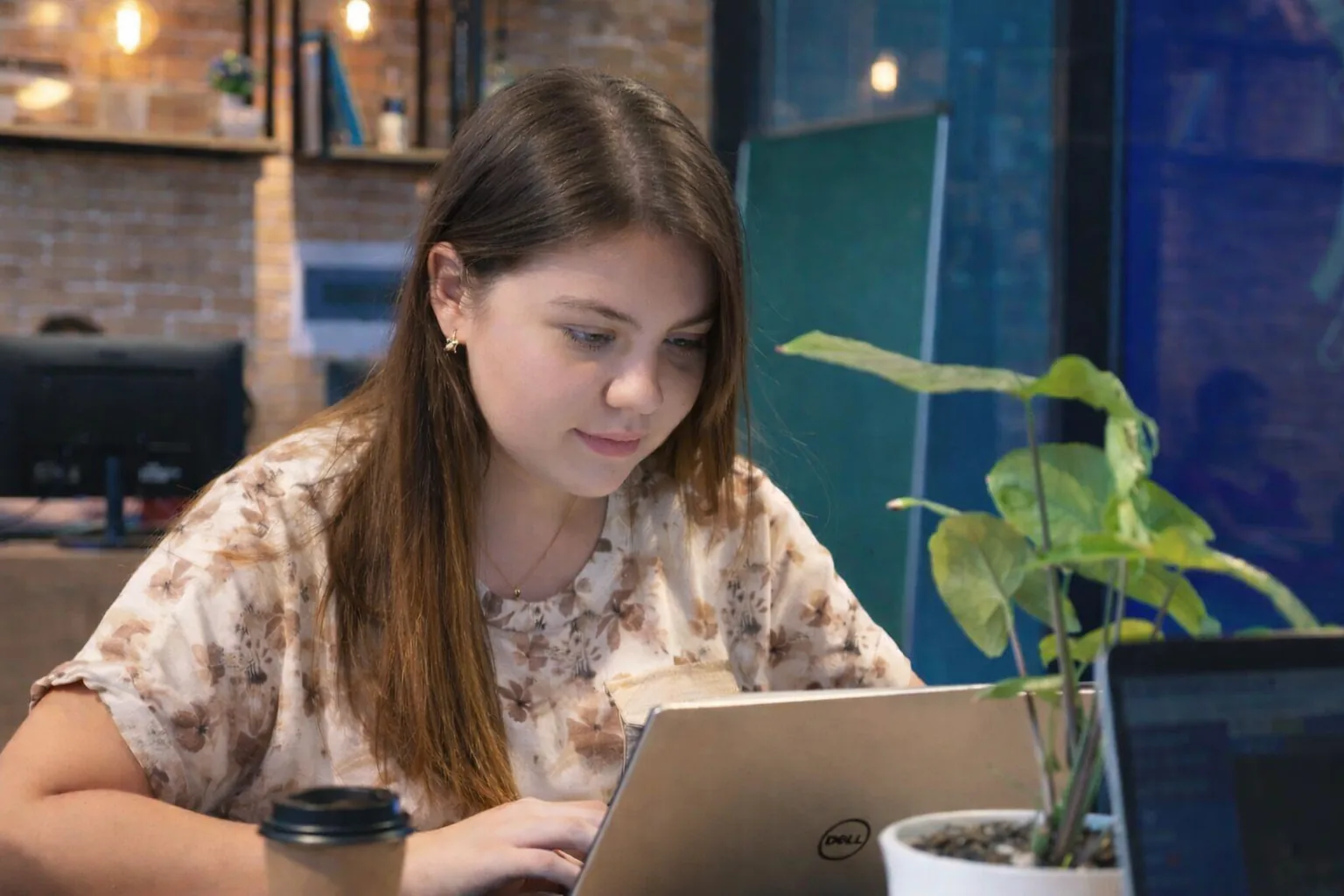
About Stereotypes
Unfortunately, the first stereotype I encountered was age. I was offered the director position exactly on my birthday, at the transition from 23 to 24 years old. At that time, many thought: "What can this young person offer us? What experience does she have at such a tender age?"
The second stereotype is related to the fact that I am a woman. There is a belief that IT is a male-dominated field. I myself noticed that there are more men here, and I had to fight harder to assert my right to be in this area, especially in a leadership position.
Obstacles for Women in IT
Probably the most common stereotypes that girls face in IT are related to their underrepresentation in this field and age. I have a story about one of our graduates. When she came to visit us, I asked how work was going. She told me that she works in a male-dominated team, and if she doesn't understand something, colleagues say: "I'll do it better myself, it takes too long to explain to you." These two stereotypes—gender and age—are still noticeable.
Fighting this is difficult; it is not easy not to notice or feel it personally. But it is important to find the strength to respond when told: "I'll do it myself," you should say: "No, show me, and I will do it myself."
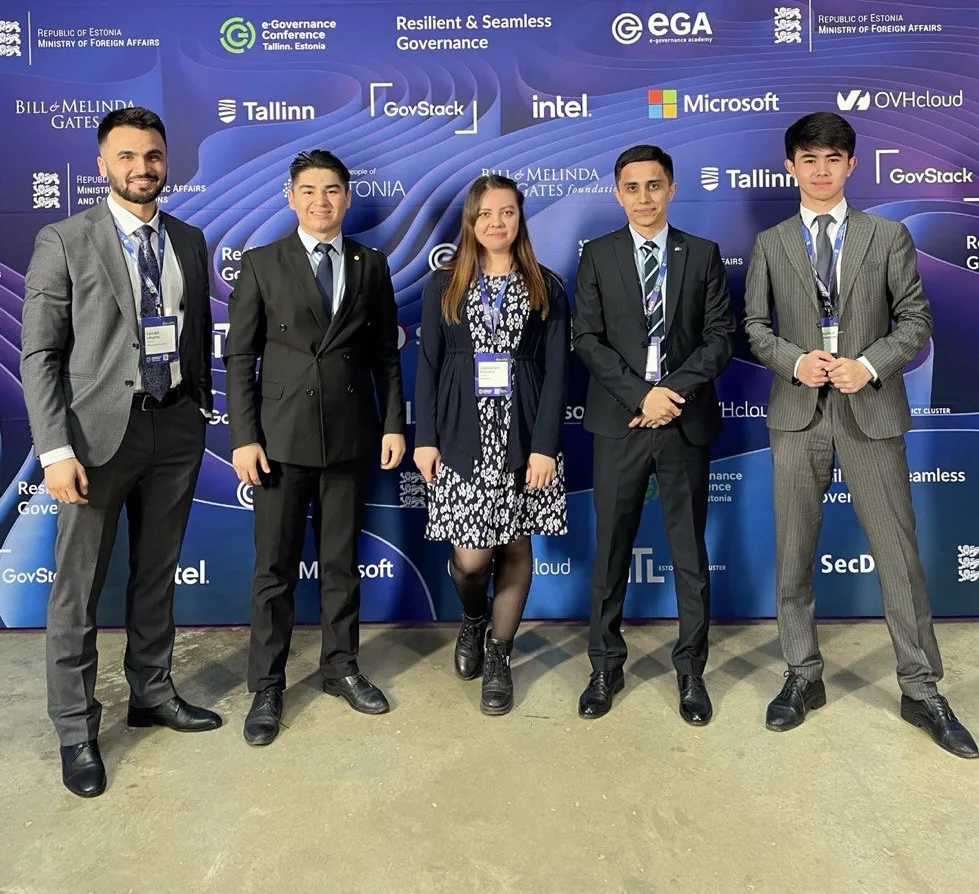
Recommendations for Those Just Starting Their Path
Start your career path and never stop learning, because the market is large, competition is high, and the main advantage is knowledge. Learning has always been and will remain a privilege, so it is important to learn new things. Many technologies have appeared that make work easier, but you need to get familiar with them by studying them. The first and most important thing is to study diligently.
If you are a girl, do not listen to those who say you won't succeed. Listen to yourself and move forward. Even if you start with a small project, experience is never superfluous.
As for salaries, many think they will be small. Of course, at the beginning, they may be modest, but with experience comes skills that make you more valuable. It is not scary for a junior specialist to start with a small salary, because everything will come with time.
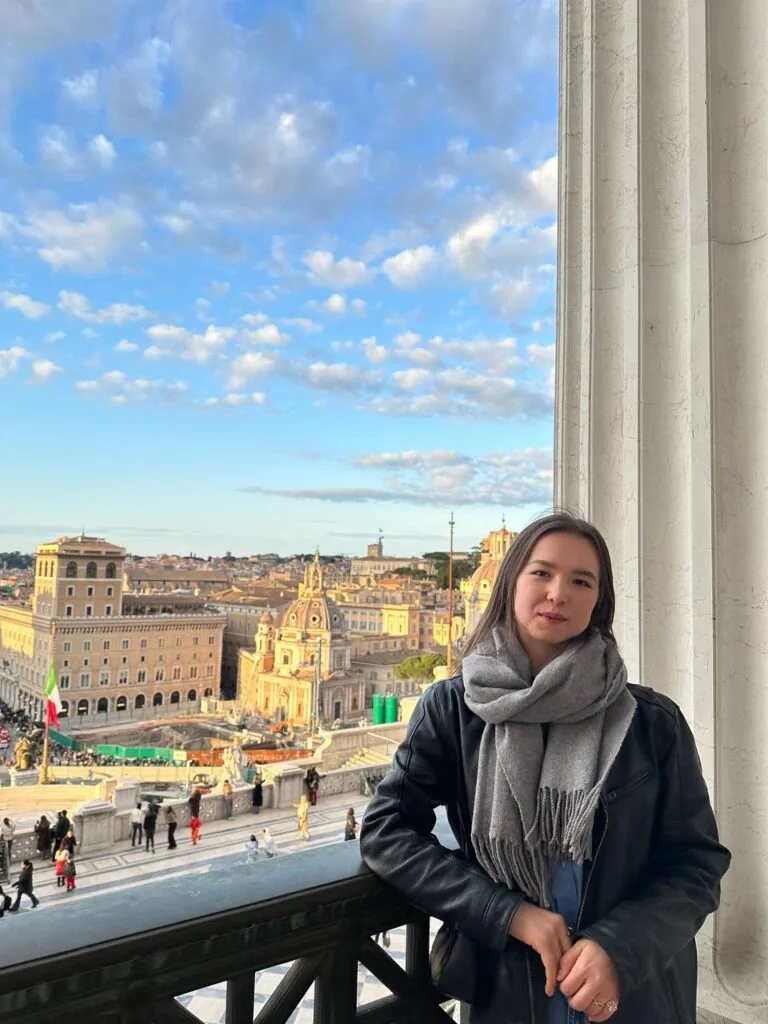
Mira Budenova, city — Astana, Data Scientist & Machine Learning Engineer at Helvar, Instagram, LinkedIn
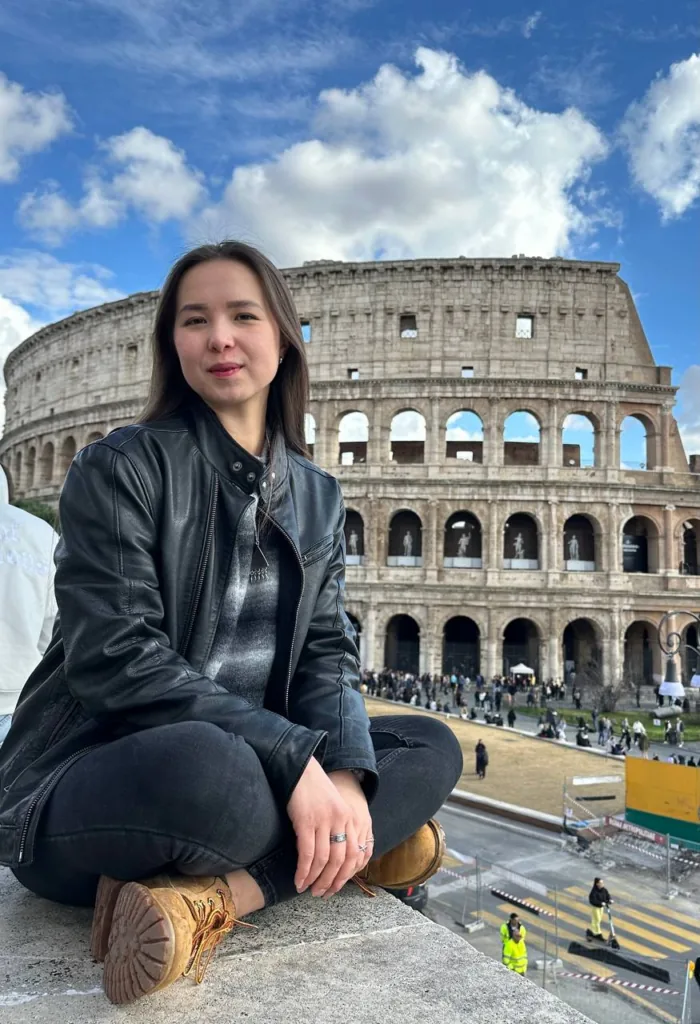
About Me
Currently, I work as a Data Scientist and Machine Learning Engineer at Helvar, a company specializing in smart lighting. I live in Finland: I work in Espoo and live in Helsinki.
My main goal, both professionally and academically, has always been to study abroad and gain international experience. Since high school, I have been preparing for this, but I was unable to go for my bachelor's degree. Therefore, I stayed in Astana and enrolled in L.N. Gumilyov Eurasian National University (ENU), continuing to look for opportunities to study abroad, especially during the pandemic. Studying in Europe is very different from studying at Kazakh state universities, and this helped me better understand my goals and prepare for international programs.
Erasmus Mundus is one of the most prestigious programs in the world, and initially, I didn't even dream of getting admitted there and receiving a full scholarship. When the admission letter arrived, I was shocked and accepted the offer literally the next day. My master's journey was long: after my bachelor's, I couldn't get a grant immediately, so I studied for a year at Nazarbayev University, and then received an offer and moved to Finland.
How I entered the IT profession
I started thinking about IT late, as I initially considered myself a humanities student. At first, I wanted to study medicine because I loved helping people. Then I realized I wanted to study languages. In the 10th grade, I accidentally fell in love with mathematics, and this prompted me to think about my future. My tutor helped me decide. Initially, I planned to study mathematics at university, but my parents believed that after that, one could only work as a teacher, and they didn't want that for me. Therefore, my dad pushed me to apply for Computer Science.
Honestly, I didn't fall in love with this field immediately, but I liked that programming is built on mathematics and logic. It is also like a new language. Thus, I combined my love for mathematics and languages and began to enjoy what I was doing. Although during my bachelor's, I wavered, sometimes hated programming, and thought I wouldn't work in the field. Later, I realized that it was interesting and important to use the knowledge I had acquired. Moreover, I was strongly influenced by the situation of women in computer science. In our group, there were 4 girls and 18 guys, and by the end of my studies, only two remained. Out of 1,200 students in the stream, only 300 were women. I was shocked by the difference and wanted to be an example, to show that one can exist and work successfully in this specialty. One of my qualities is helping people and showing that everything is possible.
My master's degree is also in the IT field. When I applied, I had a huge choice of programs. Erasmus Mundus combines several directions in one program. My program studies standard Computer Science, programming, Software Engineering, as well as Artificial Intelligence, intelligent systems, hardware, microcontrollers, and robotics. Thus, I studied programming, artificial intelligence, and engineering systems.
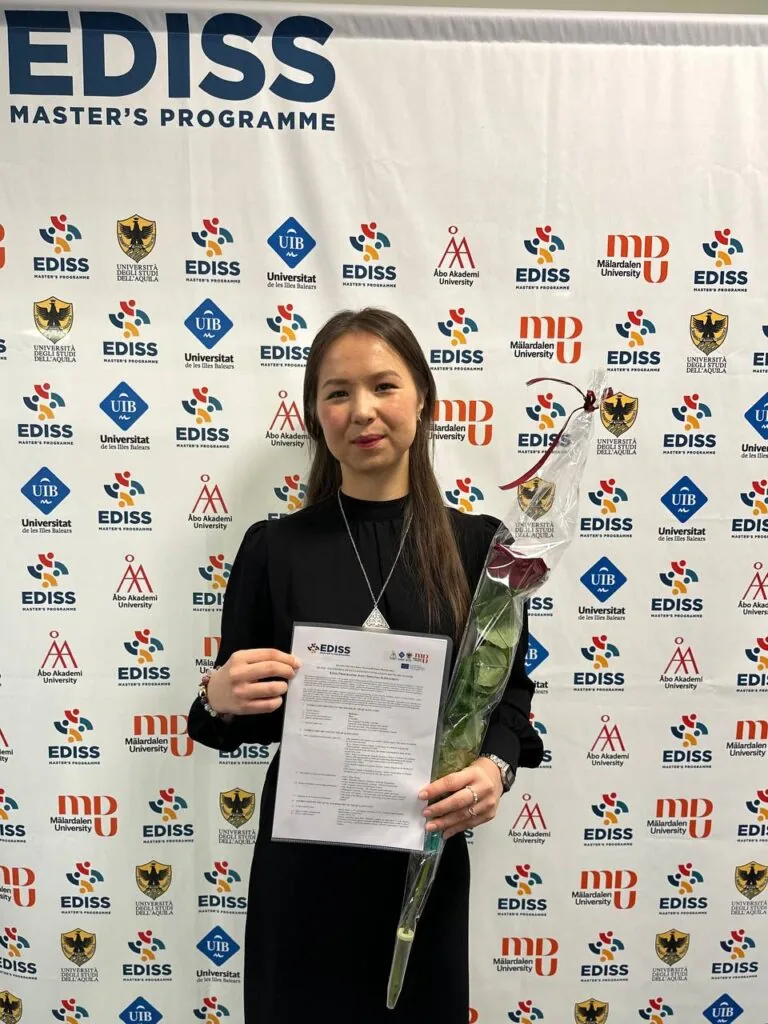
About Stereotypes
I was lucky: on my path, there were no obvious obstacles or bad events, if viewed through the prism of stereotypes about women in IT. I graduated from my bachelor's four years ago, but I still remember one episode from my first year. During an exam, I had to write pseudocode on paper, and I couldn't do it. The teacher said: "Mira, it's not too late yet, you can switch to philology."
Interestingly, later she became one of my favorite teachers. In my fourth year, she continued to say stereotypical things about girls—that one should get married and have children. It sounded strange, but in her field, she was a strong specialist, especially in algorithms and programming. Thanks to her, I mastered the basics of algorithms well. Sometimes her words threw me off balance, but I tried to discuss this and ask questions.
She was already older, and I understood that it was difficult to change her opinion. But overall, at the university, I noticed that girls often study and work harder than guys: they become class representatives and show better results. In the technical sphere, it feels like you need to try even harder to overcome stereotypes. If a girl doesn't know something or fails an exam, thoughts immediately arise: "You don't need this," "You won't succeed."
At that time, there was a strong feeling of pressure—you had to constantly be at the level of a strong student. Meanwhile, guys could study worse, and this was hardly perceived as a problem. After moving to Europe for my master's and starting work, I almost no longer encounter such attitudes: in Europe and America, diversity and inclusivity in education and work are actively supported.
We see that companies are starting to hire more women, but Kazakhstani women are still underrepresented, especially among those who studied abroad. Sometimes there is an opinion that women are hired for the sake of diversity. Perhaps such cases exist, but this can devalue real achievements. This is a complex topic: many companies try to implement diversity principles, but there are no unified standards, and decisions often remain subjective.
Now, a new wave of the Z-generation is arriving; young people are just starting to build their careers. Here, ageism is also present: experienced women are sometimes belittled by men who consider themselves superior, even if they work less or the same amount. Therefore, we need to try harder, prove that we can too, so that we are not perceived as weak.
Obstacles for Women in IT
Girls often feel pressure—they need to prove their value and right to hold a professional position. This is especially noticeable in Kazakhstan and our culture. I speak from personal experience. At the beginning of my career, I thought a lot about what role I wanted to play. Now I work with data, statistics, machine learning, and data science—I really find it interesting.
Since my bachelor's, I have also thought about communications and management. In the future, I want to try myself in product management, perhaps become a product owner—combining technical expertise and management.
But there are few women in the technical environment. In my bachelor's, there were only two of us. In my company, out of 200 employees, only about 18% are women. In the fields of systems, microcontrollers, and chips, there are no women at all—only men work there. Women more often hold positions in HR, sales, or accounting. Among data engineers, besides me, I know only one other woman.
This surprises me, especially considering Finland—a country with a higher level of gender equality than Kazakhstan. I want to continue working in the technical field and show that women are capable of holding such roles. At the same time, the desire to try myself in management sometimes causes fear—as if I might destroy what I have already built.
In conversations about equality, some men say that feminism is not needed because women already have equal rights. But in practice, supporting women in IT is still important.
I am convinced that many women want to switch from management to programming but do not understand how to do it. I help students apply abroad, and women aged 30-35 often contact me, thinking that it is too late for them to change professions or receive scholarships. Therefore, it is important to show that it is never too late to start.
In Kazakhstan, the problem of ageism is still strong: it is believed that by 30-35 years old, one should have a stable job, and after 35, one should stay at the same level and focus more on family. In Finland, I see a different approach: I am 24 years old, soon 25, and here this is perceived as the beginning of a path. Many girls my age are not in a hurry to get married and calmly build their careers.
Recommendations for Those Just Starting Their Path
I would advise believing in yourself first. It sounds like a cliché, but confidence in my goals has been my main shield. It has always helped me remember what I want to achieve and try, even when something didn't work out—whether at work or in my master's. Mistakes and failures became lessons and motivation to move forward.
If negative comments are encountered on the way, especially in an academic environment, it is important not to let them affect you. If you have a goal, you must strive for it—regardless of how big it is. It is important to at least try.
After my bachelor's, I had a year break, and I also wondered if it was too late to change something. But the main thing is to keep trying and not pay attention to what we cannot control. Support from friends and family helps with this.
My experience has shown: belief in oneself and one's aspirations is especially important in the technical field and in the cultural context of Kazakhstan. Even small steps and attempts are already movement forward. I hope that my story can support at least one person.
The Tech on Telegram Follow The Tech on Telegram
Keep up with the latest technology and startup news.
Related reading






More from this author

Article Useful
How to protect your accounts from hacking: 8 settings you should check today
The Tech

Article Useful
500 Global: How the Accelerator Works and Who Can Receive Investments
The Tech

Article Interviews
Game Development in Central Asia: Arkady Moldavski on Developing Reverb and the Growth of the Industry
The Tech

Article Useful
Google, Tesla, BlackRock, and the IMF: Where to Apply for an Internship in Fall 2026
The Tech

News IT
Tesla unveiled the flying electric car Roadster
The Tech

News IT
Intero Biosystems startup won the Startup Battlefield at TechCrunch Disrupt 2026
The Tech