Women Building Capital Bridges. How Sohiba Mukhitdinova builds her career in VC and what you need to know to enter the industry
The project is dedicated to those who connect the region with global venture capital and create access to knowledge, deals, and investment practices that remain largely inaccessible to the Russian-speaking audience today.
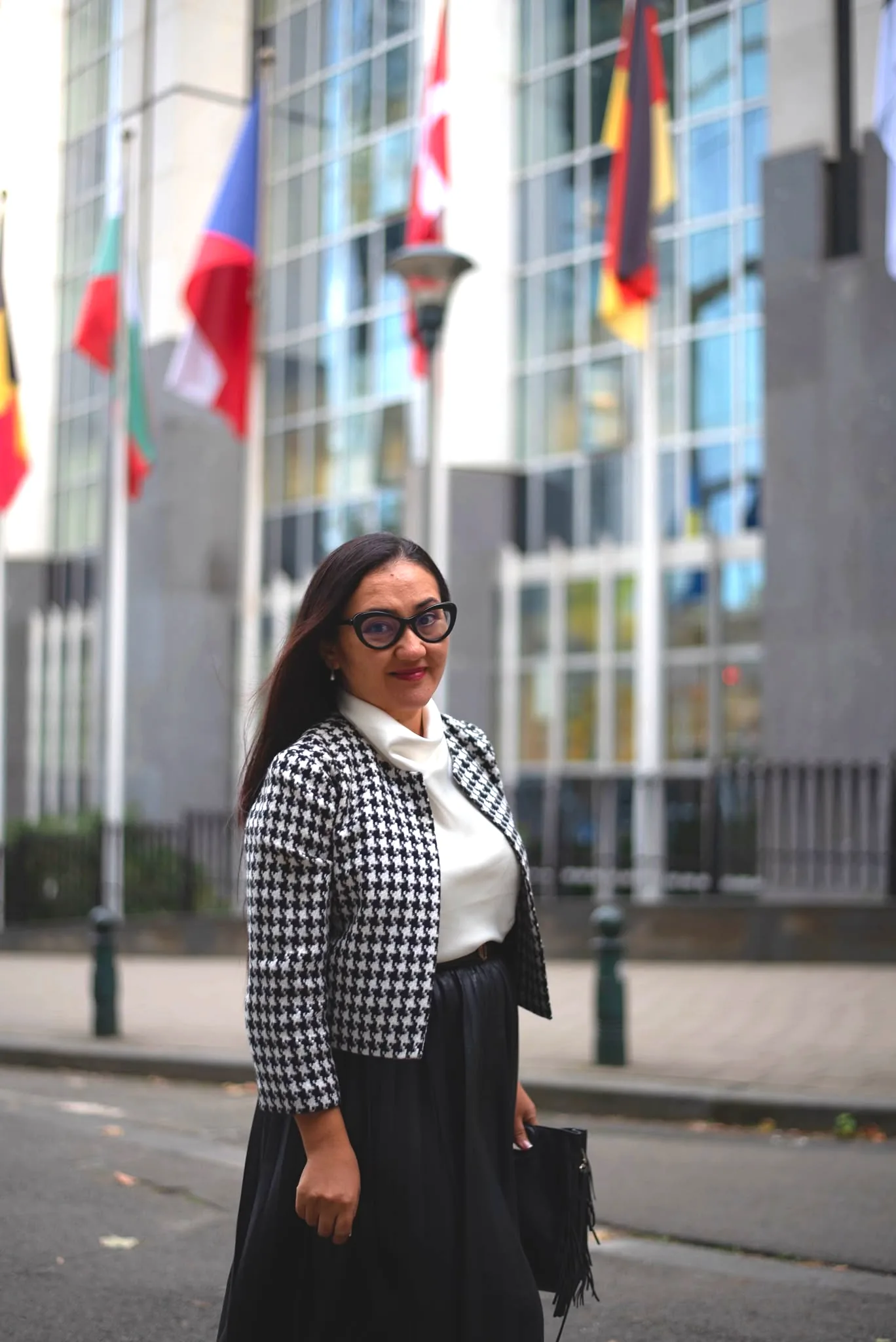
The Tech launches a new weekly column, Women Building Capital Bridges— a series of interviews with women from Central Asia who have experience in angel investing, work in venture capital funds, and serve as community builders in the global VC ecosystem.
In the first episode, we interview VC Principal from London Sokhiba Mukhitdinova, who shared her journey into venture capital and discussed how women can enter this field, what barriers exist, and what helps overcome them.
Sokhiba Mukhitdinova, City – London, Investment Director / VC Principal, LinkedIn
How It All Started
I come from a simple family and still lead a simple lifestyle—I don’t live like a typical investor or display it externally because I invest my own funds. I consciously direct money into investments rather than personal consumption, and I am comfortable with that. Therefore, I do not want to create the impression that investing is about external status or wealth.
In general, angel investing is one of the pathways into VC, and far from the most traditional one. There are several trajectories, and I followed one of the most atypical paths. Currently, I have around 30+ startups, approximately 31–32 investments, depending on how you count, as some positions have changed status.
People often approach me for career mentoring. For example, one woman worked with me for almost a year to change professions. She managed to reach an intermediate level, but she couldn’t fully transition into the new field—the gap was too large. And that’s okay: my own path also consisted of many gradual steps and was not linear.
I started my career in Kazakhstan in corporate lending: I worked at banks, including Kazkommertsbank and Sberbank, and then obtained a Master’s degree in MBA in the UK specializing in M&A. I spent about 15 years in the financial sector. After getting acquainted with the venture industry, I began attending pitch events and mentoring startups, helping with presentations, financial models, and preparation for pitches. About 200 startups have passed through my mentorship, and over time, I became increasingly immersed in the ecosystem.
The turning point was meeting a female business angel from the UK, who convinced me that not only very wealthy people can invest, and that the main thing is understanding the market, risks, and deal structures. After that, I started learning, participating in specialized programs, forums, and investment clubs. I was invited to business clubs where startups are invested in. I joined a community of experienced business angels who invest in women founders—one of the first such clubs.
Three things played a key role in my journey: education, mentors, and investment communities. Alongside my work at the bank, I began investing alongside more experienced angels and gradually built my own strategy. Eventually, I settled on a combination of FinTech and impact projects, realizing that without a clear strategy, investments turn into risky bets.
The transition into venture capital took more than a year. Due to my 15-year experience in the banking sector, my profile was too strong for entry-level positions and not specialized enough for senior roles in VC. Therefore, I had to undergo additional specialized training and gain practical experience.
People enter venture capital through various paths: through investment banking and MBA, working in startups, a scientific career, or their own startup. My path went through angel investing—one of the longest, but it gave me a deep understanding of the market and processes.
About Investments
I started my investment journey through business angel clubs and crowdfunding platforms. I particularly liked the latter as a learning tool: they allow analyzing deals and investing with small checks, which lowers the entry barrier for beginner investors. Initially, I combined both formats, but today I invest exclusively through British business angel clubs.
Our club usually invests in startups that already have initial sales or revenue. We typically do not consider very early-stage projects.
Usually, the funding path begins with bootstrapping—when the founder develops the project using their own funds and brings it to an MVP. The next stage is FFF (Friends, Family, and Fools), where money from friends, relatives, acquaintances, or initial business angels is attracted for further development. Typically, this involves amounts around $50,000–$100,000, which help refine the product and prepare it for the next round of investment.
After the appearance of initial customers and revenue, business angel clubs usually begin to invest in startups. At later stages, venture capital funds and subsequent funding rounds—Pre-Seed, Seed, and beyond—come into play. However, individual business angels can invest much earlier—sometimes even at the idea or presentation stage.
Today, I invest in the UK and Europe through business angel clubs and consider this format the most effective. One of the reasons we are developing a community of women business angels in Central Asia is the ability to pool capital and reduce risks.
If you invest independently, you might put a large sum into one startup and become heavily dependent on the outcome of a single deal. For example, it often happens that a person invests $25,000 in one startup, whereas this money could have been distributed among several projects. At the same time, a check of $5,000 on its own might be too small for a startup if the investor comes in alone.
In the format of a business club, the situation changes: 10 people can pool $5,000 each and form a common round of $50,000. As a result, everyone participates in the deal with a smaller check, but at the same time, diversifies risks.
Therefore, instead of making one investment in one project, it is more logical to participate in several deals together with the club—angel investing works most effectively in the format of a community.

A Woman in the World of VC
We need to dispel the first stereotype: that you must be rich to invest. In reality, the earlier a person starts understanding investments and trying themselves in this field, the better. But it is important to understand that startups are high-risk deals, where about 90% of projects do not survive.
Therefore, investments in startups fall into the category of high risks. Here, you should only invest the amount that you are not afraid to lose—these should not be your last dollars or your safety cushion, but rather conditionally free funds, such as a vacation budget. As investors say: in startups, you can lose money only once, but in case of success, the return can be x10, x100. Therefore, it is important to manage risk correctly.
The second stereotype is “I will start later.” In fact, you should start as early as possible, even if it is just with a basic understanding of investments: stocks, markets, startups. It is not necessary to enter with money right away, but it is important to start learning and immersing yourself. The key point here is education first, not actions with capital.
The third point is not really a stereotype, but an important problem: only about 2% of women founders receive funding. I believe this can be changed through the development of women’s investing. Women often invest in topics that are closer to them: health, education, children, social projects, climate, impact.
There are also studies showing that women founders use capital more efficiently—they build strong companies with fewer resources. Therefore, if more women invest, this will directly increase funding for women’s startups. And here, a simple understanding is important: instead of impulsive purchases, you can direct money into investments.
The reason there are fewer women investors is largely due to the lack of systematic investment education. At the same time, women manage finances daily in their household—making decisions about budgets, expenses for children and education. Essentially, they already work with money, but rarely transfer this experience into the investment sphere.
Secondly, the environment has a strong influence. If the surrounding culture is one of consumption and status purchases, this is perceived as normal. But when you enter an investment community, your mindset begins to change—you start looking at money and decisions differently.
It is often the environment that becomes the turning point. In my case, if one female angel had not noticed me then and brought me into the community, I would most likely have come to this path much later.
I am convinced that Central Asia has huge potential for women’s entrepreneurship and investing. We have many women with capital and competencies who can direct money into innovations and startups capable of truly changing the market and the economy.

How to Start the Path in Investing
There is a rule given to me by a mentor—the “Chanel Handbag Rule.” The essence is that the investment check should start with small amounts that a person can afford to lose without consequences for their family. Entry into startups should happen only with money that you are not sorry to lose, because these are high-risk investments. At the same time, there must definitely be a financial safety cushion of at least three to six months, preferably 12. Without this, investing is not possible, as startups are illiquid and, if you need to exit, you can only do so at a loss.
First, a safety cushion is formed, then lower-risk instruments are used, and only then—investments in startups. It is important to understand that in 9 out of 10 cases, the money is not returned.
You should only invest in sectors where you have understanding and expertise. Next, the team is evaluated: is there a technical founder who knows how to build the product, is there a person responsible for sales, and is there operational management.
It is also important how long the founders have been working together, as conflicts within the team are one of the frequent causes of failure. The market is evaluated separately—its size and growth potential, as well as the possible exit and potential buyer of the business.
Entering VC is difficult because it is a small market with high competition, but it is possible with the right background. The key roles are played by community and access to deals, as well as experience working with startups, own entrepreneurial experience, or technical expertise, including a scientific background or PhD.
One of the paths is to come with an investment portfolio already, as was the case with me, but this is the most difficult and costly option. There are also educational programs and VC fellowships that help structure knowledge and often become an entry point into the industry.
There is no universal path; each path is individual. It is important to constantly move toward the industry and find the right environment, because many opportunities arise precisely through it, to constantly learn, and to have mentors with experience in VC and angel investing.
The Tech on Telegram Follow The Tech on Telegram
Keep up with the latest technology and startup news.
Related reading



More from this author

Article Useful
How to protect your accounts from hacking: 8 settings you should check today
The Tech

Article Useful
500 Global: How the Accelerator Works and Who Can Receive Investments
The Tech

Article Interviews
Game Development in Central Asia: Arkady Moldavski on Developing Reverb and the Growth of the Industry
The Tech

Article Useful
Google, Tesla, BlackRock, and the IMF: Where to Apply for an Internship in Fall 2026
The Tech

News IT
Tesla unveiled the flying electric car Roadster
The Tech

News IT
Intero Biosystems startup won the Startup Battlefield at TechCrunch Disrupt 2026
The Tech