Windows of the future: how Microsoft is changing work and security
Author - Mansur Ismagulov
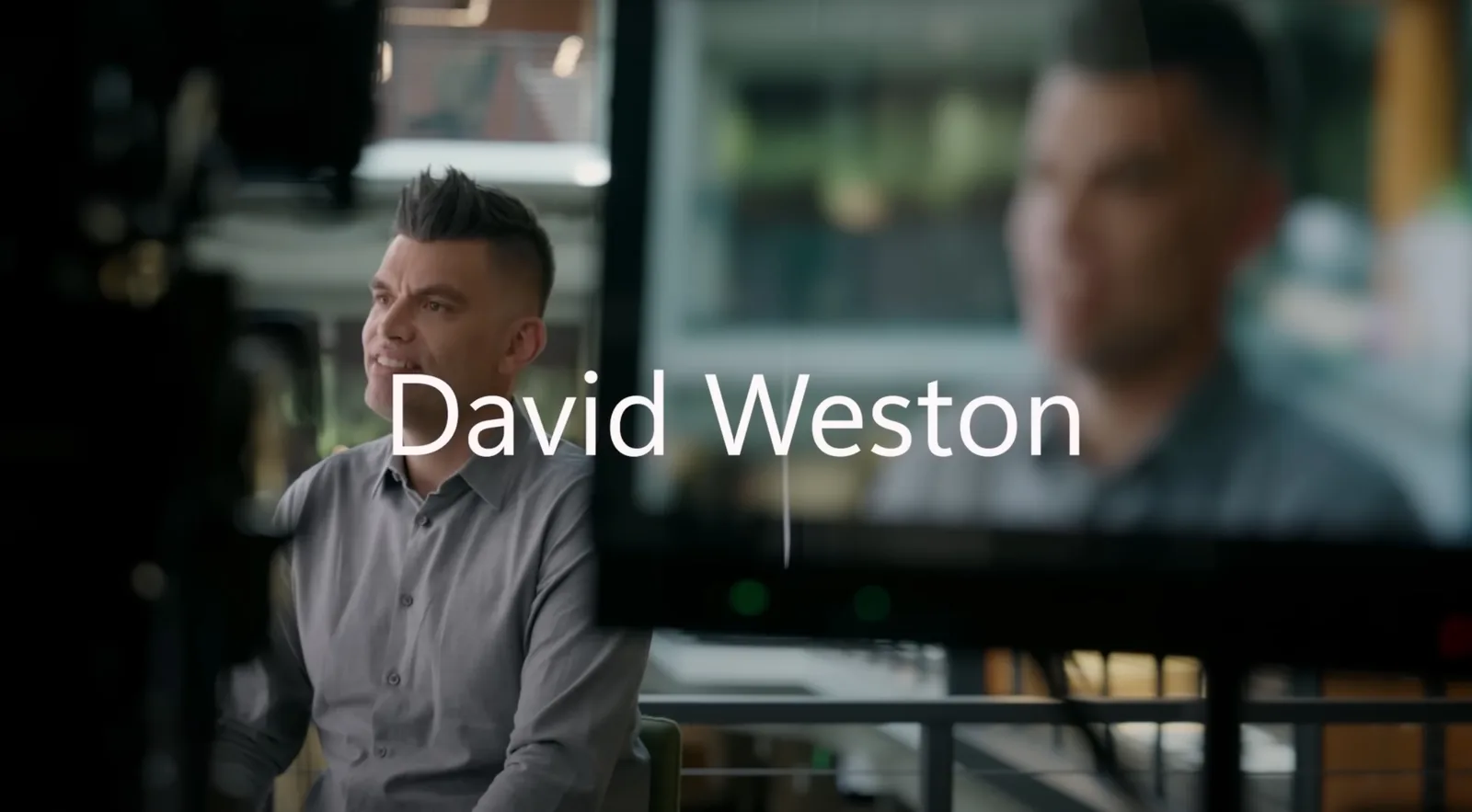
David Weston, Vice President at Microsoft, predicts that in five years, AI agents will help employees perform routine tasks, freeing up time for creative work, while operating systems will be controlled by voice and gestures.
The world in which people "click with a mouse" and "type on a keyboard" will seem as alien in the future as working in a DOS operating system looks to Generation Z today. David Weston, Corporate Vice President at Microsoft, leads the operating system security group. His team develops security technologies for Windows, Server, Azure, and Xbox, and conducts penetration testing to identify vulnerabilities.
In just five years, it will be possible to "hire" a security expert who will actually be an AI agent. Interacting with it will be similar to communicating with a human: it will be able to participate in Teams meetings, receive emails, and handle tasks. This will allow employees to spend less time on routine work and more time on idea generation, creativity, vision building, and interacting with other people. Such agents will become "amplifiers" of human capabilities and enable the execution of tasks that previously seemed unattainable.
Users will rely less on their eyes and more on their voice, and Windows and other Microsoft operating systems will transition to multimodal interaction: they will be able to see and hear what the user sees and hears, and execute more complex commands.
Three key changes will occur in the field of security:
1. Transition to an "appliance-level security" standard, where the system simply performs its function without requiring additional configuration, much like a dishwasher.
2. Change in the format of cybersecurity commands: even small companies will be able to use entire virtual departments of AI agents.
3. The emergence of unlimited computing power through quantum technologies, which will radically change the security landscape. To avoid a "defense collapse," Microsoft is already implementing post-quantum cryptography in Windows and recommends activating these features.
As part of the Windows Resiliency initiative, the company is making operating systems more resilient to failures: it is implementing remote device recovery without the need for on-site specialists, and sharing technologies and tools with partners to improve the reliability of all software.
State-sponsored hackers are already using deepfakes to apply for jobs at US financial companies with the aim of stealing money or intellectual property. Microsoft is implementing standards for media file source verification so that, for example, during elections, the authenticity of images can be proven.
Another important topic is "memory security": 70-75% of vulnerabilities are related to buffer overflows and memory corruption. Eliminating these issues will allow for the elimination of most attacks and reduce the time spent on applying patches.
Companies should address current risks, eliminate passwords, transition to new operating systems, and accelerate the update cycle. Basic cybersecurity measures — applying patches, practicing "cyber-hygiene," rotating passwords, or switching to biometrics — prevent up to 98% of attacks and remain relevant for decades.
The key to a happier user experience is eliminating routine tasks such as generating reports, scheduling meetings, and filling out documents. Automating these processes returns employees 30-40% of their working time per year, which can be directed toward more valuable and creative tasks.
Source: Windows
The Tech on Telegram Follow The Tech on Telegram
Keep up with the latest technology and startup news.
Related reading







More from this author

News
zypl.ai begins operations in Japan and focuses on next-generation risk models
Mansur Ismagulov

News
Elon Musk's net worth has exceeded $700 billion for the first time
Mansur Ismagulov

Article Interviews
"Central Asian countries should build a joint ecosystem," — Bekhzod Ismoilov on the development of AI in the region
Mansur Ismagulov

Article Interviews
Bloom's Taxonomy and Engineering Levels: A Practical Growth Model
Mansur Ismagulov

Article Useful
How the IT industry in Azerbaijan developed in 2025: key events
Mansur Ismagulov

News
Tajikistan has become a new member of the regional innovation alliance Central Asian Innovation Hubs.
Mansur Ismagulov