Vibe coding, AI agents, and "automated chaos": what was discussed at AI CRM CONF 2026
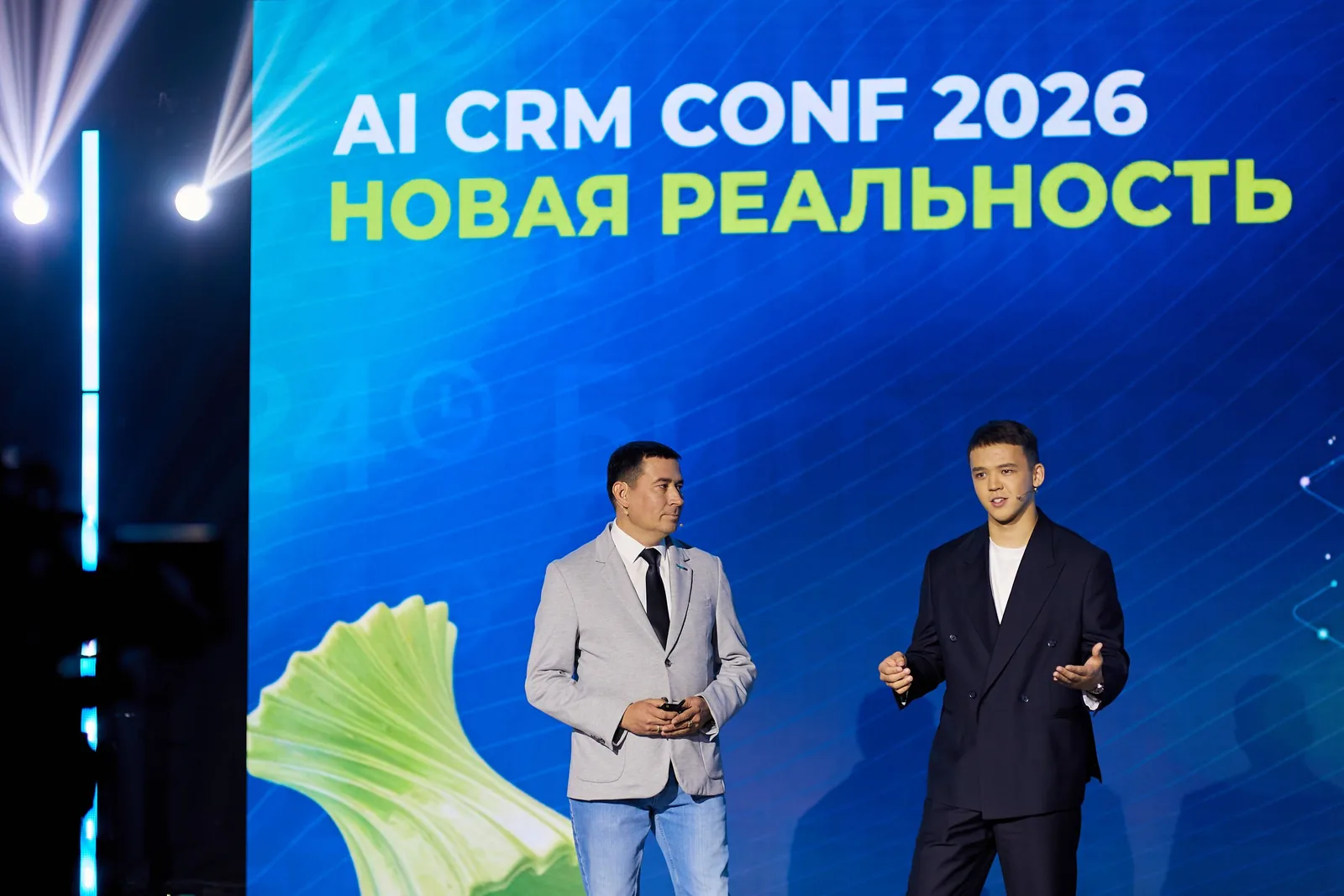
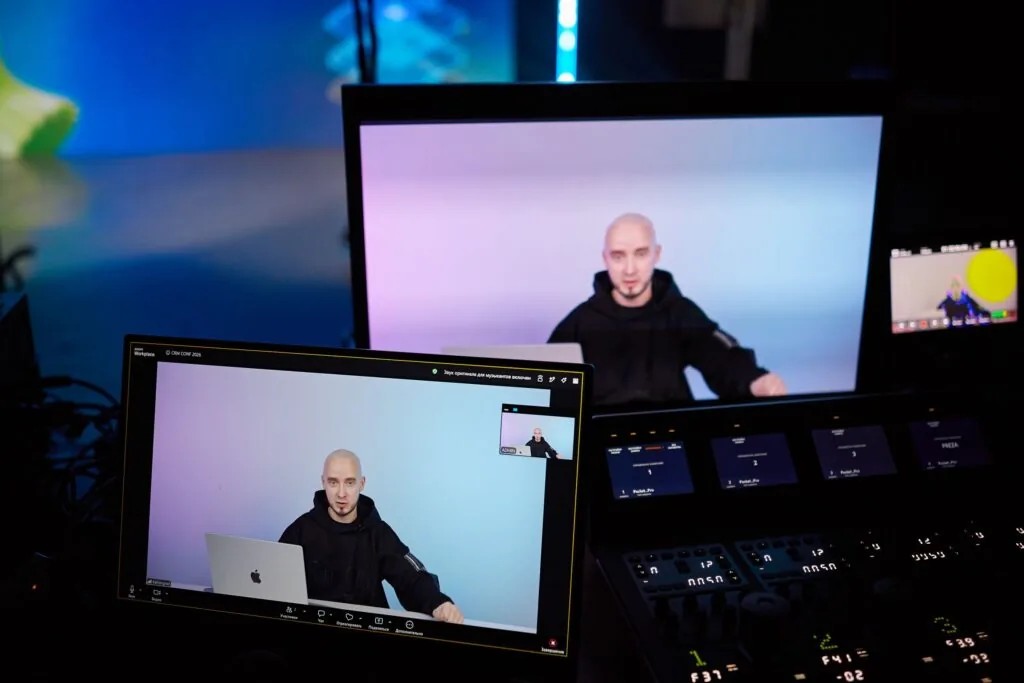
On October 15, Bitrix24 Kazakhstan held the online conference AI CRM CONF 2026: A New Reality. 14 speakers discussed how companies are transitioning from experiments with neural networks to tools that can be assembled without traditional development, and why this doesn't work without data and well-established processes.
The Tech AI
Get the key points in seconds - a short summary from The Tech AI.
At the AI CRM CONF 2026 conference, vibe coding was discussed: the creation of tools through task descriptions in plain language using AI. Alexander Vartanyan, Marketing Director of Bitrix24, and Ekaterina Shelenkova, Deputy Director, presented the "VibeCode" platform, which allows businesses to independently develop applications without deep technical knowledge. The case study of AUCE University demonstrated how integrating AI into CRM eliminates lost leads and improves the efficiency of the admissions office. Experts emphasized that automating chaos leads to errors, so implementing AI requires pre-optimized business processes.

Vibe coding instead of a technical specification
One of the main topics of the conference was vibe coding — an approach where an employee describes a task in plain language, and AI builds a working tool for it. Alexander Vartanyan, Director of Marketing and AI/Martech at Bitrix24, explained how this changes the role of IT in a company and who can now create digital tools. According to Vartanyan, every company has a “graveyard of useful ideas” — automations that were never implemented because they were too small for developers and too complex for employees. Vibe coding removes this barrier: AI writes the code, tests it, and checks it for security.
Alexander Vartanyan, Director of Marketing and AI/Martech at Bitrix24
Currently, the advantage lies with managers and business owners: we know business processes in every detail, know how to set tasks, and are accustomed to managing people — and this skill scales well to managing AI agents. However, vibe coding won’t turn us into programmers: architecture and engineering remain the responsibility of developers, while we will occupy an intermediate position between business process owners and developers.
Kovork/code and vibe code platform
Ekaterina Shelenkova, Deputy Director of Product at Bitrix24, demonstrated how this approach is implemented in the product: Bitrix24 Kovork/Code and the vibe code platform. Kovork is an AI agent that, without separate integration, sees everything happening in Bitrix24: tasks, CRM, meetings, chats, and now data from 1C. It collects a dashboard of subordinates’ tasks in 36 seconds — doing this manually with Excel exports would take at least an hour. Code goes further: based on a description of a business task, it creates a full-fledged application with its own address, which updates automatically and opens directly in the Bitrix24 messenger. Hosting, AI models, and other technical issues are handled by the vibe code platform — in 2026, Bitrix24 Kazakhstan launched it as the first vibe coding platform on the market.

Ekaterina Shelenkova, Deputy Director of Product at Bitrix24
A person starts working faster not because they started working nights or acquired new skills, but because they delegated part of their routine operations to an AI agent. Only by freeing up time from routine can one truly focus on strategic tasks — this is the new norm of efficiency.
Case study: CRM first, then AI
The practical side was illustrated by a case study from AUES, ENERGO University. Integrator GETMAN.us’s Anton Getman and Bitrix24 administrator at the university, Diddar Omarhan, explained how the admissions office moved away from Excel, WhatsApp, and manual control. Previously, applicant inquiries were lost, and advertising could not be linked to admissions.
Now, the entire applicant journey — from advertising and the first inquiry to document submission — goes through Bitrix24: messengers, social networks, calls, and the website are connected to the CRM via API and webhooks. Several educational institutions, including NYFA Kazakhstan, operate on a single Bitrix24 Enterprise account, each with its own processes. According to the speakers, applications are no longer lost, revenue and repeat inquiries have increased, and advertising has become measurable.
AI is already working within this system: it transcribes calls and creates summaries, suggests answers to operators, and during peak seasons, when 300–400 people write daily, it dampens spikes in inquiries and passes only the essence to employees. Anton Getman summarized the main conclusion as follows: artificial intelligence that works together with CRM using established processes is the combination that deserves attention. Without a CRM that collects data in one place, it is impossible even to understand that the same person called and wrote. This echoes the conclusions of an interview on what prevents AI in Central Asia from exiting pilot projects: the success of implementation largely depends on data quality.
Diddar Omarhan, Bitrix24 Administrator, AUES
We two replace very large sales departments. We two are me and artificial intelligence. Not because we started working more, but because the system we built took over the routine around the person, making the work more efficient.
Processes first, then AI
Other speakers developed the same thought: technology does not save the day if processes are poorly structured. Alexey Belimov, General Director of IT Support Group, called such a result “automated chaos”: a company automates chaos and gets the same chaos, only faster. A similar warning was also sounded in The Tech column “Vibe Coding: How Not to Drift to Absurdity on the Wave of Hype”: without mature processes, new tools turn into technical debt.

Alexey Belimov, General Director of IT Support Group
As long as you do everything by hand, you can track every process: if you have ten leads, you will process them yourself. When you implement automation, leads become not ten, but a hundred, and you can no longer process them by hand. This automated chaos looks very bad.
Sarmantai Kasenov, Director of the “1C-Bitrix” office in Kazakhstan and Central Asia
AI is not a magic button. The most important step a company can take tomorrow is not to “implement a neural network,” but to bring order to processes: understand what routine can be handed over to a machine, where the client is lost, and where the team wastes time.
Representatives of Heartland, JARVIS CRM, Kettik.kg, Person Hunters, BestComKZ, the Lanzhou restaurant chain, as well as HR expert Saule Moldazhanova, also spoke at the conference. Their reports focused on shadow AI, the transition from Excel to managed sales, team work in the AI era, and the application of AI in small business. For example, AI CRM CONF 2026 speaker and HR expert Saule Moldazhanova cited a McKinsey case: development teams of 8–10 people became hybrid teams of 4–6 people with AI agents. “Agents take over searching, drafting, and tracking statuses, while people handle decisions, judgment, and responsibility for the result,” she explained.
Kettik.kg and integrator JARVIS reported that they changed three services before finding a working AI bot: the first could not send files and got confused by inquiries in mixed languages, the second consumed too many tokens and required setup from scratch, and only the third, with AI call support, fit. Now the bot works as the first line of support: it answers clients 24/7 and handles multiple inquiries simultaneously. However, the cost of errors remains real. Once, the bot promised a client a spot on a tour that did not exist, and the company had to find a replacement or pay compensation. Therefore, speakers recommend setting aside a separate reserve for AI errors.
The main conclusion of the conference for IT teams is that vibe coding and AI agents are already removing the barrier between an idea and a working tool, but without processes, access rights, and control, they scale not benefits, but errors. See how this balance is built at Bitrix24, at the university, and at the restaurant chain, where one person with AI checks a franchise against a checklist of 295 questions in minutes — watch the recording of AI CRM CONF 2026 on the “Bitrix24 Kazakhstan” YouTube channel.
The Tech on Telegram Follow The Tech on Telegram
Keep up with the latest technology and startup news.
Related reading





More from this author

News
Now in ChatGPT, you can hide conversations with a PIN code or Face ID
The Tech

News
Anthropic has introduced Claude Duet, a personal AI agent for business
The Tech

News
Autonomous taxis from inDrive, Pony.ai, and NVIDIA will appear in Astana
The Tech
Article Useful
How to choose a startup accelerator: what programs offer besides investments
The Tech
News IT
AICONF-2026: NVIDIA, OpenAI, and SpaceXAI will come to Dushanbe
The Tech

Article Startups
How a startup from Baku combined more than 30 AI tools for moms into one app
The Tech