A fully operational underwater data center, costing $226 million and cooled by seawater, has begun operations in China.
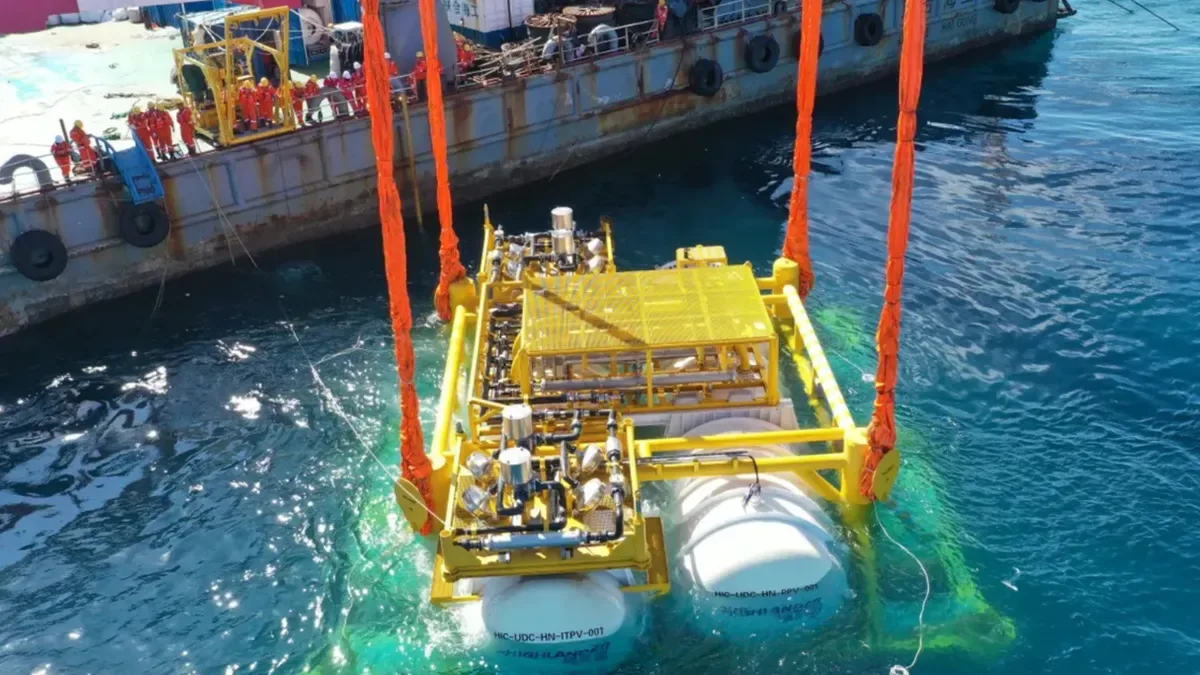
The underwater data center, hailed as the "world's first," began operations in June 2025 and was transitioned to full commercial operation last week following the successful completion of testing. The data center is located at a depth of approximately 35 meters. Construction cost $226 million. The facility, with a power capacity of 24 MW, is designed to house nearly 2,000 servers, which are cooled using ocean water.
The data center is situated off the coast of the Lingang district in Shanghai. The project was implemented jointly by the Chinese government, HiCloud Technology, and Chinese telecommunications companies. The facility is expected to be used for artificial intelligence, big data processing, and 5G infrastructure tasks.
The key difference between the new data center and traditional land-based data centers lies in its cooling system. Typically, such facilities use large-scale air conditioning systems and industrial chillers to dissipate heat. In the Shanghai project, seawater is used for this purpose. The servers are housed in hermetically sealed underwater modules capable of withstanding high pressure. They are installed at a depth of approximately 35 meters, where the water temperature remains stable.
The Power Usage Effectiveness (PUE) of this data center is less than 1.15, making it one of the most energy-efficient large-scale data centers in the world. For comparison, the PUE of most traditional corporate data centers is around 1.5 or higher, as a significant portion of electricity is consumed not for computing but for cooling and infrastructure support.
The new facility also reflects China's efforts to integrate renewable energy sources into digital infrastructure. The data center is connected to nearby offshore wind farms, allowing a significant portion of its required electricity to come from renewable sources.
However, underwater data centers present significant engineering challenges. Key issues include corrosion, high pressure, the reliability of underwater communications, and the complexity of maintenance. Therefore, operators use hermetic modular designs, remote monitoring systems, and redundant infrastructure to minimize the need for physical intervention.
The Shanghai project builds upon earlier experiments, including Microsoft's Natick program, which tested underwater data center capsules off the coasts of Scotland and California. Although Microsoft later discontinued the commercial continuation of the program, the tests demonstrated that placing equipment underwater could reduce hardware failure rates.
Source: tomshardware
The Tech on Telegram Follow The Tech on Telegram
Keep up with the latest technology and startup news.
Related reading




More from this author

Article Useful
How to protect your accounts from hacking: 8 settings you should check today
The Tech

Article Useful
500 Global: How the Accelerator Works and Who Can Receive Investments
The Tech

Article Interviews
Game Development in Central Asia: Arkady Moldavski on Developing Reverb and the Growth of the Industry
The Tech

Article Useful
Google, Tesla, BlackRock, and the IMF: Where to Apply for an Internship in Fall 2026
The Tech

News IT
Tesla unveiled the flying electric car Roadster
The Tech

News IT
Intero Biosystems startup won the Startup Battlefield at TechCrunch Disrupt 2026
The Tech