Tech Heads. CTO of inDrive on how engineering culture is built in a global platform
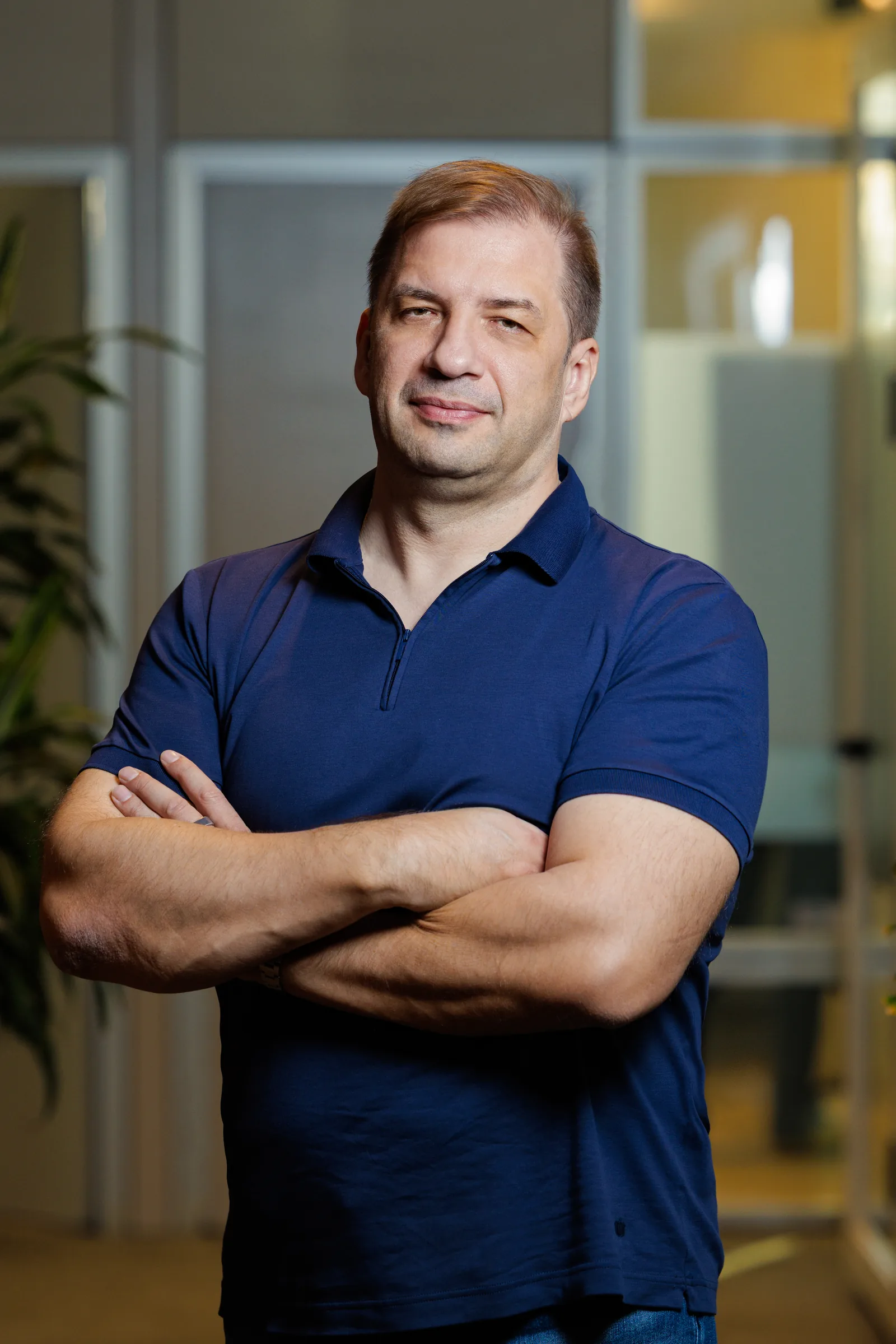
Yuri Misnik spoke about the development of the large-scale SuperApp platform, AI transformation, engineering culture, and how to build teams capable of implementing technologies in real products around the world. Read more in our article below.
Yuri Misnik, City — Abu Dhabi, Chief Technology Officer, LinkedIn
About the company and role
Our technical team ensures the operation of the entire technological platform and data platform of inDrive — from city and intercity rides to delivery and other verticals of the SuperApp. We operate in 48 countries and over 1,000 cities, which imposes high requirements on the scalability, resilience, and adaptation of the platform to the specifics of different markets.
Product teams are organized cross-functionally: backend, mobile, web, QA, and analysts. Platform areas are developed separately — microservices, Kubernetes, infrastructure, observability, and security. There are also data and machine learning teams, as well as the AI Solutions Delivery team, which develops and implements AI solutions for the entire company.
In total, the company has more than 70 teams, where 800 engineers, developers, data specialists, AI experts, and infrastructure specialists work. The proportion of roles varies depending on business tasks and products.
My main area of responsibility is systemic leadership. I shape the vision and development directions: technological strategy, architectural principles, performance metrics, and the approach to organizing engineering work.
My main tasks are to align goals, remove obstacles, strengthen the culture of accountability and decision-making. Architectural decisions are set at the level of general principles: cloud-native, data-first, AI-by-design, cost-awareness. Technical details remain at the level of platform and product teams.
Technological areas that are currently a priority for the company:
- SuperApp. We are expanding into daily scenarios — rides, delivery, financial services — starting with Kazakhstan, Colombia, Egypt, Pakistan, and Brazil. Kazakhstan, in turn, plays the role of a key hub where innovations, features, and new verticals are implemented first. The need to quickly test and implement such local launches determines our technological approach: we are developing a platform and architecture focused on efficiency, flexibility, and functionality expansion.
- AI transformation. We are building a unified AI platform with a semantic layer, knowledge base, common security policies, transparent quality and impact metrics. That is, this is a transition from individual initiatives to a systemic level: from support to personalization and security.
- Engineering efficiency. A unified tree of metrics — speed, quality, cost, risk — FinOps, automation of tests and operational scenarios using
AI agents.
About challenges and innovations
Technological challenges we are facing now:
- Heterogeneity of markets. Operating in 48 countries, it is important for us that the platform works equally stably and efficiently in conditions of slow internet, old or budget devices, different regulatory requirements, and levels of digital literacy.
- High load. We process hundreds of millions of requests per day. This requires maturity in microservice architecture, monitoring, incident management, and safe change processes.
- AI and transparency. Models should help — but not replace the user. We avoid the "black box" and leave control over price and choice to customers and drivers.
Technologies can always be adapted to current problems. But building a culture of accountability, clear roles and principles, and maturity in decision-making takes longer and is more difficult. A strong team creates a sustainable system — without it, no stack works. The foundation of such strength is diversity of experience and
cross-functional approach. We value when professionals with different backgrounds know how to listen to each other and are not afraid to discuss new approaches. It is from such a collision of different opinions that solutions are born for products used in 48 countries. Therefore, I pay a lot of attention to leadership, the ability to work with data and metrics, systemic thinking and transparency of approach, and not just the choice of tools.
The selection and implementation of new technologies begins with the goal. First, we determine what we want to improve — SLA, customer churn, ride cost, or time to market. Then we assess where a custom approach is needed, and where a ready-made solution is sufficient:
— competitive advantage. If a technology can provide a unique advantage, we build and configure it ourselves
— infrastructure hygiene. For standard processes and platform solutions, we use ready-made products. We actively work with cloud architectures such as AWS and GCP.
Mandatory conditions are operational maturity, observability, security, and cost control. In our practice — auto-scaling, FinOps, regular cost review.
In the next three to five years, the market will be defined by four technological areas:
— personalization and adaptation — the development of algorithms towards models that take into account the specifics of consumption and the requests of a specific user
— security by design. Protection is embedded not at the level of instructions, but in the architecture, interfaces, and user experience. And this is projected not only on traditional transactional layers but also on AI
— AI as an operational layer. Agent scenarios will become part of internal processes and customer experience, including support, pricing, recommendations
— unified AI platform. Instead of scattered experiments — a common knowledge base, security policy, and clear metrics of impact on service and risk.
About the team and culture
When building an engineering team, the following are important for us:
- Small team size. The 2-pizza team principle: the smaller and more autonomous the team, the higher the speed and clarity of responsibility.
- Common engineering standards. Approaches to tests, code review, releases, security, and monitoring must be unified.
- Metrics instead of control. Teams see their data — speed, bugs, incidents, cost — and can influence them themselves.
Skills and qualities we look for in engineers and leaders:
For engineers — this is, first of all, a technical foundation, understanding of distributed systems, a habit of quality and automation, mature communication in a distributed environment, and the ability to use AI as a working tool, not a replacement for thinking.
As for leaders, the ability to build effective cross-functional teams that combine different expertise and processes, and not just manage tasks, the ability to work through metrics and feedback, the ability to translate business goals into engineering language and vice versa.
About the path and leadership
My path is a series of technological transformations: at Microsoft, AWS, HSBC and FAB banks, retail, and now — at inDrive. The common thread is scale, reliability requirements, speed of change, and the need to build not only code but also the organization.
Three things helped me:
- Fundamental knowledge: in an industry where frameworks change every year, reliance on the classic engineering school, understanding of architecture, data, and system design allows me to adapt quickly.
- Willingness to work with people: it is important to be able to translate complex technical processes into human language, and at the same time transform
business strategy into clear engineering tasks. I learned to play the role of a link between people and technologies.
- The ability to see technology as a way to solve real problems — understanding that technology is a way to fight injustice or a path to customer convenience. The product should reflect people's needs, not just demonstrate the complexity of our stack.
Recommendations
- Learn at a fundamental level: architecture, data, operations, security.
- Do not be afraid to take responsibility: lead projects, improve processes, learn to work with uncertainty.
- Develop the "translation" skill — between business, people, and technologies.
- Master AI as part of daily work. This is not a replacement for thinking, but a tool to enhance speed and depth.
- And most importantly — genuinely care about users and colleagues. Without this, nothing works.
The Tech on Telegram Follow The Tech on Telegram
Keep up with the latest technology and startup news.
Related reading






More from this author

Article Useful
How to protect your accounts from hacking: 8 settings you should check today
The Tech

Article Useful
500 Global: How the Accelerator Works and Who Can Receive Investments
The Tech

Article Interviews
Game Development in Central Asia: Arkady Moldavski on Developing Reverb and the Growth of the Industry
The Tech

Article Useful
Google, Tesla, BlackRock, and the IMF: Where to Apply for an Internship in Fall 2026
The Tech

News IT
Tesla unveiled the flying electric car Roadster
The Tech

News IT
Intero Biosystems startup won the Startup Battlefield at TechCrunch Disrupt 2026
The Tech