STEM in Kazakhstan: How technological education is transforming schools and preparing children for the future
USTEM Foundation — a new author on The Tech. The foundation's team is actively developing the STEM direction in Kazakhstan, promoting robotics, engineering thinking, and modern educational technologies.
Author - Mansur Ismagulov
The Tech AI
Get the key points in seconds - a short summary from The Tech AI.
Askarbek Murzakhmetov, head of the USTEM Foundation (Astana), describes the transformation of Kazakhstani schools through the STEM approach. The FIRST program, developed in the region by the foundation, conducted about 150 competitions, involving more than 20,000 schoolchildren in the past academic year. In 2025, the STEM Hanym project was launched with the support of Samruk Kazyna Trust and ExxonMobil to promote women in technological education.
In her new article, the CEO of the USTEM Foundation shares her perspective on how STEM education is transforming schools, helping children develop future-ready skills, and shaping a new generation of engineers, scientists, and inventors.
Asylbek Murzakhmetov, Astana, Head of USTEM Foundation
It is becoming increasingly common to see in Kazakhstani schools what, not long ago, seemed like a scene from a futuristic movie: students launching drones, programming robots, creating prototypes of environmental devices, and participating in international engineering competitions. These are not extracurricular clubs for the gifted; they are already part of the educational environment shaped by the STEM approach.
STEM — Science, Technology, Engineering, Math — is not just a combination of four subjects. It is a fundamental shift in the logic of learning: instead of memorizing formulas, students solve real-world problems. Instead of lectures, there is project-based work. Instead of abstract knowledge, there are concrete prototypes, experiments, and skills applicable beyond the school walls.
From theory to prototype: children learn to create, not just memorize
The key value of STEM lies not in the content, but in the method. Education becomes less about transmitting information and more about triggering thinking processes. A child does not just learn physics; they apply it in developing their own devices. They encounter errors, seek unconventional solutions, refine their projects, and see how an idea turns into a tangible result.
This approach fosters critical thinking, creativity, teamwork, and project-based thinking — those very skills that have become currency in the global labor market. It is through STEM that schoolchildren begin not just to learn, but to solve problems that matter here and now.
How a global movement took root in Kazakhstan
One of the largest operators of the STEM approach worldwide is the FIRST program — For Inspiration and Recognition of Science and Technology, founded in the United States in 1989. Today, it covers more than 190 countries and engages millions of children annually.
In Kazakhstan and Central Asian countries, this movement is developed by the USTEM Foundation. Just last academic year, approximately 150 competitions were held under the program, involving more than 20,000 schoolchildren.
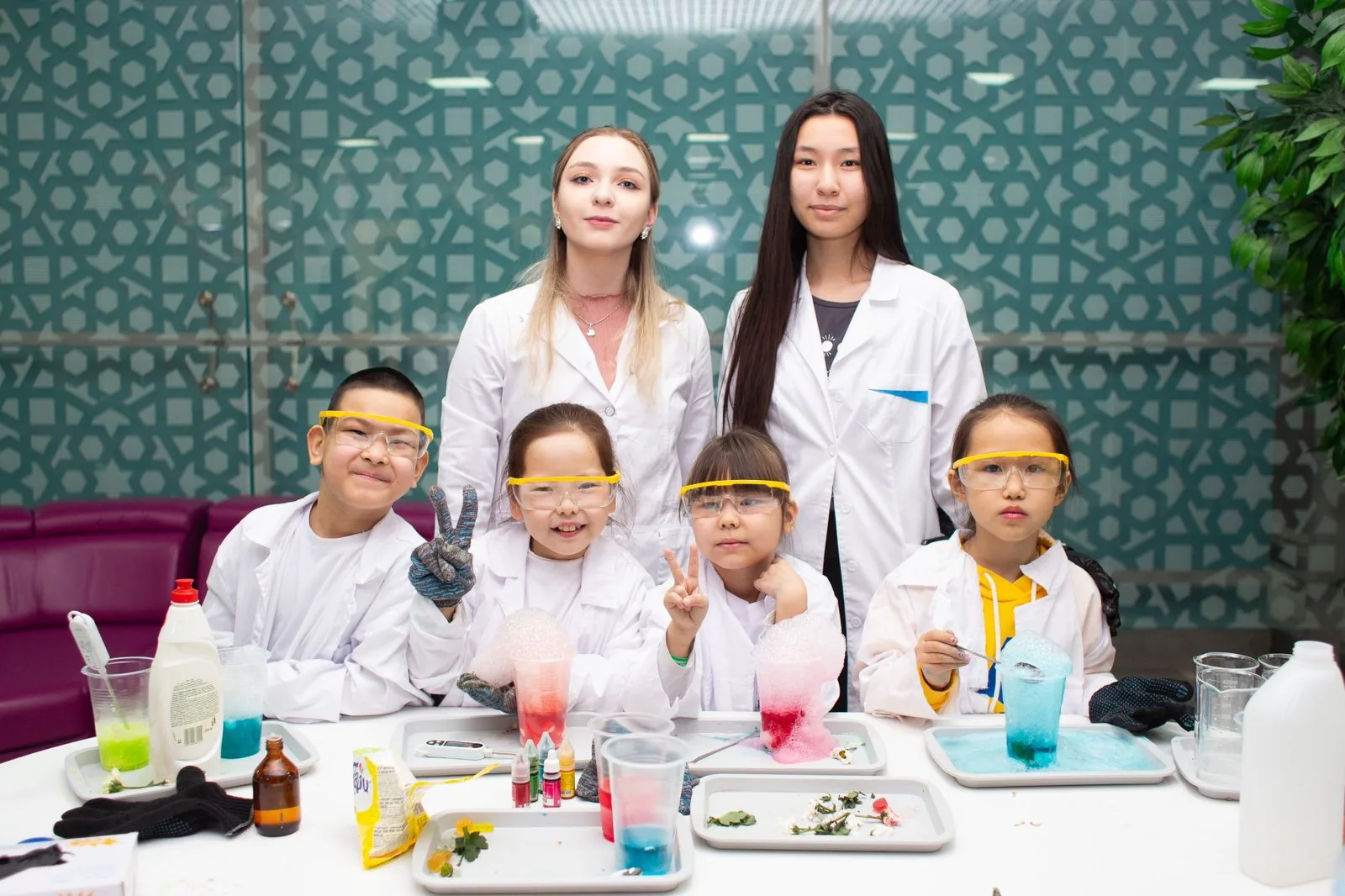
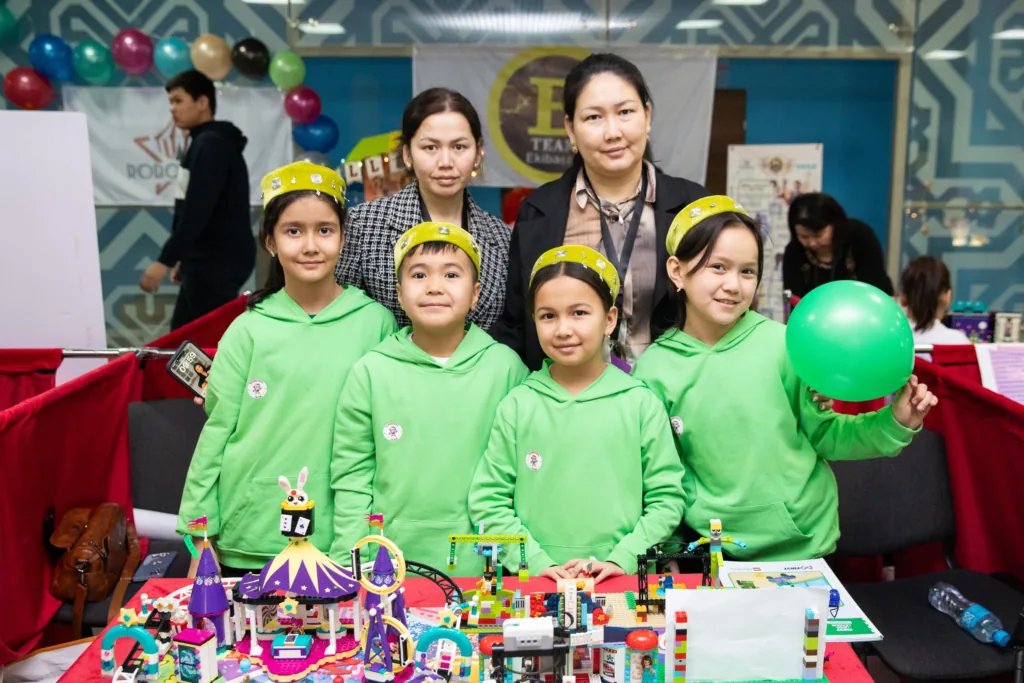
Championships have become a key motivating factor. Children spend hours working on projects, debating, assembling, testing, and programming. This fosters genuine engagement, where even complex technical disciplines are perceived not as obligations, but as challenges and games.
In recent years, it has become clear that championships and competitions have become the main driving force behind the integration of STEM into education. It is precisely these events that transform dry knowledge into a real passion, when a child comes home and independently seeks new ways to improve their robot or project.
The teacher as an integrator: what changes in the educator's role
Even the most modern program will not work without a teacher. In the STEM approach, the teacher transforms from a carrier of knowledge into a facilitator, mentor, and coordinator of project teams. They do not provide ready-made solutions; they help children find them independently.
This applies not only to physics or computer science teachers. STEM tools are today successfully adapted for primary school, humanities subjects, and even inclusive environments. The main goal is to teach children not to fear experimentation, to think, try, make mistakes, and persist until a result is achieved.
How to launch STEM without a laboratory or budget
It is fundamentally important to understand that you can start without complex equipment or funding. A school does not necessarily need a full-fledged laboratory. You can begin with a simple project — building a bridge model from popsicle sticks, studying the stability of the structure, and discussing why one model withstood the load while another did not.
Online tools — such as Code.org, Scratch, Tinkercad, and Arduino Project Hub — provide free access to basic materials, templates, and instructions. They are suitable for both students and teachers without engineering backgrounds. In Kazakhstan, communities of STEM educators are forming, helping with training, sharing experience, and becoming part of the movement.
STEM starts at home: how parents can get involved
Parental involvement is another factor influencing success. This is not about buying expensive gadgets, but about being engaged. Instead of simply controlling homework completion, a parent can participate in assembling a simple device, discuss how an engine or sensor works, or help brainstorm ideas for a school project. STEM is not only about learning but also about joint exploration.
STEM Hanym: when women become leaders of technological change
As part of expanding access to STEM in Kazakhstan, the STEM Hanym project was launched in 2025 — a joint initiative of Samruk Kazyna Trust, ExxonMobil, and USTEM Foundation. It started in the Atyrau region and aims to engage women in teaching and leadership within the STEM field.
The project is addressed not only to female teachers but also to women with disabilities, mothers of children with disabilities, and anyone who wants to become a mentor in technological education. Participants undergo training, gain access to equipment, laboratories, mentoring support, and a community. Most importantly, they begin implementing STEM in their schools and leading students along with them.
Through this project, we wanted to show that entering the STEM field is possible even without specialized education. Our program is oriented not only towards women with teaching experience but also towards mothers of children with special needs and women with disabilities. We are creating an accessible and supportive environment for everyone who wants to learn and develop.
Not a trend, but future infrastructure: what STEM programs teach us
STEM is not a passing trend. It is a long-term investment in human capital. It is the infrastructure upon which the knowledge economy will be built. And it must be accessible to everyone — regardless of region, gender, level of preparation, or social status.
As noted by Zonder Suleimenova, a computer science teacher and FIRST coach, it is currently up to schools, teachers, and similar programs to determine how prepared Kazakhstan will be for a technological future. STEM does not just form technical skills. It teaches thinking and acting. Which means — it prepares children for real life, where engineering, creativity, and teamwork become key skills.
The Tech on Telegram Follow The Tech on Telegram
Keep up with the latest technology and startup news.
Related reading







More from this author

News
zypl.ai begins operations in Japan and focuses on next-generation risk models
Mansur Ismagulov

News
Elon Musk's net worth has exceeded $700 billion for the first time
Mansur Ismagulov

Article Interviews
"Central Asian countries should build a joint ecosystem," — Bekhzod Ismoilov on the development of AI in the region
Mansur Ismagulov

Article Interviews
Bloom's Taxonomy and Engineering Levels: A Practical Growth Model
Mansur Ismagulov

Article Useful
How the IT industry in Azerbaijan developed in 2025: key events
Mansur Ismagulov

News
Tajikistan has become a new member of the regional innovation alliance Central Asian Innovation Hubs.
Mansur Ismagulov