"Start local, go global": Zainab Atabaeva on the first investments of IT Park Ventures and the fund's strategy
The Tech AI
Get the key points in seconds - a short summary from The Tech AI.
The IT Park Ventures Fund, established in December 2024 under the leadership of Azamat Karamatov, invested nearly $3.5 million in its first six months. In March 2025, deals worth $650,000 were closed for startups DataTruck, Geomotive, and UnitLab AI. The fund, with a capital of $10 million, is expanding its geographic reach across all of Central Eurasia, focusing on AI, B2B SaaS, and EdTech.
The Tech editorial team spoke with an investment manager at the IT Park Ventures fund about its first deals, selection strategy, and geographic expansion.
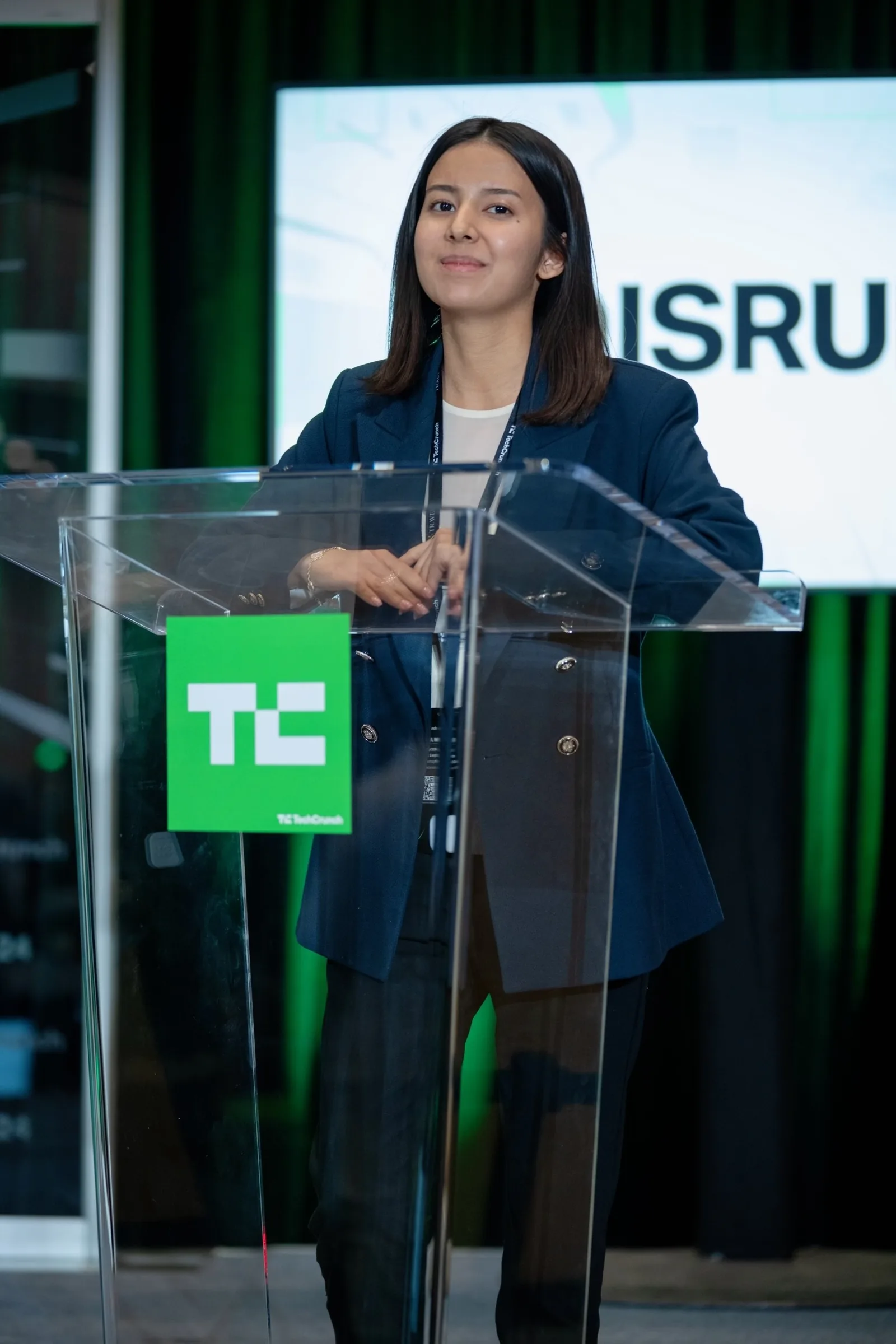
Zaynab Atabaeva, Tashkent, Investment Manager at IT Park Ventures, LinkedIn, Instagram
How 2025 began
The IT Park Ventures fund was established by Presidential Decree in December 2024. It is led by Azamat Karamatov, a professional with extensive experience in public policy and venture capital. By March 2025, under his strategic leadership, the first deals totaling $650,000 were closed — investing in startups DataTruck, Geomotive, and UnitLab AI.
One of our first investments was DataTruck, an AI platform founded by Uzbek expatriates living in the United States. The startup is transforming the logistics market through process automation and integration with over 9,000 American banks. The team demonstrated not only technological maturity but also a deep motivation to build a scalable business while maintaining strong ties to their homeland. Our decision to invest was based not only on metrics and market potential but also on the sense of trust and shared vision for the future that emerged from the very first dialogue with the founders.
Our fund operates under the Ministry of Digital Technologies and IT Park Uzbekistan, with an initial capital volume of $10 million. The average investment check ranges from $150,000 to $250,000.
Since the beginning of the year, we have prescreened more than 150 projects and continue to actively select the most promising startups for further consideration. We are consistently expanding our investment portfolio, regularly closing new deals and building a robust pipeline focused on teams ready to scale and enter international markets.
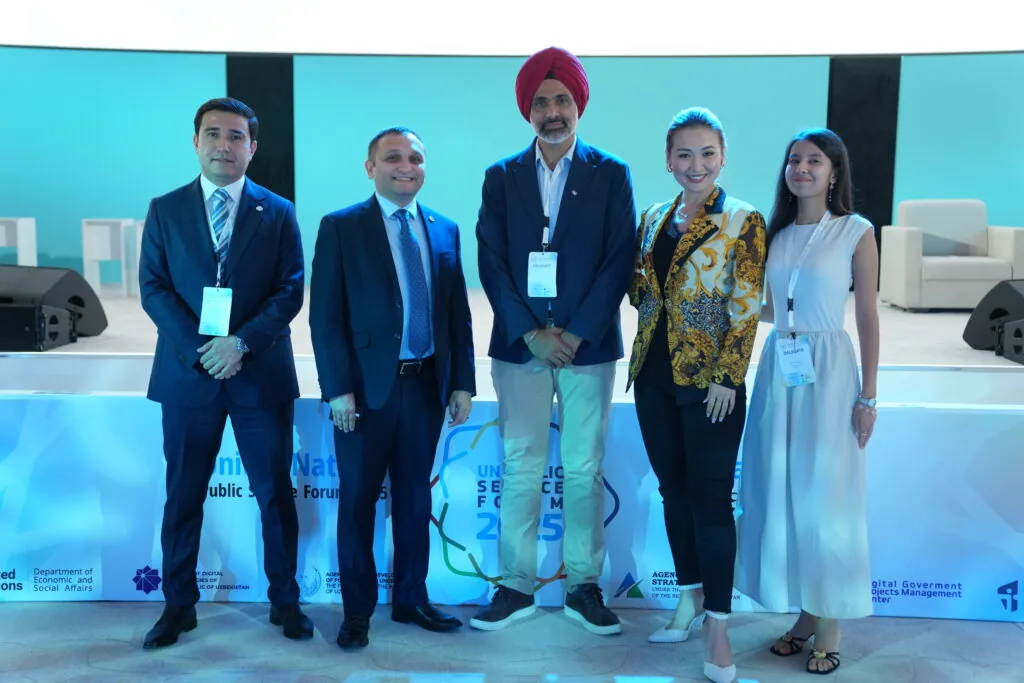
Thanks to the coordinated work of our team and partner support, we invested nearly $3.5 million in the first half of the year, including through co-investment deals with other venture funds. Recently, at the UN Forum in Samarkand, we presented five new investments.
As a state-backed venture fund, we prioritize deep analytics at every stage of the investment process. Before making decisions, we thoroughly evaluate product-market fit, conduct financial and legal due diligence, analyze the competitive landscape, and assess scaling potential. We carry out marketing research and international expertise in collaboration with Plug and Play Tech Center offices in the US and Europe — this allows us to obtain an independent assessment of product maturity, team competencies, and opportunities for entering global markets.
Preparing and defending each deal takes an average of one to two months. Within a single investment pool, we typically review three to five projects on average, which allows us to build a balanced portfolio.
Although our approach remains sector-agnostic, we focus on startups with a clear technological core and scaling potential. Our priorities include AI, B2B SaaS, Corporate Wellness, EdTech, and FinTech. One example is Push30, an Azerbaijani startup developing a corporate wellness platform with a flexible sports subscription system. The project combines technology, a sustainable business model, and a rapidly growing market.
We are also particularly drawn to initiatives with a strong social or environmental impact. This year, we invested in Coozin, an Uzbek platform that helps women learn culinary skills and earn money from home by accepting online orders. The service handles logistics, payments, promotion, and builds a community where women not only earn income but also grow together.
We believe that such projects have the power to change not just individual industries but entire communities. Therefore, we are already in negotiations with several startups focused on sustainability, inclusivity, and positive change — and are ready to support them with both investments and international expertise.
Geography and trends
Initially, we focused on startups from Uzbekistan and projects founded by members of our diaspora. However, through meetings with teams, discussions with investors, and deep analysis of the regional landscape, we realized that the potential of Central Eurasia is much broader and requires a systematic approach.
Today, our focus covers the entire Central Eurasian region. Ambitious, tech-oriented teams operate here, whose solutions have the potential to scale into MENA, Southeast Asian, European, and US markets.
By the end of the year, we plan to expand the fund’s portfolio by investing in startups from regional countries as well as international projects founded by the diaspora. Our priority is early-stage Pre-Seed and Seed teams, where access to mentorship, industry expertise, and international connections is as crucial as investment. We are also open to later-stage deals — from bridge rounds to Series A — if a project demonstrates sustainable momentum and needs a strategic partner for its next growth phase.
At IT Park Ventures, we believe in the approach: Start local — go global. By uniting as a single ecosystem and strengthening each other at the regional and national levels, Central Eurasian countries can shape the agenda on the global technology market.
Compared to 2024, startups have become noticeably more proactive: they reach out to investors themselves, actively participate in events, develop fundraising strategies, and work on their external image. At the same time, more teams are paying attention to internal culture: fostering a positive atmosphere, strengthening corporate values, and caring for team growth. Interest in publicity has also significantly increased — startups prepare high-quality pitches, research the backgrounds of investors and partners, build personal connections, and strive for conscious, professional networking.
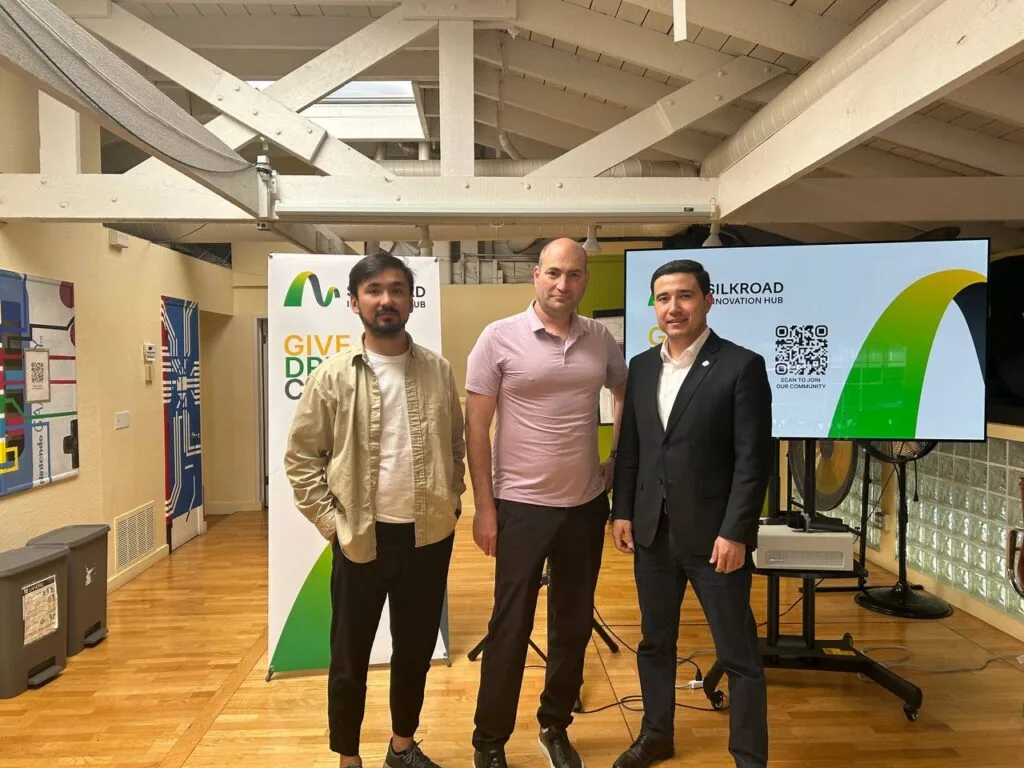
In 2023 and 2024, we presented startups at TechCrunch Disrupt in partnership with Silkroad Innovation Hub and Astana Hub. Compared to previous years, teams from Uzbekistan and Kazakhstan became noticeably more active: they approached investors and speakers, studied their profiles in advance, established personal contacts, and confidently presented their projects.
One regional startup specializing in cybersecurity approached an international expert for feedback after his talk and was subsequently mentioned in his social media posts — which gave additional visibility not only to the project but to the entire regional agenda.
Overall, teams from the region demonstrate growing maturity and confidence: from pitch preparation to investor interactions. Several meetings evolved into warm networking opportunities, including personal invitations from investors and thought leaders. One of them even admitted that Central Eurasia was an unexpected discovery for him — with bright, ambitious, and surprisingly sincere and open founders.
To strengthen this movement, we not only actively participate in international conferences and forums but also create our own platforms within them. At global events, we regularly host side-events where startups from Uzbekistan and the entire region have the opportunity to introduce themselves, find like-minded peers, and form solid partnerships. We also share collaboration opportunities with Central Eurasian ecosystems — telling them about market access, investment potential, tax incentives, and soft-landing programs. All of this helps international players discover the region as a cohesive and dynamic space for growth, in which Uzbekistan plays an active and strategic role in shaping the future of the regional ecosystem.
Currently, FinTech is actively developing in our region. One notable case is Uzum, which became a unicorn. They have a strong online banking solution and their own marketplace. TBC Digital acquired 53% of the startup Billz and is also strengthening its presence in the FinTech sector.
We recently met with Xpence, a startup from the UAE — a portfolio company of our partners White Hill Capital. The project operates at the intersection of FinTech and B2B, offering a modern solution for managing corporate expenses. Unlike the traditional approach where a company has one or two cards for everyone, Xpence’s product allows management and accountants to independently issue virtual and physical cards for employees, set limits, and flexibly manage payment permissions.
Strategy and portfolio
Initially, we planned to support only startups from Uzbekistan and the Uzbek diaspora. However, over time, after meeting projects from Central Eurasia and the MENA region, we saw great potential in them and decided to expand our focus. Currently, we actively collaborate with international funds such as Astana Hub Ventures, DOMiNO Ventures, Big Sky Capital, Sturgeon Capital, and others.
Many global investors are interested in emerging markets, so we are building partnerships with such funds to co-finance projects from Uzbekistan and Central Eurasia while simultaneously helping their portfolio companies enter our market.
Starting from the fourth quarter of this year, we plan to expand our selection geography and begin considering projects from other countries in the region — especially those whose solutions are relevant for our markets, cover the MENA region, and are preparing to operate or are already operating in the US, European, and Southeast Asian markets.
Among notable examples of startups founded by our compatriots and already operating in the US is Clarity Flo, an AI assistant that automates the entire contract lifecycle: from creation to signing, without dashboards or complex interfaces. You simply put it in the email copy — and it takes over all the routine, allowing teams to focus on what matters most.
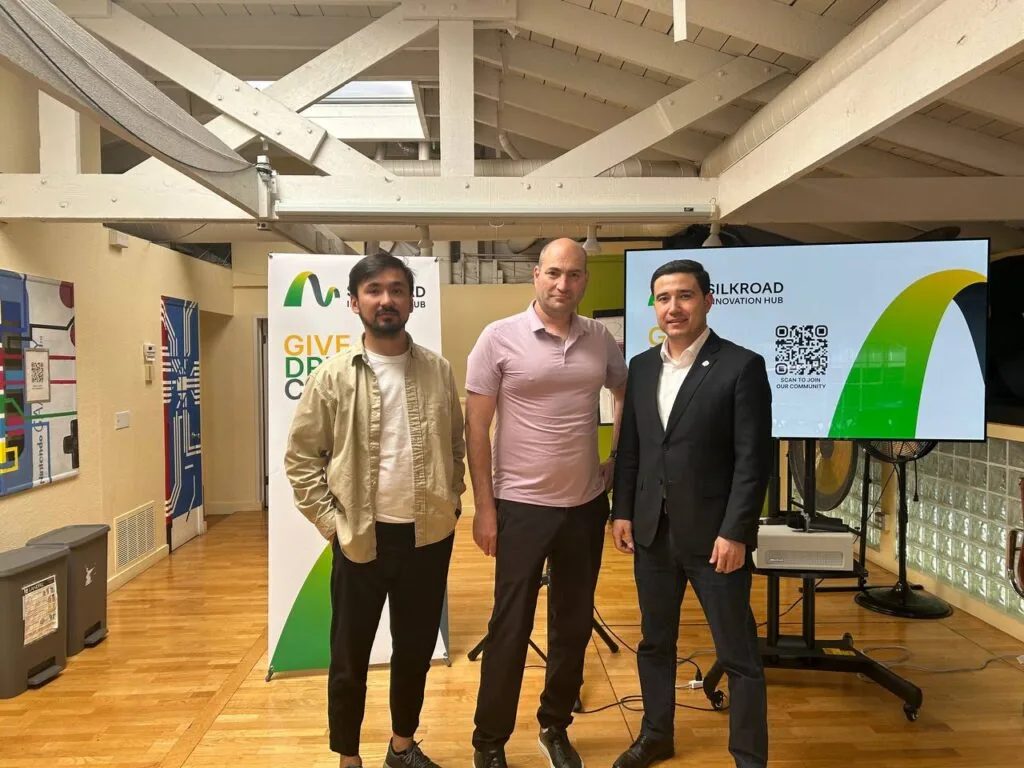
I have known one of its founders, Asror Arabjanov, for a long time. He was among the creators of Silkroad Innovation Hub. For me, he has always been a kind of role model: an Uzbek native, Stanford University graduate, who remains open and generous in sharing knowledge. We started working with him back in 2022, when we jointly launched educational webinars for founders and developed international programs as part of the hub’s cooperation.
From the very beginning, the project received support from Silkroad Angel’s Club — an angel investment community founded by Asset Abdualiev, also one of the founders of Silkroad Innovation Hub. Asset is one of those who systematically builds bridges between regions and helps teams from Central Eurasia find their place on the global map. Thanks to strategic support from our leadership and the state, we are actively developing cooperation with them, opening access for regional startups to the US market, international events, investors, and programs that create real opportunities for global expansion.
About the future
The most promising direction remains artificial intelligence — more and more funds are focusing on projects integrating AI. In Central Asia, B2B and SaaS solutions remain in high demand: businesses need tools for process optimization, ERP, and tracking. Segments like EdTech and FinTech continue to grow. One example is the Uzbek project Osnova, an EdTech platform. Without active marketing, it managed to attract about 50,000 users through integrations with superapp ecosystems like Hambi and Payme, offering free courses. This is especially relevant for the region, where there is a shortage of local educational solutions in marketing and IT.
Startups today have access to many opportunities — a large number of programs and events. But when talking to experienced founders, we often hear about the problem of strong lack of focus: young teams try to participate in everything, without highlighting priority areas.
We recommend founders focus on acceleration programs and events that are most relevant to their stage and industry. Instead of participating in dozens of programs, it is more effective to choose one or two key initiatives for the year and go through them consciously, focusing on product development.
Participation in specialized events yields significantly greater results. For example, if a FinTech project participates in an EdTech event, the benefit will be minimal — perhaps just a couple of random contacts. It is better to study the participant list in advance, identify key people for networking, prepare a personalized offer, and use opportunities selectively. Without a clear focus, the team may simply not have resources left for product work, and participation may turn into disappointment.
For investors, one of the main risks is missing a strong founder at an early stage. As a state fund, we strive to minimize this risk and support promising teams from the very beginning. Support covers not only already active projects but also those taking their first steps. For example, at the international conference GSMA M360 Eurasia 2025 in Tashkent, we allocated $40,000 as a prize fund for three emerging teams — and plan to continue such initiatives that help unlock potential at the earliest stages.
A good example is Arlan Rakhmetzhanov from Kazakhstan. He is only 18 years old and dropped out of school for his startup. Without support from Nurdaulat Bazylybekov, his potential might have gone unnoticed. At an early stage, profit is less important than help in building a sustainable product and entering international markets.
If Western startups confidently navigate the international environment, teams from our region often require more comprehensive support — especially during scaling and entering external markets. We strive to be present from the very beginning, providing not only investments but also access to a proven partner network that helps with company registration, team recruitment, obtaining tax incentives, and building relationships with local investors and ecosystems.
Recommendations
I would advise early-stage founders not to focus exclusively on the product. Yes, it is important — but at the start, speed, openness, and market contact are far more valuable. It is important to quickly build an MVP, prepare a pitch deck with all key data, not be afraid to do cold intros, reach out to tech parks and investors directly, attend events, and build contact with thought leaders. All of this is part of a mature, proactive founder’s position.
Recently in Tashkent, we held a workshop with Darsh Singh Mann from the StartX accelerator at Stanford University, where he shared practical recommendations on launching and developing a startup, building relationships with investors, and forming conscious networks.
One of our tasks is to be a bridge between international experts, communities, and Central Eurasia. We are currently preparing a joint program with StartX, within which mentors and professors from Stanford University will come to Uzbekistan to conduct an intensive for regional founders. The program will take place in Tashkent from September 23 to 28 as part of ICTWEEK Uzbekistan — a week dedicated to the development of IT and digital technologies, bringing together startups, investors, government structures, and international partners. As part of the week, we will also organize a three-day Startup & Venture Summit with panel discussions, keynote speeches, pitch competitions, and 1:1 meetings between startups and investors.
With Alchemist Accelerator, we primarily work with more mature teams from the region within joint programs — AlchemistX and Silicon Valley Residency with our partners. These programs help startups enter the US market, undergo intensive mentoring, and build international partnerships at the next level.
For early-stage founders, we are also opening access to international educational opportunities. Together with Astana Hub, we launched a selection for Hero Training by Draper University — a five-week intensive program in the US aimed at developing entrepreneurial thinking, leadership qualities, and key startup skills. Participants immerse themselves in modules on finance, legal issues, future vision, creativity, and gain access to Silicon Valley mentors and a global network. This initiative is another step toward enabling founders from Central Eurasia to grow faster, more confidently, and with a global focus from the very beginning.
We believe that investment is more than capital. It is trust, strategy, and joint movement toward scaling. At IT Park Ventures, we focus on supporting entrepreneurs from Uzbekistan and Central Eurasia who are building technological, scalable solutions. We invest at early and growth stages, connect international expertise, and help enter global markets. Our goal is to find strong teams and be a reliable partner on their path to scaling.
The Tech on Telegram Follow The Tech on Telegram
Keep up with the latest technology and startup news.
Related reading






More from this author

Article Useful
How to protect your accounts from hacking: 8 settings you should check today
The Tech

Article Useful
500 Global: How the Accelerator Works and Who Can Receive Investments
The Tech

Article Interviews
Game Development in Central Asia: Arkady Moldavski on Developing Reverb and the Growth of the Industry
The Tech

Article Useful
Google, Tesla, BlackRock, and the IMF: Where to Apply for an Internship in Fall 2026
The Tech

News IT
Tesla unveiled the flying electric car Roadster
The Tech

News IT
Intero Biosystems startup won the Startup Battlefield at TechCrunch Disrupt 2026
The Tech