Sam Altman's Tips for Aspiring AI Researchers
In a podcast for Stanford University, Sam Altman shared his thoughts on the AI architectures that lie ahead, how technologies will become more energy-efficient, and what advice he would give to aspiring researchers and developers in the field of computer science.
Author - Mansur Ismagulov
AI Training and Development
Sam Altman notes that one of the most interesting questions today is how learning works. We do not fully understand how humans and animals learn so quickly and efficiently using minimal amounts of information. Modern AI systems can also learn, but they require vast amounts of data and powerful computing resources.
A human example clearly demonstrates the efficiency of natural learning: a child can see an object once and understand it, whereas an AI might process billions of examples and still fail to generalize. Understanding how living systems learn almost "by feel" will help create models that learn faster, are more flexible, and can explain their decisions.
Today, AI surpasses humans in narrow tasks—such as games and big data processing—but still lags behind in cognitive flexibility, creativity, and the ability to transfer knowledge across domains. At the same time, AI is already helping to discover new scientific ideas—hypotheses, molecules, and concepts that humans might not have come up with. This opens the path to a new scientific revolution, where AI accelerates and expands human understanding of the world.
Skills and Careers of the Future
Sam Altman believes that the best AI researchers are those who can think unconventionally, experiment, and ask fundamental questions. It is more important to spot unexpected directions and anticipate what comes next than to simply follow current trends.
AI will become as ubiquitous a tool as computers or the internet. Most people will use it without understanding how it works, while a smaller group will create, develop, and moderate the technology. It is this latter group that will shape the future.
For future generations, it is crucial to learn how to work with AI rather than compete against it. Critical thinking, creativity, and the ability to leverage technology will become more important than rote memorization of facts.
Computer science will shift from studying syntax to systems thinking and problem formulation. Fundamental concepts will remain important, but technical implementation will gradually be handed over to AI. Programming will change: humans will formulate ideas, while AI writes code, tests, and optimizes. What today requires large teams, tomorrow could be accomplished by a single person working alongside a model, opening up new opportunities for creativity and innovation.
Advice for Beginners
According to Altman, now is the best time to start a career in computer science and AI. He advises seeking out smart, optimistic people, working with them, learning, and exchanging experiences.
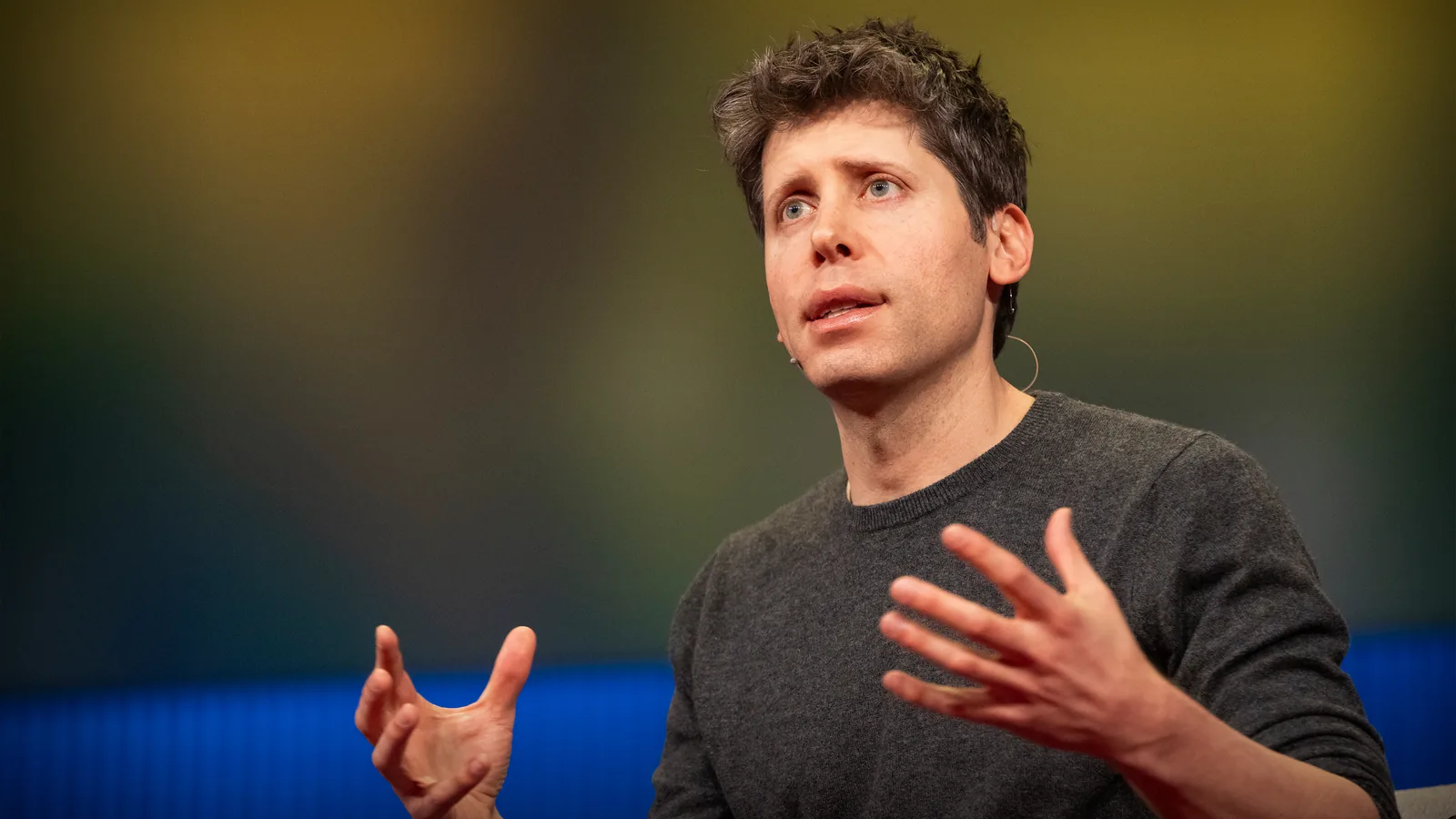
Sam Altman, CEO of OpenAI
There is no single piece of genius advice. Work on interesting problems, interact with smart people, establish rapid feedback loops, and continually improve at what you do.
The Tech on Telegram Follow The Tech on Telegram
Keep up with the latest technology and startup news.
Related reading







More from this author

News
zypl.ai begins operations in Japan and focuses on next-generation risk models
Mansur Ismagulov

News
Elon Musk's net worth has exceeded $700 billion for the first time
Mansur Ismagulov

Article Interviews
"Central Asian countries should build a joint ecosystem," — Bekhzod Ismoilov on the development of AI in the region
Mansur Ismagulov

Article Interviews
Bloom's Taxonomy and Engineering Levels: A Practical Growth Model
Mansur Ismagulov

Article Useful
How the IT industry in Azerbaijan developed in 2025: key events
Mansur Ismagulov

News
Tajikistan has become a new member of the regional innovation alliance Central Asian Innovation Hubs.
Mansur Ismagulov