Secrets of a Successful Pitch: Tips from Laura Eralieva
Author - Mansur Ismagulov

The Tech AI
Get the key points in seconds - a short summary from The Tech AI.
Laura Yeralieva, CEO of Yaya (Astana), provided recommendations on pitches after her appearance at The Tech. She advises avoiding subjective assessments, condensing slides, and focusing on metric dynamics, the team, and real-world case studies. It is crucial to clearly define the target market (TAM/SAM/SOM), evaluate the company, plan finances, and demonstrate the scalability of the project.
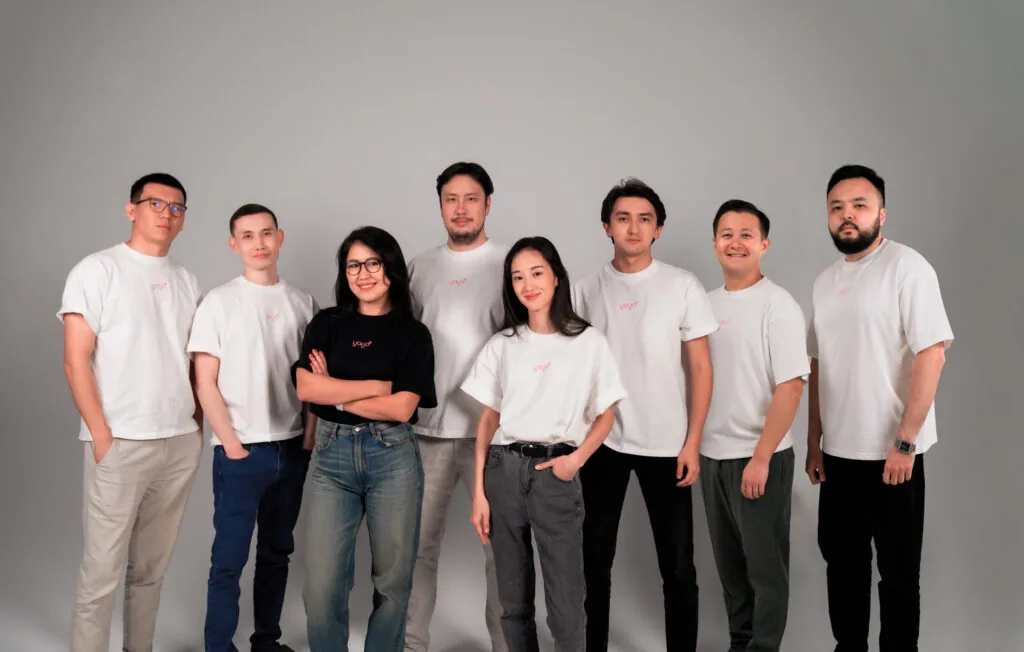
In our Telegram channel The Tech, an online pitch took place with Laura Yeraliyeva, CEO of Yaya, as the speaker. After listening to the startups, she provided valuable recommendations. We will share them below, and you can listen to the full recording via this link.
Laura Yeraliyeva, city — Astana, CEO and founder of Yaya
1. Avoid subjective phrases like "we are the best" without evidence. It is better to immediately demonstrate uniqueness using numbers and examples.
2. One common mistake is stretching important information across several slides. For example, traction and product description might take up three or four slides, when they could easily fit into one or two. Investors value compactness: the faster and clearer they understand what you do and what your strengths are, the better.
3. Numbers are good, but dynamics are even more important. If you have acquired clients, it is important to specify the time period in which this happened. Without this information, it is difficult to assess growth and prospects. Graphs and comparative metrics can enhance the impact.
4. A frequent error is repeating information. If you mentioned a social project, do not return to it later as if it were a new topic. It is better to combine everything into one concise slide with the story, details, and conclusions.
5. One of the most important slides, often overlooked, is the team slide. Investors look at this first. It is necessary to clearly show who is responsible for what and why this specific team is capable of implementing the project. It is especially important to define roles in tech and business areas.

6. Use real success stories of the product; this attracts attention and demonstrates market interest.
7. Be sure to include a section on plans and finances: where you are currently, and what you aim to achieve in the coming months.
8. Slides should be denser in meaning. Instead of dividing the problem and its consequences into two separate slides, it is better to combine them into one. The more compact the presentation, the higher the chance that it will be watched to the end.
9. Metrics are important even at the early stage. Growth indicators and strategies for achieving them must be clear.
10. At early stages, having advisors helps — especially if they are experts in the niche or investors. This increases trust. It is also worth adding a slide with competitors or at least benchmarks from other countries. This will help assess your potential.
11. The description of the target market must be accurate. Specifying TAM/SAM/SOM numbers makes no sense without geography. It is necessary to clearly state whether the discussion concerns Kazakhstan, a region, or the global market.
12. Company valuation is an important element, especially if an investment amount is stated. Without it, it is difficult for an investor to understand what share they are getting. It is better to add even a rough estimation than to leave this question open.
13. The investment request should correspond to the tasks; otherwise, investors may consider it insufficiently ambitious.
14. The age of founders, especially if they are schoolchildren or students, can become a strong point. This generates interest and respect — it is important to mention this, especially if the project looks mature and high-quality.
15. Scalability is important. If you talk only about the local market, it reduces interest. Show where you plan to expand, how you assess neighboring markets, and what is needed to enter them.
16. Have different versions of the presentation: a short one for pitches, a standard one, and an extended one for the data room.
17. Preparation for the pitch is mandatory. Many founders think they can improvise on stage, but under time constraints — especially if it is one or two minutes — it is important that every phrase is precise and persuasive.
18. Charisma and energy on stage are important factors for being remembered, even if the first appearance does not lead to investments.

Presentation Structure
Ideally, the presentation structure should be logically built: problem — solution — advantages — validation: traction and cases — team — roadmap. If you are in the stage of raising investment, it is logical to end the presentation with a request for a specific amount and valuation.
The delivery of information can be a decisive factor. Even with a perfect structure, a monotonous and emotionless performance reduces engagement. It is important to pause, highlight key points with intonation, and show genuine interest in the project.
The presentation should use minimal text and maximum meaning. On the slide — one number, three key words. This structure is read faster and perceived better. The presentation should be built as a coherent story: from problem to solution, from product to results. There should be no fragments. Each slide continues the previous one and leads to a logical conclusion.
How to Effectively Allocate Investments
A check of $100,000 is individual. In DeepTech startups, most funds go to the product and technology; marketing may not be needed. The main thing is to show the logic of fund allocation and how it will affect metric growth.
If your revenue is $10,000 per month and you want to reach $100,000, present the calculations: how many people you need in the team, what resources and expenses are required. An investor will always ask, "What's next?" — be prepared to answer.
At early stages, salaries are usually low because you are still searching for Product Market Fit, and often even Problem Solution Fit. However, it is important to understand the market. You can set your salary based on realities: first, the minimum; then, as you grow, increase it. For example, at the start, I did not take a salary at all; later it was 500,000 tenge, and later still, more. If you set a salary of 5 million tenge at an early stage, it may raise questions — especially if you are not yet generating revenue.
It is important to allocate funds correctly: if there are five people in the team and you earn $10,000, you need to understand how much of these funds will go to salaries and how much to development. The financial model must be clear and show how these funds will help return investments and ensure business sustainability.
My recommendation: actively participate in pitches, both local and international, and keep an eye on announcements from Astana Hub, MOST Hub, and The Tech. If your startup is at the idea stage, apply for incubation. If you already have traction, apply for accelerators. This will help structure the business, receive feedback, gain access to mentors, investors, and clients, and accelerate growth.
The Tech on Telegram Follow The Tech on Telegram
Keep up with the latest technology and startup news.
Related reading







More from this author

News
zypl.ai begins operations in Japan and focuses on next-generation risk models
Mansur Ismagulov

News
Elon Musk's net worth has exceeded $700 billion for the first time
Mansur Ismagulov

Article Interviews
"Central Asian countries should build a joint ecosystem," — Bekhzod Ismoilov on the development of AI in the region
Mansur Ismagulov

Article Interviews
Bloom's Taxonomy and Engineering Levels: A Practical Growth Model
Mansur Ismagulov

Article Useful
How the IT industry in Azerbaijan developed in 2025: key events
Mansur Ismagulov

News
Tajikistan has become a new member of the regional innovation alliance Central Asian Innovation Hubs
Mansur Ismagulov