The most important from Astana Finance Days 2025: trends and prospects for FinTech
Author - Mansur Ismagulov
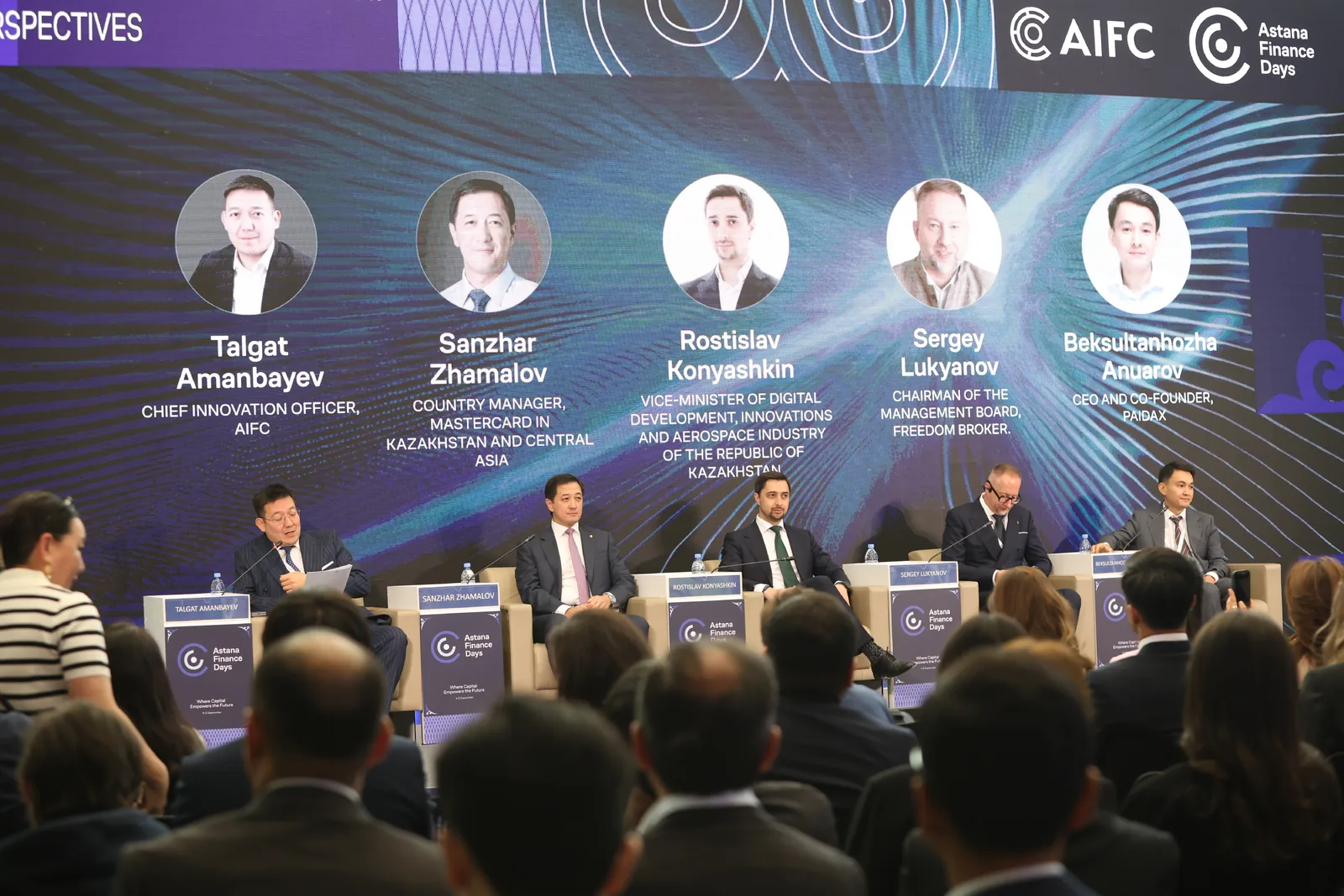
From September 4-5, Astana Finance Days 2025 is taking place at the Astana International Financial Centre (AIFC). As part of the event, a session on FinTech as a key driver of transformation in the banking sector and capital market was held. Experts discussed current trends, shared their insights, and presented examples of technology implementation that make investments and financing more accessible and transparent.
Sanzhar Zhamalov, General Director of Mastercard in Kazakhstan and Central Asia
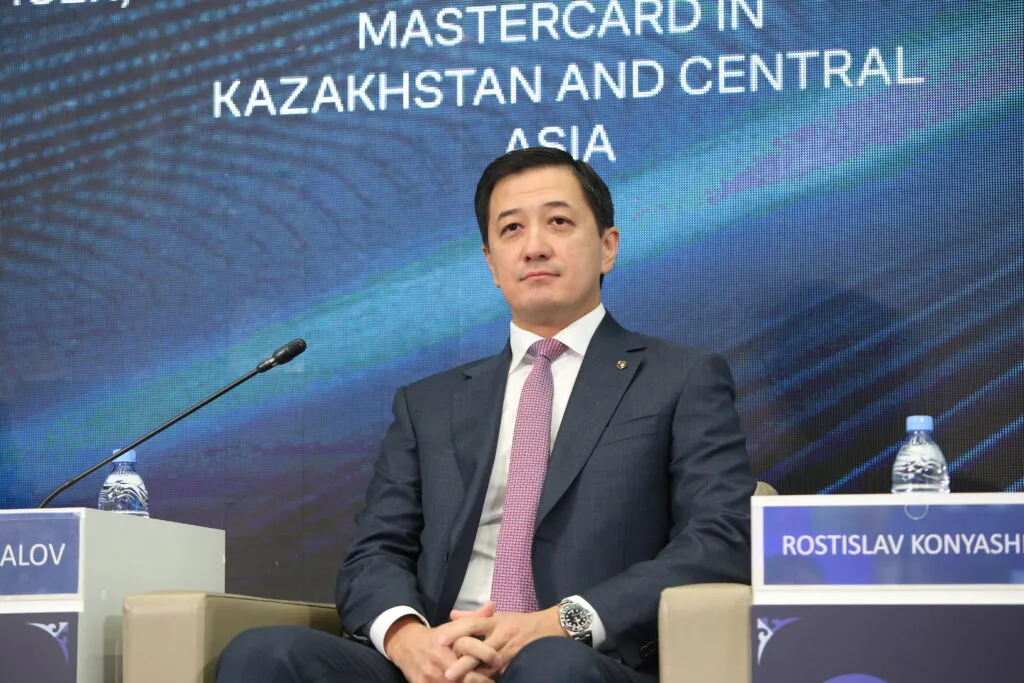
There is a joke that many FinTech companies want to become banks, while many banks want to be called FinTech. This is indeed what is happening in the market right now. Mastercard is a prime example. As many know, it is a global FinTech company with a 50-year history. While this history may not seem very long, we still strive to continuously transform because the market demands it, and time demands it, so that companies do not stand still.
More than 20 years ago, we realized that we needed to do more than just be a payment system; we needed to go further. We began transforming into a technological service company. In the service sector, we work not only with banks but also with government structures, small and medium-sized enterprises (SMEs), and various non-financial organizations. We help develop development strategies, assist in launching new businesses, and so on.
Our business consulting now accounts for nearly 40% of our revenue. Obviously, 60% still comes from payment processing and similar activities, but nevertheless, nearly 40% of our revenue is generated from consulting. This is a significant shift. At the same time, we still see potential for further growth in this market.
Rostislav Konyashkin, Deputy Minister of Digital Development, Innovations and Aerospace Industry of the Republic of Kazakhstan
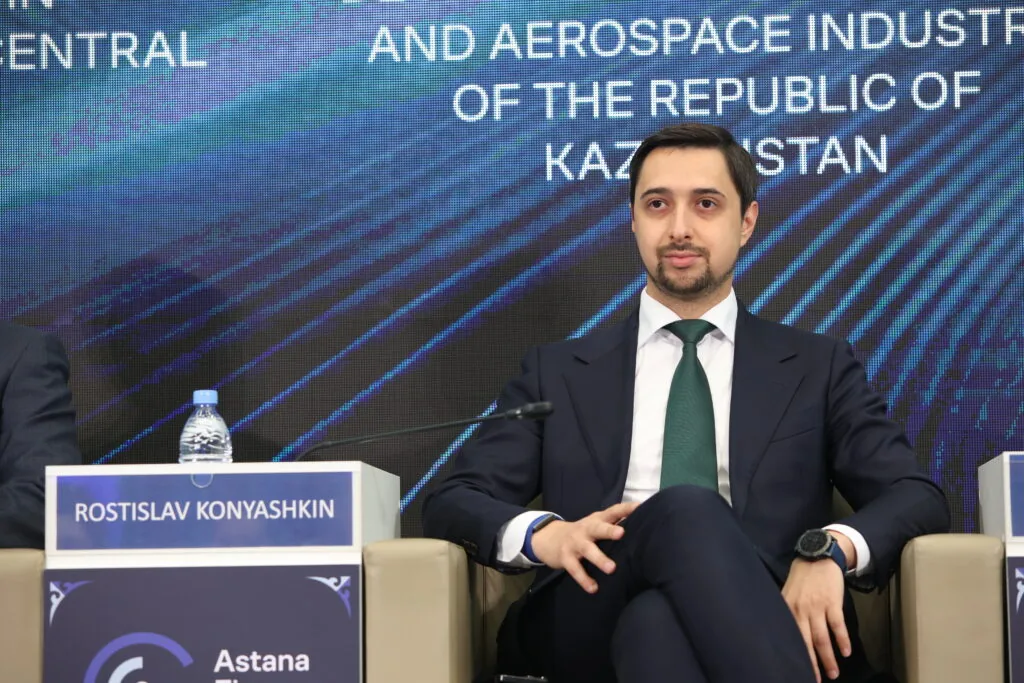
Approximately 25 million government services are provided annually through banking mobile applications. Some banks have already integrated up to 45-50 government services into their mobile apps. People have become accustomed to digital documents and use them, including within banking mobile applications. It was then that we saw an increase in the usage of digital documents. On our part, we are also oriented toward further collaboration.
Bek Sultanokhov Anuarov, General Director of Paidax
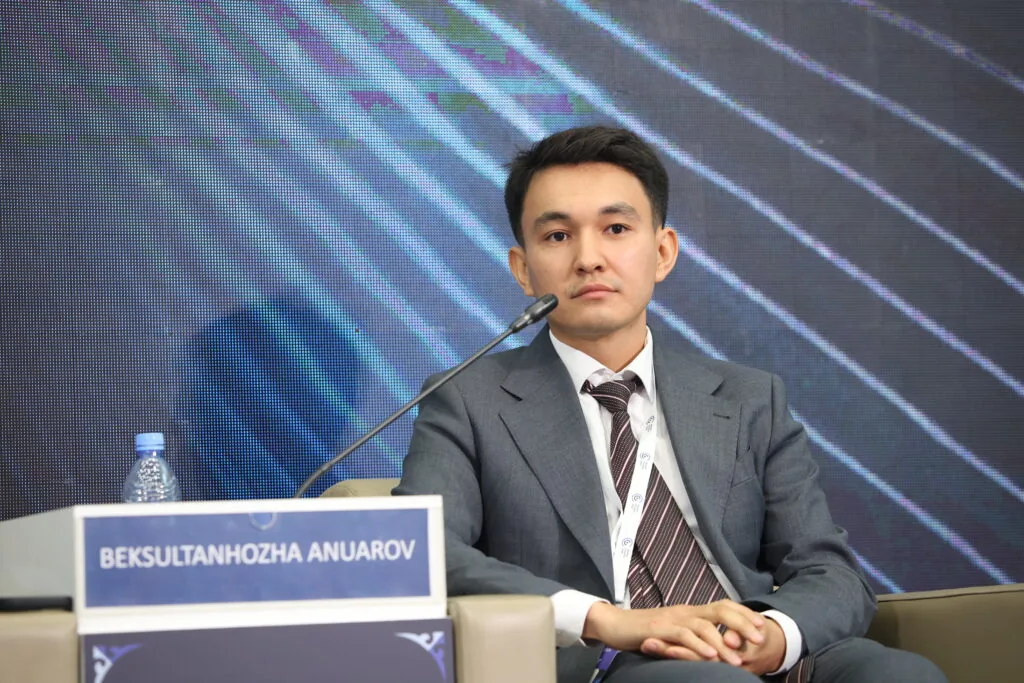
We also had a project related to grain and coffee. Specifically, coffee beans have shown high demand in the global market over the past five years and have formed a significant market architecture. Private investors can earn from such yields through futures contracts, however, not all brokers offer them.
A futures contract is a derivative whose value depends on the future price of the asset. The problem is that income is needed here and now, not just in the future, and tokenization solves this problem. Thanks to it, one can gain access to the yield of assets that are usually unavailable to retail investors. Thus, tokenization plays a key role in opening up new opportunities for users.
Sergey Lukyanov, Chairman of the Board of Freedom Finance
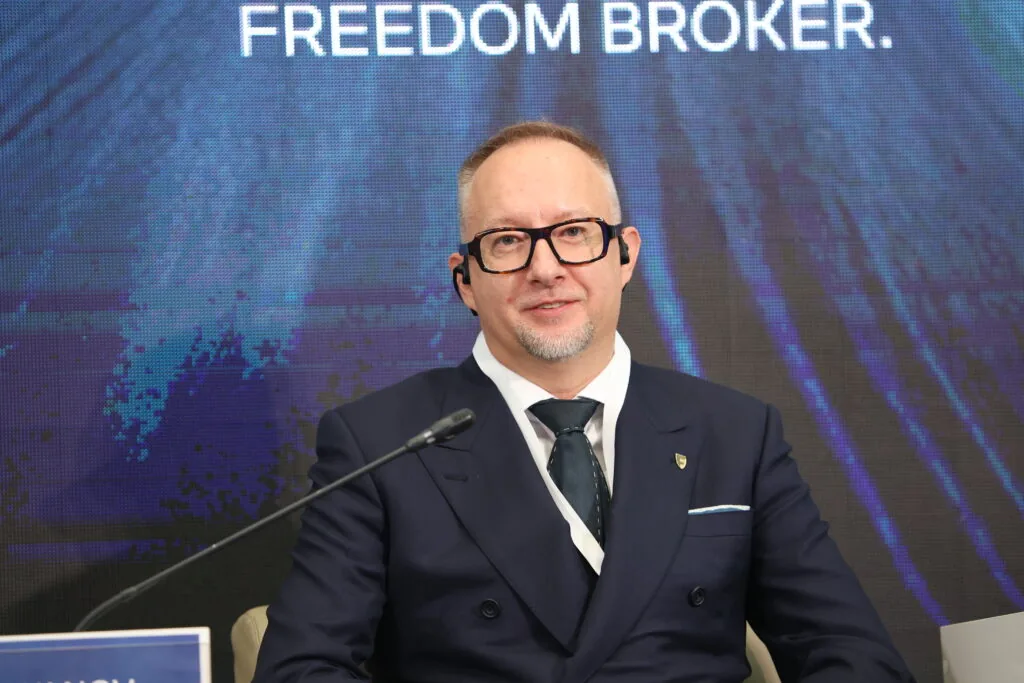
Brokerage cards already exist, and salaries can be stored on them. On a brokerage account, one can not only invest but also pay in stores and cafes simultaneously. This system is already operational, and many people use it. It is indeed a convenient tool—a good example of FinTech. Regarding tokenization, we are also working in this area, though we are currently more observing and evaluating this direction.
Tokenization is an interesting mechanism that allows liquidity to be transferred between the crypto market and the traditional financial sector. Currently, most classical investors remain in "traditional" instruments—securities, bonds, and stocks. These two worlds—crypto and traditional finance—intersect quite weakly. It is not the case that all traditional investors automatically become crypto investors.
Therefore, it is important to build a "bridge" between these markets so that investors from the crypto world can invest in traditional assets. We are also moving in this direction and have already launched our first securitization project. In Kazakhstan, unfortunately, the regulatory environment is not yet very friendly to such instruments. Throughout the entire existence of the market, only seven such deals have been completed, and we executed one of them—five years ago.
Our loans are being repaid, which allows clients to receive fair returns. For comparison: the loan interest rate is usually 36–40%, while attracting funds in the stock market costs approximately 20%. We give clients the opportunity to participate in this margin and earn the difference.
Talgat Amanbayev, Chief Innovation Officer and Board Member of the AIFC Administration
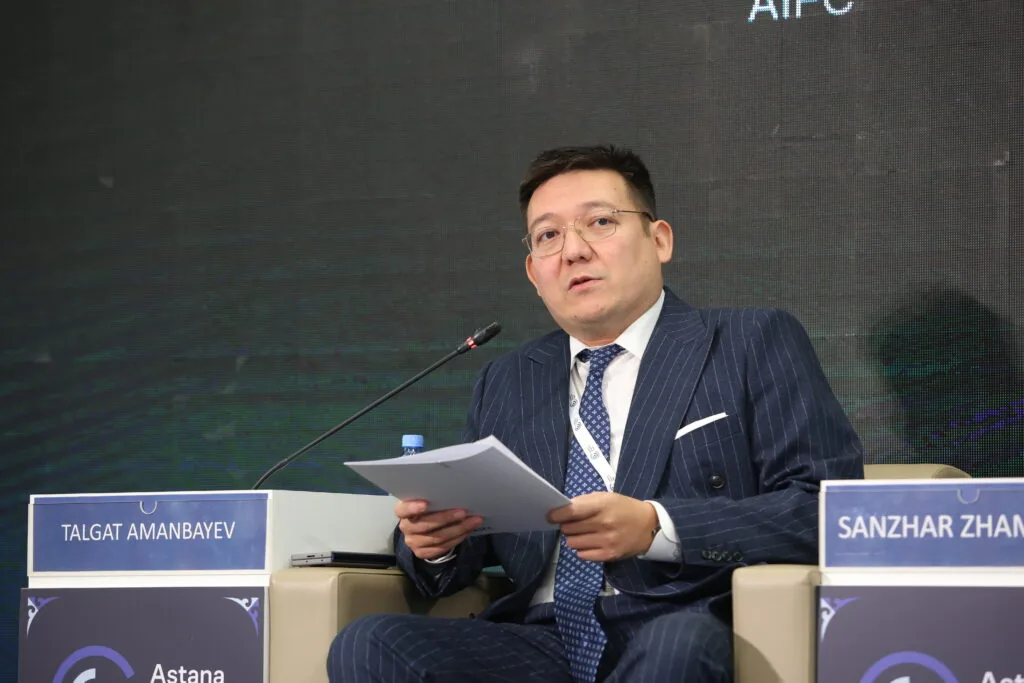
Freedom Finance was the first and remains the only one to launch its own currency—Freedom Coin. When I first saw this project, it seemed very interesting to me. It is a kind of "first swallow," showing how digital money and assets are gradually integrating into the classical market.
If you have an asset—real estate, grain, or something else—and it can be stored without losing its properties, and instead, appreciating in value, it makes sense to tokenize it. And if the asset also generates income, the business idea becomes completely obvious.
FinTech is becoming one of the key factors in the transformation of our banks and the capital market. Modern technologies open up new opportunities for investors, contribute to increased transparency, and help build trust.
FinTech does not replace traditional market mechanisms but organically complements them, enhances their stability, and creates a foundation for further growth.
The Tech on Telegram Follow The Tech on Telegram
Keep up with the latest technology and startup news.
Related reading







More from this author

News
zypl.ai begins operations in Japan and focuses on next-generation risk models
Mansur Ismagulov

News
Elon Musk's net worth has exceeded $700 billion for the first time
Mansur Ismagulov

Article Interviews
"Central Asian countries should build a joint ecosystem," — Bekhzod Ismoilov on the development of AI in the region
Mansur Ismagulov

Article Interviews
Bloom's Taxonomy and Engineering Levels: A Practical Growth Model
Mansur Ismagulov

Article Useful
How the IT industry in Azerbaijan developed in 2025: key events
Mansur Ismagulov

News
Tajikistan has become a new member of the regional innovation alliance Central Asian Innovation Hubs.
Mansur Ismagulov