Consumer Technology and AI in 2026: Key Takeaways from the TechCrunch Podcast
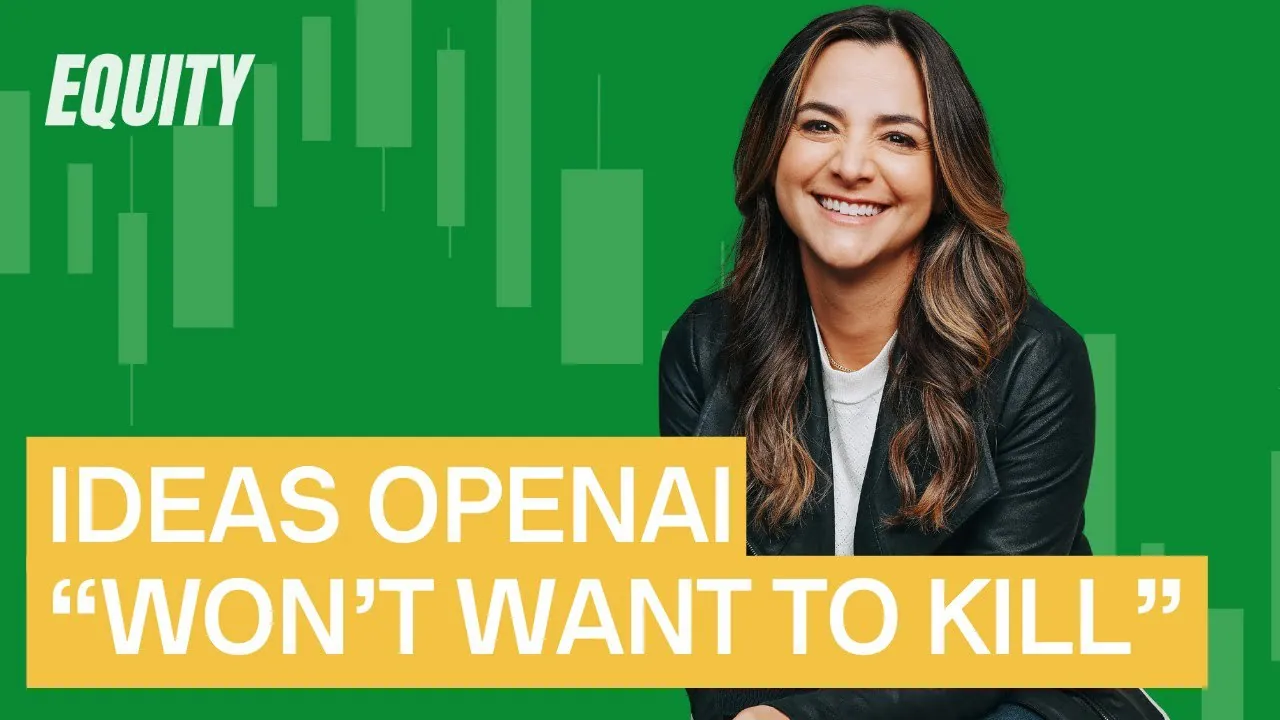
In the latest episode of the Equity TechCrunch podcast, host Rebecca Bellan joined Vanessa Larco, former NEA partner and co-founder of Premise, to discuss key trends in consumer technology and AI in 2026. Below are the key takeaways from this episode, and you can watch the full episode here.
Vanessa Larco, former NEA partner and co-founder of Premise
Consumer Technology and AI
2026 will be the year of the consumer. In conversations with founders who have already launched products in previous cycles, there is a palpable enthusiasm for the consumer sector. One founder noted that selling AI “top-down” works, but slowly: large companies have budgets and will sign contracts, but understanding how a product is actually used by users takes time.
On the consumer market, the interesting aspect is that users themselves understand how they want to use a product. They buy it for work, personal life, or various tasks—much like how we use ChatGPT or cloud services. If a product meets their needs, they continue to use it.
Working with consumers allows for a quick assessment of whether a product meets expectations, helping to identify areas for improvement or whether to launch something new. Founders are striving to create meaningful products, gather feedback, and ensure that their products are in demand.
In my view, the market and founders are excited. With the launch of OpenAI’s App Store, attention to the consumer segment will only intensify. After two years of stagnation, the market is coming back to life, and in 2026, interest in consumer products will become evident.
AI Agents and New Interfaces
Major labs like OpenAI are actively trying to capture the consumer market. Meta is also moving in this direction, but the question arises: how will startups participate in this?
The consumer market is huge, and I’m not just thinking about large companies competing with each other, but also about legacy services like WebMD. Do they need to exist independently? Probably not. Their functions will likely be integrated into open AI platforms. Similarly, with TripAdvisor: will it remain a standalone app or become part of the OpenAI App Store? That’s a big question.
In the past, we were amazed that we could do everything on our phones, without needing a computer or making phone calls. But in the AI era, we will look back and realize how many tasks used to require manual effort, switching from one app to another. AI will now perform these actions for us. The main question is: what should remain specialized, and what can be universal?
I’ve formulated a principle for myself: I invest in what OpenAI won’t want to destroy. They have an app store, and any consumer technology can be placed there. The key factor is distribution. Whoever controls this layer will be where all new products end up.
Social Media and AI Content
Social media needs transformation. Today, it’s difficult to distinguish reality from artificial content, requiring fact-checking and reading comments, which undermines trust in content. I’ve concluded that videos and images created by AI are better perceived as entertainment—for example, in the form of parodies. This makes them interesting and amusing without creating false expectations. Meta previously promised to label AI-generated content but later backed off, which only reinforces the feeling that it’s hard to trust what you see in the modern digital space.
There is a lot of fake content: stories about animals, rescues, dogs saving children—all of it is fabricated. This is frustrating because we emotionally perceive it as real. Gradually, you start to believe that none of it is real. Then the question arises: where do you find the real things? Currently, most people view this as funny videos, but sooner or later, we ask ourselves: “What is real?”
There are two approaches: some platforms, like Reddit, try to be authentic and verify the humanity of users. In the AI world, even biometric methods—such as iris scanning—are being discussed to determine who is real.
For platforms like Instagram or Meta, this doesn’t matter much: they care about engagement, clicks, and attention. Interesting content is often absurd AI-generated videos, and social media is gradually turning into entertainment platforms, similar to games or Netflix, where you watch short films. It’s better not to take news from there seriously: some stories may be inspired by truth, but most are fictional.
Wearables and Physical AI
A significant part of Meta’s AI strategy is focused on giving creators tools to produce engaging content. They acquired the Manis platform, integrating it into WhatsApp for consumers and businesses, as well as into Ray-Ban smart glasses. For this to work, an autonomous agent system is needed to manage content and interactions.
Ray-Ban Meta allow you to take photos and videos that instantly appear on your phone and in Meta apps, as well as answer calls and messages via voice. This reduces phone usage but simultaneously allows Meta to collect data on my interests and activity, improving the voice assistant’s performance.
OpenAI is also actively developing audio models for voice interfaces, and many believe this will become a key part of future consumer devices. Voice AI will be convenient for quick queries, navigation, and other tasks where a screen isn’t necessary. Designers now have new opportunities to combine form factors: glasses, pins, pens, and other wearables, optimizing them for different use cases.
There are currently several pins on the market: Rabbit’s R1, the Humane AI Pin, which didn’t gain popularity, and the new Plaude product launched at CES. CES 2026 promises to be packed with innovations in wearable AI and physical AI, opening up new ways to interact with technology and voice assistants.
The Tech on Telegram Follow The Tech on Telegram
Keep up with the latest technology and startup news.
Related reading



More from this author

Article Useful
How to protect your accounts from hacking: 8 settings you should check today
The Tech

Article Useful
500 Global: How the Accelerator Works and Who Can Receive Investments
The Tech

Article Interviews
Game Development in Central Asia: Arkady Moldavski on Developing Reverb and the Growth of the Industry
The Tech

Article Useful
Google, Tesla, BlackRock, and the IMF: Where to Apply for an Internship in Fall 2026
The Tech

News IT
Tesla unveiled the flying electric car Roadster
The Tech

News IT
Intero Biosystems startup won the Startup Battlefield at TechCrunch Disrupt 2026
The Tech