Why the best startups start not with a product, but with people
Author - Mansur Ismagulov
Many founders overlook that hiring is not a support function but one of the main pillars of any great company. Yet almost no one prepares for it. After the initial adrenaline rush of launching subsides, hiring becomes one of the most difficult and underestimated tasks. The first employees shape the culture, set the pace, and steer the entire trajectory of the company. It is hard—and it solves everything. This is why the best founders are almost always excellent recruiters.
When building a company, you should ask yourself two key questions: “Who did you need yesterday?” and “Who do you want to see in a year?”
Who did you lack yesterday
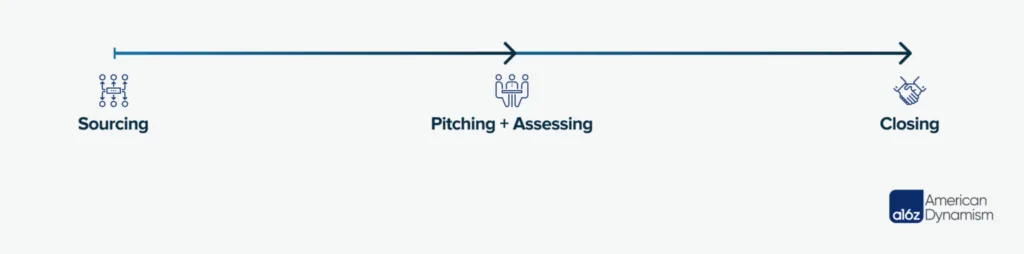
At this stage, hiring is a race against time and a question of scale. You need a steady stream of candidates and, as in many other aspects of building a company, a solid funnel.
Hiring is largely similar to sales, and it truly is. Although standard sales funnels like MEDDIC are not ideally suited for recruiting, the principles remain the same:
— you need a candidate sourcing strategy
— you need a clear, structured process
— you need to understand how candidates make decisions
— it is important to set clear expectations in advance.
Sourcing strategies
Most founders start with their closest circle—former colleagues, classmates, trusted partners. This is a good first step. But if you stop there, hiring will move slowly or remain too narrow. Sourcing must be multi-channel, not reliant on a single source.
Closest network: people you would happily work with again. Reach out directly—briefly, simply, and personally.
Second degree: warm introductions work better than cold messages. Ask friends or investors to forward a short description with a clear request—the more specific, the easier it is to help.
In-house recruiter: an excellent solution when you are juggling many tasks. They will build processes and identify recurring patterns, creating a long-term effect. Often, young candidates with high potential are better suited for startups than “veterans” from large companies. The best recruiters come from strong but lesser-known companies: they must genuinely know how to find talent.
External recruiters: vary from retained search to contingency work and are expensive. Choose based on founder reviews. Hiring more than five people per year makes it more cost-effective to have an in-house recruiter, but external specialists are useful for rare or niche roles.
Creative channels:
— X, yes, it still works
— graduates from strong but declining companies
— niche Discord communities
— university clubs—Formula SAE, rocketry clubs, and so on
— active GitHub contributors
— conference speakers and podcast guests.
Strong hiring processes
Interview formats vary—from pair programming to take-home assignments. There is no single correct way, but the process should reflect the company’s culture and technical challenges. The best hiring processes are always fast and rigorous.
Strong candidates want to see that they are valued. Act quickly, maintain communication, and show decisiveness—speed signals seriousness. Losing a candidate due to a drawn-out process is a common but correctable mistake.
Top talent is drawn to strong teams. A rigorous process sets the bar; a weak one lowers it. This is not about being rigid, but about thoughtful evaluation, deep questions, and consistent standards. Move the hardest parts to the beginning: by the end, you should be 80% confident in the candidate. If rejections happen late, the early stages are too lenient.
After the final interview, move to references. It is important not only to look for “red flags” but also to gather context to help the candidate succeed during onboarding. Treat references as a tool not for selection, but for onboarding and future interaction.
Here is how to conduct reference checks properly:
— ask strong questions. Avoid yes/no formats. Use open-ended, behavioral questions that encourage depth and understanding.
For example:
— what is the most difficult situation you have seen them handle?
— how do they respond to feedback or resistance?
— what environment helps them perform at their best?
— what should their future manager know to help them thrive?
— would you hire them again?
—look for patterns, not isolated incidents. Focus on recurring themes in feedback
— check your own biases. Reference checks are inherently subjective. Do not overvalue mismatches in style or charisma
— distinguish between formal references and informal sources. Use them cautiously—never jeopardize the candidate’s current job and rely on your network only when it is reliable and appropriate.
Ultimately, references are meant to provide a more comprehensive view of the person. They help you close top candidates with confidence and ensure their successful start from day one.
Understanding how candidates make decisions
Hiring is not a one-sided evaluation. As a founder, you are not only selecting talent but also helping candidates make an informed decision by showcasing the company’s value. To understand what truly matters to a person, ask open-ended questions:
— why did you join your previous company?
— why did you leave?
— where do you want to be in five years?
— in what team do you thrive best?
— what would make this role the right step for you?
People are motivated by different things:
Mission—want to work on a meaningful problem.
Technology—seek complex and interesting challenges.
Growth—aim for scale and development.
Team—value people and a culture of trust.
Compensation—want fair rewards and clear terms.
The key is alignment. By understanding what drives a candidate, you can build trust and move faster toward a confident “yes” or “no.”
Aligning expectations
Misaligned expectations are a frequent reason why early employees fail to thrive. The problem is often not culture, but the role being poorly defined from the start.
Two key aspects to discuss in advance:
1. Role scope. For example, a product manager might expect full autonomy, while the co-founder is still heavily involved—discuss this upfront.
2. Growth. Explain that as the company scales, more experienced leaders may join. Bring such people in with respect and transparency to maintain a sense of progress.
A useful practice: one month after an employee starts, ask: “Is the work meeting your expectations?”.
If not—adjust the hiring process.
How to identify a “great candidate”
A common mistake among founders is hiring for roles they do not understand. Acknowledge this gap and close it quickly through your network, especially investors. Ask:
— who are the best people in this field?
— what makes a specialist outstanding?
— what mistakes are commonly made in hiring?
These conversations will help set the bar and develop intuition. When the right person appears—you will feel it.
Invest time in hiring early
Hiring should be a habit, not a scramble. If you know you will soon need a new role—start preparing. Ask your contacts:
“Who is the best specialist in [needed area] that you know?”
Start conversations without making an offer—just build relationships. When the position opens, the hiring process will be natural, not chaotic.
Why people join founder-led teams
A fair question is: “Why take founder-level risk without founder-level equity?”
Yet strong candidates still join—for three reasons:
- They believe in the founder. Your experience and confidence make success real.
- They feel valued. Their contributions are respected and fairly rewarded.
- They see the upside. They understand how this role will help their future growth.
Early employees vary: some are preparing to become founders, some simply love building, and some seek more responsibility. But one rule remains constant: the quality of the first people determines the company’s trajectory.
The best people go where success seems inevitable—where there is a strong team and a leader they believe in.
Hiring is not something you do after you figure everything out. Hiring is how you figure everything out.
It is not a side task—it is the company. Founders who treat hiring this way build companies that last.
Article translated from the site.
The Tech on Telegram Follow The Tech on Telegram
Keep up with the latest technology and startup news.
Related reading







More from this author

News
zypl.ai begins operations in Japan and focuses on next-generation risk models
Mansur Ismagulov

News
Elon Musk's net worth has exceeded $700 billion for the first time
Mansur Ismagulov

Article Interviews
"Central Asian countries should build a joint ecosystem," — Bekhzod Ismoilov on the development of AI in the region
Mansur Ismagulov

Article Interviews
Bloom's Taxonomy and Engineering Levels: A Practical Growth Model
Mansur Ismagulov

Article Useful
How the IT industry in Azerbaijan developed in 2025: key events
Mansur Ismagulov

News
Tajikistan has become a new member of the regional innovation alliance Central Asian Innovation Hubs.
Mansur Ismagulov